







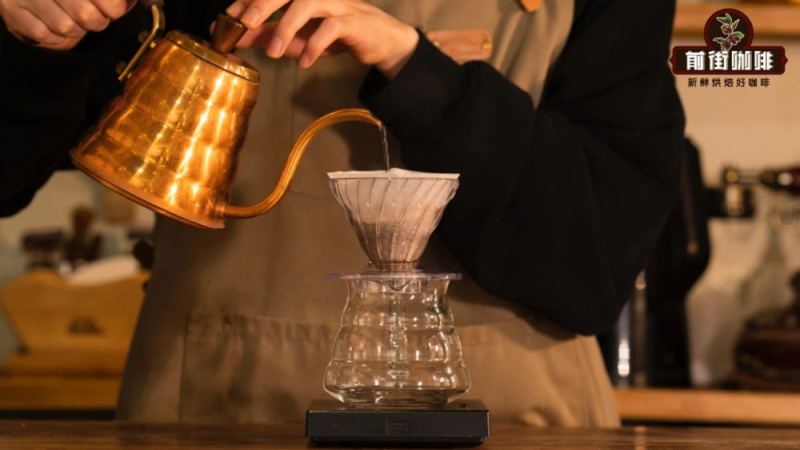
What Happens During Each Stage of Coffee Extraction?
Pour-over coffee extraction breaks into three stages based on the purpose of water meeting the grounds: blooming, main extraction, and adjustment. Blooming wets the grounds and releases gas, main extraction pulls most of the soluble flavor, and adjustment fine-tunes the finish based on how the dripper looks and tastes rather than on fixed numbers alone.
Using the same beans, ratio, grind, and water temperature as a cafe still fails when the brewer does not understand each step. Brewing resembles cooking: a recipe describes a standard result, while real conditions bring variables. Reading the dripper's state at each stage helps avoid over-extraction and under-extraction and lets the coffee formula be adjusted with purpose.
Many people buy the same beans as their coffee shop, use the same coffee-to-water ratio, grind size, and water temperature, yet still can't replicate the ideal flavor. Front Street Coffee believes that brewing is like cooking—relying on parameters alone is far from enough; the key lies in understanding the purpose of each step in the entire extraction process. This article breaks down the pour-over process into three stages based on the purpose of water contacting the coffee grounds: blooming, main extraction, and adjustment, analyzing each stage's role, water distribution, and operational techniques one by one. Whether you're a beginner just starting out or an enthusiast looking to refine your skills, you can find directions for improvement, learn to adapt flexibly based on the dripper's state, and avoid the risks of over-extraction and under-extraction.
For more specialty coffee knowledge, please follow: Front Street Coffee (Frontsteet Coffee)
Many friends, in order to enjoy coffee shop-quality flavor at home, will specifically purchase the same coffee beans and brew them using the same parameters and techniques. However, the results are often unsatisfactory, always feeling like they're just one step short of delicious. What's the problem? Same beans, same ratio, same grind, same water temperature, but the taste is just wrong!
This principle isn't hard to understand. Front Street often compares coffee bean roasting and brewing to the cooking process, and indeed it is. Imagine trying to replicate a chef's signature dish—relying solely on the data recorded in the recipe is far from enough!
Because a recipe only tells you how a dish should turn out under standard conditions, while in actual practice you'll always encounter various variables—like the heat being too low, or the marinating time being insufficient so the flavors don't penetrate. This same logic applies to brewing! Even if your parameters and materials are identical to the coffee shop's, without a deep understanding of brewing, consistently producing a good cup of coffee comes down to luck.
So, beyond brewing parameters, our understanding of the brewing process is also crucial. Understanding this process isn't complicated—you just need to break it down! At this point someone might ask: how do you break it down?
The method is simple: break it down according to the purpose of water contacting the coffee grounds! Currently, the vast majority of pour-over brews can be divided into three stages: blooming, main extraction, and adjustment. Now let Front Street explain what each of these stages means!
Stage One: Blooming
Front Street mentioned just a couple of days ago that the blooming step is quite critical for pour-over extraction. During roasting, coffee beans accumulate a large amount of gas internally, and the presence of this gas (carbon dioxide) hinders hot water from extracting flavor compounds. Therefore, we need to use a small amount of hot water to "guide" this gas out, reducing carbon dioxide's interference with subsequent extraction. The step that accomplishes this is called "blooming."
Typically, the blooming stage uses water at twice the weight of the coffee grounds, then rests for 30 seconds to let the coffee grounds degas. Because twice the weight in hot water is roughly the amount of water that dry coffee grounds can absorb, and 30 seconds gives the coffee grounds enough time to degas. For beginners or those unfamiliar with the principle, this formula is very reliable.
But if we want to go further in understanding blooming and ensure its effectiveness, then we need to judge the blooming time based on the water retention capacity of the wetted coffee bed, thereby achieving a "perfect bloom."
Stage Two: Main Extraction
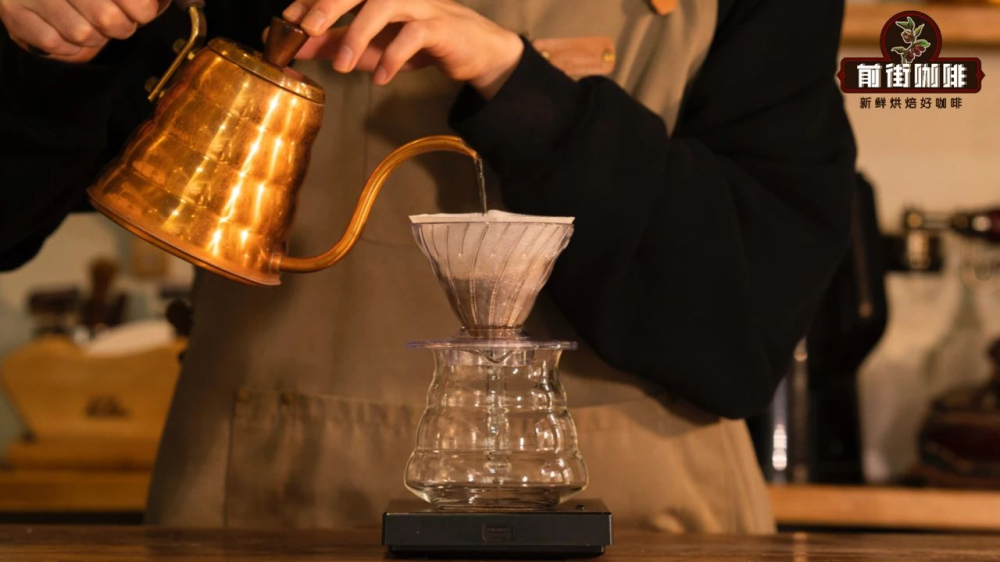
After blooming ends, the main extraction stage of the coffee begins. Generally speaking, 90% of the substances in a cup of coffee are released during this stage. So, we need to use a larger amount of water to perform the extraction. Typically this stage uses about 60% of the total water. It's precisely because of this that it becomes the hardest stage to control.

Since the amount of water poured is relatively large, to ensure the hot water delivers maximum effect, Front Street recommends deciding whether to split it into multiple pours based on your water control proficiency! Normally we pour this entire amount of hot water in one go, but if you've just recently started pour-over, it's best to split this stage's water into two pours, like the 4:6 brewing method.
By reducing the water volume of each pour, you ensure the hot water fully contacts the coffee grounds, avoiding the formation of excessive bypass water, which would negatively affect the coffee's flavor and strength.
Stage Three: Adjustment
Since the second stage has already extracted nearly 90% of the coffee substances, the role of the final extraction segment is adjustment! Adjusting what? Adjusting the coffee's strength and flavor!
Although the second stage has extracted the vast majority of substances, the strength is too high and not suitable for drinking directly. So we need the third stage of extraction to dilute the strength, making the coffee more palatable. However, the third stage is also the segment most likely to bring out bitter and harsh compounds, because most of the sweet and acidic substances have already been released in the second stage—only a small amount of sweet and acidic substances remain in the coffee grounds, with the rest being mostly bitter and harsh compounds.
And bitter substances are necessary for a cup of coffee—they can soften the impact of acidic substances while enhancing the coffee's body. But they must be present in the right amount! Bitter substances present but not prominent—that's the direction we need to control. So during extraction, we need to constantly observe the state in the dripper so we can make adjustments at any time, preventing excessive release of bitter and harsh compounds that would ruin the entire cup's flavor. The specific things to observe can be time or the drainage speed.
For example, if the second stage takes too long and the drainage speed is slow, that means continuing with the original pouring method is likely to risk over-extraction! At this point, it's best to increase the water flow rate, or reduce the flow's penetration power and stirring intensity, to lower extraction efficiency and avoid over-extraction;
Conversely, if the second stage is too short, or the drainage speed is too fast, then you need to extend the extraction time, increase stirring intensity, and so on to boost extraction, avoiding under-extraction.
Once we understand these three stages of the extraction process, brewing a delicious cup of coffee becomes much simpler!
The above content is compiled by CoffeeHunters, a coffee news website.


