








Where Are Arabica Beans From in Costa Rica?
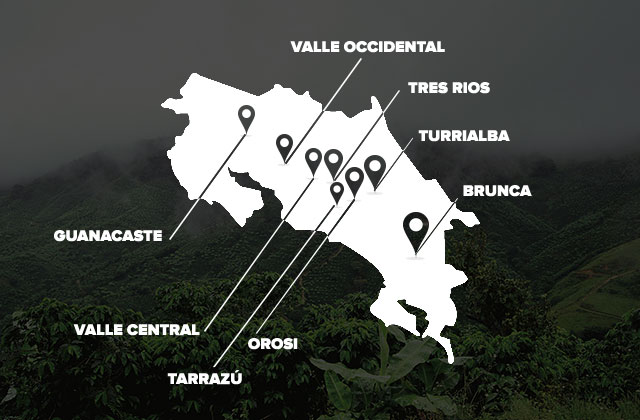
Where are arabica beans from in Costa Rica? Every coffee grown there is Arabica, and the country is divided into eight regions: Tarrazu, West Valley, Tres Rios, Guanacaste, Turrialba, Orosi, Brunca and Central Valley. Each region carries its own terroir, altitude and climate, which shape acidity, aroma and flavor in the cup.
All Costa Rican regions have signed quality agreements, so mills accept only ripe cherries. Higher volcanic areas above 1,200 meters give brighter acidity and richer aroma, and each lot selected is grown above 1,500 meters. Honey processing, from white to black, further changes the flavor divide between washed and honey lots.
Costa Rica is one of the representative origins of specialty coffee in Central America, divided into eight major coffee regions nationwide, each nurturing distinctly different styles of coffee through its unique terroir. This article, from the perspective of Front Street Coffee's bean selection, systematically outlines Costa Rica's regional distribution and the influence of altitude and climate on flavor, with a focus on comparing two beans: the Tarrazú washed everyday drinking coffee and the巨石 Estate Blueberry anaerobic heavy honey process. It also explains in detail the processing differences among white honey, yellow honey, red honey, and black honey, and includes Front Street's standard brewing parameters to help coffee enthusiasts more clearly understand the flavor divide between washed and honey-processed beans in the cup.

For more specialty coffee knowledge, please follow our WeChat official account: FrontStreet Coffee
Let's get straight to the point! If you're a longtime reader of Front Street, you should already have some understanding of the number of coffee regions in Costa Rica.
Those who already know can skip this section and continue reading; those less familiar may want to review it with us. According to ICAFE (Costa Rican Coffee Institute), as Front Street has previously introduced, Costa Rica is divided into eight coffee regions: Tarrazú, West Valley, Tres Rios, Guanacaste, Turrialba, Orosi, Brunca, and Central Valley. It's worth noting that all regions in Costa Rica have signed quality improvement agreements, with processing plant owners committing to accepting only ripe cherries, ensuring that only the highest quality coffee enters the revenue chain. Because of this, you'll notice an interesting phenomenon—all coffee grown in Costa Rica is Arabica.
Among these eight regions, some are located at lower altitudes, while others are volcanic areas exceeding 1,200 meters, where the coffee has brighter acidity, richer flavor, and more abundant aroma. Every Costa Rican coffee selected by Front Street is grown at altitudes above 1,500 meters. Take the most affordable everyday drinking coffee—Costa Rica Tarrazú—as an example; its growing area is also above 1,500 meters.
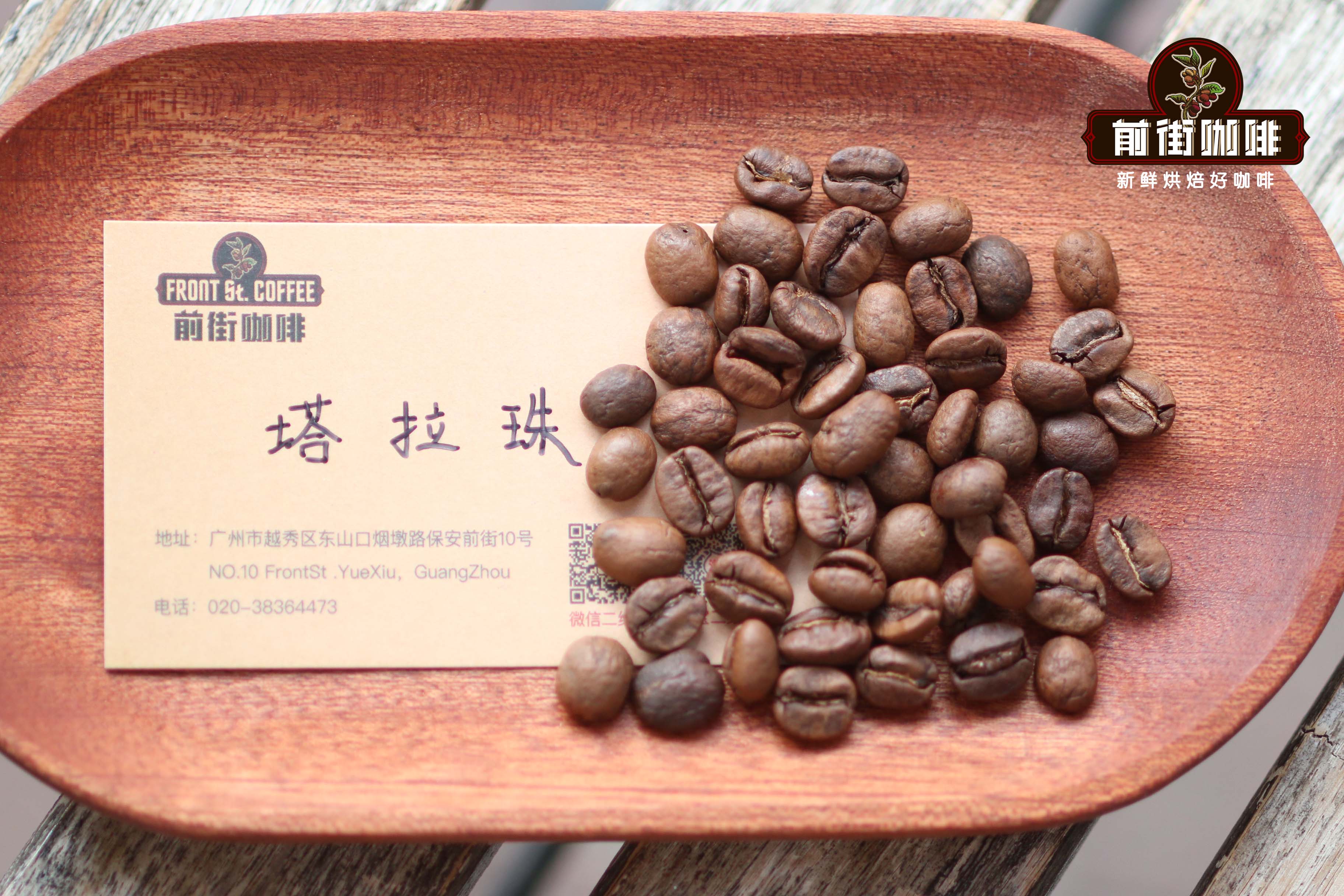
FrontStreet Coffee: Costa Rica · Tarrazú Coffee Beans
Variety: Caturra, Catuai
Altitude: 1,500 meters
Processing: Washed
Grade: SHB
In Costa Rica, rainfall, relative humidity, and temperature generally decrease with increasing altitude, and this gradient difference affects coffee bean size, hardness, and flavor expression. According to Front Street's research, Tarrazú is sheltered by mountains on the Pacific slope side, serving as a habitat for forests and rare birds, with extremely superior ecological conditions highly suitable for coffee cultivation. This bean is grown in the small valleys and slopes of the country's highest mountain range.
Tarrazú is located southeast of the capital San José, producing small, bluish-tinged, refined-looking Arabica coffee. The local land produces approximately 650,000 quintals, with a planted area of about 22,000 hectares, composed of small farms averaging 2.5 hectares. 95% of the coffee sold reaches Strictly Hard Bean (SHB) grade. These coffees grow under ideal cultivation conditions, with soil predominantly sedimentary and acidic due to its composition. Most plantations use shade cultivation, with different tree species planted in the area.
When selecting everyday drinking coffee, Front Street almost always favors washed processing. Regular coffee drinkers know that washed beans have clearer flavors. After the washing stage, most of the coffee bean's pectin has been rinsed away following fermentation, allowing the terroir flavor to be highlighted and amplified. This is Front Street's core consideration: letting consumers taste the most classic flavors of a region at the highest cost-performance ratio.
Of course, many friends are not yet clear enough in identifying flavors and may not quite understand what kind of flavor the so-called "taste of terroir" actually refers to. Next, Front Street will use Costa Rica's anaerobic heavy honey-processed Blueberry for comparison, analyzing the flavor differences between honey-processed and washed coffee. Similarly, Front Street will first briefly introduce the region information of巨石 Estate · Blueberry.
巨石 Estate is located in Costa Rica's Brunca region. Brunca is in the south of the country, composed of Coto Brus, Buenos Aires, and Pérez Zeledón cantons. Coffee cultivation in this area began in the late 19th century in Pérez Zeledón, for the same reason that the first settlers came from the Central Valley coffee-growing region, bringing deeply rooted Costa Rican coffee culture here.
The Coto Brus Valley is located on the slopes of the Talamanca Mountain Range, which divides Costa Rica into Pacific and Atlantic slopes, making the region's economy almost entirely dependent on coffee cultivation. To date, there are records of 2,600 coffee producers covering 75 communities. It is understood that the Coto Brus area is higher in altitude and more humid, with temperatures ranging between 18 and 26°C.
Generally speaking, Costa Rica's honey processing methods are standardly classified into several types, called white honey, yellow honey, red honey, and black honey. Below, Front Street walks you through the different processing methods of these techniques.
White Honey: Remove 80-90% of the mucilage Beans are dried directly on raised beds Beans dry quickly at high temperatures, and the parchment turns white
Yellow Honey: Remove 50% of the mucilage Beans are dried under low wind and moderate sunlight conditions Beans are raked 3 to 4 times a day, with drying taking up to a week
Red Honey: 80-90% of the mucilage remains on the beans Beans are dried on raised beds under cloudy or shaded conditions Beans are raked once on the first morning, then only once or twice in the afternoon thereafter
Black Honey: Keep the mucilage as intact as possible Beans are dried on fully shaded raised beds Beans are left completely undisturbed on the first day, then raked once daily; drying may take up to three weeks
However, none of the above belongs to the anaerobic heavy honey processing procedure. The anaerobic process is one of Costa Rica's most innovative techniques, a semi-industrial method that falls between washed and natural. Specifically, coffee with the pulp removed but all mucilage retained is placed in sealed tanks,隔绝 oxygen to intensify the controlled fermentation process. It is then placed in a greenhouse for about 4 days, followed by 18 days on drying beds. The temperature is above 21°C.
Note: Drying time and temperature depend on various variables (region, temperature, altitude, humidity, season, shade, etc.). The choice of drying beds or greenhouse depends on the producer's own processing philosophy.
Using the same brewing method, let's look at the flavor differences between these two coffees. Next, Front Street will provide Front Street's standard brewing method:
Front Street Brewing Parameters:
V60 dripper
Water temperature 91°C
Water-to-coffee ratio 1:15
Dose 15g
Grind size (80% passing rate on China No. 20 standard sieve)
Front Street brewing method: Bloom with 30g of water for 30 seconds, then pour in a slow circular stream until reaching 125g, then pause; when the water level drops and is about to expose the coffee bed, continue pouring until 225g and stop; when the water level drops and is about to expose the coffee bed, remove the dripper. (Timing starts at the beginning of the bloom) Extraction time is 2'00".
Overall, the Tarrazú everyday drinking coffee tends toward a clean, fresh flavor, with rounded and gentle acidity, and a hint of dark chocolate in the cup—an original and classic Costa Rican coffee. The Blueberry, on the other hand, is relatively unique, with a very clear flavor direction.
The above content is compiled by CoffeeHunters, a coffee news website.


