








How do coffee bean grades shape Blue Mountain No. 1 brewing?
Blue Mountain No. 1 from Jamaica's Clifton Estate is a washed Typica grown at 1,310 meters in the Newcastle area, and it is graded by screen size, altitude, and defect count rather than by flavor alone. For pour-over, use 88°C water, a Fuji Royal ghost tooth grinder set at 4.5, and a 1:15 coffee-to-water ratio.
The grading system behind Blue Mountain No. 1 separates lots by bean size and uniformity, which is why the cup stays balanced and mellow. Comparing natural and washed processing shows how the coffee beans process changes acidity and body: washed lots stay clean and structured, while natural lots push fruit and sweetness forward, so adjust grind and temperature to match each lot.
Blue Mountain No. 1 coffee beans have always been known for their balanced and full-bodied flavor, but exactly what water temperature and grind size should be used for pour-over? What are the differences in brewing performance between the natural and washed processing methods? Starting from the origin background of Front Street Jamaica Blue Mountain No. 1, this article provides a detailed analysis of Clifton Estate's growing conditions and grading standards, offers a complete brewing recipe with a recommended water temperature of 88°C, a Fuji Royal ghost tooth grinder setting of 4.5, and a coffee-to-water ratio of 1:15, and compares the flavor profiles of natural and washed processing. It also compiles three key points to help readers identify authentic Blue Mountain coffee, and reviews Blue Mountain's innovative breakthroughs in processing methods and varieties in recent years.
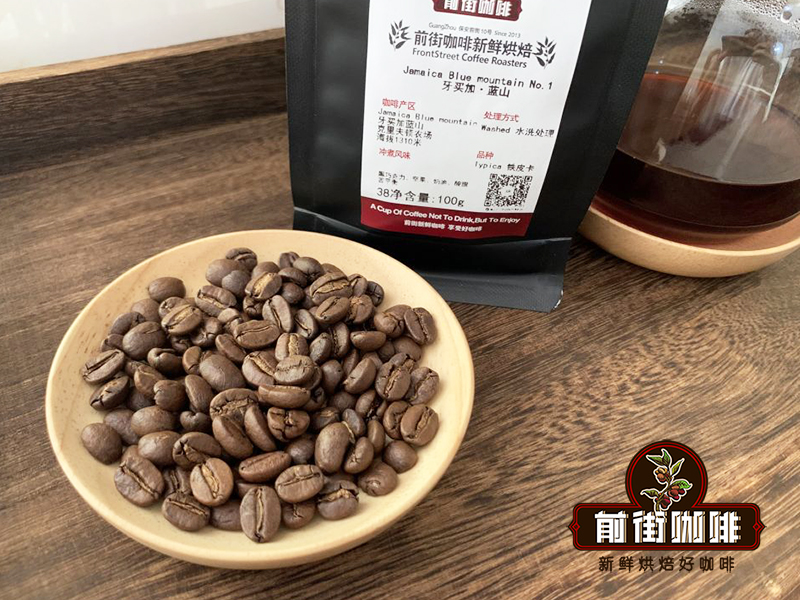
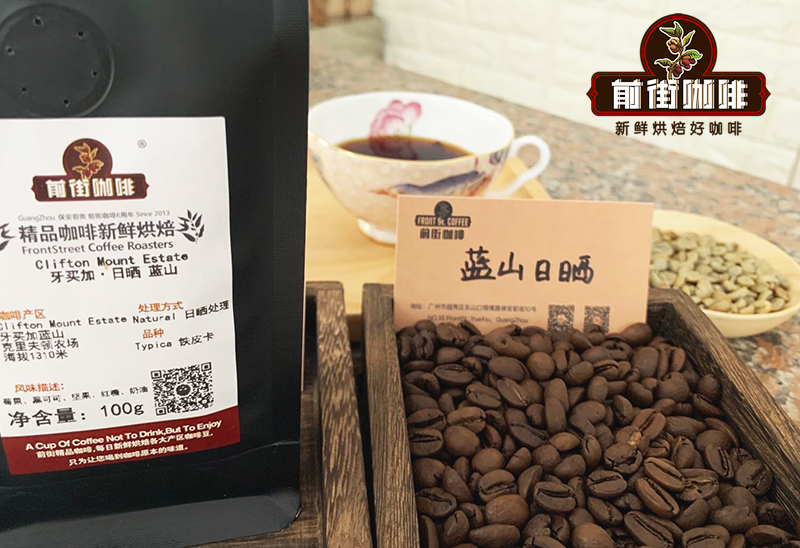
Front Street Jamaica · Blue Mountain No. 1 Coffee Beans Country: Jamaica Region: Newcastle area Estate: Clifton Estate Altitude: 1,310 meters Variety: Typica Processing method: Washed Grade: Blue Mountain No. 1
Front Street Authentic Blue Mountain No. 1 Coffee Beans Flavor description: Chocolate, nuts, cream; the acidity, sweetness, and bitterness are relatively balanced, with a rich and mellow mouthfeel.
Introduction to Front Street's Blue Mountain Coffee Producing Region
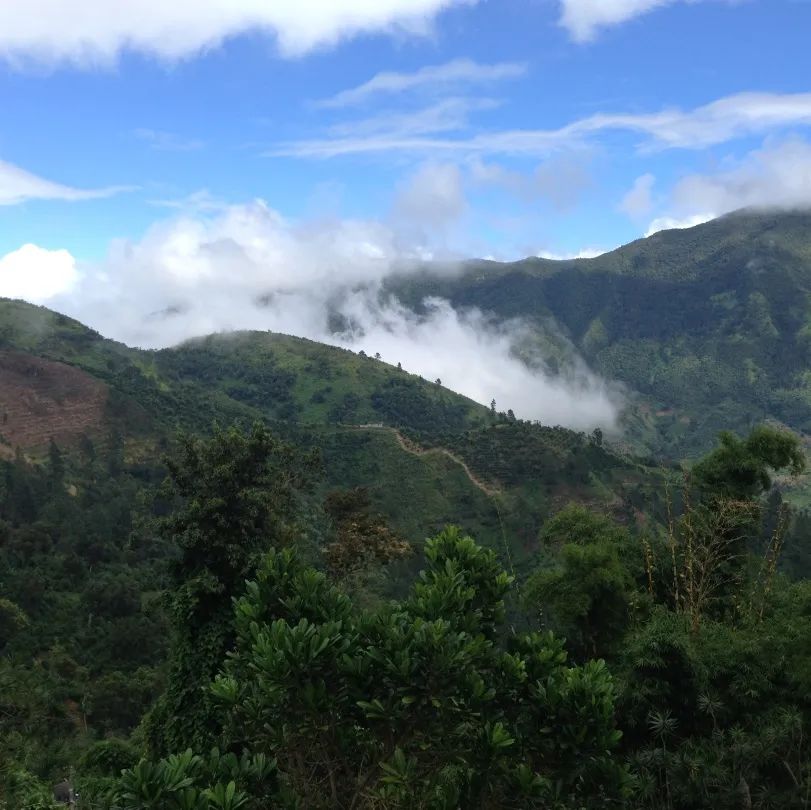
Jamaica is an island nation in the Caribbean, and Jamaica's Blue Mountains are the highest peak in the western Caribbean, reaching 2,256 meters above sea level. The unique flavor of Front Street Blue Mountain coffee beans is inseparable from the exceptional geographical location and climatic conditions of the Blue Mountain region. The Blue Mountains lie within the coffee-growing belt at 25 degrees north latitude, with fertile new volcanic soil, fresh and pollution-free air, abundant year-round rainfall, high humidity, and a pronounced temperature difference between day and night. The soil here is rich in nitrogen and phosphorus, making it highly suitable for coffee tree growth; the fertile volcanic soil, regular rainfall, and the island's hazy cloud cover that shields the coffee from the scorching sun—all these favorable factors combined have created the Blue Mountain coffee we know today.
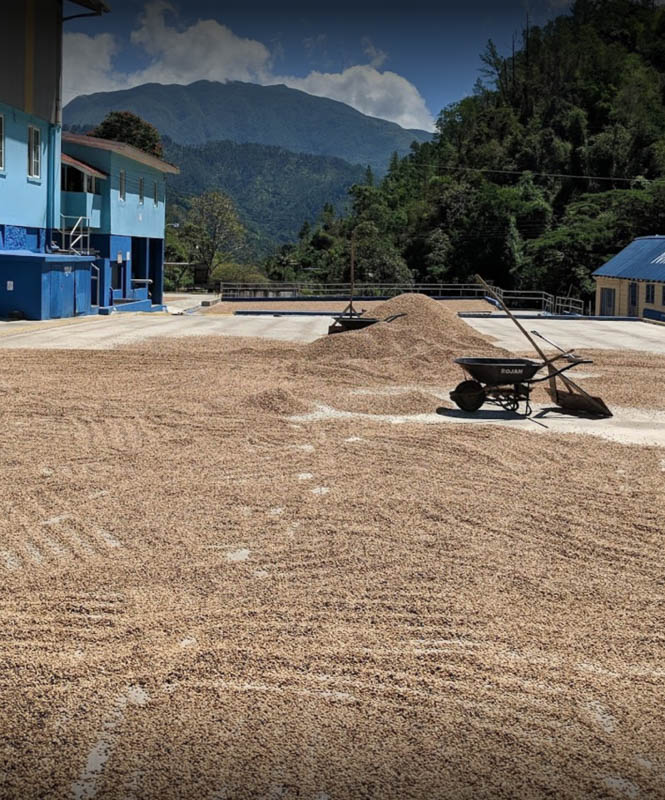
Front Street Blue Mountain coffee beans have always used the washed processing method, and their full-bodied, balanced taste is deeply impressive. It was not until 2019 that Blue Mountain coffee beans began trials with natural processing, and in 2020 the first small batch of natural-process Blue Mountain coffee beans was exported. Blue Mountain No. 1 coffee beans come from the Clifton Farm in Jamaica's Blue Mountains. The farm sits at an average altitude of 1,310 meters and began growing coffee as early as the mid-18th century, making it a historically long-operating farm in Jamaica that is still in normal operation today. Clifton Farm is also the only coffee farm in Jamaica to have obtained Rainforest Alliance certification. The Blue Mountain region has a planting area of only 6,000 hectares, so it is impossible for all coffee labeled "Blue Mountain" to actually come from there. Today, Clifton Estate is the largest estate in the region, yet by international standards it still qualifies as small-scale planting, and many estate owners are small landholders whose families have worked this land for two centuries. As early as the mid-18th century (around 1750), Clifton Estate had already begun planting and producing coffee. Its coffee planting and processing areas are located at an average height of 4,300 feet (1,310.64 meters). Sufficient altitude, gentle afternoon clouds and mist winding through the mountain forests providing shade, ample sunlight, and mineral-rich planting soil all provide excellent growing conditions for the coffee trees and also extend the ripening time of the coffee cherries.
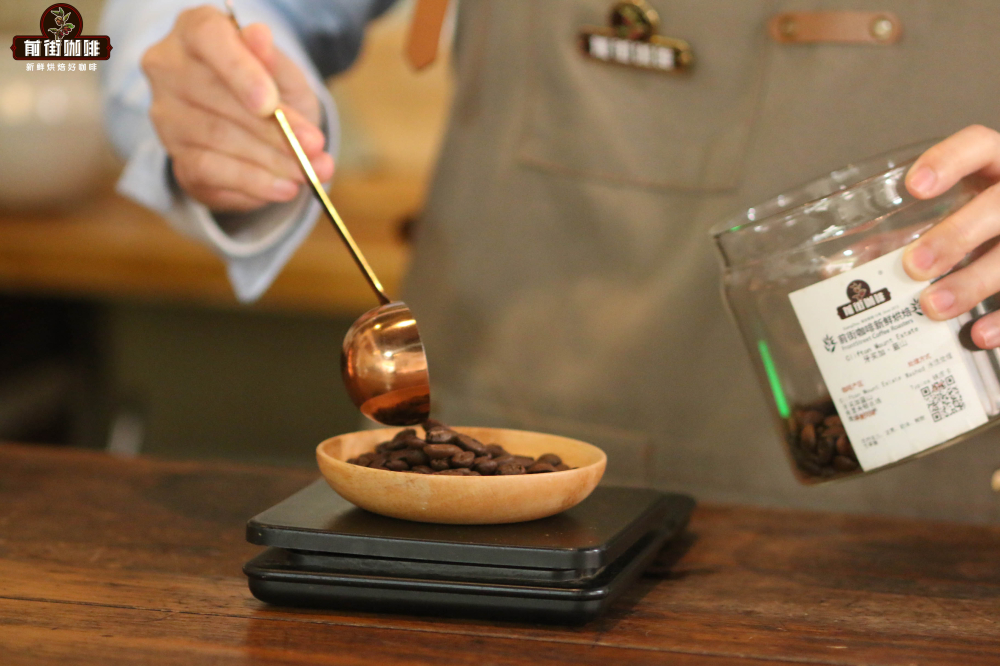
Next, we will share a brewing comparison between Front Street Blue Mountain No. 1 coffee beans processed naturally and washed:
Front Street Blue Mountain No. 1 Coffee Beans Natural/Washed Brewing Flavor Comparison
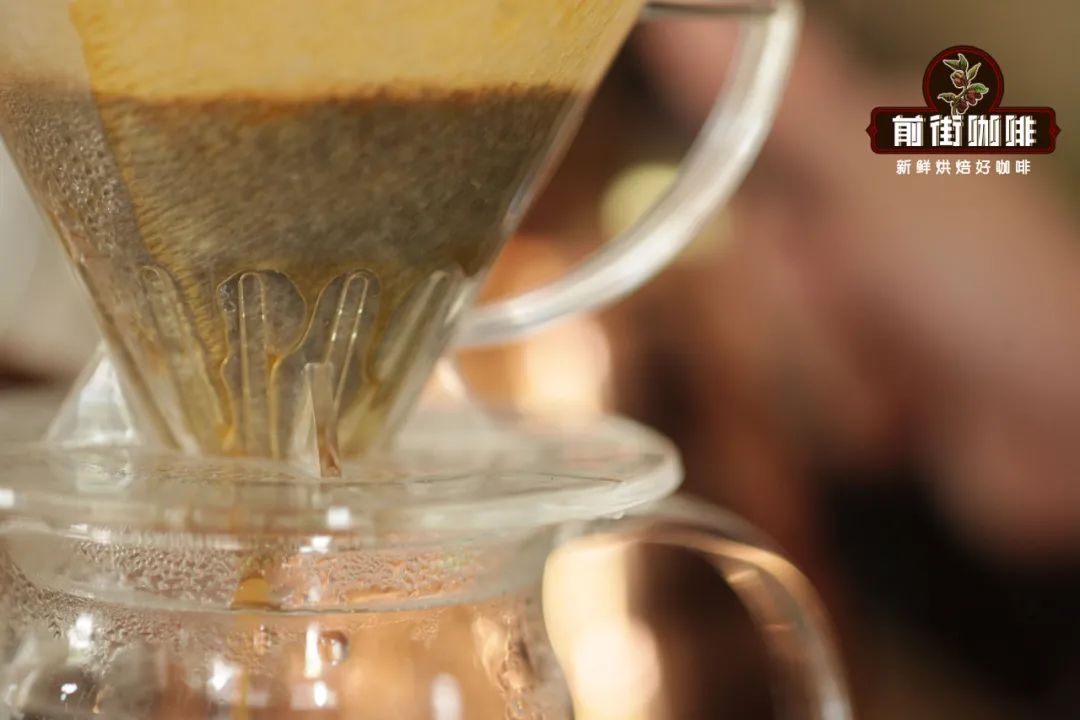
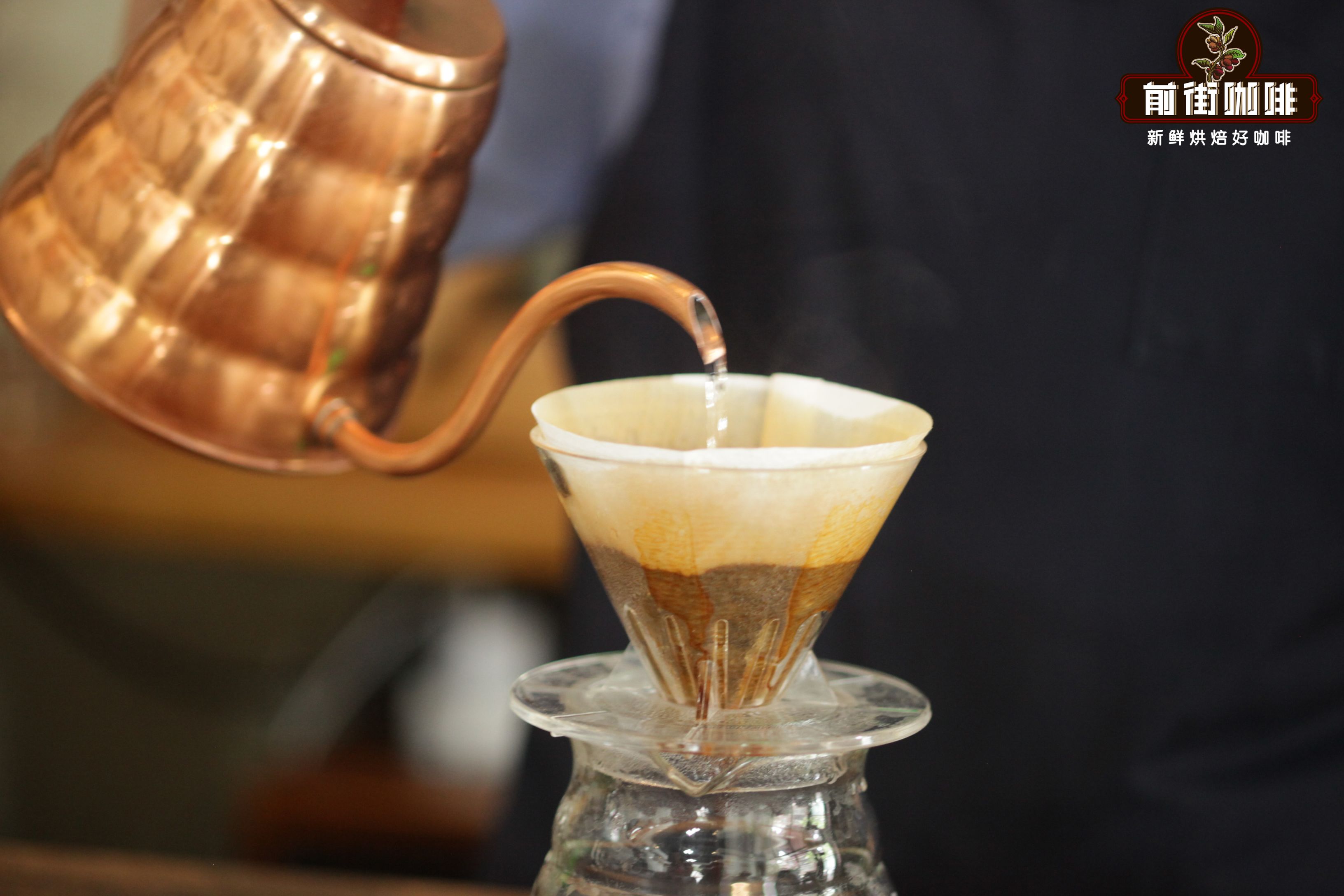
Front Street uses the KONO dripper when brewing both Blue Mountain coffees. KONO's ribs stop at less than half the height of the dripper, a design actually intended to ensure the dripper clings tightly to the wall after wetting, thereby restricting airflow and increasing the water absorption time of the coffee grounds, making the extracted coffee more uniform overall and enhancing the full-bodied mouthfeel. In addition, the groove skeleton at the bottom of the KONO dripper is a key structure designed to create a siphon effect during brewing.
Recommended water temperature: 88°C Grind size: Fuji Royal ghost tooth 4.5 (coarse granulated sugar size) Coffee-to-water ratio: 1:15
Front Street Blue Mountain Coffee Beans Brewing Technique
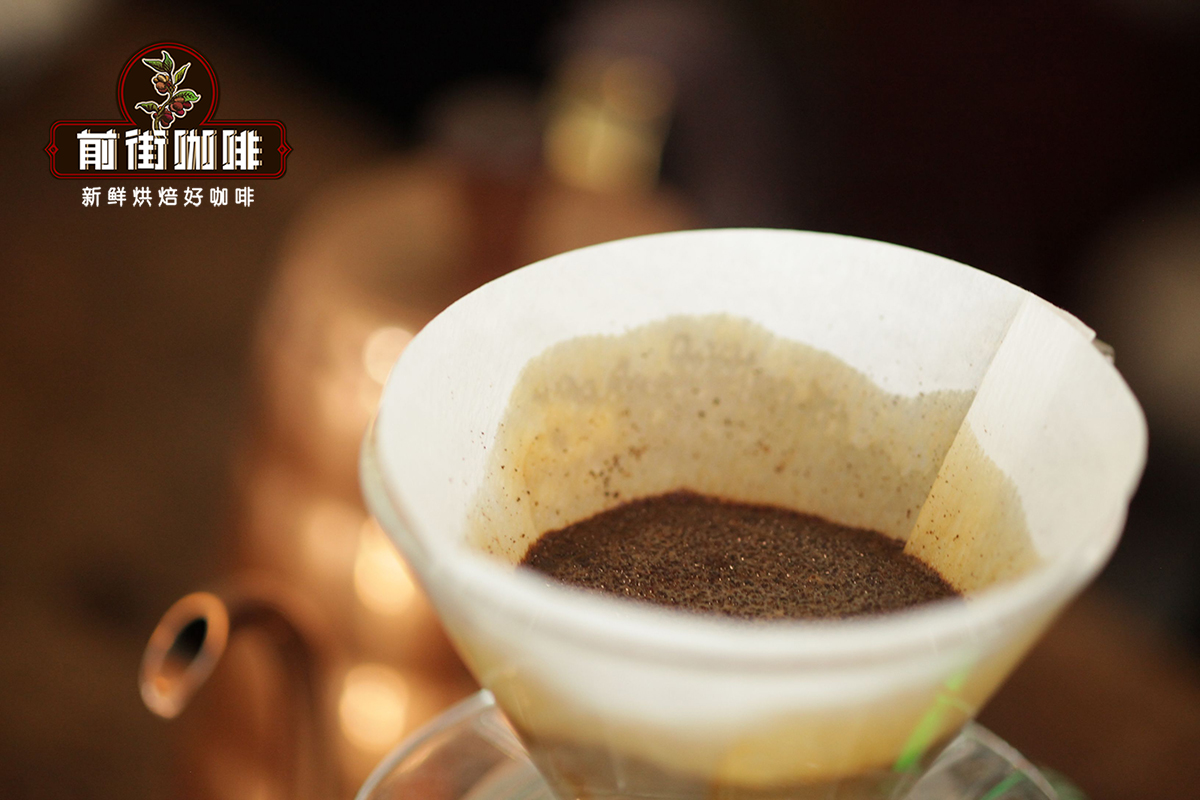
Bloom with 30 grams of water for 30 seconds, then pour in a circular motion with a slow stream until reaching 125 grams for a staged pour; when the water level drops and is about to expose the coffee bed, continue pouring until reaching 225 grams and stop; when the water level drops and is about to expose the coffee bed, remove the dripper. (Timing starts from the beginning of the bloom.) Total extraction time: 2'00".
Front Street Blue Mountain No. 1 Coffee Beans Natural Flavor Description
On the palate there is a brown sugar sweetness accompanied by berry acidity, balanced overall, with black cocoa and nut flavors, plus a slight fermented note and a smoky note.
Front Street Blue Mountain No. 1 Coffee Beans Washed Flavor Description The taste is very clean, complex, and very mild, with chocolate sweetness and a very strong body. The flavor is rich and mellow; the coffee's sweetness, acidity, and bitterness are perfectly balanced, with no bitterness at all, only a moderate and perfect acidity, and a long-lasting fruity finish. Through comparison, it is found that the natural Blue Mountain coffee beans have stronger flavor layering, with a slight berry acidity reminiscent of smoked plum and mulberry, and a slight tea-like note. The washed Blue Mountain coffee beans, meanwhile, maintain the classic flavor unique to Blue Mountain coffee beans—that smooth, bright, and full-bodied quality that goes down effortlessly from the first sip.
Coffee Bean Grading and Classification
Coffee bean grades are usually divided based on defect rate, bean screen size, altitude, green bean density, processing standards, and so on. Due to different historical reasons, trade interests, climate and topography, and various other factors, each country's producing region cannot be evaluated or graded by a unified standard or by altitude alone, nor can a certain grade from one country be directly compared with a certain grade from another country.
FrontStreet Coffee Jamaica Blue Mountain Coffee Bean Grades
Coffee beans from Jamaica's Blue Mountain region have three grades: Blue Mountain Coffee Jamaica High Mountain Supreme Coffee Beans Jamaica Prime Coffee Beans.
Among these, Blue Mountain Coffee and High Mountain Coffee are each further divided into two grades. In terms of quality from highest to lowest, they are: Blue Mountain No. 1, Blue Mountain No. 2, High Mountain No. 1, High Mountain No. 2, and Jamaica Coffee. In terms of quality from highest to lowest, they are: NO.1, NO.2, NO.3, and PB, where PB refers to peaberry. According to CIB standards, the basic criteria for NO.1 Blue Mountain green beans are beans of 17 screen or above, a defect rate below 3%, and a moisture content of around 13%. The Blue Mountain coffee beans selected by FrontStreet Coffee are of the highest grade, Blue Mountain No. 1.
How to Identify Authentic Blue Mountain Coffee?
Below, we will identify what constitutes true "Blue Mountain Coffee" through three key points: export companies designated by the Coffee Industry Board, the only producing region that packages green beans in wooden barrels, and Clifton's rainforest certification.
One: Truly authentic Blue Mountain coffee is exported by companies designated by the Coffee Industry Board.
Part of the authentic Blue Mountain NO.1 in the Chinese market is mainly exported to China by Japan, Australia, and Europe through directly operated branch companies. According to 2013 statistics from the International Coffee Organization (ICO), Japan accounted for 85% of the allocation, while the United States, Europe, and other countries each accounted for 5%. ICO statistics show that China accounts for 15% of Blue Mountain coffee consumption. It is worth noting that the limited Blue Mountain NO.1 is mostly allocated to Japan, the United States, and Europe. Since Japan invested in Jamaica's coffee industry, most Blue Mountain coffee was bought up by Japan. In 1992, Jamaica sold 688 tons of Blue Mountain coffee to Japan, 75 tons to the United States, and only 59 tons to the United Kingdom.
In 2005, Jamaica's Minister of Agriculture announced that Blue Mountain coffee should be roasted in Jamaica, and thus, through direct quota allocation, it tended to flow directly from Jamaica to consuming countries. This allocation system was recognized by the Jamaica Coffee Industry Board (CIB). (PS: The board members of CIB are estate owners in Jamaica who own estates above a certain scale.)
In addition, the officially registered logo of the Jamaica Coffee Industry Board is used for certification and inspection of exported Jamaican Blue Mountain coffee. The BLUEMOUNTAINCOFFEE trademark is the mark on the packaging of authentic Jamaican Blue Mountain coffee.
Coffee Industry Board (CIB)
Two: Truly authentic Blue Mountain coffee is the only producing region that packages green beans in wooden barrels.
Blue Mountain coffee is, to date, the only coffee-producing region among all coffees that uses wooden barrels to package green beans; all other coffee exports use burlap sacks.
During the mid-18th century British colonial period, flour shipped from Britain to Jamaica was transported in barrels; after the barrels were emptied, they were recycled to ship coffee and rum, in order to isolate the coffee aroma and ensure coffee quality. The barrels used today are made from timber from American temperate forests.
Three: The frog on the Clifton barrel lid is the rainforest certification.
Clifton Estate is the oldest coffee estate in Jamaica, and Clifton Farm is the only farm in Jamaica to bear the (RFA) Rainforest Water Frog logo.
Only those that meet the "Sustainable Agriculture Network standards" can obtain certification, and their barrels bear the rainforest certification logo.
Front Street Blue Mountain is Blue Mountain coffee beans that have been through export companies designated by the Coffee Industry Board, packaged in wooden barrels, and certified by the Rainforest Alliance.
Extended Reading: Changes in Blue Mountain
2020 was an important year of change for Blue Mountain. As is well known, up until 2019, the Blue Mountain coffee circulating in overseas markets was all washed Typica. Precisely because of this single processing method and coffee variety, Blue Mountain coffee achieved consistently high quality for a decade, and its balanced, full-bodied taste was loved by many enthusiasts. Then in 2020 (with news emerging in 2019), Blue Mountain first launched natural-process Blue Mountain No. 1 coffee, breaking away from the situation of having only washed processing. Afterwards, it launched Blue Mountain Geisha, breaking Blue Mountain's monopoly of only the Typica variety. Although there have also been ongoing reports that Jamaica is trial-planting Bourbon varieties.
While admiring Blue Mountain's courage to make changes, FrontStreet Coffee also pondered why Blue Mountain, after focusing so consistently for a decade, began to open up its thinking and innovate in recent years. Before light-roasted acidic coffees became popular, the public's impression of coffee was of a full-bodied, rich flavor, like traditional Mandheling coffee and Colombian coffee. In that era, traditional Blue Mountain coffee existed like the king of all birds, and its clean, full-bodied, balanced flavor became the object that people later imitated one after another. Together with Hawaiian Kona, it was known as the "king and queen" of the coffee world.
However, times have changed. First came Yirgacheffe coffee beans with an explosion of fruity aroma, and then the world-famous Panama Geisha coffee beans, setting off a worldwide wave of appreciation for coffee's delightful acidity. Faced with this situation, Jamaican Blue Mountain coffee farmers who insisted on tradition felt that Blue Mountain's status had been shaken and began gradually innovating. This year's newly added natural-process Blue Mountain and Blue Mountain Geisha are good proof of this. As soon as news of Blue Mountain Geisha was released, FrontStreet Coffee also obtained a barrel of Blue Mountain Geisha green beans (the Geisha variety has scarce production) at the first opportunity, to experience it firsthand.
You should know that coffee is a plant, and it is not as simple as "transplanting coffee from one place to another region to grow." This involves "the adaptability and stability of a new species to a new environment." To grow good flavor, you need excellent agronomic experience, time for adaptation, a suitable growing environment, and ample coffee processing experience.
It can be seen that Blue Mountain started planting other varieties very early, and after years of breeding and flavor adjustment. The Geisha variety was discovered in 2004 by Panama's Hacienda La Esmeralda because of its high-quality floral and fruity flavors. After more than 10 years of spread, it has basically covered the coffee-growing belt, and even Yunnan grows Geisha. And this year Jamaica launched a micro-batch Blue Mountain Geisha, showing that Blue Mountain is full of confidence in this Geisha coffee.
When FrontStreet Coffee received the green beans, it found that Blue Mountain Geisha, like traditional Blue Mountain No. 1 coffee, had its exported coffee packaged in wooden barrels, with the Rainforest Alliance logo affixed to the barrel (currently, among coffee farms in Jamaica's Blue Mountain region, only Clifton has passed this certification).
After repeatedly adjusting the roasting curve to determine the best roasting style and roast level, during cupping, everyone at FrontStreet Coffee could feel the obvious difference. The micro-batch Blue Mountain Geisha, processed with the washed method, showed citrus acidity during cupping, reminiscent of the sweet-and-sour taste of honey pomelo, a stronger jasmine floral aroma as it cooled, a honey-like sweet finish, and accompanying caramel.
The above content is compiled by CoffeeHunters, a coffee news website.


