








Cold Brew, Ice Drip and Iced Pour-Over: How Do They Differ?
Cold brew, ice drip and iced pour-over are three separate iced coffee methods, not variations of one drink. Iced pour-over brews hot coffee at a finer grind and lower coffee-to-water ratio, then chills it over ice. Ice drip passes ice water drop by drop through a grounds bed over several hours, while cold brew steeps grounds in room-temperature water for more than ten hours.
The choice partly depends on whether an iced Americano or a slower extraction suits the moment, since is an americano hot or cold is really a matter of preference and season. For cold brew, a common starting point is 15 grams of coffee with a coarser grind, adjusted for a fuller body; ice drip needs a steady drip rate and often a period of refrigerated rest before serving.
As temperatures gradually rise, iced coffee becomes the top choice for many coffee lovers. However, the iced coffee family has many members—cold brew, ice drip, and iced pour-over each have their own unique brewing processes and flavor characteristics, making it hard for newcomers to tell them apart. This article will systematically break down the differences between these three types of iced coffee from aspects such as brewing methods, parameter configurations, and flavor profiles, with a special focus on sharing the specific steps for making cold brew coffee. At the same time, using Front Street Coffee as an example, the article provides detailed brewing parameters and operational procedures to help readers easily recreate a cup of rich, full-bodied cold brew coffee at home.

For more specialty coffee knowledge, please follow our WeChat official account: Front Street Coffee (FrontStreet Coffee)
It's only just entered March, and Front Street can already feel waves of heat from bicycle seats. It's not hard to imagine that refreshing, thirst-quenching iced coffees of all kinds have long been bestsellers in stores. However, the variety of iced coffee is quite rich—beyond iced espresso drinks like iced Americanos and iced lattes, there are also many options such as iced pour-over coffee, ice drip coffee, and cold brew coffee.
Because of this wide variety, many newcomers often fall into "choice paralysis" due to being unable to distinguish between them. So today Front Street will briefly sort out what advantages each of these three iced coffees has, and where their differences lie.
Iced Pour-Over Coffee
For most people, iced pour-over coffee should already be very familiar. If you're still unfamiliar with it, we can simply understand it as hot pour-over coffee with ice added for cooling.
The only difference is that, to avoid over-diluting the coffee concentration after the ice melts, we grind finer before brewing and also lower the coffee-to-water ratio during brewing, first obtaining a cup of hot pour-over with higher concentration than usual. Then, with the cooling and diluting effect of the ice, it ultimately becomes a pot of iced pour-over coffee with moderate concentration.
Taking Front Street's approach as an example, Front Street typically uses 15g of coffee grounds to make pour-over coffee. For hot brewing, the grind size is 80% passing a No. 20 sieve (light roast coffee), with a coffee-to-water ratio of 1:15; for iced brewing, the grind size is adjusted to 85% passing a No. 20 sieve (light roast coffee), with a coffee-to-water-to-ice ratio of 1:10:6.
The remaining parameters stay the same—92°C water temperature, 2-minute extraction time, using a three-stage pouring method. For iced brewing, after the pour is finished, the mixture is shaken or stirred multiple times to allow the ice to fully contact the coffee liquid, thereby rapidly cooling and diluting the concentration.
Compared with the other two types of iced coffee, the biggest feature of iced pour-over coffee is its greater flexibility. Since hot water is first used to extract the flavor compounds from the coffee and then ice is used to cool it down, there's no need to prepare 1–2 days in advance—it can be made to order at any time. Because of this, customers can choose suitable beans according to their own preferences to make iced pour-over.
In terms of taste, the overall concentration of iced pour-over coffee is not as high as ice drip or cold brew, so it drinks very refreshingly, with prominent flavors and no burden at all.
Ice Drip Coffee
Ice drip coffee, like pour-over coffee, belongs to the drip filtration extraction category. The difference is that when making ice drip, ice water is used instead of hot water. Because the extraction efficiency of ice water is extremely low, and the drip filtration method itself makes extraction even harder, ice drip coffee often takes several hours to complete.
In addition, ice drip coffee cannot be drunk immediately after the dripping is finished—it still needs to be refrigerated for several hours to ferment. Through fermentation, ice drip can produce a richer aroma and outstanding mouthfeel, which is also why ice drip coffee needs to be made 1–2 days in advance.
Again taking Front Street as an example, Front Street's ice drip coffee brewing parameters are: 60g coffee grounds, a 1:10 coffee-to-liquid ratio, grind size the same as pour-over coffee—80% passing a No. 20 sieve (light roast coffee).
The ratio of ice to water is 1:1, the flow rate is controlled by a throttle valve at 2 seconds per drop, and the entire extraction process lasts about 6–8 hours. After extraction, it is sealed in a bottle and chilled for 12 hours before it can be served.
Compared with the other two types of iced coffee, ice drip coffee has more outstanding coffee flavors, a richer fermentation aroma, higher sweetness, a cleaner mouthfeel, and more layered complexity. But the downside is that for some people, the wine-like aroma of ice drip coffee may be too intense and easily cause discomfort, and the range of options is relatively limited.
Cold Brew Coffee
Cold brew coffee, like ice drip coffee, uses cold water for low-temperature extraction. The difference is that cold brew uses an immersion method, which makes the process simpler. We just need to put coffee grounds into water and refrigerate for a long immersion extraction, then finally filter out the coffee grounds with filter paper to get a clean coffee liquid ready to enjoy directly (those who have purchased a professional cold brew bottle can skip the filtering step, but cleaning may be slightly more troublesome).
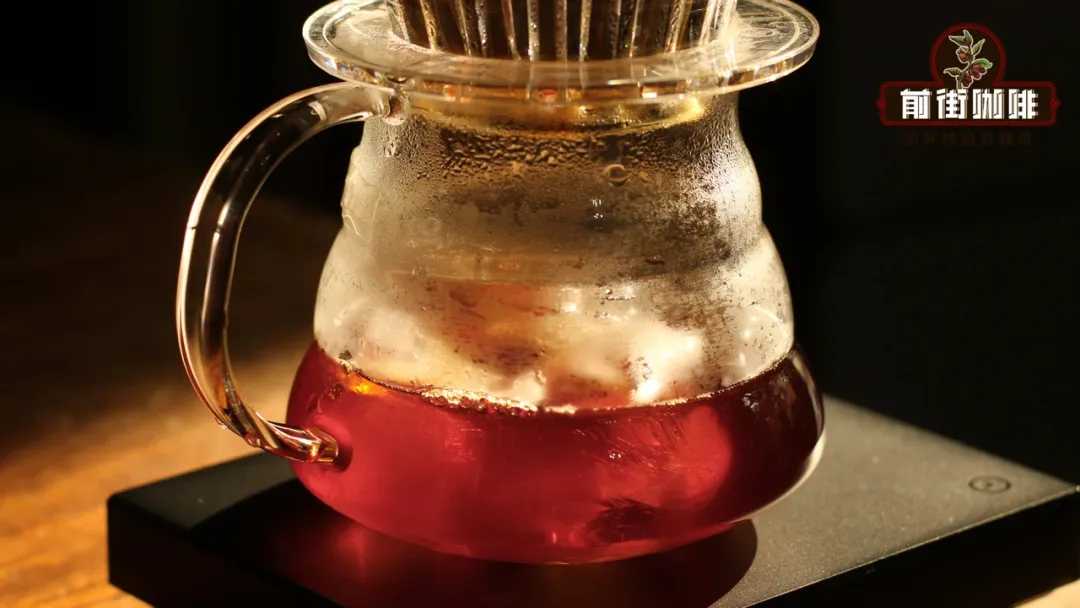
Still taking Front Street as an example, Front Street Coffee (FrontStreet Coffee)'s cold brew brewing parameters are: 50g grounds, a 1:12 coffee-to-water ratio, and an immersion time of 8–12 hours.
The method is as follows: first pour the coffee grounds and room-temperature water into a sealed bottle, stir well, then seal and refrigerate. The next day, or after waiting 8–12 hours, take it out and filter. The filtered liquid is cold brew coffee ready to drink directly~
Compared with the previous two, cold brew coffee's layering is not as rich, but its mouthfeel is thicker and fuller. Because filtering cannot completely remove fine particles and oils, cold brew coffee gains a richer, fuller texture from their presence. At the same time, since the extraction is relatively even, the sweetness when drinking is also more prominent than the previous two.
The above content is compiled by CoffeeHunters, a coffee news website.


