







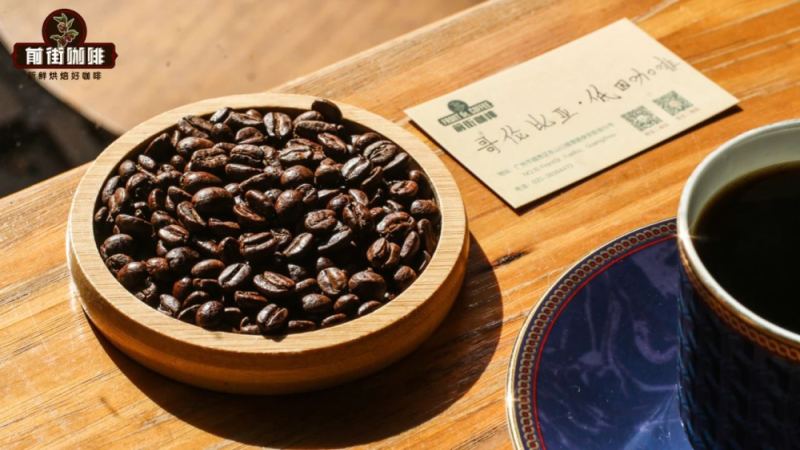
People who are sensitive to caffeine often face the dilemma of being unable to enjoy coffee freely. Front Street Coffee's recently launched Colombian decaf beans offer a new option for such enthusiasts. This article focuses on this Huila region Typica processed with the Swiss Water Method, systematically outlining the definition of decaf coffee and common decaffeination processes, with emphasis on analyzing the two-stage Swiss Water Process, caffeine removal rate, and flavor retention advantages. It also combines Front Street's roasting curve and brewing plan to explain why decaf beans are best suited to medium-light roasting and coarser grinding, and provides recommendations on water temperature, coffee-to-water ratio, and staged pouring, helping readers fully grasp the key details from principle to practice.
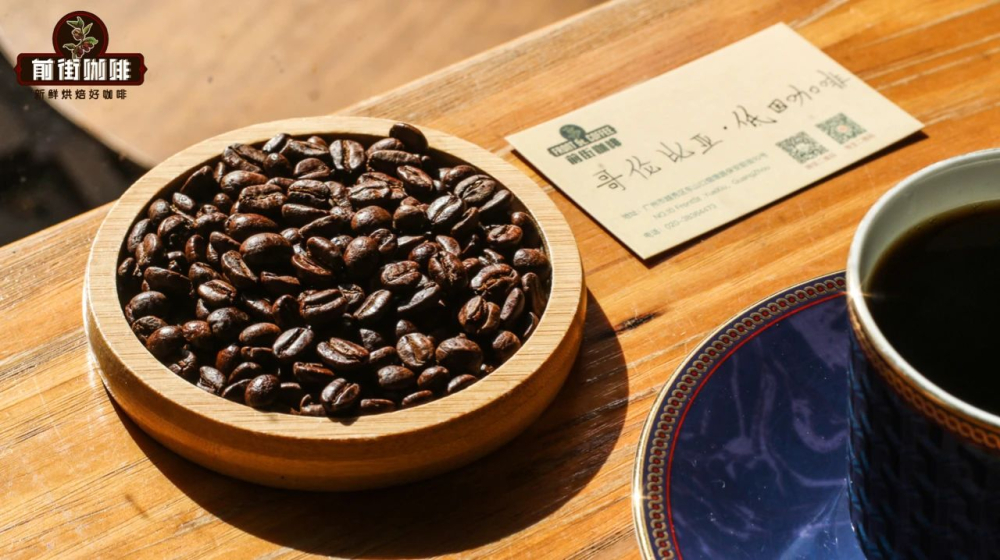
For more specialty coffee knowledge, please follow the WeChat official account: Front Street Coffee (FrontStreet Coffee) Many coffee enthusiasts, due to caffeine sensitivity, often find themselves caught in the contradiction of wanting to drink coffee but not daring to drink too much. A Colombian decaf coffee recently launched by Front Street happens to provide an ideal option for those who wish to enjoy coffee flavors without consuming too much caffeine. What exactly is decaf coffee? The caffeine content of coffee beans is usually measured by weight percentage. The caffeine content of Arabica ranges from 0.9% to 1.4% (average about 1.2%), while Robusta reaches 1.8% to 4% (average about 2.2%). Decaf coffee can be divided into two categories: one is naturally low-caffeine varieties with inherently lower caffeine, and the other is coffee that has undergone artificial decaffeination.
Among naturally low-caffeine coffees, the best-known representative is Laurina (Coffea Laurina), whose caffeine content is about half that of ordinary Arabica (0.6%). Unlike artificially decaffeinated products, Laurina's low caffeine comes from genetic degeneration, so its flavor performance is actually better. As for artificially decaffeinated coffee, the standard set by the European Union is that after processing, caffeine does not exceed 0.1% of the green bean weight, while the U.S. Food and Drug Administration (FDA) requires removal to below 3% of the original caffeine content.
What are the common decaffeination methods currently available? There are quite a few processes for removing caffeine, which can broadly be classified into direct or indirect solvent methods, supercritical carbon dioxide methods, the Swiss Water Process, and the mountain spring water process. [Direct Solvent Method] The direct solvent method uses chemical solutions such as dichloromethane or ethyl acetate to dissolve out caffeine. In operation, steam is first used to open the pores of green coffee beans, then dichloromethane solvent is introduced directly into the beans. After the solvent binds with caffeine, the caffeine-rich solvent is rinsed away, and the coffee beans are then steamed again to remove residual solvent. Because dichloromethane is suspected of increasing cancer risk with long-term exposure, using it as a solvent inevitably raises concerns. However, the FDA sets the upper limit for dichloromethane residue in decaf coffee at 0.001%, and actual levels are often even lower, so the negative impact is actually very limited. If ethyl acetate is used as the solvent, the process is basically the same; ethyl acetate is usually derived from sucrose, so the direct solvent method is sometimes also called the sugarcane decaffeination method. Colombian decaffeination generally uses this method, but ethyl acetate is highly flammable, making the operation relatively dangerous.
[Supercritical Carbon Dioxide Method] This method first allows coffee beans to absorb water and swell, making the caffeine molecules within the beans become loose. Then liquefied carbon dioxide is added, and an environment of more than 100 atmospheres is created in the water. Carbon dioxide is highly selective and, while dissolving caffeine, does not destroy the carbohydrates and proteins in the coffee beans, thereby preserving the beans' flavor. The liquid carbon dioxide that carries away caffeine can also be recycled after caffeine removal. Coffee decaffeinated with carbon dioxide places less burden on the human body. Studies show that its caffeine extraction amount is greater than that of the direct solvent method, but its cost is also considerably higher than the direct solvent method.
[Swiss Water Process] The Swiss Water Process was developed by the Swiss company Coffex in the late 1970s, and SWISS WATER is now patented. This process first soaks green coffee beans in hot water, and the soaking stage itself can already remove part of the caffeine. Then the soaked solution is filtered through activated carbon, and finally the solution is returned to the coffee beans. This series of steps can remove caffeine more efficiently. It requires no chemical solvents, and the soaked solution can also be reused in different batches, but coffee still loses some flavor during the filtration process. The caffeine removal rate of this method can reach 99.9%, the highest among various decaffeination methods.
[Mountain Spring Water Process] The mountain spring water process is quite similar to the Swiss Water Process, except that it uses another special water source—water taken from glaciers—to extract caffeine. Descamex states that it uses some kind of special filtration device to remove caffeine. After processing, a caffeine-free water-based solution is obtained. This solution also contains dissolved coffee solids and can be reused in the decaffeination process. What Front Street Coffee (FrontStreet Coffee) offers is precisely Colombian Swiss Water decaffeinated coffee. Front Street believes that the Swiss Water Process does not introduce unnecessary additives and can also preserve the coffee's flavor substances while decaffeinating to the greatest extent.
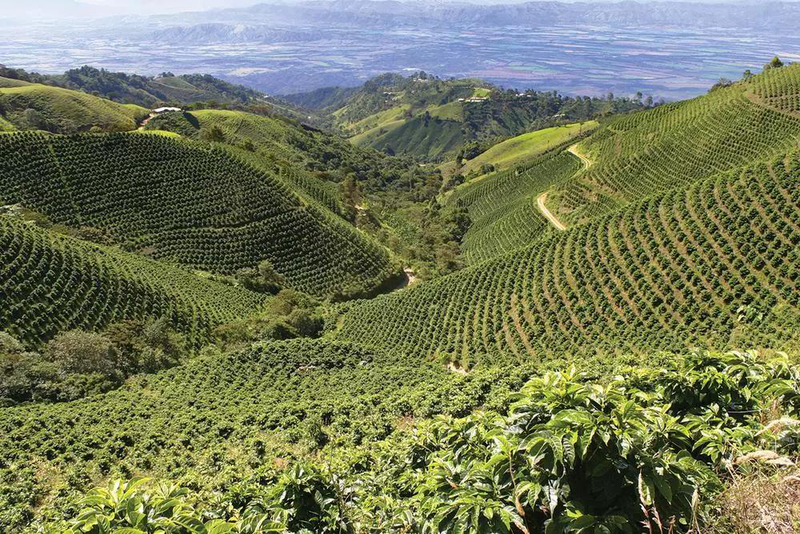
Front Street Coffee (FrontStreet Coffee) Colombia Swiss Water Process Decaf Coffee Region: Colombia, Huila Altitude: 1,750 meters Variety: Typica Processing Method: Swiss Water Process Flavor: Berries, citrus, cocoa, nuts Coffee Decaffeination Technology The Swiss Water decaffeination technology uses a commercially developed and highly efficient processing method, divided into two major steps. The first step is to pour green coffee beans into hot water. At this point, the hot water carries away all flavor factors in the green beans, including caffeine. This initial batch of green beans is then discarded. Next, the hot water carrying all the flavor factors is passed through an activated carbon filter to remove caffeine. What remains is hot water fully loaded with pure flavor factors, known in the Swiss Water Process as "Flavor-charged Water." This water already contains saturated green coffee flavor factors and lacks only caffeine, making it the most important medium in the subsequent decaffeination procedure.
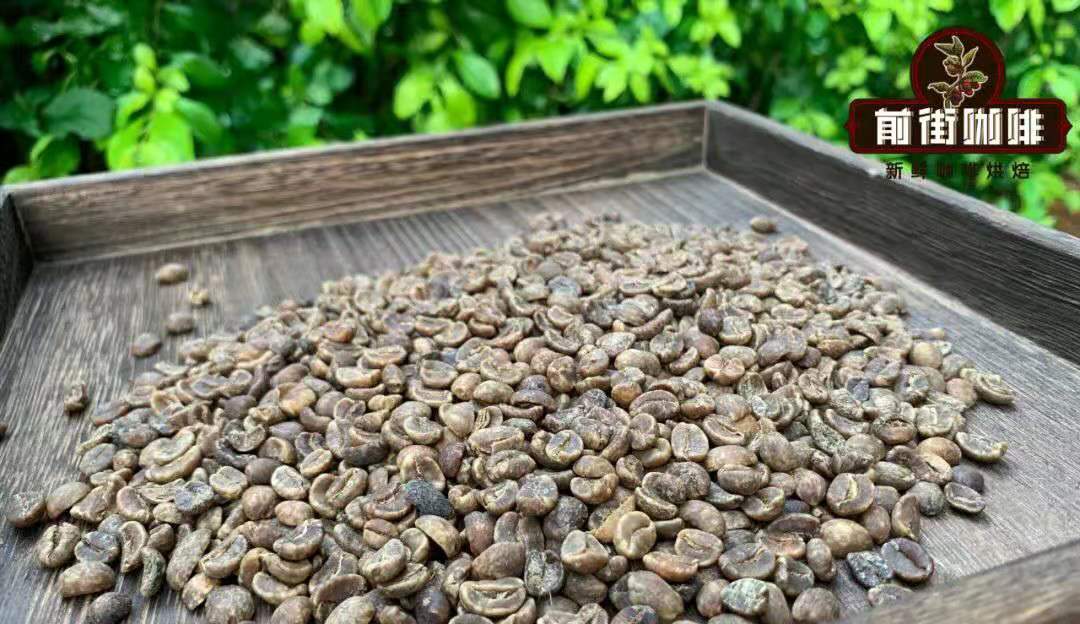
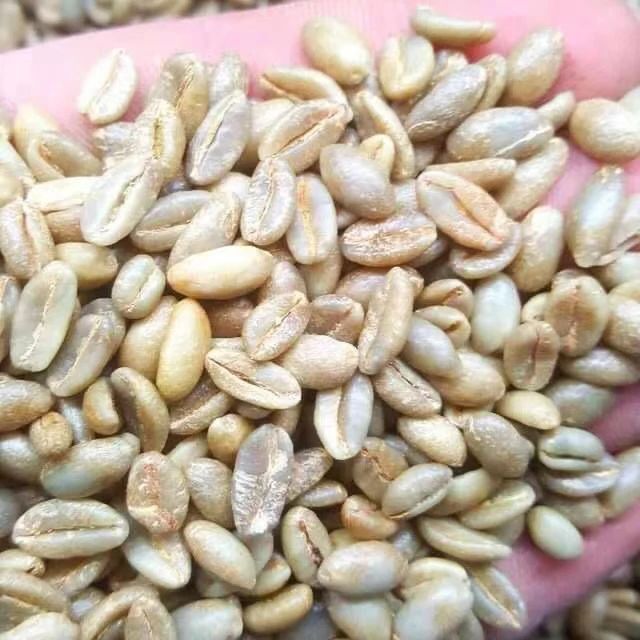
When a new batch of green coffee beans is soaked in caffeine-free flavor-charged water that is full of flavor factors, the beans release caffeine but do not release flavor factors. In this way, the original flavor of the green coffee beans is not overly diminished. Obviously, the flavor factors in the flavor-charged water are already close to saturation and cannot dissolve out more flavor factors, but there is still ample room to dissolve out caffeine. This series of steps can effectively remove 99.9% of caffeine. In addition to requiring no chemical solvents, the soaked solution can also be reused in different batches. After decaffeination, green coffee beans take on a dark green color. Front Street Coffee (FrontStreet Coffee) Roasting Analysis Front Street uses a medium roast for this bean and shares a roasting curve for a Huila washed bean as a comparative reference, as follows: It can be seen that the development time of the Swiss Water processed bean is 2'30, at a temperature of 196°C; while the development time of the Huila washed bean is 3'40, at a temperature of 202°C. The roast level of the Swiss Water processed bean is slightly lighter than that of the washed bean. Comparing these two beans again, the Swiss Water decaf bean has a dark brown body and shines with oil, which is especially obvious compared with the washed Huila on the right.
The reason may be that during decaffeination, coffee beans need to be soaked in hot water to release caffeine and then dried. This process may have changed the coffee's fiber structure, causing oils to be released more easily when roasted to a medium-dark level, making the bean body shiny with oil. Front Street Coffee (FrontStreet Coffee) Brewing Analysis Because this bean's fiber structure is somewhat different, the brewing parameters need to be adjusted accordingly, as shown in the table below: Coffee dose: 15g Ratio: 1:15 Water temperature: 88°C Grind size: Coarse grind (62% passing a No. 20 standard sieve) Dripper: Kono dripper
1. Add the coffee grounds and pour in twice the amount of water (30ml) for a 30-second bloom. 2. Then proceed to the second pour, gently circling to pour in 150ml of hot water, pushing the coffee bed upward so that a golden foam surface forms on top. 3. Wait for the water level of the coffee bed to drop slightly, then pour in the final 45ml. After all the coffee liquid has flowed into the server, remove the dripper and end extraction. The extraction time is 2 minutes 10 seconds.
The above content is compiled by CoffeeHunters, a coffee news website.


