







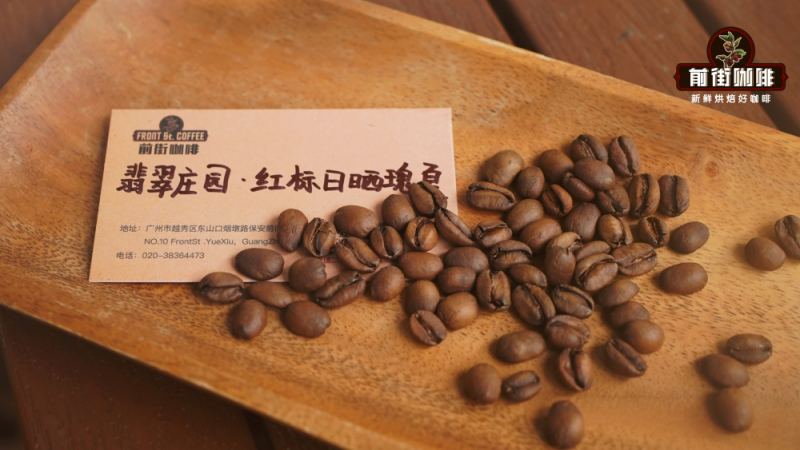
Why Is Panama Geisha Coffee Graded and Priced So High?
Panama Geisha coffee sits at the top tier of specialty coffee, not because of a single official grade but because of how estates like Hacienda La Esmeralda classify and manage it. Since 2004, when that farm brought the variety to global attention, Geisha has been linked to high auction prices, driven by its floral, citrus, and peach-like cup profile and limited supply.
The price stays high for structural reasons. Panama produces roughly 10,000 tons of coffee a year, while Hacienda La Esmeralda releases only about 150 bags of green beans annually, near 9,000 kilograms. Geisha makes up a small share of that, so scarce yield, difficult cultivation, and estate grading systems keep it among the most expensive coffee in the world.
Geisha coffee can be said to be one of the most high-profile varieties in today's specialty coffee scene. Since being brought to the forefront by Hacienda La Esmeralda in 2004, it has almost become synonymous with "expensive" and "top-tier flavor." Many people wonder: what grade does Geisha coffee really belong to? Why has its price remained so high? This article will sort out the logic behind Geisha's high price and its flavor charm from the angles of variety characteristics, scarce yield, cultivation difficulty, estate grading systems, and brewing suggestions. If you are also interested in this coffee full of "fruit-tea-like" character, read on.
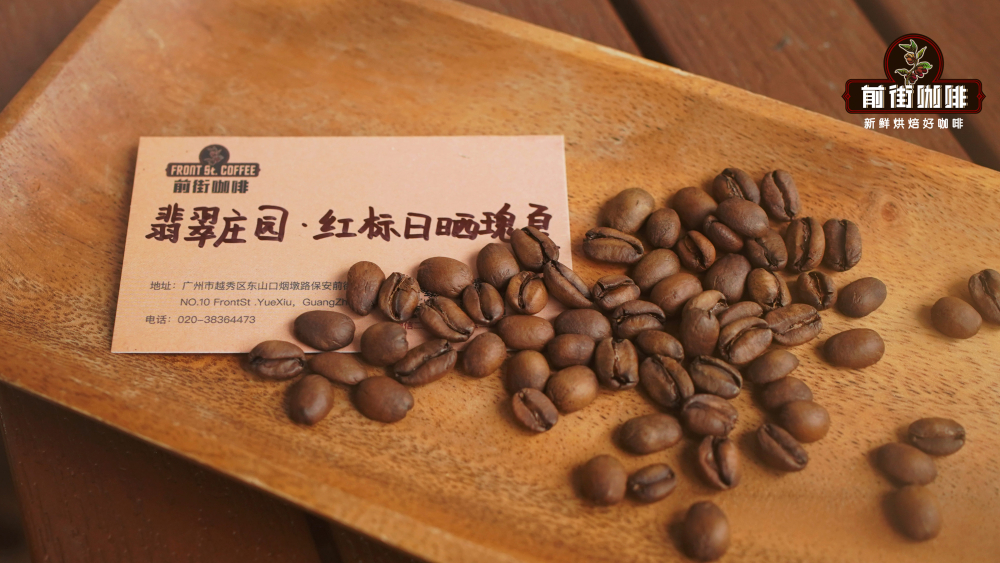
If you had to pick the most talked-about variety in today's specialty coffee scene, Geisha would almost without question rank first. In 2004, Hacienda La Esmeralda pushed Geisha before the world, and since then it has continued to carry out meticulous management of this outstanding variety and established an independent grading system, allowing Geisha coffee beans to gradually move toward the high end.
What exactly makes Geisha coffee special? Why does it sell for so much?
Even if you do not often drink pour-over coffee, you have most likely heard the name Geisha, and it is usually tied to "expensive," often appearing near the top of lists of the world's most expensive coffees. So where exactly does Geisha's high price come from?
The reason Geisha has swept the world is that in the cup it can show intense yet elegant floral aromas, citrus and peach-like fragrances, and the full acidity brought by complex fruits, with a creamy smooth mouthfeel and a sweet oolong tea-like finish. This level of refinement often makes people feel they are not drinking coffee but tasting a cup of aromatic fruit tea. Front Street Coffee has mentioned in many articles that coffee is essentially an agricultural crop, and its flavor is always closely related to factors such as variety, climate, altitude, soil, and management methods. It is the truest expression of the variety and its local terroir, while post-processing and roasting should try to preserve, restore, and present these true flavors as much as possible. The fact that Geisha can perform like this is precisely the result of the above conditions working together.
As the saying goes, things are precious when they are rare, and Geisha's yield is extremely low. Panama's total annual coffee output is about 10,000 tons, while Hacienda La Esmeralda produces only 150 bags of green beans each year, about 9,000 kilograms. If Geisha accounts for only 3% of that, then it is only about 270 kilograms. Add to that the media's constant promotion of Geisha's flavor, and enthusiasts' enthusiasm for it keeps growing, so its price naturally remains high for a long time.
Compared with other Arabica varieties, Geisha not only bears less fruit, but the plant itself is also especially delicate and quite picky about its growing environment. It needs high altitude, fertile soil, and also clouds or shade trees, and cannot be exposed to direct sunlight. The leaf system of the Geisha coffee tree is very thin, its photosynthetic efficiency is relatively low, and its root system is also fragile, absorbing water and nutrients very slowly, so its yield is very limited. In addition, because it grows at high altitudes, the fruit matures later. A single Geisha coffee tree produces only half the fruit of a Caturra variety, which is also one of the reasons for its high price.
The owner of Hacienda La Esmeralda once said that the estate needs a large number of shade trees to block sunlight for the delicate Geisha, and in the early planting stage traditional pruning methods must also be used, otherwise the plants easily die. The higher the altitude at which Geisha is planted, the longer the fruit takes to mature, and only then does its flavor become more complex and unique. Geisha cherries must be harvested at the most suitable ripeness and immediately undergo post-processing. This is a great test of the estate owner's professional judgment and the workers' competence; once the timing is missed, quality declines and waste may even result.
Many customers chatting at Front Street Coffee about Geisha always mention the two "labels" on the board: one is the Red Label Geisha from Hacienda La Esmeralda, and the other is the Gold Label Geisha from Geisha Village. Because the green bean cost is higher, Front Street Coffee deliberately lists them separately and marks the corresponding pour-over prices, which are "75/cup" and "60/cup." This has also attracted a lot of attention, especially from those who have long heard of Geisha but have not yet had the chance to taste it carefully.
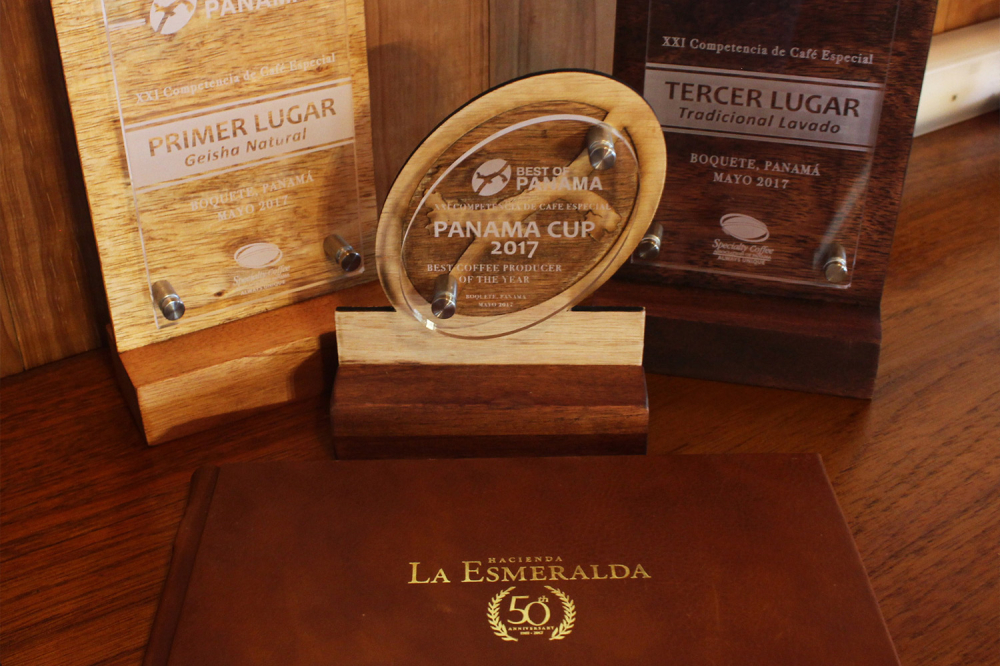
If it is your first time experiencing Geisha, which one is more suitable? Or which "label" offers better value? It is best to start with the colors of these "labels."
You will find that these labeled Geishas that baristas talk about are actually named this way to highlight grade. Whether it is the Red Label and Gold Label mentioned today, or the Green Label and Blue Label that follow in order, even if we cannot tell from the prefixes alone which is higher or lower, we can certainly understand this: this or that labeled Geisha from such-and-such estate should be a higher grade than ordinary Geisha, and of course may also be more expensive.
In fact, this way of speaking with "labels" exists only in the Chinese-language context. In other words, if you switch back to their English names, you may not recognize which is which, let alone tell which is more premium.
The Red Label Geisha from Hacienda La Esmeralda is originally called "Esmeralda Special," translated into Chinese as "Emerald Special Selection," and is the highest-quality Geisha coffee bean sold by the estate. It not only requires a cupping score of 91 or above, but each lot also comes with detailed "birth information." The "red" in Red Label is taken from the background color of this product's trademark, and the Green Label and Blue Label from Hacienda La Esmeralda follow the same logic, with the aim of making it easier for domestic consumers to remember and distinguish them.
For ordinary consumers, specialty coffee is mainly about a sense of place, so besides variety differentiation, where it is grown is also crucial. Hacienda La Esmeralda is located in the Boquete production area of Chiriquí Province, Panama, which has high altitude, volcanic soil, and a unique microclimate at the same time, allowing the T2722 variety to fully display floral and honeyed notes while still retaining creamy and nutty aromas. Good coffee cannot be separated from an excellent growing environment, and Front Street Coffee believes the Boquete production area deserves great credit for Panama's ability to produce high-quality Geisha year after year.
Front Street Coffee's brewing suggestions for Panama Geisha coffee
Preparation before brewing is very important. Since these are high-quality coffee beans, if you want to taste the complete aroma, Front Street Coffee suggests choosing freshly roasted coffee beans. All coffee has a period when its flavor is at its best, generally 7-30 days after roasting, and only brewing during this stage does justice to these good beans. The coffee beans shipped by Front Street Coffee are all roasted within 5 days, which ensures that the coffee beans everyone receives after ordering are the freshest and just in their best tasting period.
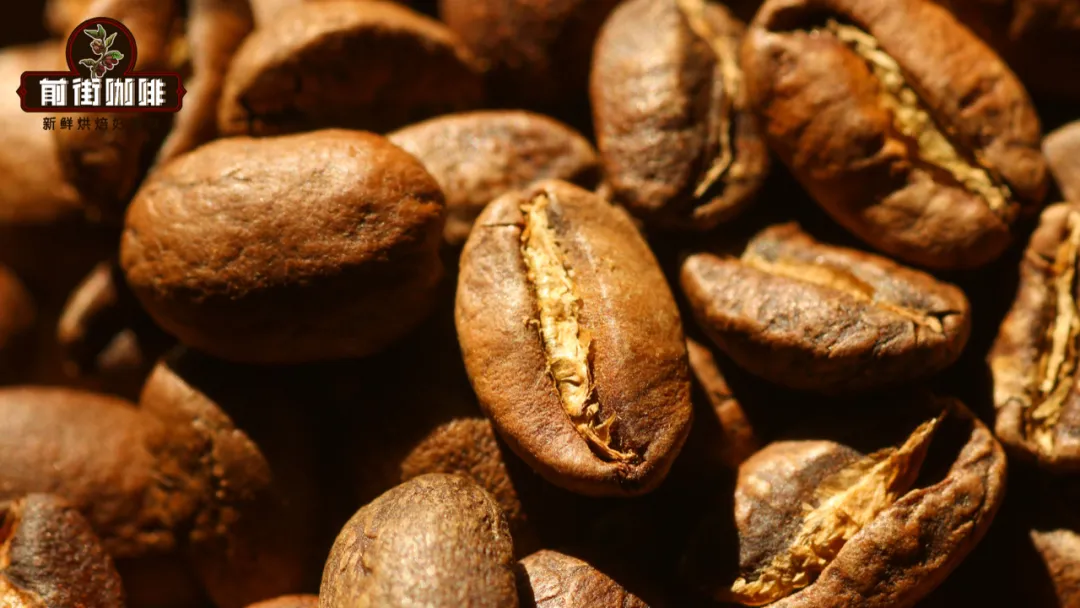
Lightly roasted coffee beans are harder in texture and require higher water temperature and finer grinding to bring out the aroma of Geisha coffee.
Dripper: V60 Water temperature: 91-92℃ Dose: 15g Coffee-to-water ratio: 1:15 Grind size: fine granulated sugar size (80% passing a No. 20 sieve)
Three-stage extraction: In the first stage, use 30g of water to bloom for 30 seconds, pouring evenly in circles to form a dome; in the second stage, pour 95g of hot water, and when the coffee bed drops halfway, begin pouring the third stage of 100g until all the coffee has finished dripping. Be careful to start pouring from the center point, using a gentle small stream in circles throughout, to avoid uneven extraction.
The pour-over Emerald Red Label Geisha coffee tastes elegant, with the acidity of roses, citrus, strawberries, and tropical fruits, and a lingering, pleasant black tea note. The flavor layers change with temperature, and the overall mouthfeel is smooth.
The above content is compiled by CoffeeHunters, a coffee news website.


