








How Does Australian White Coffee Differ From a Latte?
Australian white coffee and flat white name the same drink, also sold as Aussie White. Compared with a latte, it uses a smaller cup and less milk, with thinner, denser milk foam, so the coffee flavor stays prominent against a rounded milky aroma. It relies on a set ratio of coffee to milk rather than a heavy pour.
The flat white name appears in print from the 1960s, though an early British film reference described weak coffee and has no link to the modern drink. Australia and New Zealand both claim its origin, and mid-1980s Australian cafe coverage helped spread it. Preparation centers on a double espresso, careful milk steaming, and latte art.
When you walk into a café and order a milk coffee, most people first think of a latte or cappuccino, but at Luckin Coffee and Starbucks you will also see names like Flat White and Aussie White. They all actually point to the same drink: Australian-style white coffee, or Flat White. This article sorts out the controversy over the origins of the flat white, its differences from a latte and a cappuccino in cup size, milk volume, and milk foam thickness, and gives Front Street Coffee's flat white preparation method, including the extraction parameters for a double espresso, key points for steaming milk, and latte art techniques, while also introducing the flavor sources and suitable scenarios for Front Street's Sunflower Warm Sun blend coffee beans.

When you go to a café and want a milk coffee, the first things that pop into your head are usually a latte and a cappuccino. But once you walk into Luckin Coffee or Starbucks, you will find that besides the latte and cappuccino, there are also options like Flat White and Aussie White. Australian-style white coffee originated in Australia and also flourished there, and later Starbucks brought it into the Chinese market under the name "Fu Rui Bai," after which the Flat White quickly became popular in China.
However, many people still cannot figure out exactly how Aussie White and Fu Rui Bai differ, let alone how their preparation differs from an ordinary latte.
It should first be explained that the two new names mentioned above both refer to the Australian-style white coffee that everyone has heard of, sometimes written as flat white, or simply Aussie White. It is regarded as a classic Australian coffee, relying on the golden ratio of coffee to milk to achieve a finished drink with abundant milky aroma and a more prominent coffee flavor.
The Flat White was first mentioned in the 1960s. The British film Danger by My Side featured flat white coffee, but that usage had no connection to today's flat white; it was merely used to describe coffee that was weak and unpleasant.
The place of origin that truly made the flat white widely known, however, remains disputed, with one side saying Australia and the other saying New Zealand, each with its own account.
In the mid-1980s, an Australian café magazine introduced a certain café whose menu listed a drink called "Flat White." Another newspaper article, in order to satirize the latte that was popular at the time, translated latte as Flat White. On the New Zealand side, a 1985 menu at Parliament House in Canberra featured "flat white," because seasonal factors prevented the milk from forming foam.
In the final analysis, Australian-style white coffee originated in the Australian region. But the Australian flat white and the New Zealand flat white are not made the same way: the Australian flat white customarily uses a single espresso, while the New Zealand flat white uses a double espresso. Next, Front Street will first explain how the flat white differs from the latte and cappuccino you usually drink.
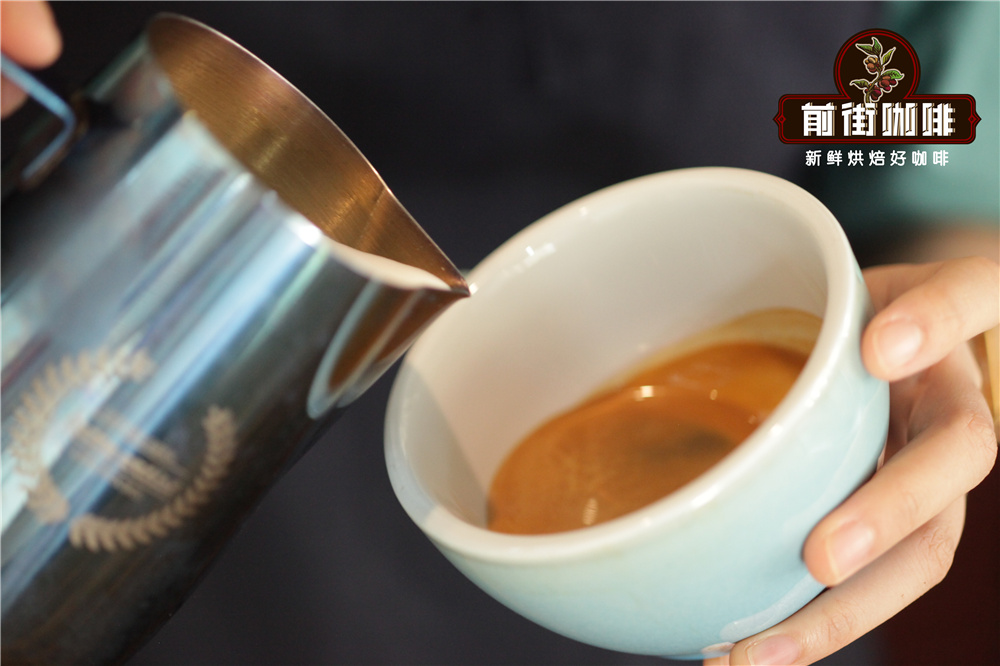
What is espresso?
Unlike classic espresso, ristretto, as its name suggests, has a more intense and concentrated coffee flavor. When extracting espresso, the first drops of coffee liquid are dark in color and viscous in texture, and as extraction continues the liquid becomes lighter in color and thinner in texture. Ristretto takes the front and middle portions of the espresso, so the flavor is stronger and the mouthfeel is thicker.
The differences among flat white, latte, and cappuccino
When Front Street Coffee serves flat white, latte, and cappuccino, it uses cups of different capacities to distinguish them. For example, the latte uses a 300 ml wide-mouthed ceramic cup, the cappuccino uses a 180 ml narrow-mouthed white ceramic cup, and the flat white uses a 210 ml glass.
Among the three, the latte uses the highest proportion of milk, while the flat white uses less milk, so in terms of coffee flavor, the latte has a stronger milky taste, while the flat white highlights the rich coffee flavor more. And the easiest way to distinguish the three is by the thickness of the milk foam.
Front Street found an image online that fully presents the differences among them. The cappuccino has the thickest milk foam, the latte is in the middle, and the flat white has the thinnest milk foam of the three. Therefore, the cappuccino has the smoothest and fullest mouthfeel.
Front Street Coffee's flat white preparation method
Next, let Front Street Coffee explain how to make a flat white.
Front Street Coffee uses a double espresso when making a flat white. Front Street Coffee's standard for serving espresso is to extract 40 grams of espresso liquid from 20 grams of coffee powder, with an extraction time of about 28 seconds.
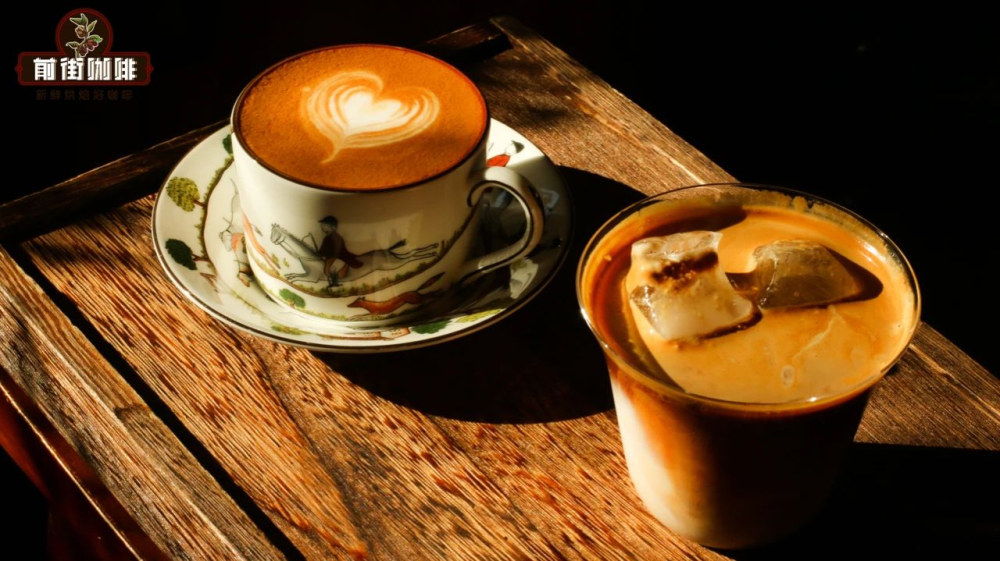
Because the defining feature of a flat white is its rich coffee flavor, it uses less milk than a latte. When steaming the milk, be careful to inject less air while making it as silky as possible. When the milk combines with the espresso liquid, because the steamed milk foam is very thin, it is difficult to form patterns in latte art, so you can pour a small dot at the end with a fixed-point pour in the center, or pour a heart shape.
The flat white made by Front Street has a rich whiskey aroma, along with vanilla, nut, and chocolate flavors. This is because Front Street's stores use the Sunflower Warm Sun blend coffee beans. This blend is made from 70% Honduras Sherry coffee beans and 30% Ethiopian natural Red Cherry coffee beans.
Front Street Coffee — Sunflower Warm Sun blend coffee beans
Region: Honduras & Ethiopia
Variety: Caturra, Catuai, Pacas, local heirloom varieties
Processing method: washed & natural
Among them, the 70% Honduras Sherry is fermented in sherry whiskey barrels. After refined washing, the coffee beans are placed into sherry whiskey barrels for low-temperature fermentation for about 30 days. As time passes, the whiskey aroma in the barrels penetrates into the green coffee beans, giving the beans a very rich whiskey aroma.
People who know something about whiskey will find that compared with whiskey aged in bourbon barrels or wine barrels, whiskey aged in sherry barrels is sweeter and more fragrant in flavor. It is precisely because of this sweetness and fragrance that many connoisseurs keep chasing sherry whiskey. Honduras Sherry coffee beans, boosted by the sherry whiskey barrel element, also have a very sweet and fragrant coffee flavor.
In addition, this Sunflower Warm Sun blend contains 30% Ethiopian natural Red Cherry. As is well known, Ethiopian coffee has a bright, rising fruity acidity, while coffee beans processed by the natural method are richer and fuller in flavor and mouthfeel.
When making milk coffee, the milk is ultimately heated to about 65°C. At this temperature, the lactose in the milk breaks down, taking the milk's sweetness to an even higher level. Combined with Front Street's Sunflower Warm Sun blend, the berry-like acidity of the Ethiopian natural Red Cherry and the whiskey aroma and chocolate notes of the Honduras Sherry make the whole cup of milk coffee sweeter and more delicious, feeling even warmer in winter.
For more coffee bean information, please follow Coffee Workshop (WeChat public account cafe_style) For professional coffee knowledge exchange, please add WeChat ID kaixinguoguo0925
The above content is compiled by CoffeeHunters, a coffee news website.


