







What Makes Arabica Coffee Different from Robusta?
Arabica coffee carries roughly 0.9 to 1.2 percent caffeine, about twice the sugar content of Robusta, and 60 percent more fat, which together produce a smooth body, prominent sweetness, and layered fruity acidity. That is why it dominates specialty menus. The bitterness in Robusta instead comes largely from chlorogenic acid, which runs higher in that species along with caffeine and amino acids.
Inside the Arabica species, varieties differ sharply in flavor. Typica, the oldest Ethiopian native type, tastes elegant and delicate but yields little and resists disease poorly. Bourbon, a Yemen mutation of Typica, has rounder beans and wider leaves. Beginners can compare single-variety lots such as Typica and Bourbon side by side to learn how much an arabica variety shapes the cup.
Arabica coffee has become the top choice for most coffee lovers thanks to its mild flavor, rich sweetness, and layered acidity. But within the Arabica species, there are many varieties with significantly different flavors, and beginners often don't know where to start. This article begins with the essential differences between Robusta and Arabica, then systematically sorts out the origins, characteristics, and flavor profiles of major varieties such as Typica, Bourbon, Caturra, Catuai, the Kenyan SL series, Geisha, and Ethiopian Heirloom, and for each variety includes a "Front Street" coffee bean purchase recommendation suitable for beginners, helping you avoid pitfalls when buying and quickly find the specialty Arabica coffee that suits your taste.
The bitterness in coffee mainly comes from chlorogenic acid. Robusta beans are higher in caffeine, amino acids, and chlorogenic acid, which makes them naturally lacking in the light, uplifting aroma of Arabica and instead gives them a heavier, deeper bitterness. By contrast, Arabica contains only about 0.9% to 1.2% caffeine, while its fat content is 60% higher than Robusta's. In addition, Arabica has twice the sugar content of Robusta, which is why it feels smooth on the palate, has prominent sweetness, and also carries layered fruity acidity, naturally making it the preferred choice for most people when drinking coffee.
Within the Arabica species, quite a few distinctive varieties have actually branched off. The following "checklist for avoiding pitfalls when buying specialty Arabica coffee" is meant to help you take fewer detours when choosing:
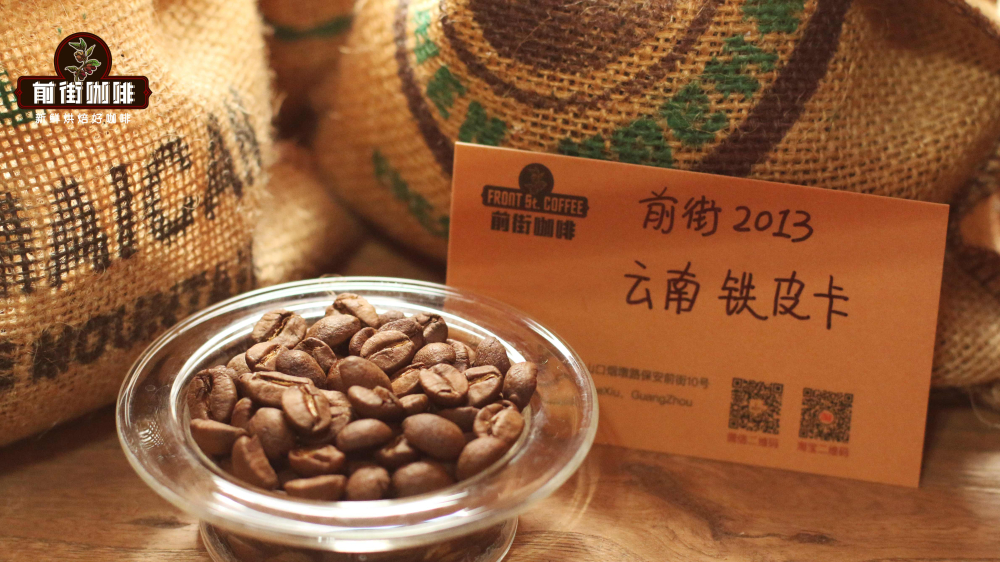
1. Typica : This is Ethiopia's oldest native variety, and it can be said that all Arabica originates from Typica. Its top leaves are bronze-colored, its bean shape is somewhat oval or slender and pointed, and its flavor is elegant and delicate, but the plant itself is relatively weak, has poor disease resistance, and also produces lower yields.
Recommended purchases: Front Street 2013 Yunnan Typica, Front Street PGN Bird of Paradise, Front Street Jamaica Blue Mountain
2. Bourbon : After Typica was transplanted to Yemen in earlier years, it mutated, and the bean shape changed from slender and pointed to round and smooth. Bourbon's leaves are wider than Typica's, with a rough texture and wavy leaf edges, and the young leaves are mostly green. The fruit is round, and when ripe it can show a variety of colors such as red, orange, or yellow, with a pure flavor and a clean aftertaste.
Recommended purchases: Front Street Brazil Cerrado Red Bourbon, Front Street Brazil Queen's Farm Yellow Bourbon, Front Street Rwanda Red Bourbon
2. Caturra: It is a natural mutation of the Arabica variety Bourbon, discovered in Brazil in 1937. Its tree is shorter than Bourbon, and although it inherits Bourbon's lineage and therefore has relatively weak disease resistance, it performs well in yield and has a sweet flavor.
Recommended purchases: Front Street Colombia Huila, Front Street Panama Diamond Mountain
3. Catuai : Catuai is an artificial hybrid of Caturra and Mundo Novo, and Mundo Novo itself is the product of a natural cross between Bourbon and Sumatra Typica. Therefore Catuai also carries Typica genes, which is reflected in its appearance. Its coffee beans are oval and flat, with the tail end of the bean relatively slender.
Recommended purchase: Front Street Panama Elida Estate Catuai
4. Kenya "SL28" and "SL34 : SL is the abbreviation of Scott Labs. In the 1930s, the lab was commissioned by the Kenyan government to conduct coffee breeding and classification research, with the goal of finding varieties that could adapt to Kenya's terroir, be suitable for large-scale cultivation, and have commercial value. SL-28 and SL-34 were two important results of this research, and they give Kenyan coffee its signature black plum acidity, citrus notes, and a wonderful wine-like taste, mixed with a sugarcane-like fresh sweetness, with a rich yet elegant aroma, layered, complex, and deep.
Recommended purchase: Front Street Kenya Little Tomato
5. Geisha: Geisha's upper branches extend skyward at a 45 to 50 degree angle. The plant is tall, with relatively wide spacing between branches, and both the trunk and branches are relatively thin, while the leaves are smooth and slender. Its most intuitive difference from Typica is tree shape: Geisha is umbrella-shaped or flat-topped, while Typica is conical. Ripe Geisha coffee beans are slender, pointed at both ends and full in the middle, somewhat resembling a sausage roll in appearance. Its flavor is even more distinctive, with citrus-like fruitiness and sweetness, as well as jasmine-like aromatics.
Recommended purchases: Front Street Panama Butterfly, Front Street Panama Boquete Geisha, Front Street Geisha Blend Strawberry Candy
6. Ethiopian Heirloom : These beans usually vary in size and shape, because they may be a mix of multiple varieties that have not been separated individually. Ethiopia can be called a gene treasury of coffee beans, with an extremely large number of varieties, and combined with the limited production conditions of local farmers, classification is extremely difficult. For protection purposes, the local government also chooses not to disclose variety information, so they are collectively called "Heirloom."
Recommended purchases: Front Street Yirgacheffe, Front Street Guodingding, Front Street Huakui
The above content is compiled by CoffeeHunters, a coffee news website.


