







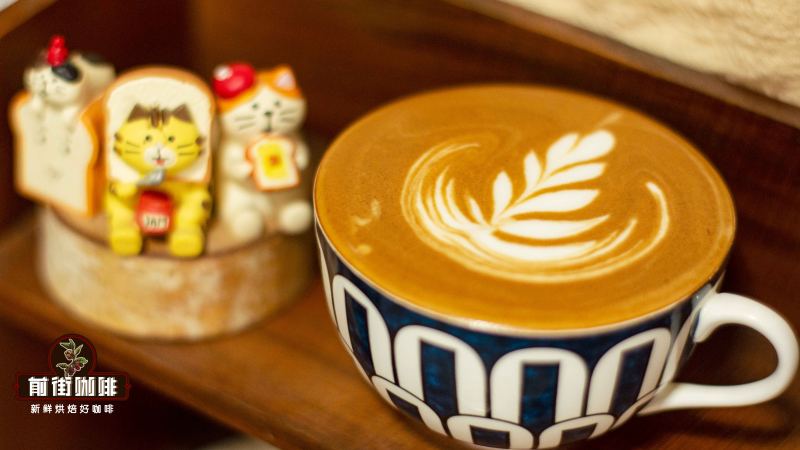
What Is Australian White Coffee and How Does It Differ From a Latte?
Australian white coffee is the drink sold in English as Flat White, the name Starbucks later popularized. It uses an espresso base topped with fine, glossy milk foam rather than the thicker foam of a cappuccino. The result puts espresso flavor forward: bitterness is more prominent, while the milk sits further in the background, giving a longer aftertaste than a latte.
An italian latte, by contrast, is milk-led, milder in bitterness and heavier on milk aroma. Origin is still debated: the Flat White is generally traced to Australia in the 1980s, with a later New Zealand claim, and the English term appeared in print as early as 1962 in a different sense. Milk foam thickness and milk temperature are what separate the two drinks.
The Flat White that Starbucks made popular is actually the Flat White on the English menu, commonly known as Australian white coffee. How exactly does it differ from a latte or cappuccino? This article starts with the name controversy, origin stories, espresso base selection, and the ratio of milk foam to coffee, clarifies the Australian and New Zealand schools of preparation, and compares the same drink behind chain brand names such as Fu Rui Bai, Chun Yi Bai, and Ao Rui Bai. At the same time, Front Street Coffee will share the parameters for making a Flat White with a classic Italian blend bean: powder-to-liquid ratio, extraction time, milk foam thickness, and milk temperature, to help you understand why Australian white coffee highlights Espresso flavor more.
Starbucks stores quickly brought the name "Fu Rui Bai" into public view. From the Chinese name alone, it is hard to tell what kind of coffee it is. After checking the English name, Front Street found that it is written as Flat White, which is the familiar Australian white coffee. When hearing Fu Rui Bai for the first time, it is easy to associate it with white coffee, or to think it is a milk coffee with less coffee and a whiter color. Starbucks calls this product Fu (fu) Rui (rui) Bai (bai). It is close to a latte in taste, but Fu Rui Bai has a more prominent bitterness, with the milk flavor relatively more in the background; it is slightly more bitter than a latte and has an aftertaste. A latte, by contrast, is mainly milky, with lighter bitterness. Simply put, the latte in memory is milky aroma plus slight bitterness, while Fu Rui Bai is bitterness with a hint of milk aroma.
Regarding its origin, controversy has always existed. The "so-and-so white" coffees that have become popular globally and in the Chinese market in recent years are essentially a variation of cappuccino—flat white, a latte coffee with fine milk foam that originated in Australia and appeared as early as the 1980s. The English term Flat White for Australian white coffee can be traced back as early as 1962, when the British film Danger by My Side mentioned it, but the Flat White in that film was not the same thing as today's Flat White. It is now generally believed that Australian white coffee originated in Australia, and later some also claimed it originated in New Zealand, though the latter claim appeared three years later than the former.
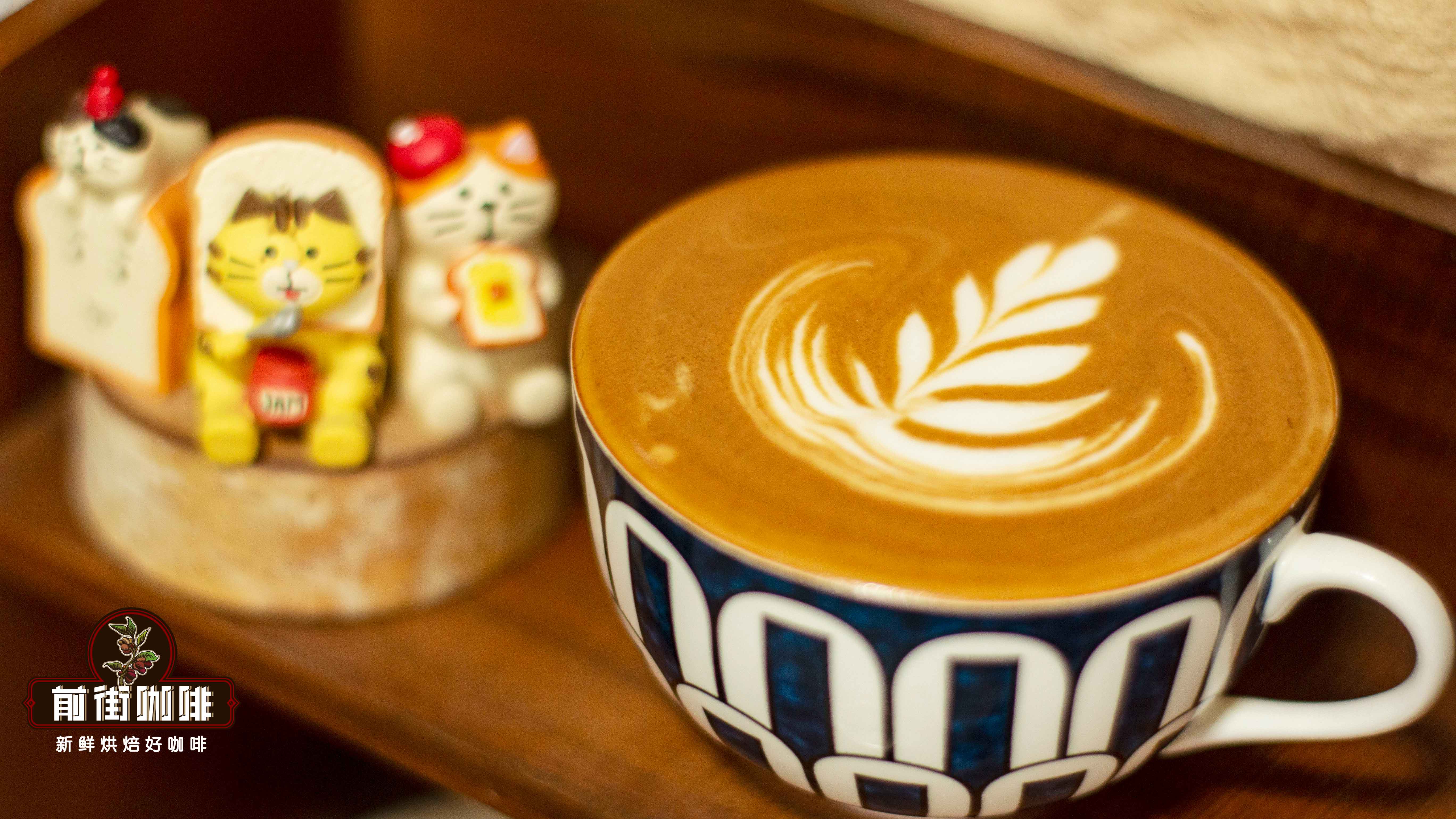
The earliest written record of Australian white coffee can be traced to Australia in the mid-1980s: in May 1983, in the Sydney cafe magazine, Miller's Treat cafe mentioned flat white coffee on its menu. In April 1984, an article in a local Sydney newspaper satirized the popularity of lattes, writing that caffe latte translated means flat white. In 1985, Alan Preston of Moors Espresso Bar in Sydney added this drink to the regular menu and said he brought the idea from his hometown of Queensland to Sydney; in the 1960s and 1970s, Queensland cafes often served "White Coffee·flat." In January 1985, the cafeteria in Parliament House in Canberra even posted a sign saying "flat white only," because seasonal issues made it impossible for milk foam to form.
However, as Front Street mentioned earlier, the origin of Australian white coffee, Flat White, is disputed. New Zealanders claim that Flat White was invented by them, a claim that comes from Derek Townsend and Darrell Ahlers of DKD cafe in Auckland, who said this coffee could replace the Italian latte. Others say that Australian white coffee, Flat White, originated in 1989 at Bar Bodega on Willis St in Wellington, New Zealand, when a barista named Fraser Mclnnes tried to make a cappuccino with low-fat milk that was difficult to froth; because the milk foam was insufficient, it could not be called a cappuccino (as is well known, among cappuccino, latte, and Australian white coffee, cappuccino has the thickest milk foam), so he named this cup of coffee Flat White.

In my view, where flat white originated and who created it is no longer so important. Its emergence was an inevitability in the ongoing evolution of coffee. It emphasizes Espresso flavor more while still retaining milk aroma, so it is very popular among coffee enthusiasts. What is Australian white coffee? Australian white coffee is made by integrating fine, tiny milk foam into a single espresso or a double Ristretto. To some extent, it is a bit like a traditional 5-ounce cup (150mL) cappuccino or latte, so the coffee proportion is higher, the milk foam is lighter and finer, the Espresso flavor is richer, and at the same time it also has milk aroma.
At this point, Front Street feels it is necessary to talk with friends about how the two countries make Australian white coffee. The espresso used in Australian white coffee can be espresso or ristretto. Australians like to use single espresso, while New Zealanders use double ristretto. What is ristretto? Ristretto means "restricted," so ristretto is actually an espresso with restricted flow rate, and the flow rate will be slower. Before studying ristretto, you need to first understand espresso. Espresso is a small 30-milliliter cup of coffee made by forcing high-pressure and very hot water through finely ground dry coffee powder for 25 to 30 seconds to produce a highly intense and concentrated beverage.
Technically speaking, the two beverages are almost identical: the same amount of coffee powder is placed in the portafilter, and the same water temperature and pressure are used to brew the coffee in the same amount of time. For example, if espresso uses 20g of powder and extracts 40g of espresso in about 25 seconds, then ristretto uses 20g of powder and extracts 20g of espresso in about 25 seconds. In Italian, ristretto means "restricted." Ristretto is the restricted "shorter" version of espresso: it uses less water, so the beverage is smaller. Depending on the rules of the cafe or barista, ristretto has a volume of 15 to 25 milliliters. Because ristretto is generally shorter than espresso, the final beverage is slightly sweet, has a richer flavor, and is less bitter than espresso.
How does FrontStreet Coffee make a cup of Australian white coffee? Below is today's FrontStreet Coffee Flat white recipe. The coffee beans used are FrontStreet Coffee's Front Street classic Italian blend coffee. This is a recipe composed of beans from three origins: Brazil, Indonesia, and Vietnam, using a deep roast, which can highlight the mellow aroma of the coffee to the greatest extent and also allow everyone to easily extract rich and dense crema. It is very suitable whether making an Americano diluted with water or a latte paired with milk, and can be purchased in the Front Street Taobao store or the Front Street Tmall flagship store. FrontStreet Coffee uses the Lelit Bianca V3 espresso machine when making espresso. The extraction parameters are as follows:
Coffee beans: Front Street classic blend coffee beans
Powder-to-liquid ratio: 1:2
Extraction pressure: 9bar
Extraction time: 26–32 seconds
Grind setting: Galileo 2.0
Dose: 12g (single espresso) 20g (double espresso)
Extracted espresso amount: 20ml (single) 40ml (double)
Recommended milk-to-coffee ratio for Australian white coffee: use whole-fat fresh milk (Front Street uses Vitasoy fresh milk); froth the milk to 50–60°C (if the temperature is too low, the lactose in the milk cannot be brought out; if the temperature is too high, the protein in the milk will be damaged, creating a gritty mouthfeel); milk foam thickness 5mm (1cm milk foam is used for making latte, and 1.5cm thick milk foam is used for making cappuccino); espresso amount 40ml; milk amount 140ml.
Differences among Australian white coffee, cappuccino, and latte

When you search online for the differences among these three coffees, you will find that most explanations focus on milk foam thickness. Actually, that is not the case. Milk foam thickness only affects coffee mouthfeel to a certain extent and does not determine coffee taste. What determines the difference among Australian white coffee, cappuccino, and latte is mainly the coffee ratio. In fact, the difference among the three can be divided by the intensity of coffee aroma: Australian white > cappuccino > latte; and by milk foam thickness: cappuccino > latte > Australian white. Flat White's requirement for milk is to remove the looser foam on the surface and retain only the finer part in the middle.
What exactly is Starbucks' new Fu Rui Bai? For most consumers, the term Fu Rui Bai should have entered their view starting with a coffee launched by Starbucks in 2015. After that, various coffee brands launched flat white products one after another and gave this drink from the Southern Hemisphere various names: Starbucks' Fu Rui Bai, Costa's Chun Yi Bai, and the newly emerging chain coffee brand luckincoffee's Ao Rui Bai. So what are the differences among these flat whites from different brands? The coffee machines in ordinary coffee shops are generally semi-automatic dual-head espresso machines. When extracting Espresso, a standard 18–20g portafilter is used to extract 60mL of Espresso. Since a 180mL flat white contains 30mL of Ristretto, Ristretto accounts for 16.7% of the entire flat white, and the mouthfeel and flavor are both very good. Then, aside from the factor of coffee bean quality, if calculated only by a Ristretto proportion of 16.7%, according to Starbucks' cup sizes tall (12 oz)/grande (16 oz)/venti (20 oz), the amounts of Ristretto that should be added are 60ml, 80ml, and 100ml respectively.
Usually, when extracting Ristretto, extraction is stopped about 15 seconds after the first drop of coffee liquid flows into the cup, and the extraction amount is about 30mL. If the above speculation is followed, Starbucks would need to extract 2 times, 3 times, and 4 times respectively according to different cup sizes to reach the theoretical concentration ratio. Starbucks' production speed is still astonishing, which has to be attributed to its fully automatic coffee machine Mastrena. After basically understanding what kind of coffee flat white is, today Front Street will bring you the flat white products of three domestic chain brands; Flat White, Starbucks calls it "Fu Rui Bai," COSTA calls it "Chun Yi Bai," and Luckin calls it "Ao Rui Bai."
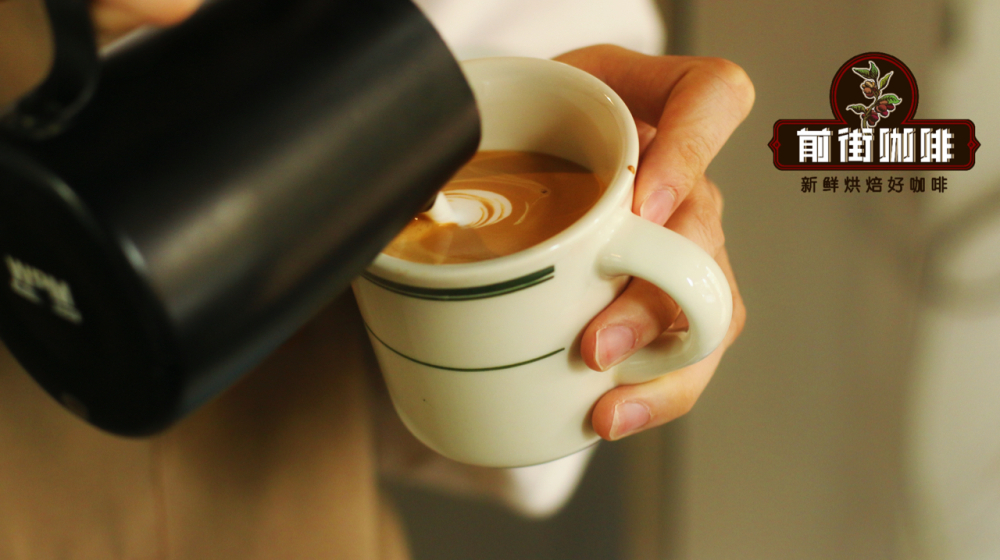
No matter whether its Chinese name is "Fu Rui Bai," "Chun Yi Bai," or "Ao Rui Bai," its English name is still Flat White, and in essence it is still Australian white coffee.
The above content is compiled by CoffeeHunters, a coffee news website.


