







What Defines Brazil Cerrado Coffee and Its Soft Bean Flavor?
Brazil is the largest coffee producer in the world, and the Cerrado in the central-west of Minas Gerais is one of its notable regions. Fertile soil and distinct wet and dry seasons there produce the soft bean profile: low acidity, nutty and chocolate sweetness, and a full, balanced body. A medium-roasted Red Bourbon from the region shows roasted nuts, chocolate, cream and caramel.
Four processing methods shape the cup: natural sun-dried, pulped, semi-washed and washed, each shifting clarity and sweetness. Cerrado beans suit drinkers who reject acidity and want a round mouthfeel; a Kono dripper with segmented pours works well. A useful coffee standard to apply is tasting across processing methods rather than judging a single lot alone.
As the world's largest coffee producer, fluctuations in any of Brazil's producing regions ripple through the international coffee market. Among its many regions, the Cerrado in the central-west of Minas Gerais, with its fertile soil and distinct wet and dry seasons, nurtures the "soft bean" flavor profile known for low acidity, nutty-chocolate sweetness, and full, balanced body. The Brazil Cerrado Red Bourbon from the Front Street Coffee (FrontStreet Coffee) everyday beans series is a classic representative of this style—interweaving roasted nuts, chocolate, cream, and caramel, ideal for those who dislike acidity and prefer a rounder mouthfeel. This article will systematically cover the terroir conditions of the Cerrado region, Brazil's coffee flavor classification and main producing regions, and fully document Front Street Coffee (FrontStreet Coffee)'s medium roast curve for this Red Bourbon, along with the Kono dripper segmented brewing method. Finally, it will detail the process differences among Brazil's four processing methods—natural sun-dried, pulped, semi-washed, and washed—to help coffee enthusiasts comprehensively understand the flavor logic of Brazilian coffee from origin to cup.
For more specialty coffee knowledge, please follow our WeChat official account: Front Street Coffee (FrontStreet Coffee)
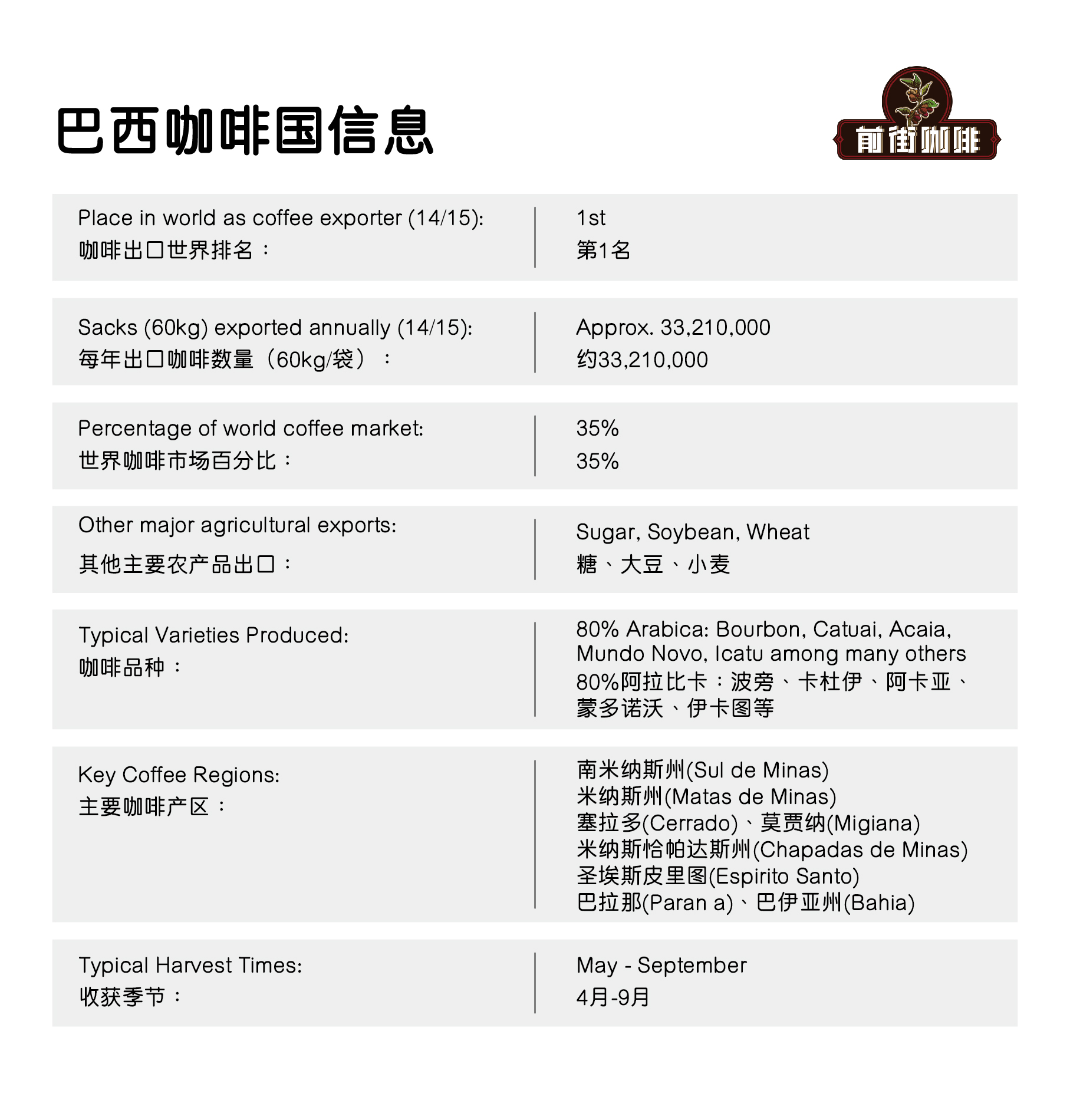
Brazil ranks first in the world in coffee production, and any fluctuation in its output sends ripples through the international coffee market. In this world's largest coffee-producing country, the Cerrado region in the central-west of Minas Gerais is particularly noteworthy. The Front Street Coffee (FrontStreet Coffee) everyday beans series includes a Brazil Red Bourbon that presents clear chocolate and nut notes on the palate, with moderate body that is soft and non-irritating—a quite reliable choice for drinkers who reject acidic coffee.
Customers who come to Front Street for coffee generally fall into two categories: those who prefer acidity and those who prefer full body. Front Street Coffee (FrontStreet Coffee) has representative beans for both taste preferences. If a customer prefers a full-bodied style and isn't very knowledgeable about coffee, Front Street Coffee (FrontStreet Coffee) typically recommends this Brazil Cerrado Red Bourbon, because its flavor is distinctive enough and classically recognizable—even those who rarely drink coffee can easily perceive it.
Brazil is located in the Latin American region of the Western Hemisphere, in the eastern part of South America on the western shore of the Atlantic Ocean. On land, it borders every South American country except Ecuador and Chile. Most of its territory lies between the equator and the Tropic of Capricorn, making it the country with the largest tropical expanse in the world. One-third of its territory has a tropical rainforest climate, while two-thirds has a tropical savanna climate—these favorable tropical natural conditions are extremely suitable for the cultivation and production of coffee and other tropical cash crops.
Brazil fully leverages its tropical geographic advantages and places great importance on coffee production and sales, keeping its output, export volume, and per capita consumption consistently at the top of the world, thus earning the title "Coffee Kingdom."
Brazilian Coffee Flavor—Soft and Gently Sweet
Compared with other Central and South American countries, Brazil's producing regions are noticeably lower in altitude, with flat terrain and a lack of microclimates, and coffee trees are rarely shade-grown. This gives rise to the unique "soft bean" style of Brazilian coffee—low acidity, nutty notes, chocolate-like sweetness, balanced acidity and bitterness, good body, often accompanied by woody and earthy tones, forming a strong contrast with the bright floral and citrus notes of African beans.
Brazil's Five Flavor Classifications Based on Aroma
Brazilian coffee centers on the body and sweetness characteristic of soft beans, overall mild and easy-drinking. The industry therefore uses five grades to distinguish different soft beans, in order: Strictly Soft, Soft, Softish, Hardish, and Rioy.
These five grades can also correspond to different Brazilian producing regions:
Strictly Soft: Sul de Minas, Cerrado, Mogiana, Bahia Diamond Plateau.
Soft: Bahia, Southeast Minas Forest Zone, Paraná, Central-West São Paulo, mountainous areas of Espírito Santo.
Softish: Eastern and Northeastern Minas.
Hardish: Low-altitude areas of Paraná, Espírito Santo.
Rioy: Flatlands of Espírito Santo, lower-lying areas of Southeast Minas.
Although Brazilian coffee gives a relatively uniform impression overall, many specialty beans have emerged in recent years, with Sul de Minas, Cerrado, Mogiana, and Bahia Diamond Plateau being the most promising.
Brazilian Coffee Bean Producing Regions
São Paulo State (Mogiana, Centro-Oeste)
Paraná State (Norte Pionerio do Paraná)
Bahia State (Planaltoda Bahia, Cerrado da Bahia, Atlantico Baiano)
Espírito Santo State (Montanhas do Espírito Santo, Conilon Capixaba)
Minas Gerais State (Sul de Minas, Cerrado Mineiro, Chapada de Minas, Matas de Minas)
Rondônia State (Rondônia)
Rio de Janeiro State (Rio de Janeiro)
São Paulo State
Mogiana
This area is adjacent to southern Minas. Coffee is interplanted with shrubs, grasses, and other vegetation. A large number of cultivating families are distributed here, some continuing the traditional large-farm model while others operate on a small-scale modern basis. The combination of modern technology and mountain coffee-growing culture produces extremely high-quality Brazilian coffee beans.
Centro-Oeste
(Garea,Marilia and Piraju)
Brazilian coffee cultivation in this region typically involves large estates paired with traditional production lines. Although production appears to be shrinking, producers are in fact shifting toward pursuing higher-quality green beans.
Paraná
Norte Pionerio do Parane
This state was once Brazil's largest producing region and currently possesses its own unique production techniques.
After discovering declining yields per unit in coffee groves, Paraná producers created a new type of "closed planting system." Currently, large numbers of coffee trees rely on per-hectare saplings to better withstand cold winds while ensuring more regular output.
Bahia State
Bahia / Atlantico Baiano: Mainly produces Robusta beans on large farms.
Chapada / Planaltoda Bahia: Located in central Bahia, mainly produces hand-sorted Arabica coffee, mostly using the washed processing method.
Cerrado da Bahia: Located in western Bahia, generally regarded as the newest Brazilian coffee-growing region. Modern technologies in irrigation and harvesting are widely used in this area.
Espírito Santo State
Montanhas do Espírito Santo
Conilon Capixaba
This state is mainly divided into two regions: the north grows Robusta beans on both large and small estates; the south produces typical mountain-grown coffee, generally in smaller quantities. Both washed and natural processing are used in this area.
Minas Gerais
Sul de Minas
Dominated by small estates, producing about 8 to 10 million bags of mountain-grown Brazilian coffee beans. Suitable altitude, undulating terrain, and a coffee-friendly climate mean that rainfall is concentrated during the several months needed for fruit growth, while the climate is dry during the several months needed for harvesting.
Cerrado Mineiro
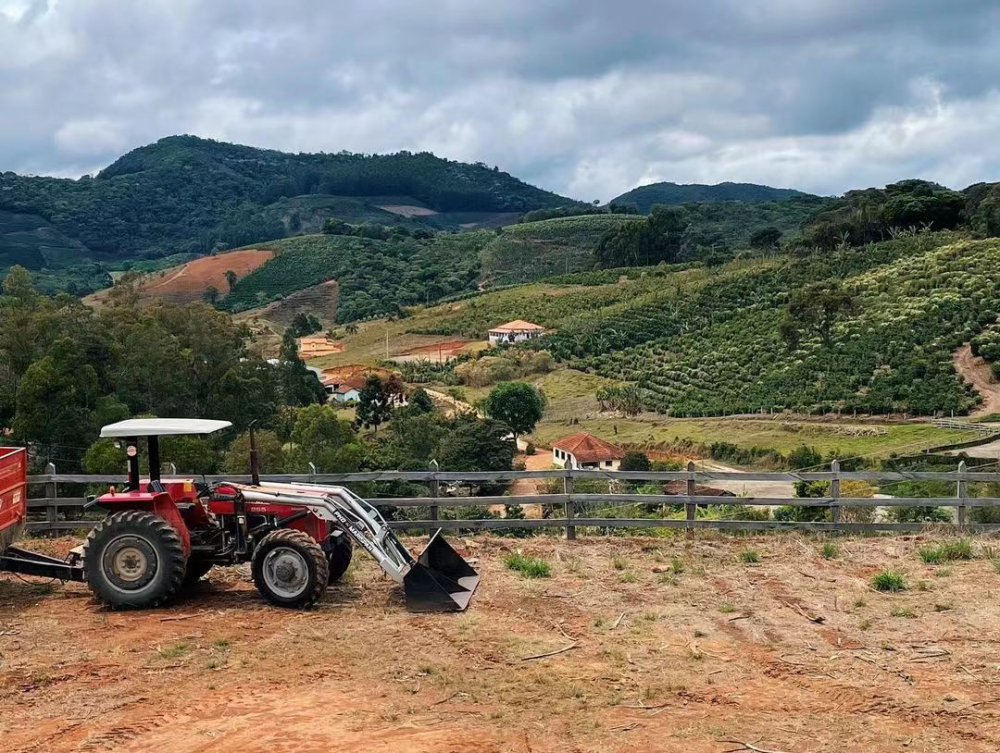
Of Brazil's coffee-growing area of up to 27,000 square kilometers, the most renowned region is none other than the Cerrado in Paraná, southern Brazil. Unlike other Brazilian regions that compete on volume, Cerrado's coffee beans are known for their excellent quality.
The Cerrado is actually a savanna accounting for 22% of Brazil's total area, located on the tablelands in the southern part of Brazil's Cerrado savanna climate zone, with rich native plant and animal species. "Cerrado" means "closed place" in Portuguese. The Cerrado savanna begins in Mato Grosso state in southwestern Brazil, passes through the central-west of Minas, and reaches western Bahia state to the north. The Cerrado coffee-producing region referred to by Front Street Coffee (FrontStreet Coffee) is not the entire Cerrado savanna, but only the coffee-growing areas above 1,000 meters altitude in the central-west of Minas that can be called the Cerrado coffee-producing region. This area is the cream of the Cerrado savanna, with distinct wet and dry seasons and a relatively cool tableland climate, causing coffee fruit to ripen more uniformly.
The Cerrado producing region sits at about 1,000 meters altitude, with an annual average temperature of around 21 degrees. Most critically, the local soil is very fertile and rich in minerals, giving the coffee beans abundant nutrition. Only high altitude and fertile soil can produce specialty coffee beans that are sweet, full-bodied, and clean.
Cerrado is a well-known high-quality coffee-producing region in Brazil, with relatively refined processing methods. Unlike Brazil Santos coffee, which uses natural processing, Cerrado coffee beans mostly use washed or semi-washed processing. Premium Cerrado coffee contains nutty aromas, with a mouthfeel similar to Brazil Santos but more refined and clean. Moderate aroma, soft and smooth on entry, with a slight sweetness at the finish, and within the captivating sweetness emerge special notes of tropical fruit and nutty almond. The entry is aromatic like tropical fruit and nutty almond, the finish carries genmaicha tea notes, and at lower temperatures it presents different layers of almond sweetness, creamy notes, and tea notes.
Front Street Coffee (FrontStreet Coffee)—Brazil Cerrado Red Bourbon
Country: Brazil
Region: Cerrado
Altitude: 1,000 meters
Variety: Red Bourbon
Processing: Semi-natural (pulped natural)
Flavor: Roasted nuts, chocolate, cream, peanut, caramel
Roasting Recommendations
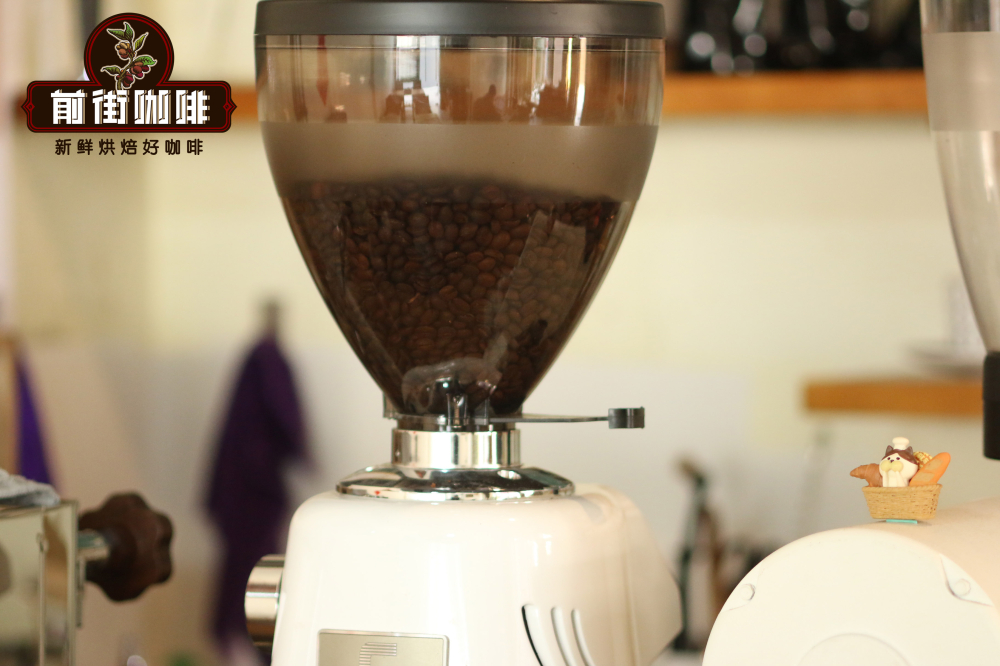
Brazilian coffee beans are primarily full-bodied, and Front Street Coffee (FrontStreet Coffee) uses a medium roast to highlight this flavor.
Machine: Yangjia 800N, 550g green beans charged
Charge temperature 160℃
Turning point 6'52", 145.2℃
First crack 10'46", 186.8℃
Development after first crack 3'00'', discharged at 202.5℃
How does Front Street Coffee (FrontStreet Coffee) brew Cerrado coffee beans?
Brewing Parameters
Dripper: Kono dripper
Water temperature: 88℃
Dose: 15g
Coffee-to-water ratio: 1:15
Grind size: medium-fine (70-75% passing through China standard No. 20 sieve)
For darker-roasted coffee beans, to highlight the full body, Front Street chooses the Kono dripper for brewing. The Kono dripper's feature is its immersion function, which can extract more coffee substances through immersion, enhancing the full-bodied mouthfeel. Because its ribs are few and located at the lower end, it allows the filter paper to cling tightly to the dripper to restrict airflow, thereby slowing the water flow and increasing water-coffee contact time.
The water temperature is chosen at 88℃, a relatively low brewing temperature, to avoid extracting too many off-flavors from the coffee beans during brewing, because the darker the roast, the more off-flavors increase.
Front Street Coffee (FrontStreet Coffee) uses segmented extraction: 30g of water for a 30-second bloom, then a slow small stream in circles up to 125g where a segment pause occurs, and when the water level drops and is about to expose the coffee bed, continue pouring to 225g and stop, (timing from the start of the bloom) with an extraction time of 2 minutes.
Cerrado coffee flavor description: Obvious sweetness on entry, with a faint lemon aroma, containing rich nutty flavors, with an obvious dark chocolate note in the latter part, overall quite round.
Brazilian Coffee Processing Methods
The four most common processing methods are: natural sun-dried, pulped, semi-washed, and washed, with natural sun-dried being the most popular. Since the harvest seasons of Brazil's two major producing regions, Cerrado Mineiro and Mogiana Paulista, both fall in the dry season of the year, natural sun-dried processing is extremely widespread in these areas.
Natural Sun-Dried Method
The natural sun-dried method differs greatly from the washed method used in other Central American countries and Colombia. Because the term "Unwashed" cannot fully capture the essence of this processing technique, Brazilians ultimately chose the same term as Ethiopian coffee: "Natural." But note that Brazil's natural sun-dried method differs from the traditional Ethiopian natural method. What Brazilians call "natural sun-dried" refers to the harvesting technique rather than the traditional processing technique, because Brazilians let the coffee absorb sunlight fully on the branch and ripen completely before picking.
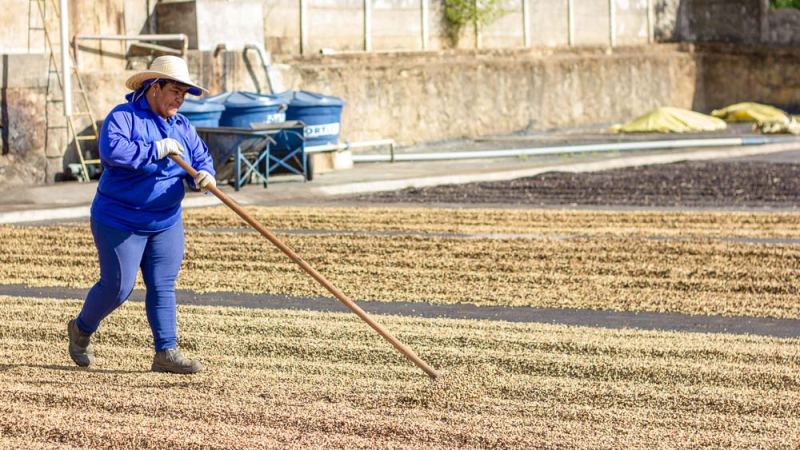
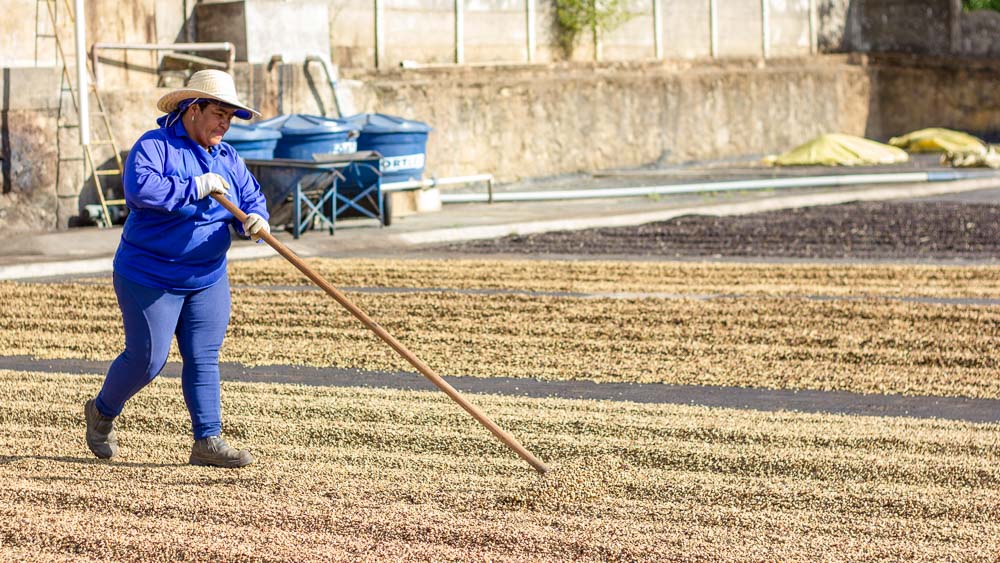
In Brazil, people spread freshly picked fruit on patios to dry, and the dried fruit is locally called "Boia" (English for "ball"). As mentioned earlier, all coffee is picked without sorting, so during drying many fruits are already overripe, shriveling up like raisins after drying. On more modern, better-equipped plantations, workers sort the coffee before drying to remove unripe fruits by placing all the fruit into a water tank, where unripe fruits float to the surface because they are lighter, and workers use siphon equipment to draw off these floating fruits. But on relatively backward plantations, workers lack sufficiently advanced equipment, and unripe fruits cannot be completely removed—this is why many Brazilian natural coffees contain a lot of unripe beans.
Traditionally, naturally processed coffee often carries leather, tobacco, and woody flavors, but Brazil's natural sun-dried method brings sweetness and balanced fruit aromas to the coffee. Dr. Flavio Borem from the Federal University of Lavras (UFLA) has conducted in-depth research on the natural sun-dried processing of green coffee. According to his theory, when using natural sun-dried processing on green coffee, to ensure high quality, the metabolic rate of the coffee beans during drying must be strictly controlled to maximize retention of the coffee's sweetness, flavor complexity, and body. Only by strictly controlling the external temperature and fruit drying speed during the drying process can the integrity of the coffee's cellular structure be ensured. During drying, the cell walls of coffee cells are highly susceptible to damage. Once the cellular structure is destroyed, coffee quality cannot be guaranteed.
Pulped Method
Next, let's talk about the pulped method. The pulped method was introduced to Brazil 25 years ago by the well-known machinery manufacturer Pinhalense. The pulped method is Brazil's second most widespread green coffee processing method, and Brazilians habitually call it "Cereja Descascado" ("Descascado" means "remove skin," "Cereja" means "fruit"). In Central American countries, the pulped method is also called "honey processing." When using this method to process green beans, a pulper is essential, and coffee processed this way has extremely prominent sweetness and a unique flavor. The pulper separates the skin and pulp of the coffee fruit from the green bean. After the pulping step, people rinse the mucilage on the surface of the green beans with water to the desired degree, then dry them. What's unique about this method is that the green beans do not undergo fermentation. Because a small amount of mucilage still adheres to the surface of the green beans, the drying process must proceed quickly to prevent the coffee from rotting or molding. Once dried, people place the green beans into wooden boxes called "Tulhas" to rest for a period, making the coffee's flavor and aroma more consistent.
Semi-Washed Method
The semi-washed method is now a somewhat outdated green bean processing method in Brazil. It is easily confused with the pulped method, but in my view, the semi-washed method still has some unique merits. Coffee processed by the semi-washed method has an extremely full body and very high sweetness. This processing method demands extremely high skill and experience from the grower—once a mistake is made, the coffee becomes undrinkable. Like the pulped method, people first use a pulper to remove the fruit's skin, but the difference is that the semi-washed method requires removing as much skin, pulp, and surface mucilage from the green beans as possible. In Central America, people wash directly with a washing machine after pulping, so this method is also called "mechanical washing." The processed green coffee beans are very clean, and without fermentation, the coffee beans can begin drying. Semi-washed coffee dries quickly under constant temperature, so the coffee flavor is purer and has less mustiness compared to other slower-drying coffees, and is full of fruitiness.
Washed Method
Finally, let's talk about the washed method. Although many Brazilian coffee growers have recently shown strong interest in the washed method, domestic and international market demand for this coffee remains low, because washed Brazilian coffee has a poor reputation in the international market, and washing technology started late in Brazil and is not yet mature. Washed coffee's processing method is extremely similar to semi-washed coffee, but washed coffee requires fermentation to remove the mucilage on the surface of the green beans. Washed coffee typically has a clean mouthfeel and pleasant acidity.
The above are the four most common green bean processing methods in Brazil. Once processing is complete, with only parchment remaining on the outside of the green beans, the coffee undergoes final sorting to meet specialty coffee standards. Parchment coffee beans are sent to unified dry processing plants, where people perform final sorting, bagging, and prepare for export. Factory workers first use vibrating screens to grade the coffee by green bean density. You should know that density is one of the important criteria for measuring coffee quality. After grading, the coffee beans are cleaned again, and the cleaned beans are sent to the laboratory for final color grading. Colorimeters use lasers to detect defects or stains on the surface of the coffee beans. Overall, in Brazil, green bean sorting is highly mechanized. Machine processing not only avoids unnecessary errors but also helps solve labor shortage problems caused by high wage levels.
The above content is compiled by CoffeeHunters, a coffee news website.


