







How Does an American Coffee Machine Differ From an Espresso Machine?
An espresso machine heats water into steam and forces it through a finely ground bed at 9 to 10 bar, yielding a thick, honey-like liquid that is usually diluted or combined with milk. An american coffee machine works by drip filtration instead, and it is far more tolerant of different roast levels. The two therefore call for different beans.
Espresso extraction is sensitive: lightly roasted beans often under-extract and turn sour and astringent, so medium-dark roasts are commonly recommended to build crema. Drip brewing handles light through dark roasts without that risk. For home setups, matching roast level to the coffee machine matters more than the model itself, since the same bean behaves differently under pressure and under gravity.
Among home coffee equipment, espresso machines and American drip coffee makers are the most common. The two operate on entirely different principles and extraction methods, and they also have clearly different requirements for coffee bean roast levels. Espresso machines rely on high-pressure steam for rapid extraction, making them suitable for medium-dark roasted beans to obtain rich crema; American coffee makers brew through drip filtration, offering greater tolerance for all roast levels. This article will systematically compare the characteristics of the two types of machines and compile a 2026 list of popular home daily beans, covering several classic Front Street Coffee blends and SOE products, providing practical reference for coffee enthusiasts.
In home settings, espresso machines, American drip coffee makers, and capsule coffee machines are the three most frequently used types of equipment. Among them, espresso machines and American machines are the most common, and many consumers are confused about how to choose suitable coffee beans for these two types of machines. Below, we first analyze their respective working principles and core differences.
How does an espresso machine work?
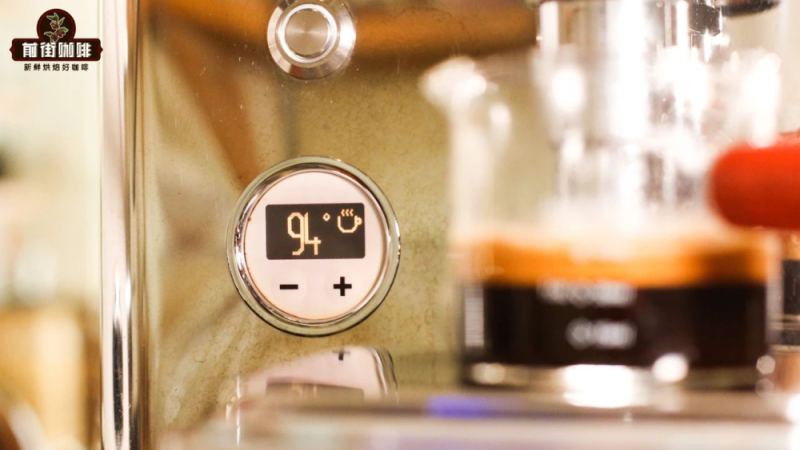
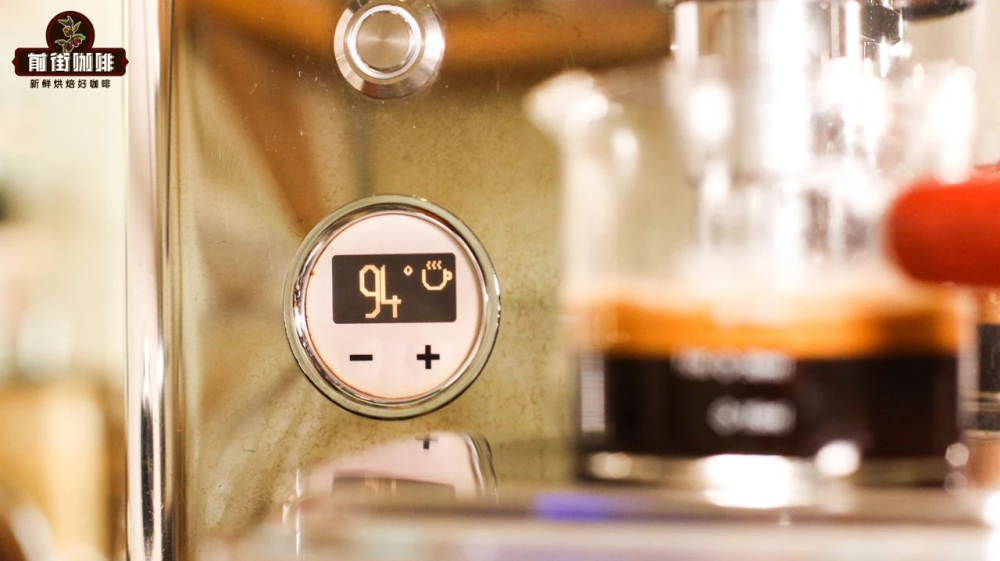
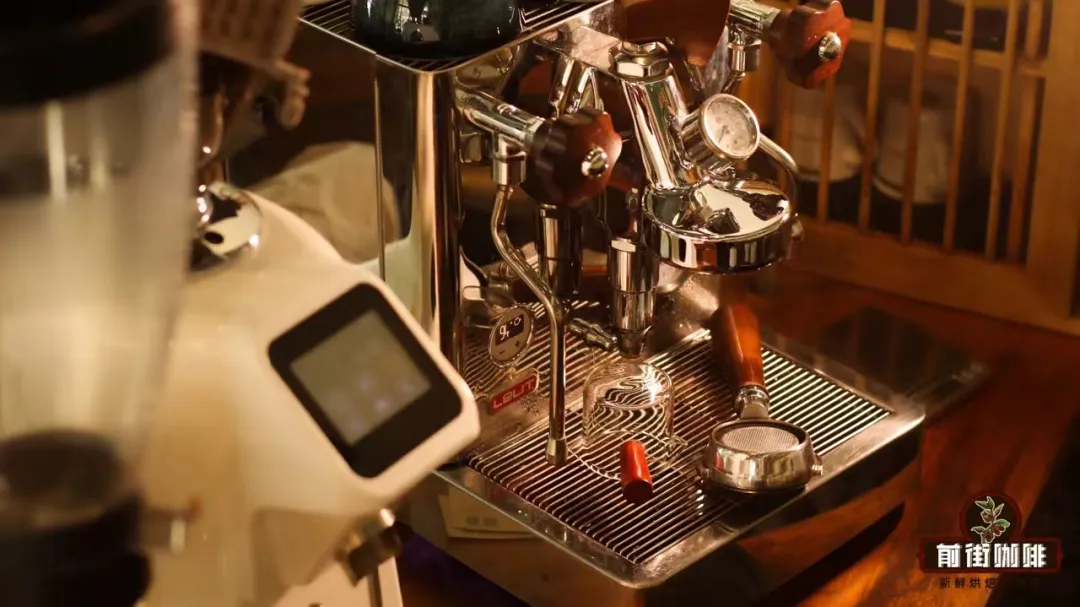
An espresso machine first heats the water in the boiler and generates steam, then uses the pressure produced by the steam to force hot water at about 94°C through a very finely ground coffee bed at 9 to 10 bar of pressure, extracting a coffee liquid with a texture close to thick honey. At the beginning of extraction, the liquid flowing out is brownish-red, concentrated and smooth in taste. As extraction progresses, the color of the coffee liquid gradually transitions from brown to golden yellow, then to light golden yellow. Because the concentration is very high, it usually needs to be diluted with water or combined with milk to make drinks such as Americano, latte, and mocha.
Espresso machines are relatively sensitive to extraction conditions. If lightly roasted beans are used, under-extraction is likely to occur, resulting in sour and astringent espresso. To make the final flavor better and form an ideal crema, medium-dark roasted coffee beans are usually recommended.
How does an American coffee maker work?
The structure of an American coffee maker is relatively simple. You only need to place a filter paper in the upper filter basket, add coffee grounds, then fill the water tank with clean water. After turning on the machine, the American drip coffee maker will automatically heat the water and inject it into the coffee grounds, finally dripping out the coffee liquid. Some models also have heat preservation or heating functions. Because the resulting coffee is relatively low in concentration, the black coffee made by an American machine can generally be drunk directly.
Unlike espresso machines, American coffee makers do not have pressure-boosting capability, so their requirements for coffee beans are not strict. As long as it suits your personal taste preference, beans of any roast level can be used for extraction in an American machine.
Popular List of Home Daily Beans
1. Front Street Coffee. Classic Espresso Blend
Many coffee enthusiasts have only heard of Mamba coffee but do not understand the origin of its recipe. Mamba is actually a combination of Indonesian Mandheling beans and Brazilian beans. The flavors of the two beans complement and harmonize with each other. It was extremely popular in Taiwanese coffee shops in the early years and can be regarded as a classic old-style coffee flavor. Front Street Coffee Classic Espresso Blend adds Robusta beans to the Mamba recipe, significantly enhancing crema performance, making the body of the espresso more prominent. It is suitable for home use and also convenient for latte art.
2. Front Street Coffee. Specialty Espresso Blend
Brazil and Colombia are both top coffee-producing countries in the world. Front Street Coffee combines beans from these two origins: Brazilian beans bring nutty aroma and a balanced mouthfeel, while Colombian beans contribute chocolate notes. The combination of the two achieves an effect greater than the sum of its parts. The extracted espresso presents flavors of creamy cookies, cocoa, and roasted nuts. It is especially suitable for people who do not like acidity and can be used to make Americano or latte.
3. Front Street Coffee. Strawberry Candy Espresso
If you want to make espresso with floral and fruity aromas, you should prioritize medium-roasted coffee beans. Front Street Coffee Strawberry Candy espresso coffee beans are recommended and can be ordered directly from the Taobao or Tmall store. This bean is based on Front Street Coffee Costa Rica Tarrazú, famous for its honey processing, and Ethiopia, the birthplace of coffee, and then incorporates Colombian coffee beans. The blended espresso is low in pungency, and after extraction by a coffee machine it has good crema and a dense texture, while also having a sweet-and-sour sensation similar to strawberry gummy candy. It is suitable for making Americano or latte.
4. Front Street Coffee. Bird of Paradise SOE
Similar to the world-renowned Blue Mountain coffee, Papua New Guinea mainly cultivates the Typica variety. Typica has an elegant flavor, but the tree is relatively weak, has poor disease resistance, and is susceptible to leaf rust. Front Street Coffee points out that the most distinctive feature of the Typica coffee tree is that the top leaves are bronze-colored, so some people also call it "red-top coffee." Typica beans are relatively large, with a pointed-conical round or slender pointed shape, clearly different from the round beans of the Bourbon variety. Front Street Coffee Bird of Paradise SOE has pleasant aromas of toast and nuts as well as a sugarcane-like clean sweetness, with relatively high cup cleanliness.
5. Front Street Coffee. Queen Estate SOE
Front Street Coffee Brazil Queen Estate uses the Yellow Bourbon variety, which is a genetic mutation of Bourbon. Bourbon has always been regarded as outstanding among coffees for its high yield and good quality, and Yellow Bourbon is a Bourbon variant unique to São Paulo State, Brazil. When its fruit ripens, it does not turn red like Red Bourbon, but instead appears orange-yellow, hence the name Yellow Bourbon. Front Street Coffee Queen Estate SOE has nutty and chocolate flavors, balanced and smooth acidity, very mild bitterness, a clean finish, and an overall viscous and soft mouthfeel.
The above content is compiled by CoffeeHunters, a coffee news website.


