







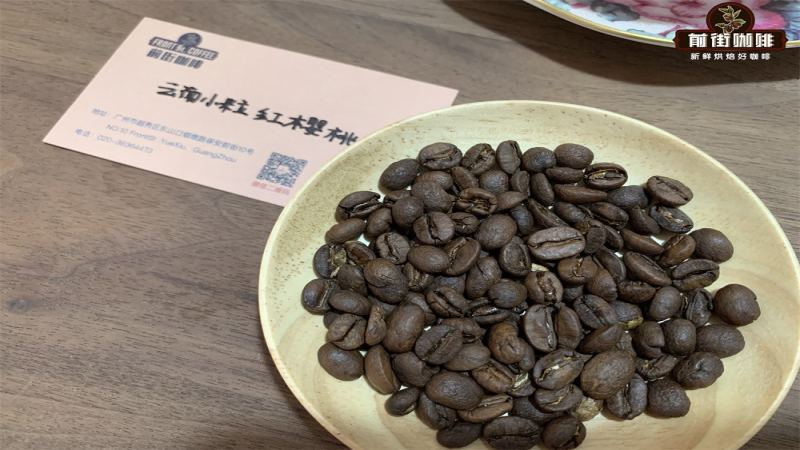
Yunnan is China's largest coffee-growing province, and its small-bean coffee is known for a neutral flavor profile that is aromatic without being bitter, rich without being harsh, and mildly acidic and pleasant, drawing close attention from coffee lovers. Starting from the taste characteristics of Yunnan small-bean coffee, this article systematically sorts out how it differs conceptually from Yunnan coffee, traces the historical origins of small-bean coffee since its introduction to Yunnan in 1904, analyzes the flavor differences between the two major varieties Typica and Catimor, and introduces in detail the features of major producing regions such as Baoshan, Pu'er, Dehong, and Lincang. At the same time, the article also shares Front Street Coffee's experience growing Typica in Lincang, Yunnan, as well as the influence of washed and natural processing methods on flavor and brewing suggestions, helping readers gain a comprehensive understanding of the true face of Yunnan small-bean coffee.
For more specialty coffee knowledge, please follow the WeChat public account: Front Street Coffee (FrontStreet Coffee)
Yunnan is the province with the largest coffee-growing scale in China, and the film "One Mile Above" led more people to begin paying attention to coffee from this land. So is Yunnan coffee actually good? As an Asian-origin coffee, it inevitably carries the earthy, piney, and nutty notes typical of Asian beans, but at the same time it also incorporates the brown sugar sweetness and fruity acidity given by the local terroir. The overall flavor of Yunnan small-bean coffee leans neutral, with neither acidity nor bitterness standing out. It can be described as sufficiently aromatic without being bitter, rich in mouthfeel yet not harsh, and softly acidic in a way that is comfortable, making it highly acceptable to most people's tastes.
Coffee cultivation in China is mainly concentrated in the two provinces of Yunnan and Hainan, among which Yunnan's output holds an absolute advantage, with recent annual production of about 26,000 tons, accounting for about 90% of the national total. Yunnan is located in a subtropical mountainous climate zone south of the Tropic of Cancer, with unique plateau red soil that is loose and fertile, and a mild climate, making it very suitable for cultivating small-bean coffee and possessing the conditions to produce world-class quality coffee. Yunnan's natural conditions are quite close to those of Colombia, as both belong to low-latitude, high-altitude producing regions with large temperature differences between day and night. Their cupping quality analysis is classified as mellow-aromatic, and the taste quality has similarities to Colombian coffee.
The history of Yunnan small-bean coffee can be traced back to 1904, when the French missionary Tian Deneng brought Typica coffee seeds from Vietnam into Yunnan and successfully planted them in Zhugula Village, Binchuan County. This is regarded as the starting point of Yunnan coffee and is usually called small-bean coffee, commonly known domestically as Yunnan small-bean coffee. So-called small-bean coffee refers to Arabica coffee beans. Because their beans are relatively small, they are also called small-fruit coffee; Robusta coffee is called medium-fruit coffee, and Liberica belongs to large-fruit coffee. What is grown in Yunnan is precisely Arabica, hence the name Yunnan small-bean coffee. At Front Street Coffee (FrontStreet Coffee), two Yunnan coffee beans can currently be found: one is Front Street 2013 Natural Typica coffee, and the other is Catimor small-bean coffee. Both beans belong to the category of small-bean coffee, but because Typica's floral and fruity aromas and fruity acidity are softer and richer, the name Huaguoshan is specially used to distinguish these two varieties.
Yunnan Coffee Bean Varieties
Yunnan coffee is coffee standing on the tide of the times. After a century of development, domestic coffee demand has continued to grow, and the quality of Yunnan coffee has also steadily improved. The varieties of Yunnan small-bean coffee belong to the Arabica species, among which Robusta genes are also mixed. In the 1970s and 1980s, coffee leaf rust broke out in many countries in Central and South America, seriously affecting coffee production. In response to the leaf rust problem, a Portuguese coffee research center, CIFC, crossed Timor, which carries Robusta genes, with the Bourbon variety Caturra in 1959, breeding the disease-resistant and high-yielding Catimor. To solve the disaster brought by leaf rust, along with encouragement and promotion by coffee organizations, Central and South America began widely introducing and planting it in the 1980s.
In the past, Yunnan coffee was called "Yunnan small-bean coffee." In fact, "small-bean species" is another name for Arabica coffee. Arabica coffee (Arabica) is also called small-bean coffee. It originated from wild coffee in Africa and later spread to Europe through Arabia and became widely known, hence the name. It was introduced to Zhukula, Binchuan County, Dali, China, in the 1890s and has since taken root and developed in mainland China. Yunnan also became the representative of Chinese coffee, so Yunnan coffee is also called "Yunnan small-bean coffee."
Arabica coffee has quite strict requirements for its growing environment and is usually more suitable in mountainous areas with abundant rainfall and large temperature differences between day and night. In addition to paying attention to bean variety, estate, and processing method, some specialty coffees even indicate the growing altitude on the packaging. In addition, Arabica coffee has many varieties, such as the common Typica, Bourbon, Caturra, and so on (similar to citrus varieties such as Hongmeiren, Ehime, and Shiranui). These are all names of coffee tree varieties.
The most classic high-quality Arabica variety is Typica. This coffee tree has strong adaptability, and many coffee varieties we know well are its variants: for example, Blue Mountain coffee is a variant of Typica grown in Jamaica, Kona coffee is a variant of Typica grown in Hawaii, and Mandheling is a variant of Typica grown in Sumatra.
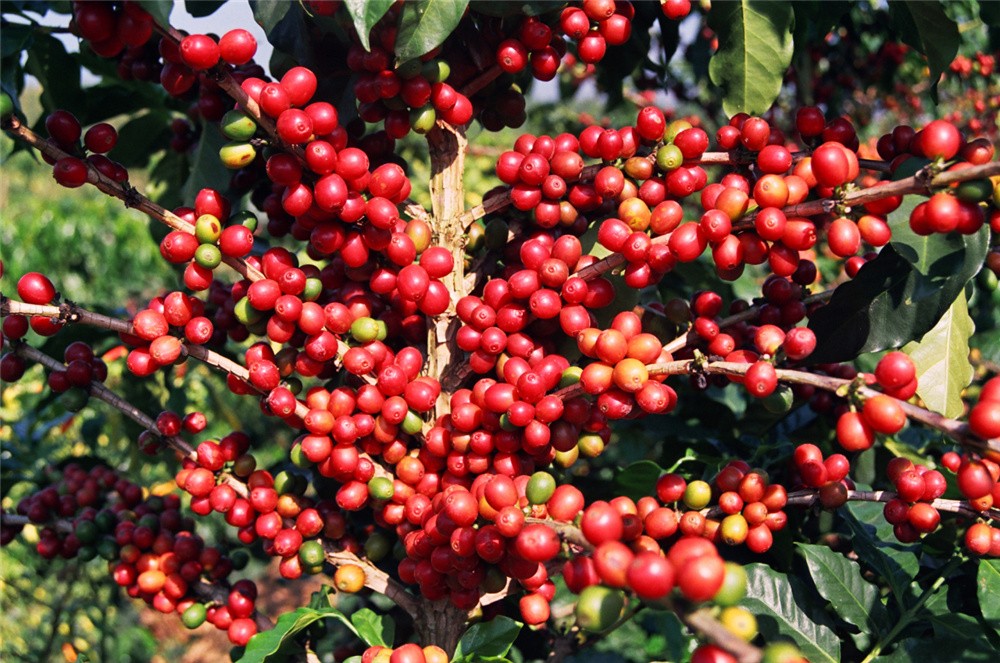
Typica coffee beans (Typica) originated in Ethiopia and southeastern Sudan and are one of the oldest coffee varieties in the Arabica species, also known as the old variety small-bean coffee. Typica coffee trees are quite tall, with conical branches, and the mother branches are inclined at about 60 degrees. The leaves usually have a dark bronze color, and the top leaves are red-copper colored, so it is also called red-top coffee. Typica coffee trees are very tall, yield less than other varieties, and are difficult to cultivate, which means obtaining this high-quality coffee is often difficult. Although the coffee bean yield is very low, the cupping score is extremely high, and the coffee flavor presents varied fruity aromas.
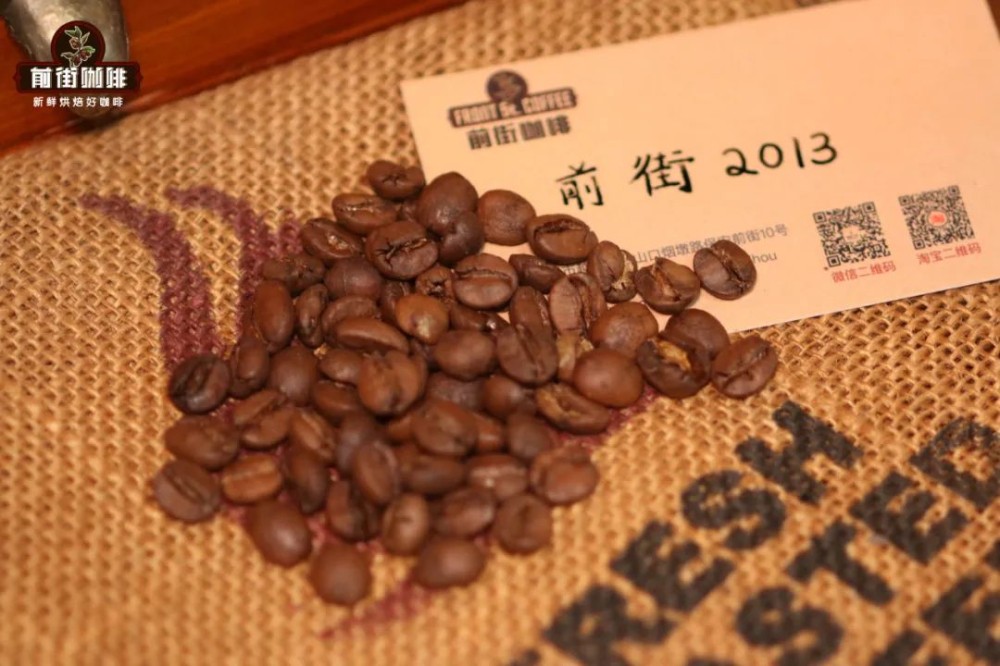
Under the careful natural drying of Front Street Coffee (FrontStreet Coffee), the Typica variety Front Street 2013 Natural Typica coffee exhibits notes of berries, brown sugar, nuts, and black tea.
Catimor is a hybrid variety of Timor and Caturra. Catimor inherited Timor's Robusta genes, enabling it to better resist coffee berry disease and coffee leaf rust, while also having stronger resistance to pests and diseases, and its fruit ripens quickly with high yield. This also leads to insufficiently complete flavor development, and improper processing can easily produce negative tastes such as heavy bitterness and grassy notes.
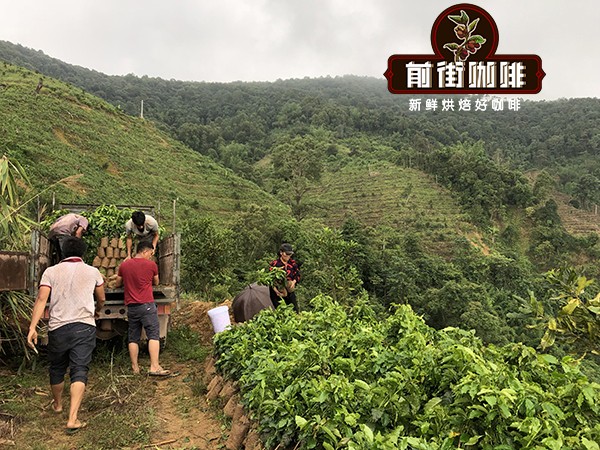
However, Front Street Coffee (FrontStreet Coffee) believes that if Yunnan coffee is to taste good, change must begin with the variety. Therefore, in 2013, Front Street Coffee (FrontStreet Coffee) went to Lincang, Yunnan, and began cultivating the Typica variety as well as a small amount of the Bourbon variety. One reason for choosing Typica is that, as one of the oldest coffee varieties, it possesses the genes of a pure Arabica variety, and because of its elegant, clean flavor, it has always been widely recognized as a specialty coffee variety; another reason is that the earliest coffee trees planted in Yunnan were also Typica, brought in by French missionaries.
Main Producing Regions of Yunnan Coffee
The western and southern parts of Yunnan Province lie between 15° north latitude and the Tropic of Cancer. Most areas have an altitude of 1,000 to 2,000 meters. The terrain is mainly mountainous and sloping, with strong undulation, fertile soil, abundant sunshine, ample rainfall, and large temperature differences between day and night, making it very suitable for coffee growth. Yunnan's geographical and climatic conditions are of very high quality, providing good conditions for coffee growth. Planting areas are mainly distributed in Lincang, Baoshan, Simao, Xishuangbanna, Dehong, and other prefectures.
Baoshan
The golden coffee-growing areas of Baoshan, Pu'er, and Dehong possess large amounts of tropical-zone resources with low latitude, high altitude, and large temperature differences between day and night, making Yunnan a golden growing region for producing high-quality Arabica (small-bean) coffee. Front Street Washed Yunnan Small-Bean Coffee and Natural Catimor Coffee come from the Baoshan producing region.
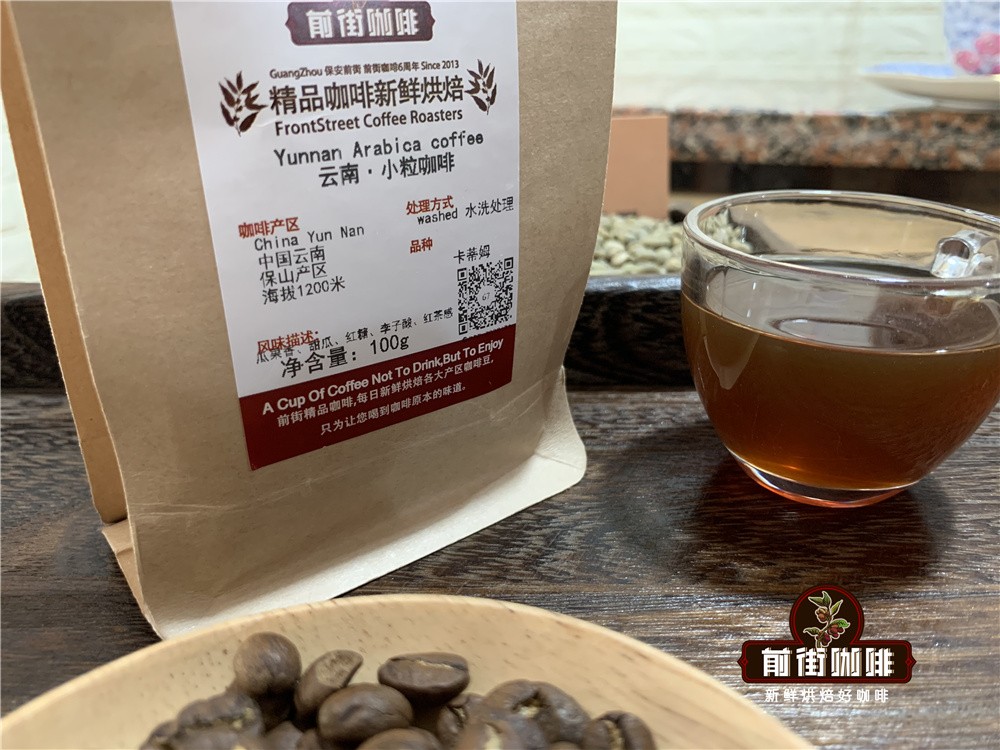
After more than 60 years of development, Baoshan small-bean coffee has formed a scaled coffee industry and become a characteristic industry with an annual output value of nearly 500 million yuan. Baoshan's coffee industry once created many glories. At the 1980 National Coffee Conference, Baoshan small-bean coffee was praised as the "crown of national coffee"; in 1992, at the first China Agricultural Expo, Baoshan small-bean coffee was awarded the highest silver award; in 1993, at the 42nd Brussels Eureka Expo in Belgium, it won the Eureka Gold Award...
Pu'er
Pu'er, the hometown of tea. Pu'er City's coffee planting area has reached 650,000 mu, making it China's main coffee producing region with the largest area, highest output, and best quality, and a major distribution center for coffee trade. While improving in "quantity," Pu'er is also seeking breakthroughs in "quality." In recent years, the Pu'er municipal government, enterprises, and coffee farmers have strengthened coffee variety selection and breeding and deep processing of coffee beans, introduced international coffee giants, learned from their planting and production technologies, and while improving raw material quality, also "gone out" to expand markets, allowing the Pu'er coffee brand to grow and break through. A series of measures, including building coffee estates, coffee museums, and coffee culture streets, and holding the China Coffee Culture Festival, have gradually unfolded the blueprint for the development of Pu'er's coffee industry.
Dehong
In Dehong Dai and Jingpo Autonomous Prefecture, a mature price protection mechanism, along with technological support and a complete management system, is the source of confidence for coffee growers. It is understood that Dehong Hogood Coffee Co., Ltd. has fully leveraged its leading role since 2004, implementing the "three unifications and three protections" measures of protected prices, guaranteed investment, guaranteed quality, and unified purchasing, unified processing, and unified sales.
Lincang
Lincang City has a subtropical low-latitude plateau mountainous monsoon climate, with complex terrain and topography, and is a region with multiple climate types. It is mainly affected by the warm, humid airflow from the Indian Ocean and the southwest monsoon. The distinction between the four seasons is not obvious, but the dry and rainy seasons are distinct. There is relatively more rain, and sunshine duration is long, with an average annual sunshine duration of more than 2,000 hours. The frost period is relatively short, and some areas are frost-free year-round; the vertical climate is obvious, and the average annual temperature in mountainous areas is 13-15 degrees Celsius. Front Street established the Front Street Coffee (FrontStreet Coffee) estate in Lincang and produced Front Street 2013 Natural Typica coffee.
Is Yunnan Small-Bean Coffee Good?
The flavor of Yunnan small-bean coffee is relatively neutral, with neither strong acidity nor strong bitterness. It indeed belongs to the type that is aromatic without being bitter, moderate in strength without being harsh, and lightly acidic and pleasant, fitting well with mass tastes.
Compared with the Typica variety, although the Catimor variety carries Robusta genes, today's Yunnan Catimor is no longer the hard-to-swallow flavor of the past. Under reasonable cultivation and traditional processing methods, Yunnan Catimor small-bean coffee exhibits flavors like nuts, caramel, and plum; Yunnan coffee belongs to Asian beans, so it naturally cannot lack grassy and piney notes, but it has more flavor characteristics of the local producing region, such as brown sugar, tea-like notes, and plum acidity. Front Street also likes Yunnan coffee very much, because this is Chinese people's own coffee.
The flavor of coffee cannot be separated from variety. Coffee variety is the essence and basically determines the general flavor characteristics of the coffee. For example, Arabica variety coffees mostly appear as specialty coffee, while Robusta variety coffees mostly appear in the form of espresso blends. That is to say, the flavor of Arabica variety coffee is better than that of Robusta, but it does not mean that all Arabica variety coffees taste better than Robusta. Yunnan small-bean coffee used to be Arabica, also called Yunnan small-bean coffee. In terms of taste, it is relatively neutral, neither too acidic nor too bitter. It is truly coffee that is aromatic without being bitter, rich without being harsh, and mildly acidic and comfortable, and it also fits mass tastes relatively well. But at present, most Yunnan small-bean coffee is of the Catimor variety, so the taste is not as good.
Yunnan Coffee Bean Processing Methods
Yunnan's weather is rainy and foggy, so washed processing has become the most commonly used processing method for Yunnan coffee. Of course, there is also natural processing, such as Front Street's Natural Catimor Coffee and Front Street 2013 Natural Typica Coffee. With the advancement of specialty coffee, Yunnan coffee beans have also gained some special processing methods, such as honey processing and so on, but these processing methods still cannot fully cover the flavor of Yunnan coffee beans themselves. Therefore, Front Street chose coffee beans with the most traditional natural and washed processing methods, and washed coffee beans can better reflect the local coffee flavor. Therefore, most of Front Street's everyday beans use the washed processing method.
Front Street Brewing Parameters for Yunnan Catimor Coffee:
Front Street store serving parameters: Use Kono dripper, water temperature: 88°C, dose: 15 grams, coffee-to-water ratio: 1:15, grind size: medium-fine grind (75% passing through a Chinese standard No. 20 sieve).
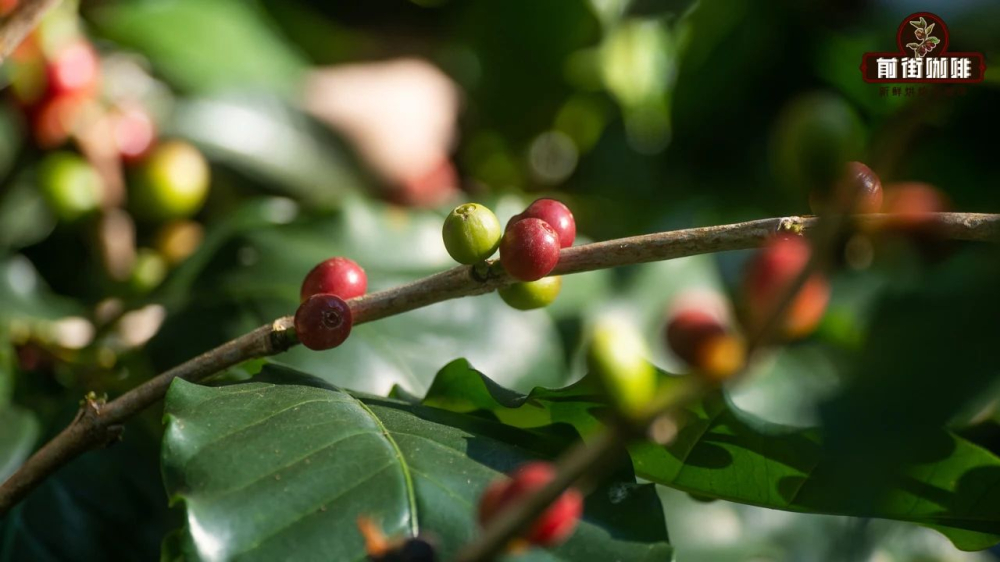
[Front Street Washed Yunnan Small-Bean Coffee Flavor] Herbal, nutty aroma, chocolate, caramel, black tea note.
[Front Street Natural Yunnan Catimor Coffee Flavor] Nuts, chocolate, spice, caramel, plum.
Front Street Coffee Brewing Suggestions:
No matter what kind of coffee is being brewed, to brew a delicious cup of coffee, attention still needs to be paid to the freshness of the coffee beans. Front Street has always believed that the freshness of coffee beans has a great relationship with coffee flavor. Therefore, the coffee beans shipped by Front Street Coffee (FrontStreet Coffee) are all within 5 days of the roasting date. Front Street's roasting philosophy is "freshly roasted good coffee," so that every customer who places an order receives the freshest coffee when they get it. The resting period for coffee is about 4-7 days, so when customers receive it, it is exactly at its best flavor.
For friends who need ground coffee, Front Street warmly reminds you: if coffee beans have been ground in advance, there is no need to rest them, because during transportation, the pressure generated by carbon dioxide inside the packaging can also make the coffee flavor rounder, so once you receive the coffee grounds, you can immediately brew a cup and start drinking. However, coffee grounds need to be brewed promptly, because after coffee grounds contact air, they oxidize relatively quickly, which means the coffee flavor will dissipate relatively quickly and the coffee will not taste as good. Therefore, Front Street recommends buying whole beans and grinding fresh before brewing, so that you can better taste the flavor of the coffee.
The above content is compiled by CoffeeHunters, a coffee news website.


