







How does black honey coffee processing work in Costa Rica?
Honey processing is Costa Rica's signature method. Depending on how much pectin is left on the parchment, it splits into black, red, yellow and white honey grades. Black honey keeps nearly all the pectin, making it the highest grade. The result is pronounced sweetness and acidity, a light fermented wine aroma, and a nutty, creamy body.
Brazil developed the pulped semi-dry coffee process in the 1990s, and Costa Rica adopted it around 2000, refining the details into today's honey processing. Raisin honey is a newer variation. A Costa Rican Diamond Series black honey lot can be brewed as pour-over with recorded roast curve, cupping report and V60 parameters covering water temperature, ratio, grind size and staged pouring.
Honey processing is the most iconic coffee processing method in Costa Rica, but you may not know that depending on the degree of pectin retention, honey processing is further divided into multiple grades such as black honey, red honey, yellow honey, and white honey. This article starts with a Costa Rican Diamond Series black honey from Front Street Coffee, and sorts out the origin and evolution of honey processing, the process differences between the various grades, and the innovative practice of raisin honey processing that has become popular in recent years. The article also includes Front Street Coffee's roasting curve, cupping report, and V60 pour-over parameters for this black honey coffee, including water temperature, coffee-to-water ratio, grind size, and staged pouring technique, making it easy for coffee enthusiasts to replicate at home. If you want to understand why honey-processed coffee has such prominent sweetness and a mellow mouthfeel, this content is worth reading carefully.
For more specialty coffee knowledge, please follow our WeChat official account: Front Street Coffee (FrontStreet Coffee)
In the 1990s, Brazil was the first to develop the pulped semi-dry method. Around 2000, Costa Rica introduced it and improved every细微 detail, gradually evolving it into today's widely popular honey processing.
Honey processing is now one of the mainstream coffee processing methods in Costa Rica, but do you know that depending on the degree of pectin retention, honey processing is also divided into different grades? Taking a Costa Rican Diamond Series black honey from Front Street Coffee as an example, black honey retains the most complete pectin in honey processing, with almost no removal, making it the highest grade of honey processing. When Front Street Coffee tested this black honey Diamond Series coffee bean, it found that compared with other grades of honey processing, its sweet and sour sensation is more prominent, with a slight fermented wine aroma, and the mouthfeel also shows a nutty and creamy viscous mellowness. Below, we will share the background knowledge of honey processing, as well as Front Street Coffee's Diamond Black Honey brewing plan—it would be a shame to miss it.
After Brazil's pulped natural method was introduced to Central American countries such as Costa Rica and El Salvador, it was improved locally and called honey processing.
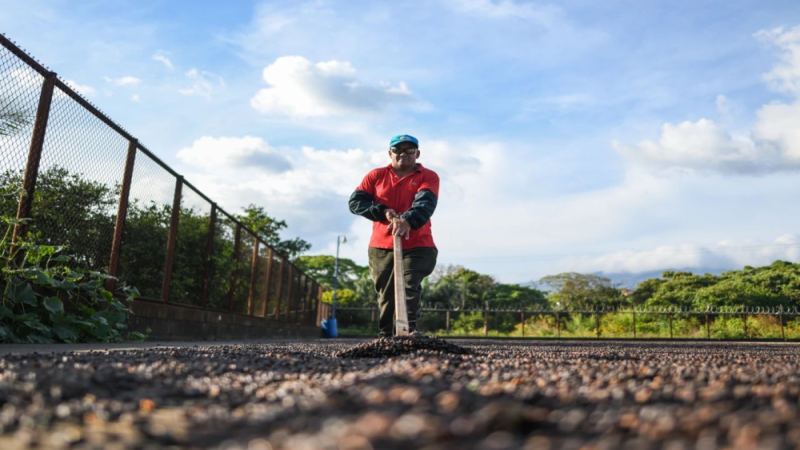
When producers process honey-processed green beans, they first pour the coffee cherries into a water tank for flotation, removing underripe fruits and impurities, then use a depulper to remove the outermost layer of the fruit. At this point, they do not use large amounts of water to wash off the pectin; instead, they dry it directly with the pectin still on. Because pectin contains sugar and has a sticky texture, it is easily associated with honey, hence the name honey processing. Compared with the washed method, honey processing does not require large amounts of fresh water and supporting equipment, and it also reduces defective negative flavors caused by prolonged exposure to the sun. In addition, honey-processed coffee usually exhibits full tropical fruit flavors and fermented sweet aromas, making it quite popular among consumers in the market.
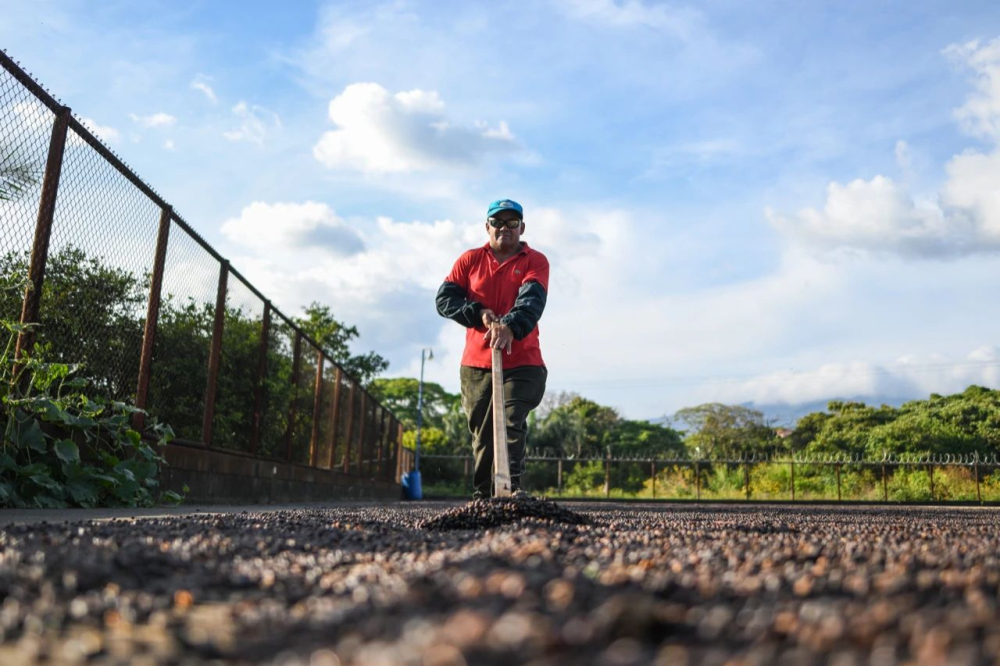
The honey processing flow is: after harvesting red cherries, remove the skin and part of the pectin, then spread the still sticky parchment beans flat on African raised mesh beds with good drainage, turning them every few hours to allow the coffee beans to dry evenly. Because the pectin contains sugar and has a sticky surface, it easily reminds people of sweet honey, hence the name honey processing.
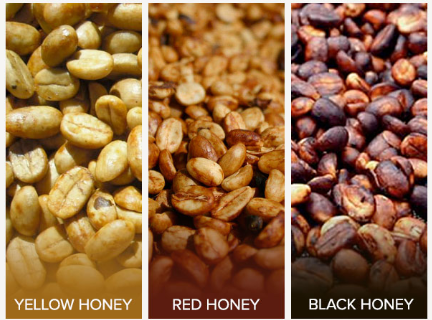
Whether dried on a patio or on raised mesh beds, the honey processing requires regular turning to ensure even drying, and the overall flavor can better highlight the pectin's sweet aroma and fruity notes, approaching the aromas of mango, longan, honey, and hazelnut, with a thick mouthfeel and relatively low, gentle acidity. According to the thickness of pectin removed, the length of sun-drying time (or the thickness of the drying layer), and the frequency of turning during drying, honey processing is further divided into black honey, red honey, yellow honey, and white honey.
According to the thickness of pectin removed, the coffee's sugar content, and the fermentation state:
Black honey: almost no pectin is removed, so drying takes the longest, requiring more than 14 days. During the process, to avoid drying too quickly, covers are used to block overly strong sunlight, allowing sugar conversion to be more complete and resulting in a finished coffee with richer fruit flavors. Black honey-processed coffee tends to be wild in flavor, showing intense sweetness and mellowness, sometimes with a mouthfeel reminiscent of red wine.
Red honey: remove 25% of the pectin (specific practices vary by estate), sun-dry for about 12 days, possibly using shade covers during the process, and turn the coffee several times a day, not as frequently as yellow honey. Red honey processing is intermediate between washed and natural processes, and red honey is also the most common honey processing method.
Yellow honey: remove 40% of the pectin, receive the most sunlight for drying, lasting about 8 days, with the coffee placed on raised beds and turned once per hour
White honey: retain 40-60% of the pectin, with the shortest fermentation time, making it the processing method closest to washed processing
Raisin honey processing:
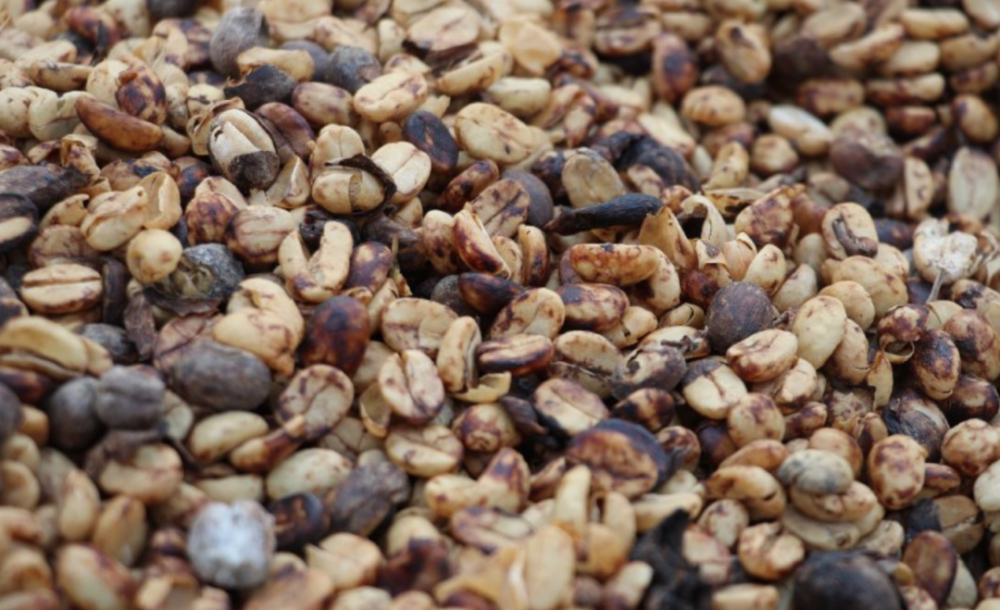
In addition to the several common honey processing types above, there is also an innovative raisin honey processing method that has joined the trend in recent years. The steps of raisin honey processing are that before removing the skin and pulp, the coffee cherries are dried on raised beds for at least three days, allowing the fruit to dehydrate and shrivel into a "raisin" state, and only then are they depulped and demucilaged, continuing with the subsequent honey processing steps.
The characteristics of the raisin honey processing method are "retaining 100% pectin" and "zero water treatment," which also increases the difficulty of the raisin honey processing method. According to Front Street Coffee's understanding and analysis, this requires strict control of time, and is even more difficult than black honey processing. The initial drying step for the green beans allows the aromatic flavors of the fruit pulp to penetrate into the green beans under the warming sunlight, so coffee using raisin honey processing not only has rich floral and fruity sweetness, but also a clear sweet-and-sour flavor profile. Two coffees from Costa Rica on Front Street Coffee's daily bean list use raisin honey processing: Front Street Coffee's Bach coffee from the Musician Series and Front Street Coffee's Strawberry Candy coffee from the Mirazu Geisha blend.
One more point to emphasize: the reason Front Street Coffee's Costa Rican everyday drinking beans do not choose honey processing is that Front Street Coffee believes everyday drinking beans are a series convenient for everyone to get started with, allowing people to understand a coffee bean and the characteristics of its producing region by tasting its own aroma. Although honey processing wins coffee beans a rich aroma, Front Street Coffee feels that washed Tarrazu coffee better presents the characteristics of the coffee beans themselves here and presents the classic flavor profile of Costa Rican coffee.
[Front Street Coffee (FrontStreet Coffee) Roasting Curve]
Bean drop temperature: 180°C; turning point: 5'45", 152°C; first crack: 9'25", 184.5°C; development after first crack 1'50", discharged at 197.4°C.
[Front Street Coffee (FrontStreet Coffee) Cupping Report]
Nuts, fermented wine aroma, cream, caramel, citrus
[Front Street Coffee (FrontStreet Coffee) Brewing Parameters]
Dripper: Hario V60
Water temperature: 88-90°C
Dose: 15 grams
Coffee-to-water ratio: 1:15
Grind size: BG 6S
[Front Street Coffee (FrontStreet Coffee) Brewing Technique] : Use 30 grams of water for a 30-second bloom, then pour in a small stream in circles until 124 grams for a staged pour. When the water level drops and is about to expose the coffee bed, continue pouring until 225 grams and stop pouring. When the water level drops and is about to expose the coffee bed, remove the dripper. (Start timing from the beginning of the bloom.) The extraction time is 2'01".
[Flavor Description] : When hot, sipping reveals citrus acidity and fermented wine aroma; as the temperature changes, there is a creamy aroma; the finish has caramel sweetness; the mouthfeel is relatively clean and balanced.
The above content is compiled by CoffeeHunters, a coffee news website.


