







What Does a Coffee Grading System Like G2 or AA Actually Mean?
Labels such as Yirgacheffe G2 or Kenya Washed AA record the grade of a batch of green coffee beans. Producing countries judge that grade on bean size, defect count, growing altitude, bean hardness and cupping score, so the same letters can mean different things from one origin to the next. Reading the grade helps estimate a bean's quality and flavor potential before purchase.
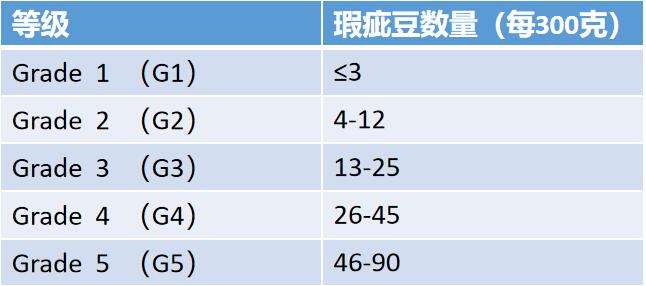
Ethiopia once set export grades through the CLU of the agriculture ministry, counting defects in a 300-gram sample; washed lots usually land at G1 to G2, while sun-dried lots sat at G3 to G5 until drying improved and reached G1 and G2 as well. Kenya, Tanzania, Colombia, Brazil and Jamaica each apply their own green coffee beans criteria, which is why grades are not directly comparable across countries.
When selecting coffee beans, you often see markings like Yirgacheffe G2 or Kenya Washed AA. These letters and numbers actually represent the grade of green coffee beans. Different producing countries have different criteria for grading green coffee, usually based on a comprehensive assessment of bean size, defect count, growing altitude, bean hardness, and cupping score. Understanding these grading rules helps to more accurately judge the quality positioning and flavor potential of a bean. This article will use representative producing countries such as Ethiopia, Kenya, Tanzania, Colombia, Brazil, and Jamaica as examples to outline their respective grading logic and naming methods, and retain relevant product information from Front Street Coffee for coffee enthusiasts' reference.
To get more specialty coffee knowledge, you can follow the WeChat public account: Front Street Coffee (FrontStreet Coffee).
When buying beans, everyone may have seen labels like Ethiopia's Yirgacheffe G2 or Kenya Washed AA. Symbols like G2 and AA actually reflect the grade of that batch of green beans. Each coffee-producing country uses different criteria when classifying green bean grades, generally considering several dimensions such as bean size, proportion of defective beans, growing altitude, bean hardness, and cupping score. Front Street Coffee (FrontStreet Coffee) will now introduce several representative producing countries to see how their green bean grading standards differ.
Ethiopia
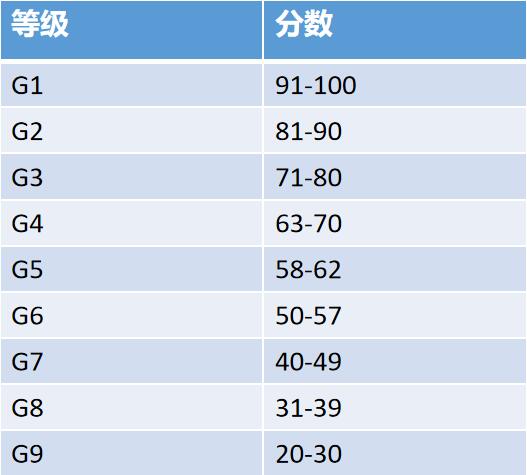
Before the establishment of the Ethiopia Commodity Exchange (ECX), the country's coffee export grades were set by the CLU department (Cupping and Liquoring Unit) under the Ministry of Agriculture, with the core basis being the number of defective beans contained in a 300-gram sample. The specific grading standards are shown in the table below.
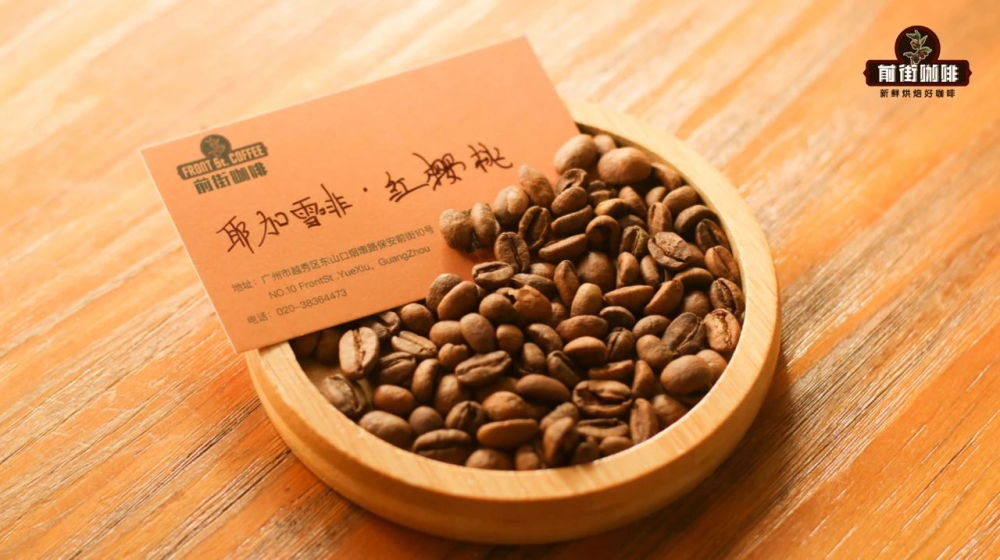
Typically, washed beans fall into the G1 to G2 range; due to limitations in early sun-dried processing technology, sun-dried green beans had more defects and were generally classified as G3 to G5. Later, as sun-dried technology improved, sun-dried beans can now also reach G1 and G2 levels. For example, Front Street Yirgacheffe Daily Beans are G2 grade, while Front Street Sun-Dried Red Cherry and Front Street Gudingding are at the highest G1 grade. These coffees can all be ordered from the Front Street Tmall flagship store.
After the ECX (Ethiopia Commodity Exchange) was established in 2008, it changed to combining the physical attributes of green beans with cup tasting flavor characteristics for scoring and grading.
ECX divides coffee into three definitions based on processing method: non-washed, washed, and washed:
a. Specialty: Few defects, high cup tasting flavor quality
b. Commercial: Does not reach specialty grade, but higher than local/domestic consumption grade
c. Local/Domestic: Large number of defective beans (unripe beans), relatively poor flavor due to being out of season or improper storage
Among these, specialty and commercial are for export to the international market. ECX divides green beans into nine grades based on the total score of physical attribute characteristics and cup tasting flavor characteristics, with physical characteristics accounting for 40% and cupping quality accounting for 60%.
Physical characteristics (40%):
Washed processing: Defect count (20%), appearance size (10%), color (5%), odor (5%)
Non-washed processing: Defect count (30%), odor (10%)
Subsequently, G1 to G3 are further cupped according to SCAA standards to further evaluate flavor attributes in detail. G1 and G2 scoring no less than 85 points are designated as Q1 grade; G1, G2, and G3 scoring between 80 and 85 points are designated as Q2 grade; all G1, G2, and G3 scoring below 80 points are classified as G3 grade.
Q1 and Q2 are exported as specialty grades, while G4 to G9 maintain their original grading and are exported as commercial grades together with G3.
Kenya
Grading is based on green bean size.
E (Elephant Bean): E stands for Elephant, but it is not the Maragogype variety of coffee. It occurs due to abnormal development where two seeds intertwine with each other, forming a bean that "looks like one." Essentially, it is a defect. Normally, a fruit contains two seeds that fit face-to-face, so one side is flat, called a flat bean or mother bean. E-grade beans are where two seeds merge and stick together during growth, becoming exceptionally large. E-grade beans are approximately 18 mesh (one mesh is 1/64 inch) or above, and are rare in quantity.
AA: This grade is approximately 17-18 mesh (about 6.7-7.1mm), and is the most well-known Kenyan coffee grade. In the specialty coffee field, this grade is usually called AA TOP, and it is also a bean that many coffee shop owners feature. However, AA does not mean it is the best; it only represents bean size and cannot be directly linked to flavor.
AB: Most coffee beans fall into this grade. It is called AB because A has a mesh size of 6.80 mm and B has 6.20mm, and the two sizes of beans (A grade and B grade) are mixed together for sale, hence called AB, with a size of approximately 15-16 mesh (about 6.0-6.4mm).
C: Bean size is approximately 14-15 mesh (about 5.6-6.0mm), smaller than B grade.
PB: Full name Peaberry, also called small round bean, or male bean. Compared to ordinary flat beans, it is also relatively rare, accounting for about ten percent of all coffee beans. It mainly occurs because only one seed develops fully inside the fruit, resulting in a small, round bean. Some people particularly prefer the flavor of PB, so it is selected out and sold separately.
TT: This type of coffee bean is screened out from AA and AB by airflow sorting machines as light beans, typically light in weight, failing to meet hardness standards, and containing broken and defective beans.
T: Lighter beans screened from C-grade beans, mixed with broken beans, and even fragments of shattered beans.
MH/ML: This type of coffee bean is not for export. It is usually overripe coffee beans that have fallen to the ground, of poor quality, accounting for about 7% of all coffee beans, and is only for Kenya's domestic market.
Tanzania
Tanzania's coffee grading system is very similar to Kenya's, also grading by green bean size.
Grading is based on green bean hardness. At the same latitude and in the same plot, the higher the altitude, the greater the temperature difference between day and night, the longer the coffee growing period, the harder the bean, the more nutrients absorbed by the bean, and the more pronounced the flavor compounds. Therefore, many coffee-producing countries in Central and South America south of Mexico use this as a standard, such as Guatemala, Costa Rica, Panama, and other Central American countries. When these producing countries export green beans, they all have only one grade: SHB.
There are also countries that use altitude as a grading system. The higher the altitude, the greater the temperature difference between day and night, the longer the coffee growing period, the harder the bean, the more nutrients absorbed by the bean, and the more pronounced the flavor compounds. For example, Honduras, El Salvador, and Nicaragua.
Colombia
Grading is based on coffee mesh size.
Brazil
Brazil generally uses the NY grading method.
Naming method: Country + Region (Port) + Grade Name + Cup Quality
For example: Brazil Santos NY.2 FC means Brazil Santos region grade 2, the best cup-tested beans.
Brazil considers that only beans with absolutely no defects can be NY.1, and beans with absolutely no defects do not exist. Therefore, among Brazilian green beans, the best is only NY.2.
Classified by cup test level as:
Fine Cup (FC), Fine, Good Cup (GC), Fair Cup, Poor Cup, Bad Cup
Jamaica
Jamaican coffee grading is generally distinguished by mesh size.
Blue Mountain No. 1, No. 2, No. 3, and Blue Mountain Peaberry are the only coffees in the world exported in wooden barrels, with three specifications: 70 kg, 30 kg, and 15 kg. Other grades of Jamaican coffee are exported in 60 kg burlap sacks.
Today Front Street Coffee (FrontStreet Coffee) has shared these grading methods for green coffee beans from these producing countries and regions, hoping it is helpful to readers.
The above content is compiled by CoffeeHunters, a coffee news website.


