







Where Does Brazil's Coffee Cultivation Take Place and How Is It Graded?
Brazil is the largest coffee producer, with coffee cultivation spread across 14 states, and 7 major producing states account for nearly 90 percent of national output. Most farms sit on flat land at lower altitude, where cherries ripen faster and bean density stays lower than in high-altitude regions. The resulting cups show low acidity, high body and nutty, cocoa flavors.
Because the terrain is flat, estate owners plant improved arabica varieties that need neither high altitude nor shade and can harvest mechanically, cutting labor costs. The Queen's Estate Yellow Bourbon is a clear example of the sweetness and balance associated with Brazilian beans, and many espresso blends use Brazilian lots as a base. Brazil also applies its own defect grading and cupping standards.
As the world's largest coffee producer, Brazil's coffee cultivation spans 14 states, with 7 major producing states accounting for nearly 90% of the national output. From the vast flatlands of Minas Gerais to historic São Paulo, Brazilian coffee is known for its low acidity and high body, with nutty and cocoa flavors. Many of the espresso blends on Front Street Coffee's bean list use Brazilian beans as their base, and the Queen's Estate Yellow Bourbon is a prime example of sweetness and balance. This article will systematically outline Brazil's main producing regions, key varieties, and its unique defect grading and cupping standards, helping coffee lovers gain a comprehensive understanding of the flavor secrets of this South American coffee giant.
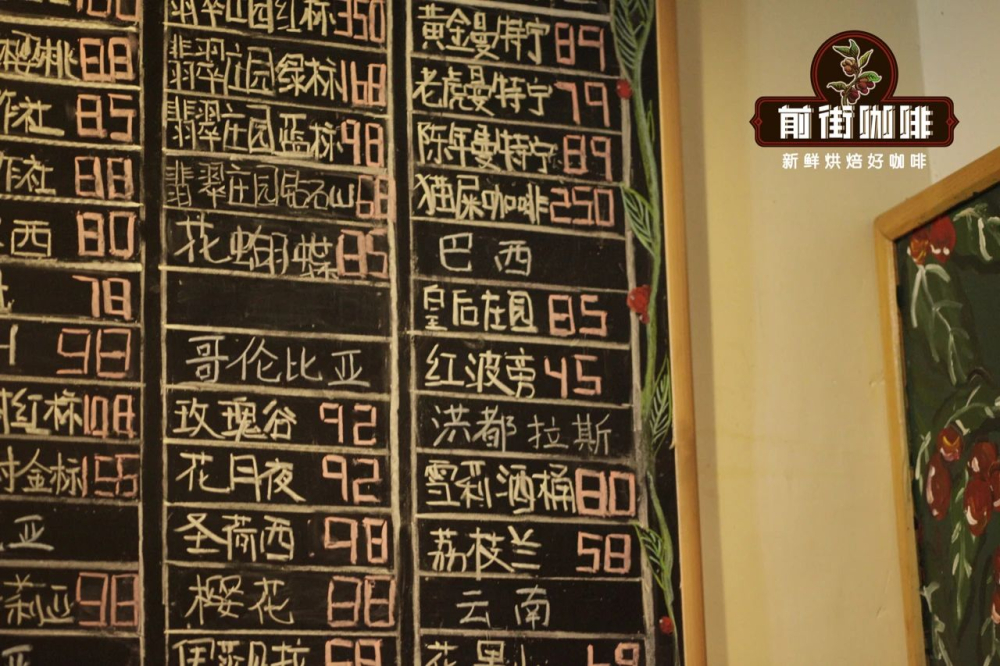
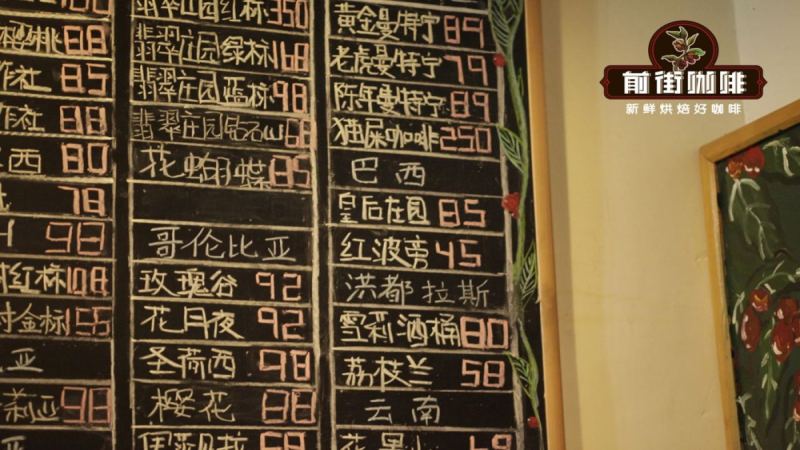
Front Street Coffee's bean list features over fifty types of coffee beans, and those new to coffee often don't know where to start. If roughly categorized by flavor preference, they can be divided into two main camps: the acidic camp and the bitter camp. The most representative of the bitter camp are the rich and full-bodied Jamaican Blue Mountain, Indonesian Mandheling, and Brazilian coffee. Today Front Street Coffee will talk about the smooth, sweet, and pleasant Brazilian coffee.
What Are the Main Coffee Producing Regions in Brazil?
Brazil is located in the tropics, and its output of cash crops such as coffee, sugarcane, and citrus ranks first in the world. As the world's largest coffee producer, Brazil accounts for about one-third of global production. Statistics from 2020 show that Brazil continued to hold the top spot with 37.4% of total global production.
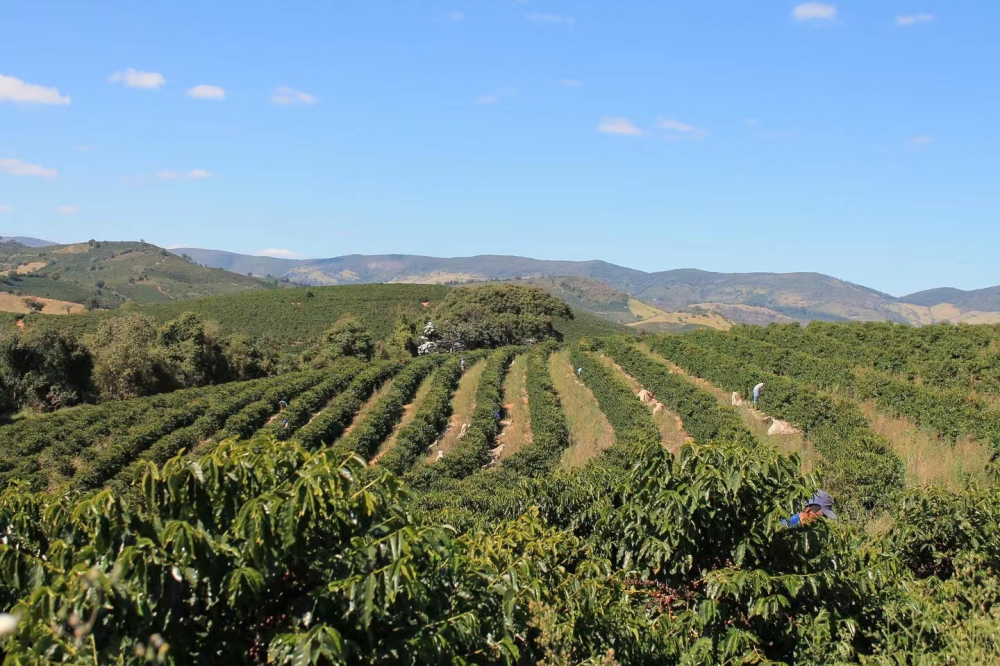
Brazilian coffee is mostly grown in flat terrain. To adapt to these topographic conditions, local estate owners cultivated improved Arabica varieties decades ago that do not require high altitude or shade, and can be planted directly on plains or grasslands, leaving coffee trees fully exposed to sunlight—completely different from the traditional high-altitude shaded cultivation model. The low-altitude environment accelerates the ripening of coffee cherries, resulting in insufficient flavor development and lower bean density than high-altitude regions. But the flat terrain also brings advantages—large coffee plantations can implement mechanized harvesting, greatly reducing labor costs.
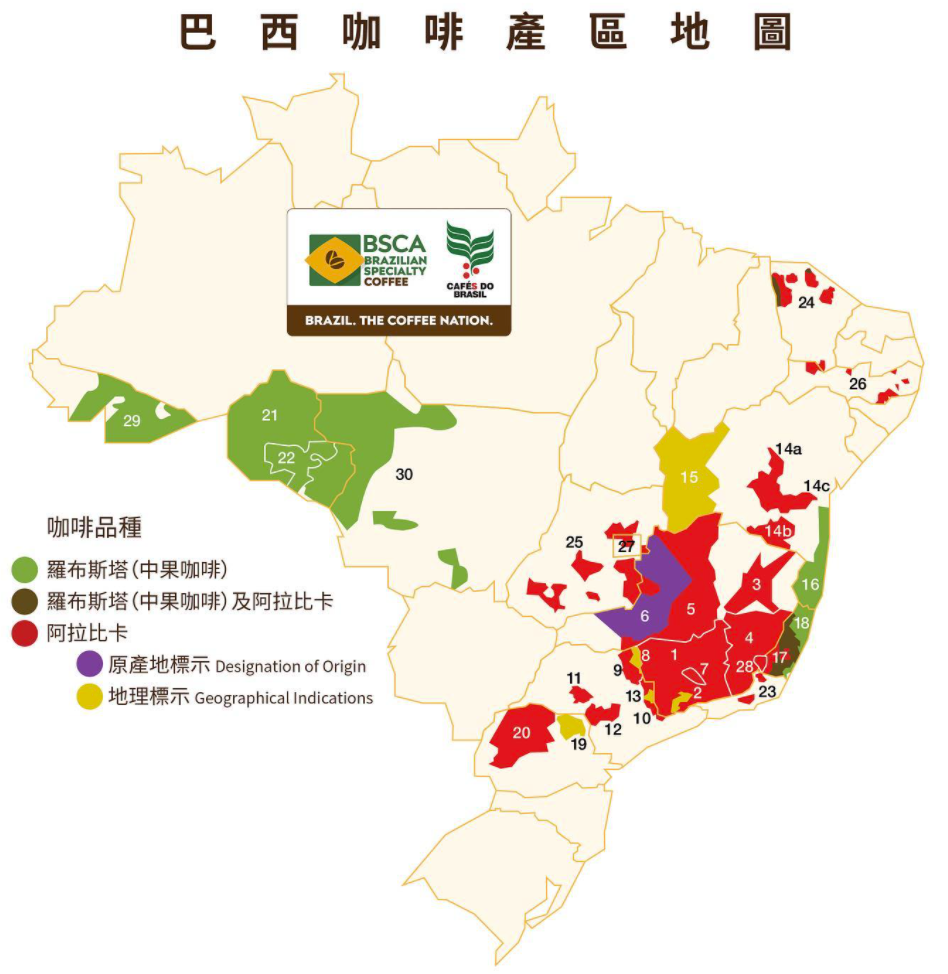
Brazilian coffee cultivation covers 14 states nationwide, with 7 states producing the most, together accounting for nearly 90% of the national total. The western zone is dominated by Robusta varieties, while the higher-quality Arabica is concentrated in the southeast. Here Front Street Coffee focuses on two representative regions: Minas Gerais, Brazil's largest coffee producing region, and São Paulo, where coffee was first planted in Brazil.
The state of Minas Gerais produces nearly half of the country's coffee annually and has four major producing regions under its jurisdiction: Cerrado, Sul de Minas, Chapada de Minas, and Matas de Minas. The Cerrado region, sharing its name with the Cerrado savanna, in coffee terminology specifically refers to the Cerrado area in western Minas Gerais. The terrain there is flat, the harvest period is concentrated, and it is very suitable for large-scale management and harvesting operations. Many exporters have established coffee farms there, generally covering more than 10 hectares. The other three regions, due to their more undulating terrain and steep hills, mainly rely on smallholder manual production.
The state of São Paulo includes one of Brazil's better-known coffee producing regions, Mogiana. The name of this region comes from the Mogiana Railroad Company—a company that established a "coffee railway" in 1883. The arrival of the railway improved transportation conditions and drove further expansion of coffee production here. The Mogiana region has an altitude of 900 to 1,100 meters, with an average annual temperature of about 20°C. Its hilly terrain gives the coffee good sweetness and balance. Due to terrain limitations, estate production mainly relies on manual harvesting. The Queen's Estate coffee on Front Street Coffee's bean list comes from Mogiana, displaying sweet, clean, well-balanced characteristics with tropical fruit aromas.
Brazilian Coffee Varieties
Brazil has a wide variety of coffee varieties, currently with Red Bourbon, Yellow Bourbon, Mundo Novo, and Catuai as the mainstays, among which Bourbon is the oldest local variety. Bourbon cherries are short and round, and the beans have higher density. Bourbon grown at high altitudes has high sweetness and bright acidity. Like Typica, it is an ancient and excellent variety. Bourbon has better resistance to leaf rust than Typica, and its flavor is no less impressive. The biggest thing Bourbon and Typica have in common is that they must have shade trees to block sunlight in order to grow well and develop flavor, so they have certain requirements for the growing environment.
Common Bourbon changes color from green to slightly yellow, then red, and finally to fully ripe dark red from flowering to fruit maturity, hence the name Red Bourbon. There are also Bourbon varieties that do not turn red when ripe, but instead turn a rarer yellow or pink, namely Yellow Bourbon and Pink Bourbon. Yellow Bourbon produced at high altitudes has delicate flavors and has won top placements multiple times in Brazil's Cup of Excellence competition. Front Street Coffee's Queen's Estate coffee uses precisely Yellow Bourbon coffee.
Brazilian Coffee Bean Grading
Due to the enormous production volume and uneven bean quality, local quality inspection agencies take a 300-gram sample and grade it according to different standards such as green bean defects, size, and cupping. This is also Brazil's unique grading system that distinguishes it from other producing countries. Brazilian coffee jute bags usually bear relevant grade information: country + defect grade + cup profile + screen size + flavor + region. For example, Brazil NY.2 SC – 17/18 FC Cerrado means it comes from the Cerrado region of Brazil, with a screen size of 17 to 18, SC stands for Strictly Soft, indicating a very smooth mouthfeel, FC stands for Fine Cup, indicating high-quality cup flavor, and the defect rate grade is NY.2.
Defect grading method: NY.2 refers to the New York grading standard. According to the proportion of defects, it can be divided into NY2, NY2/3, NY3, NY3/4... The smaller the number, the lower the defect rate and the higher the grade. Among them, lots with deductions below 4 points belong to NY2, which is the highest grade. Since NY.1 requires not a single defective bean, such specially selected lots cannot be supplied stably, so Brazil sets NY.2 as the highest grade.
Screen size: 17/18 means the green beans' screen size is between 17 and 18 (1 screen = 1/24 inch).
There are also corresponding standards for flavor and mouthfeel. Based on the coffee's mouthfeel during cupping, there are several different descriptions: Strictly Soft, Soft, Softish, Hard, Rioy. SC means Strictly Soft, the best mouthfeel. Cup flavor is divided into Fine Cup, Good Cup, Fair Cup, Poor Cup, and Bad Cup, among which Fine Cup has the best flavor and highest quality, followed by Good Cup.
Flavor Characteristics of Brazilian Coffee Beans
Specialty-grade Brazilian coffee beans have the characteristics of low acidity and high body. After roasting, they present flavors of nuts, cocoa, chocolate, and toast, with a smooth, balanced, and clean mouthfeel. Therefore, they are often used in espresso blend recipes, playing a supporting and neutralizing role. Front Street Coffee's bean list has 4 espresso coffee beans, three of which use Brazilian coffee as the base ratio (Front Street Specialty Blend Coffee, the espresso bean recommended by many baristas—Front Street Dark Cocoa Blend Coffee, and Front Street Commercial Blend Coffee), giving the extracted espresso rich golden crema and intense roasted hazelnut aroma. Made into Americano, it is rich and aromatic; blended with milk into a latte, it becomes creamy and smooth.
The most common form Front Street Coffee offers is pour-over as single-origin coffee, allowing everyone to taste the flavor characteristics of Brazilian coffee. If you want to enjoy rich Brazilian coffee at home, you can follow the brewing parameters below from Front Street Coffee for pour-over.
Dripper: KONO dripper
Water temperature: 87–88°C
Coffee dose: 15 grams
Coffee-to-water ratio: 1:15
Grind size: medium grind (70% passing rate on China standard No. 20 sieve)
Wet the coffee bed with twice the weight of the coffee grounds in water, forming a dome and letting it bloom for 30 seconds. Then pour in a thin stream in circles from the inside out until 125 grams, pause, wait for the coffee bed to drop to half the height of the dripper, then continue pouring the third stage with the same thin stream until 225 grams, and remove the dripper after all the coffee liquid has filtered through. The total time is about 2 minutes.
For professional coffee knowledge exchange and more coffee bean information, please follow Coffee Workshop (WeChat public account: cafe_style)
For more specialty coffee beans, please add the private WeChat of Front Street Coffee (FrontStreet Coffee), WeChat ID: qjcoffeex
The above content is compiled by CoffeeHunters, a coffee news website.


