







What Separates Sidamo and Yirgacheffe Coffee Beans?
Yirgacheffe and Sidamo sit close together in southern Ethiopia but cup differently. Yirgacheffe, originally part of the larger Sidamo region, shows citrus and elegant floral notes, with the local Kurume variety expressing its terroir; Sidamo leans toward berry and honey sweetness. Altitude, varieties, processing, and microclimate explain the gap between the two profiles.
Yirgacheffe lies northwest of Sidamo and was separated into its own region after its flavors stood out. Its growing areas include Wenago, Kochere, and Gedeb, with altitudes near 2,000 meters. The article compares representative beans, roasting curves, and brewing parameters, a different exercise from arabic coffee vs turkish coffee comparisons, so each cup shows its origin clearly.
Ethiopia, as an important birthplace of specialty coffee, has its two major regions Yirgacheffe and Sidamo frequently compared by coffee enthusiasts. Although both belong to southern Ethiopia, they present distinctly different flavor profiles due to differences in varieties, altitude, processing methods, and microclimates. This article starts from the selection perspective of Front Street Coffee, systematically reviewing the regional backgrounds, representative beans, roasting curves, and brewing parameters of Yirgacheffe and Sidamo, helping readers understand the difference between Yirgacheffe's floral and citrus notes and Sidamo's berry and honey sweetness, while providing practical extraction suggestions so that every cup of Ethiopian coffee can show its best.
For more specialty coffee information, welcome to follow our WeChat official account: Front Street Coffee (FrontStreet Coffee)
When it comes to Ethiopia's specialty coffee regions, Yirgacheffe and Sidamo are often the first two names that come to mind. What exactly are the differences between the coffees produced in these two places? Front Street Coffee (FrontStreet Coffee) will guide everyone through them one by one this time.
Yirgacheffe Specialty Coffee Region Among many regions, Yirgacheffe's fame is second to none. The citrus notes and elegant floral fragrance presented by Front Street Yirgacheffe make it an entry-level choice for many people stepping into the world of single-origin coffee. It is worth mentioning that in Yirgacheffe there is a coffee variety called "Kurume," which refers to a local variety formed after long-term climate and soil conditions in the region, and can be said to be a concentrated expression of Yirgacheffe's terroir characteristics.
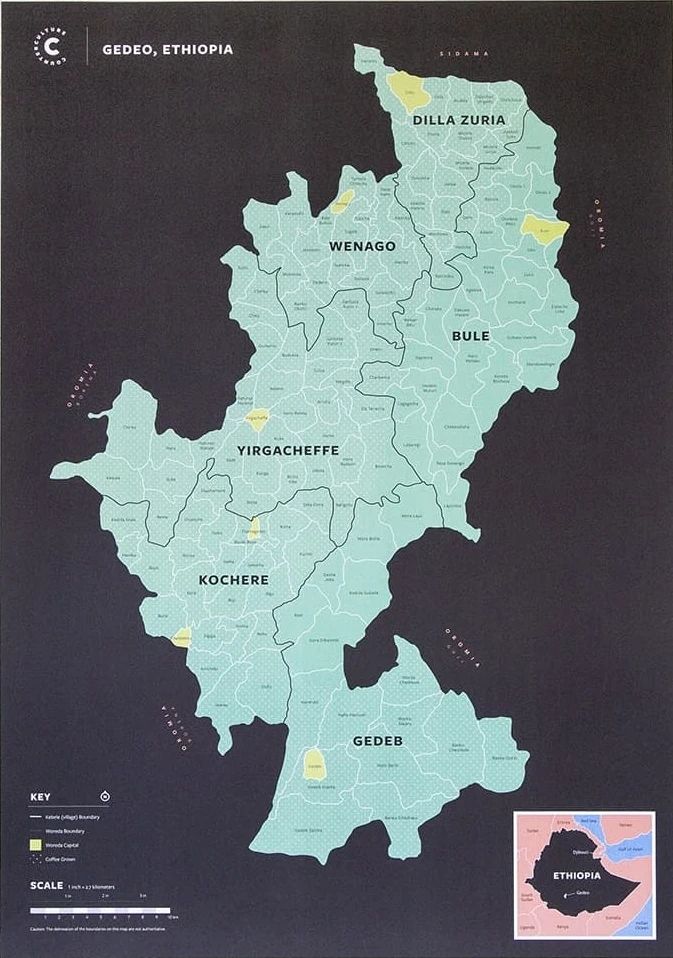
Geographically, Yirgacheffe is located northwest of Sidamo and originally belonged to the larger Sidamo region. Later, because its flavor performance was so outstanding, it was separated into an independent region. If you look at a map, you will find that Yirgacheffe is just a small town for Ethiopia, but as a coffee region, its scope is far beyond Yirgacheffe town itself and also includes multiple legal areas such as Wenago, Kochere, and Gedeb.
The altitude of the Yirgacheffe region is usually around 2,000 meters, making it a typical high-altitude growing area. The advantages brought by high altitude make this an ideal place for coffee growth. In addition to superior altitude conditions, this region also has sufficient rainfall, fertile soil, and a cool and pleasant climate, all of which are exactly the environmental factors preferred by Arabica coffee beans. It can be said that Yirgacheffe is a naturally fertile land of flavor. Among Yirgacheffe's many outstanding representatives, Front Street Yirgacheffe Geddid comes from the Geddid Cooperative.
Front Street Ethiopia Yirgacheffe Geddid Region: Yirgacheffe Gedeo Zone Producer: Geddid Cooperative Altitude: 1900-2300m Variety: Local heirloom varieties (Heirloom) Processing Method: Natural process Grade: G1
Geddid Cooperative is located in the Woka region at the southeastern end of Yirgacheffe. At first, it was only a component of the Woka Cooperative under the Yirgacheffe Coffee Farmers' Cooperative Union YCFCU. Later, as the market's demand for traceability of green coffee beans continued to increase, more and more "single-origin areas" were discovered one by one by coffee hunters around the world.
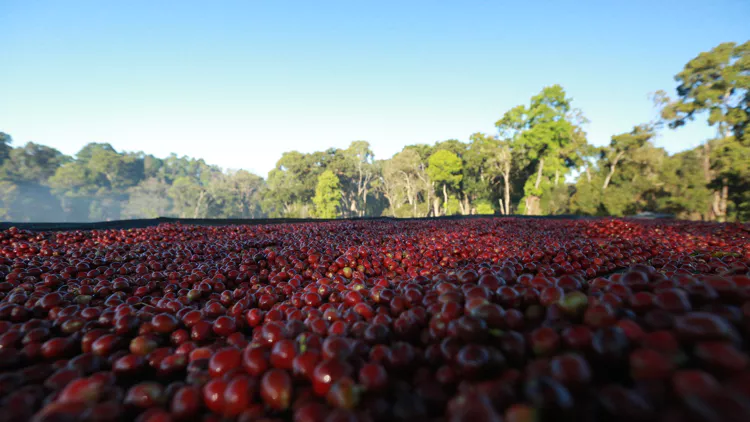
In 2012, Geddid, with about 300 member farming households, officially separated from the original organization and established the independent "Geddid Cooperative." Geddid Village is one of the earliest village areas to be separately delineated. Many local smallholder farmers were originally members of the Woka Cooperative, so their coffee cultivation and processing techniques are quite mature. The cooperative mainly uses two processing methods: washed and natural. This Front Street Yirgacheffe Washed Geddid purchased by Front Street can bring out citrus and black tea notes, and as the temperature changes, cream, caramel, and almond aftertastes also emerge, with a lasting sweet finish and a clean, sweet taste.
Sidamo Specialty Coffee Region The Sidamo region has an altitude range of 1,400 to 2,200 meters and is a long-famous specialty coffee area in southern Ethiopia, adjacent to Kenya. Washed Sidamo green beans are light green, relatively small, long oval in shape, plump, balanced in overall quality, with a rich and mellow aroma and a long aftertaste, carrying a kind of primitive wild charm.
Sidamo's coffee flavors are extremely diverse. Different soil types, microclimates, and a huge number of native coffee varieties create significant differences and distinct personalities among coffees produced in different towns. In 2010 to 2012, this region continuously received high scores of 92 to 94 on the authoritative American coffee evaluation website CR, which shows the excellence of its green bean quality. The region has rich terrain, with high mountains, highlands, plateaus, valleys, and plains distributed in an interlaced pattern. Geologically, it is volcanic soil rich in nutrients and with good drainage. The soil depth is close to two meters, and the surface soil is dark brown or brown. The greatest advantage of this place is that soil fertility is maintained through the cycling of organic matter, with fallen leaves from surrounding trees and plant residues naturally converting into nutrients.
Front Street Ethiopia Sidamo Natural Arsi
Region: Sidamo West Arsi Altitude: 1900-2200m Variety: Local heirloom varieties Processing Method: Natural process Grade: G1
West Arsi is located between the well-known Yirgacheffe growing area and Harerge, in the eastern part of the Sidamo region, with an altitude of 1,900 to 2,200 meters. This area benefits from high altitude and fertile soil, and in addition, traditional green organic cultivation methods use fallen leaves from surrounding trees and plant residues as natural fertilizer, giving the coffee produced here rich tropical fruit notes and a very prominent sweetness.
Coffee cultivation in the West Arsi region is mainly based on smallholder models. The average farm size of each smallholder is not large, about 2 to 3 hectares, but even so, it is slightly larger than the common 1.5 to 2 hectares in most parts of Ethiopia. Although local coffee cultivation techniques are still in the development stage, compared with other regions, West Arsi's cultivation techniques are improving very quickly. Coffee farmers do not need to hire temporary or full-time workers, but rely on family members to help complete coffee selection. This method allows them to better control coffee quality, and processing stations usually pay extra for ripe red cherries, greatly motivating coffee farmers.
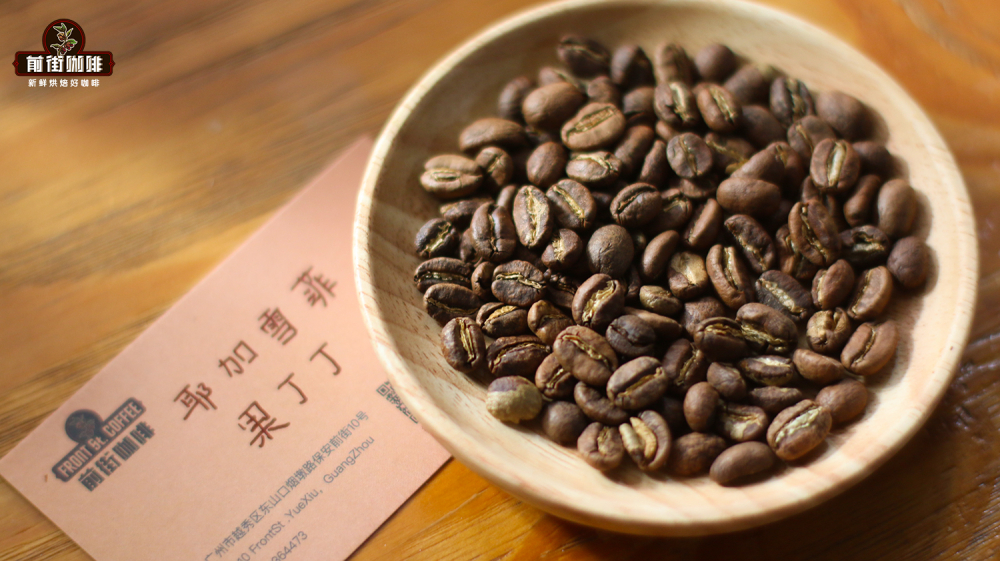
This Front Street Sidamo Natural Arsi coffee purchased by Front Street lets you feel berry, honey, and cranberry jam-like sweetness, full of fruity charm.
Front Street Coffee (FrontStreet Coffee) Roasting Analysis Front Street roasters believe that both are excellent-quality Ethiopian coffee beans. Front Street Yirgacheffe Geddid retains the region's distinctive floral and citrus fruit notes, while Front Street Sidamo Arsi has berry and honey sweetness, so two custom light-roast curves were developed for them respectively.
Front Street Yirgacheffe Geddid: Use Yangjia 800N, charge amount 480g. When the drum temperature rises to 175°C, charge the beans, set the damper to 3, and set the heat to 120; the turning point is 1 minute 32 seconds. When the drum temperature is 140°C, keep the heat unchanged and open the damper to 4; at this time the bean surface turns yellow, the grassy smell completely dissipates, and the dehydration stage begins. At 166°C, lower the heat to 100, and at 176°C lower the heat to 80, keeping the damper unchanged. At 8 minutes 28 seconds, wrinkles and dark spots appear on the bean surface, and the toast smell clearly turns into coffee aroma, which can be regarded as the prelude to first crack. At this time, listen carefully for the first crack sound. First crack begins at 9 minutes 38 seconds. Adjust the damper to 5 (heat adjustment must be very cautious and must not be so low that there is no cracking sound). After first crack, develop for 1 minute 30 seconds and drop the beans at 193.5°C.
Front Street Sidamo Arsi: Yangjia 800N semi-direct fire, roasting amount 480g. Charge at 170°C, heat 130, damper 3; turning point 1 minute 32 seconds, when the drum temperature is 100.2°C keep the heat unchanged; at 3 minutes adjust the damper to 4, and at 4 minutes increase the heat to 140. When the drum temperature is 150.5°C, the bean surface turns yellow, the grassy smell completely disappears, and the dehydration stage begins. At 8 minutes 36 seconds, wrinkles and dark spots appear on the bean surface, and the toast smell clearly turns into coffee aroma, which can be defined as the prelude to first crack. At this time, listen clearly for the first crack sound. First crack begins at 9 minutes 10 seconds. After first crack, develop for 1 minute 30 seconds and drop the beans at 192.5°C.
Front Street Coffee (FrontStreet Coffee) Brewing Suggestions
Ethiopian coffee has rich and diverse flavors, with floral and fruity aromas especially prominent. Front Street suggests choosing freshly roasted coffee beans so that the complete flavor can be tasted. Coffee beans enter their best tasting period 4 to 7 days after roasting. Once this period is exceeded, the aroma will dissipate more quickly. The coffee beans sold by Front Street are all freshly roasted within 5 days, so you can start brewing as soon as you receive them.
In order to fully show the flavor of Ethiopian coffee, Front Street chose two beans from the Yirgacheffe region: Front Street Geddid Cooperative and Front Street Natural Red Cherry. Because Ethiopian beans grow in high-altitude environments, the beans are relatively hard. Front Street believes that a higher water temperature and a finer grind are needed for brewing to extract Yirgacheffe's layered flavors. Speaking of grinding, some customers ask Front Street whether we provide grinding service. Of course Front Street provides grinding on request. However, after coffee beans are ground, the aroma volatilizes more quickly, so if they are ground in advance, they need to be drunk as soon as possible. Storing them too long will affect the brewing flavor.
Filter: V60 #01 Water temperature: 90-91°C Dose: 15g Coffee-to-water ratio: 1:15 Grind size: fine granulated sugar size (20-mesh sieve, 80% passing)
Front Street brewing method: In the first stage, pour 30 grams of water for a 30-second bloom, then pour 95 grams (the scale shows about 125 grams), finishing the pour at about 1 minute. When the water level drops to 2/3 of the coffee bed, pour the remaining 100 grams (the scale shows about 225 grams), finishing the pour at about 1 minute 35 seconds. Dripping is completed at 2 minutes 10 seconds. Remove the filter cup and finish extraction.
Both Front Street Ethiopian Yirgacheffe coffees give off delicate floral and fruity aromas after grinding. Front Street Washed Geddid has a bright, uplifting acidity like lemon and berries on the palate, with prominent sugarcane sweetness, and after the temperature drops it shows a green tea-like mouthfeel with a lasting finish; Front Street Natural Arsi tastes of berry and fermented fruit sweetness, with a round black tea-like mouthfeel.
The above content is compiled by CoffeeHunters, a coffee news website.


