







How Did Mandheling Coffee in Java and Sumatra Get Its Name?
Mandheling is a Sumatra Arabica coffee named after the Mandailing tribe, not a producing region. The story traces to World War II, when a Japanese soldier asked a cafe owner about a coffee and the owner replied with his home region. After the war the name stuck to Sumatran Arabica. Aceh Gayo, Lake Toba, and Lintong are the main areas.
Dutch colonists brought Typica to Java and Sumatra in the late seventeenth century, and rust disease later pushed replanting, including areas where Robusta coffee beans are grown. The wet-hulling process strips parchment early, giving Mandheling its full body and herbal spice aroma. Lintong and Golden Mandheling show those traits in the cup.
Mandheling is synonymous with Indonesian Sumatra Arabica coffee. Its name comes from a misreading of the Mandailing tribe and hides an amusing story from World War II. From the Dutch colonists introducing Typica, to the estates being destroyed by rust disease and replanted with Robusta, to the Gayo Mountains in Aceh and the Lake Toba and Lintong producing regions in North Sumatra each developing their own unique flavors, Indonesian coffee has traveled a winding and fascinating path. This article will sort out the historical thread of Sumatran coffee, explain in detail how the wet-hulling process shapes Mandheling's signature full body and herbal spice aroma, and include Front Street Coffee's flavor descriptions and brewing parameters for Lintong Mandheling and Golden Mandheling, giving you a complete understanding of this representative Asian coffee.
In the Asian coffee landscape, Indonesian Mandheling is undoubtedly a highly recognizable representative. What needs to be clarified is that Mandheling is not the name of a producing region, but a transliteration of a tribal ethnic group called Mandailing in northwestern Sumatra. Regarding the origin of this name, there is an anecdote from World War II: during the Japanese occupation of Indonesia, a Japanese soldier drank a cup of extremely aromatic coffee in a cafe and asked the owner what coffee it was, but the owner mistakenly thought the other party was asking where he was from and casually replied "Mandailing." After the war ended, the soldier recalled the cup of coffee he had drunk in Indonesia and called it "Mandheling." Since then, Arabica coffee beans produced in Sumatra have gradually come to be collectively called Mandheling coffee.
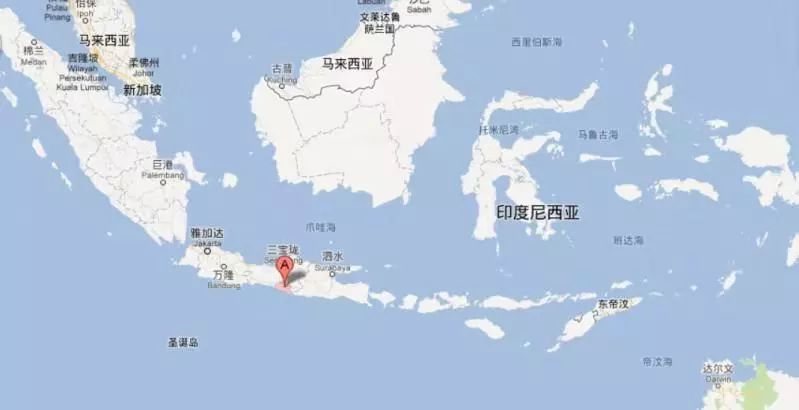
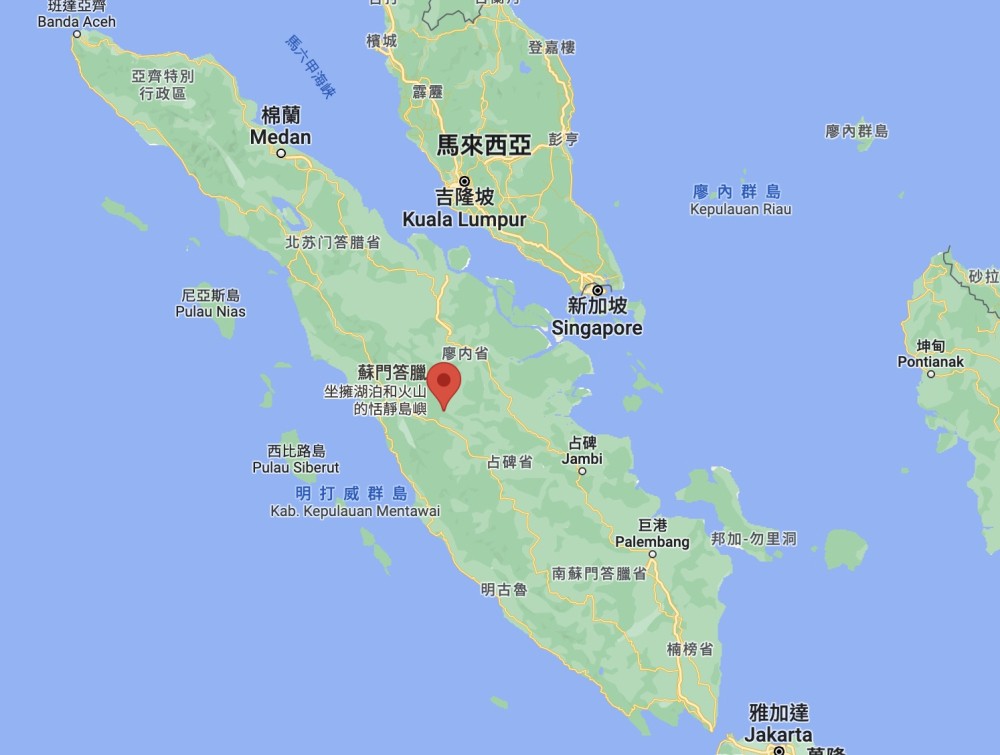
The homeland of Mandheling coffee is Sumatra, Indonesia. Indonesia is a Southeast Asian country and the world's largest archipelagic state, with Jakarta as its capital, and it borders Papua New Guinea, East Timor, and Malaysia. Indonesia is also one of the earliest regions outside Yemen to grow coffee.
At the end of the seventeenth century, the Dutch first brought Arabica seedlings to Ceylon (present-day Sri Lanka) and Indonesia. They first transplanted the Arabica Typica variety to Jakarta on the island of Java. Because the local climate and soil conditions were suitable, Arabica quickly spread to Sumatra in the northwest of Java and Sulawesi in the northeast. In 1877, a large-scale disaster swept across the Indonesian islands. Coffee rust disease almost destroyed all coffee trees, and people had to abandon the Arabica they had cultivated for many years and instead introduce the more disease-resistant Robusta coffee tree from Africa.
Today, Indonesia has become one of the major coffee-producing countries, with coffee production mainly concentrated in Java, Sumatra, and Sulawesi, among which Robusta accounts for ninety percent of total production. Sumatra Mandheling, however, belongs to the scarce Arabica category. When we speak of Mandheling coffee today, we usually mean Arabica coffee beans produced on the Indonesian island of Sumatra.
Indonesian Coffee Bean Growing Environment
Indonesia has a typical tropical rainforest climate, with an average annual temperature between 25 and 27 degrees Celsius, no distinction between the four seasons, and annual rainfall of 1600 to 2200 millimeters. Indonesia lies in a volcanic belt, and the soil is fertile and rich in minerals, providing favorable conditions for coffee bean cultivation and growth. Indonesian coffee is mostly grown at altitudes between 900 and 2100 meters, with the main growing areas concentrated at around 1200 meters.
Indonesian coffee beans have two main harvest seasons, with the main harvest around September to October and the secondary harvest in May to June. This year Indonesia's coffee bean exports have increased significantly compared with last year. Analysts believe that last year's high Indonesian coffee prices led to reduced exports, while production growth in the current season has driven exports higher. Between the one decrease and the one increase, this year's Indonesian coffee exports have climbed sharply.
Indonesia's main coffee-producing areas are Sumatra, Java, and Sulawesi, among which "Mandheling" from Sumatra is the most famous. Around Lake Tawar in the north, it can be called Aceh coffee or Lake Tawar coffee; what is produced in the Lintong and Lake Toba area can be called Mandheling. Sumatra is divided into eight provinces, but only two provinces grow coffee in large quantities—Aceh and North Sumatra. The most representative coffee-producing regions of these two provinces are the Gayo Mountains around Lake Tawar in Aceh, where the local indigenous Gayo people grow coffee, and the growing areas around Lake Toba in North Sumatra. Lake Toba is enormous and is the largest volcanic lake in the world. The Mandheling produced by Lake Tawar and Lake Toba is the famous "two lakes, two Mandhelings," and the producing region south of Lake Toba is Lintong.
Lake Toba: Its geographical location is north of Medan, the provincial capital of Sumatra. It is an alpine freshwater lake with an average elevation of about 900 meters. The lake is diamond-shaped, 100 kilometers long and 30 kilometers wide, with an area of 1130 square kilometers. The surrounding alpine lake area has an average elevation of about 1100 to 1600 meters; at the same time, it is also the largest volcanic lake in the world. What is commonly called Mandheling refers to coffee beans of Typica or its variants grown in the mountainous areas around Lake Toba, among which Lintong is the most famous Mandheling coffee-producing region in the Lake Toba area, also called Lintong Mandheling coffee.
Unselected raw Lintong Mandheling beans sometimes show unstable output, but to a large extent they still retain the flavor characteristics of Sumatran coffee—a strong, intense mouthfeel with a distinctive spicy herbal aroma. Therefore, Front Street also lists Lintong Mandheling in Front Street's high-value daily coffee series, so that everyone can try the unique taste of Indonesian coffee.
Aceh Gayo Mountain Producing Region:
The Gayo Mountain region is located in Aceh in northern Sumatra, where coffee is grown on hillside plots around the town of Takegon and Lake Tawar. The average growing altitude in the production area is between 1110 and 1600 meters. The coffee is grown by smallholders under shade trees and processed using the wet-hulling method, expressing a peculiar flavor and a low yet lively richness. Aceh, located at the northernmost tip of Sumatra, is a fascinating and complex place.
Because of long-term political instability, Aceh is not a region most people would visit. The Gayo Mountains are located in the Aceh producing region of North Sumatra Province, and most of the coffee farmers working there are local farmers. The word "Gayo" comes from a tribe in the Aceh region of Indonesia. This area has ideal growing conditions, a long historical culture, and unique flavors. Organic methods are widely used in coffee cultivation in this region, with no chemical fertilizers applied, and it is considered a green coffee-producing region in the world. Therefore, Gayo coffee is also often called green coffee or Gayo organic coffee.
Lake Toba is located in the central part of North Sumatra Province. Dutch colonists moved "Java Mandheling" north to the Lake Toba area in 1888. Lintong in South Sumatra and the Lake Toba area can be called Mandheling, and the Lintong area is the true Mandheling producing region. Mandheling is produced in the mountainous areas around Lake Toba. The lake is located north of Medan, the provincial capital of Sumatra, and is an alpine freshwater lake with an average elevation of about 900 meters. What is commonly called Mandheling refers to coffee beans of Typica or its variants grown in the mountainous areas around Lake Toba.
Lake Tawar is located in the central part of the Aceh Special Region, at the northern tip of Sumatra. Most of what is produced in North Sumatra is Gayo, mainly the Ateng variety; what is produced around Lake Tawar in the north can be called Aceh coffee or Lake Tawar coffee, and its area is less than one-tenth that of Lake Toba. However, in recent years, its coffee quality and production have surpassed those of Lake Toba.
Because Indonesia has thousands of islands, not all coffee in the country tastes the same. In addition to Java, coffee beans produced on the Indonesian island of Sumatra have made Mandheling coffee beans famous worldwide for their heavy body, low acidity, and aromas of earth, spice, and herbs.
Indonesia's Unique Coffee Processing Method—Wet Hulling
Wet Hulling, also known in the local language as Giling Basah, is a traditional Indonesian coffee processing method. From the name alone, wet hulling looks very similar to wet processing (the washed method), yet the cupping flavors of these two processing methods are completely different. Coffee processed by wet hulling is usually full-bodied and intense, with a very distinct character.
The uniqueness of Mandheling coffee's flavor comes from the local unique post-processing method for green coffee beans. Because Sumatra has rain all year round and high air humidity, if the natural sun-dried method were used, the coffee fruit might be ruined by rain or even over-fermentation, so the local area does not have the conditions for sun-dried processing.
In addition, the washed processing method requires sufficient water and also sufficient funds, while local economic conditions are limited and cannot meet the requirements of full washing. Therefore, the wet-hulling method with distinctive Sumatran characteristics emerged, with a short drying time and less water used in the process.
Wet method: After removing the skin and pulp of the coffee fruit, the parchment beans with sticky mucilage are briefly cleaned and then placed in a tank for short fermentation. The longer the fermentation time, the heavier the acidity. Some processing stations or estates even skip the fermentation step entirely and directly spread the parchment beans evenly for drying. In this way, acidity is suppressed and the viscosity of the mouthfeel is increased. To a certain extent, the parchment layer serves as a protective layer for the green coffee beans, protecting them from external damage.
However, Sumatra's local climate is too humid, and coffee drying takes longer. During this period, maintaining coffee at relatively high humidity attracts bacterial infection, causing the coffee beans to be ruined. By removing the parchment layer and allowing sunlight to directly hit the surface of the green coffee beans, the green coffee beans can dry quickly.
In the process of removing the parchment layer, greater friction is generated between the green coffee beans and between the green coffee beans and the machine. Excessive heat may cause the coffee to age quickly, leading to the woody and earthy special flavors found in Sumatran coffee.
This special wet method causes Mandheling coffee beans to appear cracked and asymmetrical in shape, which is what we call "goat's feet." This is not a defective bean but a normal phenomenon. Some friends even say that the uglier the Mandheling coffee beans, the better they taste.
Golden Mandheling Coffee
Another Mandheling coffee bean often mentioned is called "Golden Mandheling," and the word "Golden" reflects the high quality of this coffee bean. Front Street chose Golden Mandheling produced by PWN. When producing Golden Mandheling, PWN uses extremely strict standards: green coffee beans are above 18 screen size, and each 300-gram sample of green beans contains fewer than 3 defects. On the basis of meeting G1 grade, it is further subjected to three rounds of manual hand sorting to ensure that defective beans are completely removed, thereby extending cleanliness of the cup as much as possible and making the sweetness even stronger.
Traditional Mandheling coffee has a full body because it is roasted to a darker degree. In order to present the traditional Mandheling flavor, Front Street uses a medium-dark roast level when roasting Mandheling.
Front Street Brewing Parameters for Mandheling Coffee:
The special feature of the Kono dripper is that its "ribs" guide grooves extend to the bottom of the opening where the coffee liquid flows out. Because the ribs are at the bottom and are very short, they fit closely with the filter paper, so the flow rate is slower than that of the V60. Therefore, it can increase the coffee's extraction rate and improve the coffee's body.
Dripper: KONO dripper, water temperature: 88°C, dose: 15 grams, coffee-to-water ratio: 1:15, grind size: medium-coarse grind (75% passing rate on China standard No. 20 sieve).
Use staged extraction. Bloom with twice the amount of water as the coffee grounds, that is, 30 grams of water for 30 seconds. The reason the blooming process is needed is to allow the coffee grounds to release internal carbon dioxide gas, thereby making the later extraction more stable. Pour in a small stream in a circular motion until 125 grams, then pause, continue pouring until 225 grams and stop. After the water in the dripper has dripped through, remove the dripper. Start timing from the beginning of pouring; the extraction time is 2'00". Next, pick up the whole cup of coffee and shake it evenly, then pour it into a cup for tasting.
[Front Street Lintong Mandheling Coffee Flavor Characteristics] Herbal, chocolate, caramel, overall relatively balanced.
[Front Street Golden Mandheling Coffee Flavor Characteristics] Nuts, spices, herbs, licorice, chocolate, caramel.
The above content is compiled by CoffeeHunters, a coffee news website.


