








How Do Soy Milk and Calcium Milk Change a Latte?
Five non-fresh-milk ingredients were tested in lattes: soy milk, milk powder, banana milk, Wangzai milk, and AD calcium milk. Each was paired with the same espresso blend at a coffee-to-milk ratio of 1:5, hot and cold, and scored for aroma integration, sweetness, smoothness, milk foam, and latte art. The calcium coffee option changes body and foam most.
Milk powder mixed thin gave weak foam but decent sweetness, while soy milk split easily in hot coffee. Banana, Wangzai, and AD calcium milk added distinct sweetness that masked lighter espresso notes, so the dirty coffee milk ratio and bean choice matter more with these ingredients. The tests list pros and cons for home and shop use.
Latte, cappuccino, flat white, and Dirty all rely on milk, but what would they taste like if replaced with soy milk, milk powder, banana milk, Wangzai milk, or AD calcium milk? This time, Front Street made lattes with five types of non-fresh milk ingredients one by one, uniformly using Front Street Italian Blend · Strawberry Candy Espresso, with a coffee-to-milk ratio of 1:5 for hot and cold comparisons, focusing on recording aroma integration, sweetness, smoothness, milk foam performance, and suitability for latte art. The article preserves parameters that can be directly replicated and provides pros and cons for each ingredient, suitable for enthusiasts who want to make specialty coffee at home or in stores.

As everyone knows, Front Street has tested quite a few milks over the years. Because many familiar coffee drinks in daily life rely on milk to complete, such as latte, cappuccino, flat white, Dirty... So choosing what kind of milk is indeed quite crucial for coffee.
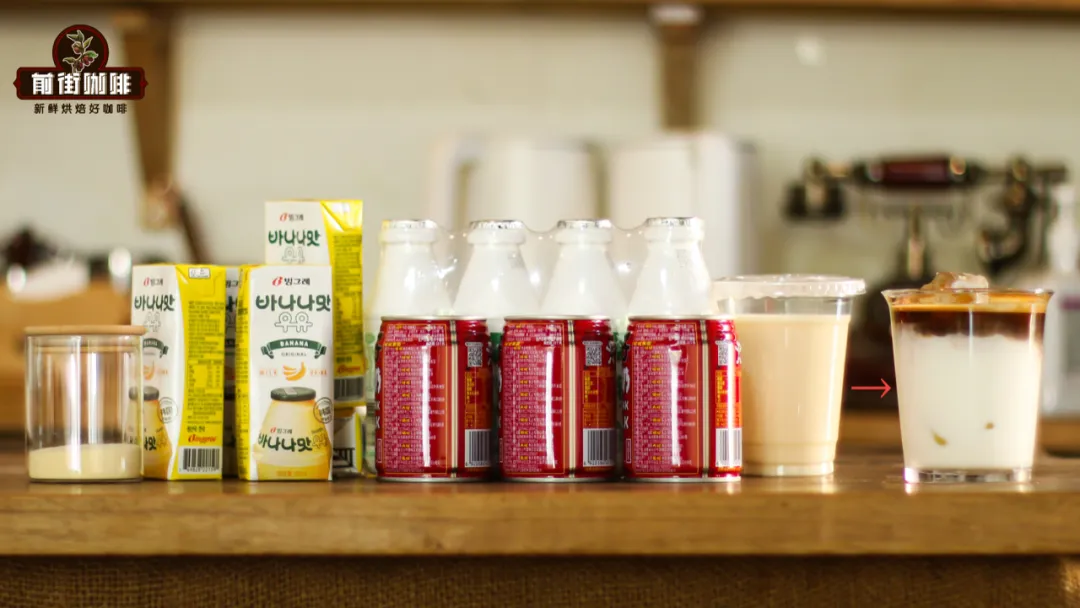
Besides regular dairy products, Front Street has always wanted to test another kind of "milk." Yes, it's that bunch in the cover image that looks familiar but isn't exactly traditional milk. It's just that the topic was too niche, so it was delayed until now. Recently, many friends have asked if these things can be used to make lattes, so today Front Street will share: what do lattes made with them actually taste like, and how do they perform?
(Milk powder, banana milk, Wangzai, soy milk...)
By the way, using these dairy products to make lattes is no longer new. Since a certain chain brand's raw coconut latte became popular, this kind of "specialty coffee" has come in waves.
Orange C Americano, North Ice Ocean Americano, ginger Americano, etc., are all hit products combining familiar classic drinks with coffee. So Front Street's review today shouldn't be too abstract... right.
Alright, without further ado, let's start Front Street's sharing.
What coffee beans are suitable for making lattes?
For latte coffee, it is recommended to purchase Front Street Italian bean series for production, including the crema hit - Front Street Classic Blend, nutty style - Front Street Specialty Blend, essential for opening a shop - Front Street Commercial Blend, and the god of cost-effectiveness - Front Street Dark Cocoa Blend. Each bean has its own characteristics and is suitable for different scenarios.
If you want a delicious and affordable daily staple, buy the Front Street Dark Cocoa Blend coffee beans recommended by many baristas. It is suitable for all types of coffee shops, bakeries, beverage stores, and home coffee machines. Yunnan washed small-grain coffee beans + Brazil semi-washed coffee beans, it combines the acidity of ripe plums with nutty notes. When ground into powder, it emits the aroma of creamy chocolate and cocoa cookies. The taste is balanced, and the crema has a golden luster. Friends opening a shop or using it at home can buy it without any problem.
Experimental beans
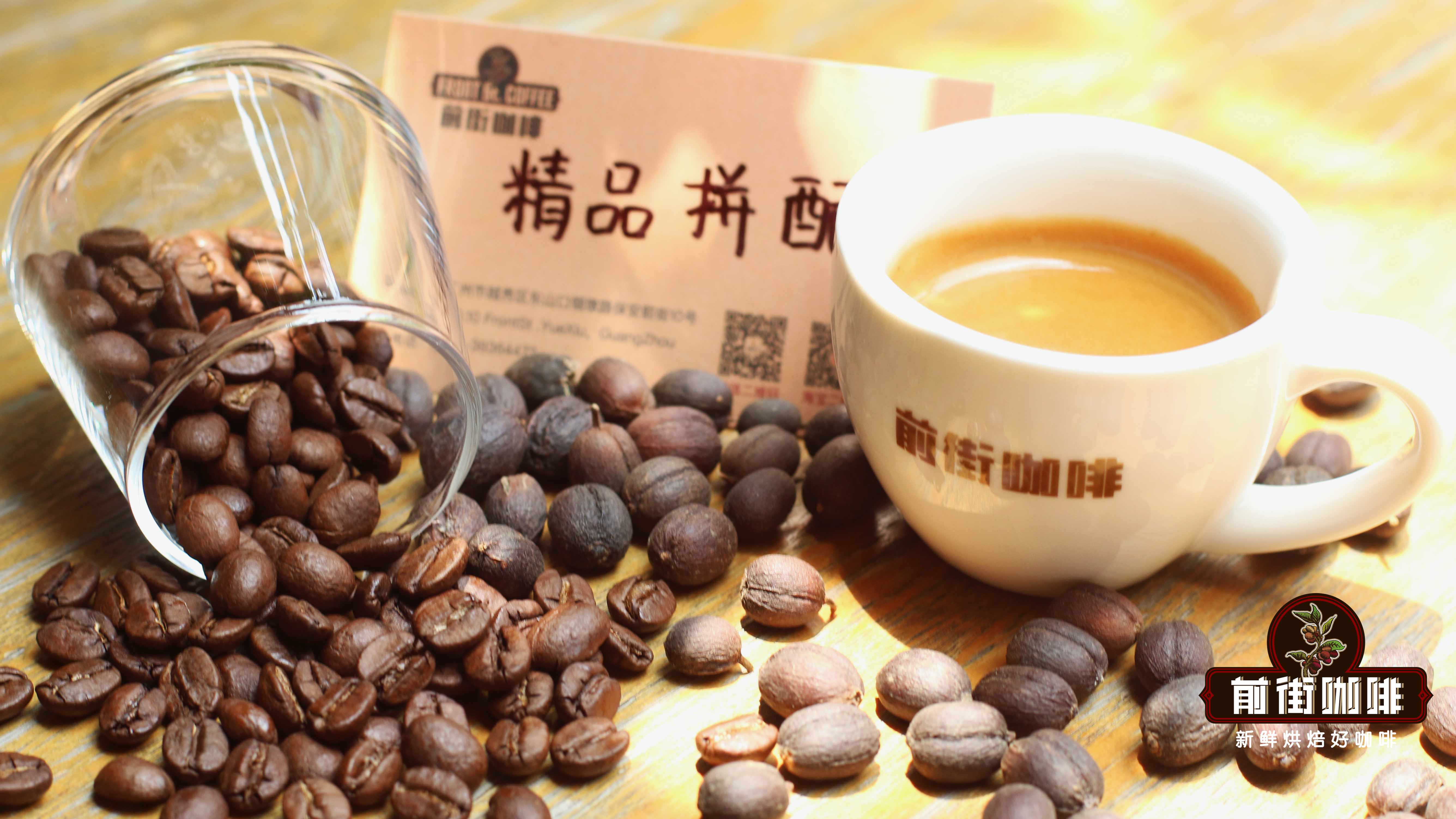
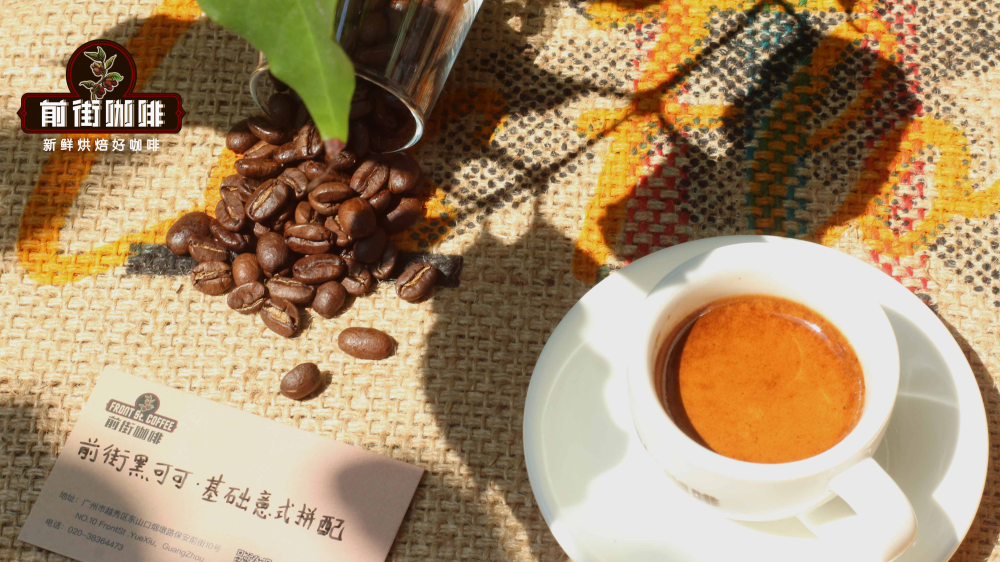
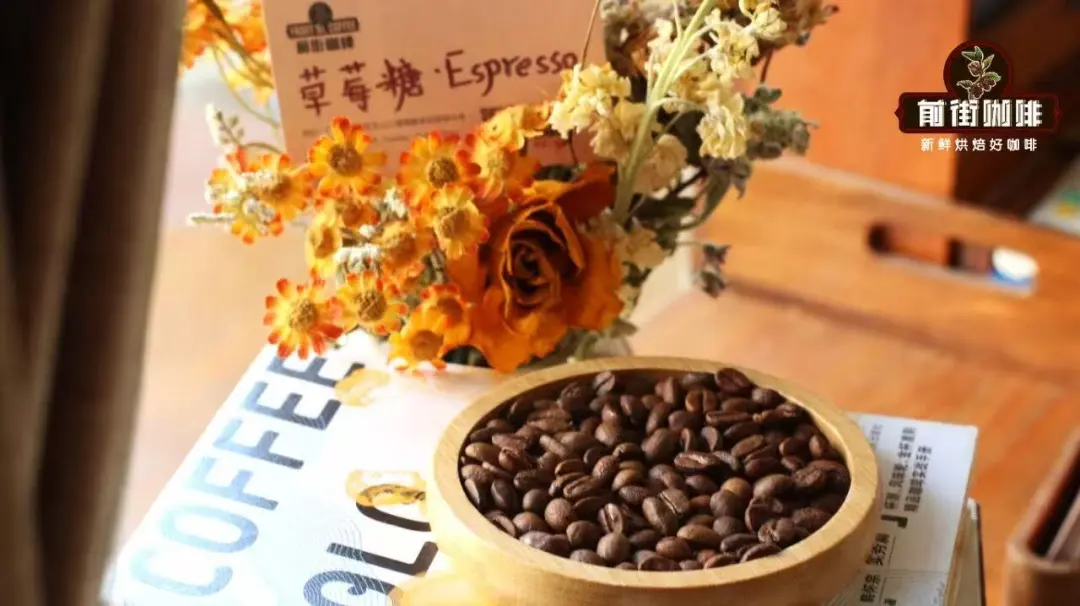
The espresso made by Front Street in this experiment used the same coffee beans, all from Front Street's bean list: Front Street Italian Blend · Strawberry Candy Espresso. The extraction parameters are: 20g powder, 30s, yielding 40ml espresso liquid.
The reason Front Street chose it is because this bean has very high compatibility. It is a medium-dark roast level, and the extracted espresso tastes balanced and soft, not very bitter, nor sour. At the same time, its flavor performance is also excellent: strawberry, rose, raisin, cookie. The milk coffee made from it is very delicious!
Contestant No. 1: Soy milk
The first to appear is the national drink—soy milk. Although soy milk is not a dairy product, like oat milk, it belongs to plant milk. Oat milk can be a coffee companion, why can't soy milk? So Front Street did this experiment last December: using soy milk instead of milk to make a "latte."
(Left is milk, right is soy milk)

The ratio used by Front Street is the same as for a latte, both 1:5, 40ml espresso with 200ml soy milk. To make it hot, first heat the soy milk to 65°C, then blend. After blending, start tasting.
Same as last year, the "latte" made with soy milk performs quite well in taste. The soy milk aroma and coffee aroma blend very well, with no abruptness. In terms of taste, because the soy milk has added sugar, this cup of "latte" has a slight sweetness, not bitter. The flavor performance is: bean aroma, strawberry, rose, cookie, chocolate. Quite good.
Unfortunately, after soy milk contacts coffee, the protein in soy milk changes and begins to curdle, greatly affecting the coffee's mouthfeel. Due to the presence of flocculent substances, the coffee has a noticeable grainy texture when drunk, not silky, like drinking a cup of coffee-flavored tofu pudding... (Since this time the latte art is even uglier, I'll still use last year's picture...)
From this alone, it can be seen that soy milk is not suitable for pairing with coffee. Although the "latte" made tastes good, the mouthfeel experience is greatly reduced, not very appealing.
Contestant No. 2: Milk powder
The second to appear is milk powder. In the comments section of "Put milk like this at night, and the next day you can make super rich milk coffee" shared by Front Street the day before yesterday, a friend suggested using milk powder to make rich milk coffee. Of course, it's possible, because Front Street already shared this method in mid-last year.
In that article, Front Street mentioned that using milk powder to make milk coffee has long existed, and in world-class coffee competitions, some contestants have used this method to increase coffee texture.
After trying it personally, Front Street also verified the feasibility of this method. Just pay attention to the ratio when brewing milk powder. If the ratio is too small, the concentration of the milk mixed is insufficient, and the coffee made will have a thinner mouthfeel, tasting watery.
Learning from last year's experience, Front Street now uses a ratio of 1:6 (milk powder to hot water), 30g whole milk powder mixed with 180ml 60°C hot water (if you want to do latte art, you need to replace part of the hot water with ice cubes to cool it down, extending the time for frothing milk), then paired with 40ml espresso liquid.
The latte coffee made this way is not much different from a latte made with fresh milk. The coffee and milk flavors are very balanced, complementing each other, just that the coffee has a unique milk powder aroma, tasting a bit special. (Not very suitable for latte art)
Contestant No. 3: Banana milk
Contestant No. 3 is banana milk. The so-called banana milk is a kind of modified milk, tastes sweet, with a rich banana flavor, quite tasty, and many people like it. So how does a latte made with it perform? Front Street will try it.
Similarly, the coffee-to-milk ratio is 1:5, 40ml espresso with 200ml banana milk. Front Street is making the hot version now, so still need to heat the milk first, then do a shallow latte art.
Like most modified milks, the milk foam frothed from banana milk deflates very quickly, becoming rough in no time, not suitable for latte art. But the taste is unexpected—it's actually quite good.
Because banana milk itself has more sugar, and the Strawberry Candy Espresso bean chosen by Front Street is not roasted that dark, one sip and you hardly taste any bitterness, just sweet. In terms of flavor, Front Street first feels a soft banana taste, followed by the strawberry and raisin flavors brought by Strawberry Candy Espresso. The mouthfeel is smoother than regular milk. Very good! So Front Street plans to make another iced cup to try.
The coffee-to-milk ratio is the same, both 40ml espresso liquid and 200ml banana milk, just to maintain low temperature, Front Street added two ice cubes.
After tasting, it was found that the iced banana milk latte is not as tasty as the hot version, because low temperature suppresses the aroma performance, tasting more like a sweeter latte with some banana flavor, but still quite good.
Contestant No. 4: Wangzai milk
Wangzai milk probably needs no introduction from Front Street, a dairy product known to everyone and widely popular. So without further ado, directly put it into latte making. Hot latte parameters: 40ml coffee liquid, 200ml Wangzai milk.
To be honest, the latte made with Wangzai milk is just a sweet latte with more sugar added. Compared to the former, its sweetness is much higher, the mouthfeel is slightly thinner, not as rich and silky as a latte made with fresh milk. In terms of flavor, there is nothing too outstanding, because it is all masked by the sweetness of the milk, only a small amount of berry aroma can be captured.
Next, Front Street will make another iced Wangzai milk latte to try, same parameters, 40ml espresso liquid and 200ml Wangzai milk, then add two ice cubes to maintain low temperature.
Compared to the hot one, the iced Wangzai milk latte tastes much better, because low temperature reduces our sensitivity to taste, and the sweetness is relatively less obvious. In terms of mouthfeel, it also tastes thinner, maybe a stronger milk version would be better. Overall, it's quite average.
Contestant No. 5: AD calcium milk
AD calcium milk, Front Street originally didn't plan to try this, but too many friends left messages in the background asking Front Street to try it, so rather than keep putting it off, just try it together.
Since this product is quite unique, Front Street will not make a hot drink, directly make an iced version. Parameters are the same as before, 40ml coffee liquid with 200ml AD calcium milk, 2 ice cubes to maintain low temperature. After stirring evenly, you can start tasting.
After Front Street tasted it, how to put it, this "latte" made with AD calcium milk tastes very special, a bit like coffee-flavored AD calcium milk, but its overall mouthfeel and taste are very strange, can't say it's bad, but it's not good either, roughly that's it.
The above content is compiled by CoffeeHunters, a coffee news website.


