








How Does the Coffee Beans Process Shape Flavor in the Cup?
The coffee beans process decides much of what ends up in the cup. Natural, washed, and honey labels describe how the skin, pulp, and mucilage are removed from the coffee fruit to leave the coffee seed. The natural method dries the whole fruit, the washed method removes mucilage before drying, and honey process sits between them.
Natural processing is old, low-cost, and simple, but uneven drying raises defect risk. The red wine natural offshoot uses controlled fermentation to lift sweetness, cleanliness, and complex acidity. Washed coffee tends to show clearer acidity and cleaner structure. Comparing the two explains why aroma and mouthfeel differ so much between lots.
What do the labels commonly seen on coffee packaging—such as natural, washed, and honey—actually mean? This article focuses on the natural process and its innovative offshoot, the red wine natural process. Starting from the structure of the coffee fruit, it breaks down in detail the steps of the natural method, its cost advantages, and defect risks, and further explains how the red wine process enhances sweetness, cleanliness, and complex acidity through controlled fermentation. The article also draws on specific products such as Front Street Red Cherry, Huakui, ALO, and the Panama Hartmann Estate to show the actual performance of traditional natural and red wine natural coffees in aroma and mouthfeel, helping coffee lovers more clearly understand how processing methods affect the flavors in the cup.
To learn more about specialty coffee, follow: Front Street Coffee
When buying coffee beans, you can often see words like natural, washed, and honey on the packaging. Natural and washed are fairly easy to understand, but terms like honey process and wet-hulled leave people puzzled. Today Front Street Coffee will talk about how the natural process and the washed process differ, and what impact they have on the flavor of coffee beans.
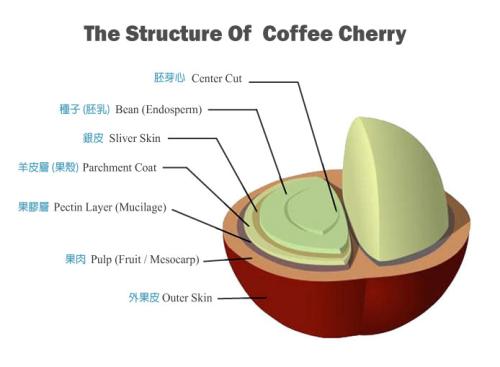
In fact, when coffee beans first grow, they are not a bean at all, but more like a round, plump fruit.
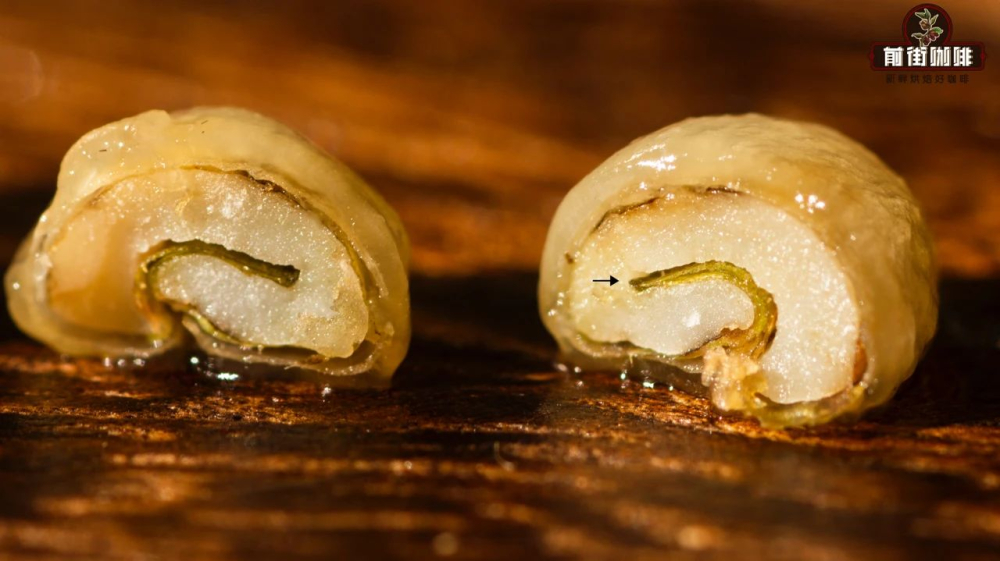
From outside to inside, it can roughly be divided into the skin, pulp, mucilage layer, parchment (also called the husk layer), silver skin, and the coffee seed at the very center. Through different processing methods, these outer materials such as the skin, pulp, and mucilage are removed, leaving the innermost coffee seed, which after roasting becomes the coffee we drink every day.
Next, let's look at how coffee beans are extracted. Common coffee processing methods mainly fall into three major categories: the natural method, the washed method, and the methods in between such as honey process, wet-hulled, semi-washed, and semi-natural. Today we will first take a detailed look at the natural process.
The natural method is a quite ancient processing method with relatively low cost and fairly simple operation. Its core principle is to lower the moisture content of the coffee fruit through extensive drying.
Steps of the natural process
Pour the harvested coffee fruit into a large water tank. Ripe, plump fruit will sink to the bottom; underdeveloped or overripe fruit will float on the surface, and these floating beans need to be picked out and discarded. However, in some water-scarce areas, people use screens to sort the coffee fruit.
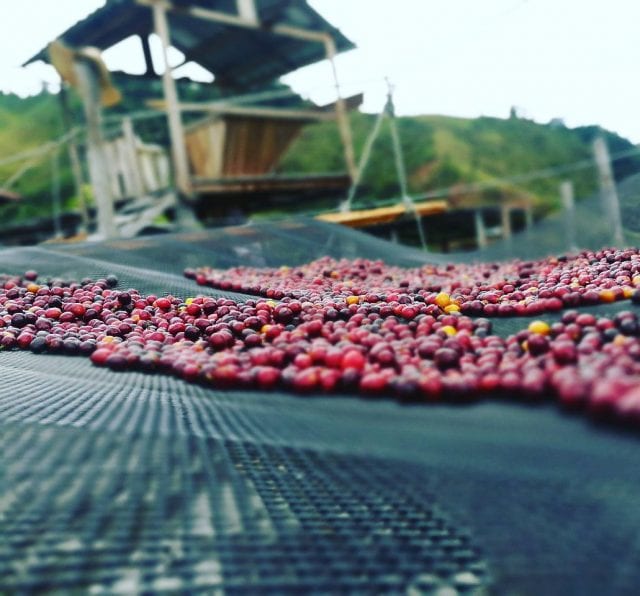
After sorting is complete, the whole coffee fruit—with pulp, skin, and seed—is spread directly on a concrete patio or drying bed and naturally dried to a moisture content of about 12%. This process takes about two to four weeks, depending on the climate conditions of the producing region.
After drying is complete, a huller is used to remove the dry, hard skin, pulp, and parchment layer, yielding green coffee beans.
Although the natural method has low cost and a simple process, it also has obvious shortcomings. It must be placed somewhere exposed to sunlight and has high requirements for climate and environment, usually concentrated in tropical countries with distinct wet and dry seasons. There are too many uncontrollable factors in the weather and environment. When handled improperly, problems such as defective beans, insect-damaged beans, spoilage, and mold easily occur, resulting in flavors mixed with many impurities.
Moreover, the coffee fruit itself has a fairly high moisture content. Leaving the coffee fruit sitting for more than twenty days will naturally trigger fermentation, and once fermentation goes too far, it easily spoils. If the coffee fruit is piled too thick somewhere and ventilation is poor, spoilage will be even more serious. Therefore, a large amount of manpower is needed to frequently turn the coffee fruit piles to ensure air circulation. In addition, the natural method has very few sorting steps—only a rough sorting after picking, and then it goes straight into sacks—so the defect rate of natural processed coffee is somewhat higher than that of washed processed coffee.
Although naturally processed coffee beans have a relatively high defect rate, high-quality natural beans that are properly processed taste prominently sweet, have a fuller body, and offer more complex aromas. Front Street Red Cherry Coffee, Front Street Huakui Coffee, and Front Street ALO Coffee are all traditionally natural processed, carrying rich tropical fruit aromas and suitable for many brewing methods such as pour-over, cold brew, French press, moka pot, and espresso. Everyone can place orders at the Front Street flagship store or the Front Street Taobao store.
As the industry continues to develop, today in addition to conventional natural processing, there are also innovative processing methods based on traditional natural processing, such as anaerobic natural, red wine natural, and enzyme natural. Below, Front Street takes red wine natural as an example to explain what it is all about.
Red wine processing method
Coffee processed in a way similar to red wine fermentation has greatly enhanced sweetness, and its cleanliness and multi-layered, complex, elegant acidity are also improved. This fermentation method greatly improves the quality and uniqueness of the coffee produced. The red wine processing method is also called the controlled fermentation method, or lactic/acetic fermentation method.
After collecting the fruit, the estate carefully sorts the ripe red coffee cherries to ensure that among the coffee fruit used for processing, the proportion of unripe fruit is below 2%, the proportion of defective beans is below 3%, and the proportion of floating beans is below 5%. The selected coffee fruit is placed into a specific container, which should be equipped with a device similar to a red wine fermentation lock or one-way exhaust valve.
In this way, carbon dioxide can be discharged through the device, thereby controlling the concentration of air inside the container. At this point, the coffee fruit in the container undergoes acetic fermentation, and the beans obtained after the reaction have a relatively bright, clean flavor with citric acidity. Front Street believes that coffee beans processed by the red wine method present a fermented vinous aroma similar to red wine, with a full body and clean acidity.
For example, a red wine processed coffee from Front Street's Panama Hartmann Estate, after brewing, has a full fruity charm in the flavor, is smooth on entry, with lively and bright acidity, soft acidity and rich layers, and obvious notes of red wine finish, honey, and sucrose, while after fully cooling it presents a brown sugar flavor.
The above content is compiled by CoffeeHunters, a coffee news website.


