








What is espresso and why does 92 degree espresso matter?
Espresso anchors every Italian coffee menu, and the other drinks are extensions of it. A standard shot forces water at 92 to 94 degrees Celsius through finely ground, evenly tamped coffee at 9 bars of pressure for 20 to 30 seconds, producing about 30 milliliters topped with a dense layer of crema, the golden-to-brown foam whose shade shifts with roast level.
The "es" in espresso comes from the English "ex," suggesting something fast and convenient. Beans used for these drinks are usually a House Blend, a mix from several regions that balances flavor. Milk drinks such as the latte and cappuccino, plus water-diluted Americano and sweetened variations, all build on the same base shot.
Walk into any coffee shop, and espresso is the star of the menu. Many people are startled by its intense bitterness when they first try espresso, but the world of Italian coffee is far richer than one might imagine. From basic espresso to the water-diluted Americano, the milk-blended latte and cappuccino, and on to fancy variations with chocolate or caramel, each has its own unique recipe and flavor logic. This article will systematically sort out the most common types of Italian coffee found in cafés, analyze their origins, ratios, and key preparation points, and share Front Street Coffee's practical parameter plans to help coffee lovers find the cup that suits them.

Espresso is an indispensable category on café menus, and many domestic consumers' first impression of it is often unbearably bitter. But in fact, Italian coffee isn't limited to just espresso—to find a non-bitter option that suits your personal taste, understanding the classification of Italian coffee is the first step. Front Street Coffee will guide you through the major types of Italian coffee commonly found in cafés, helping you gain a deeper understanding of the Italian coffee system.
When it comes to Italian coffee, espresso is the unavoidable starting point. The reason is simple—all other Italian coffee categories are essentially extensions of espresso.
A standard cup of espresso is made by forcing near-boiling high-pressure water at 92 to 94 degrees Celsius and 9 bars of atmospheric pressure through a finely ground and evenly tamped coffee puck in 20 to 30 seconds, yielding about 30 milliliters of finished product. Its surface is covered with a thick, dense layer of coffee oil foam, known as Crema, with a color between golden and brown, which now also varies in shade depending on the roast level. Italians place great importance on the culture and quality of Italian coffee; the Italian National Coffee Academy has even established official certification standards for espresso extraction parameters, giving the brewing process a reliable basis and allowing the traditional flavor to be more completely preserved.
The "es" in espresso comes from the English "ex," implying fast and convenient. The coffee beans used to make Italian coffee are called House Blend, which is what we commonly call a comprehensive blend, made from beans from multiple regions mixed together. Using blended beans helps balance flavor and stabilize output. To ensure final quality, the beans are usually ground to a fine powder with a professional grinder before preparation, so that extraction can be completed in a short time.
Because espresso has an extremely intense flavor, many people are used to adding sugar or milk to neutralize the bitterness, which gave rise to the diversified trend based on espresso. Fancy Italian coffees are combined with syrups, cream, spices, and other elements to create layered, flavor-rich beverages, such as Con Panna, Macchiato, Caramel Macchiato, Cappuccino, Latte, Mocha, and Italian Americano—all members of the Italian coffee family.
Italian coffee is the foundational composition of many coffee drinks. Let's take a look at the common types of Italian coffee.
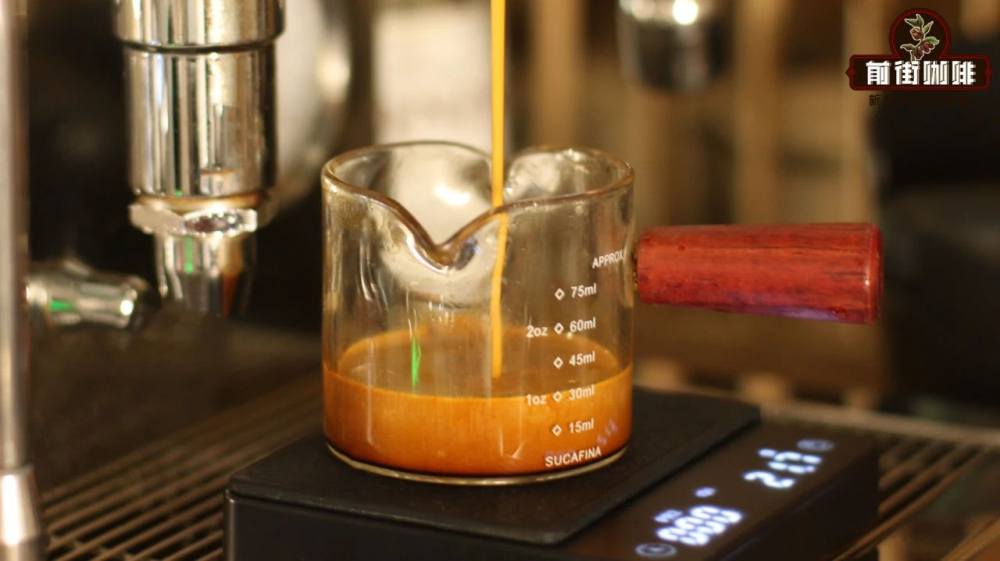
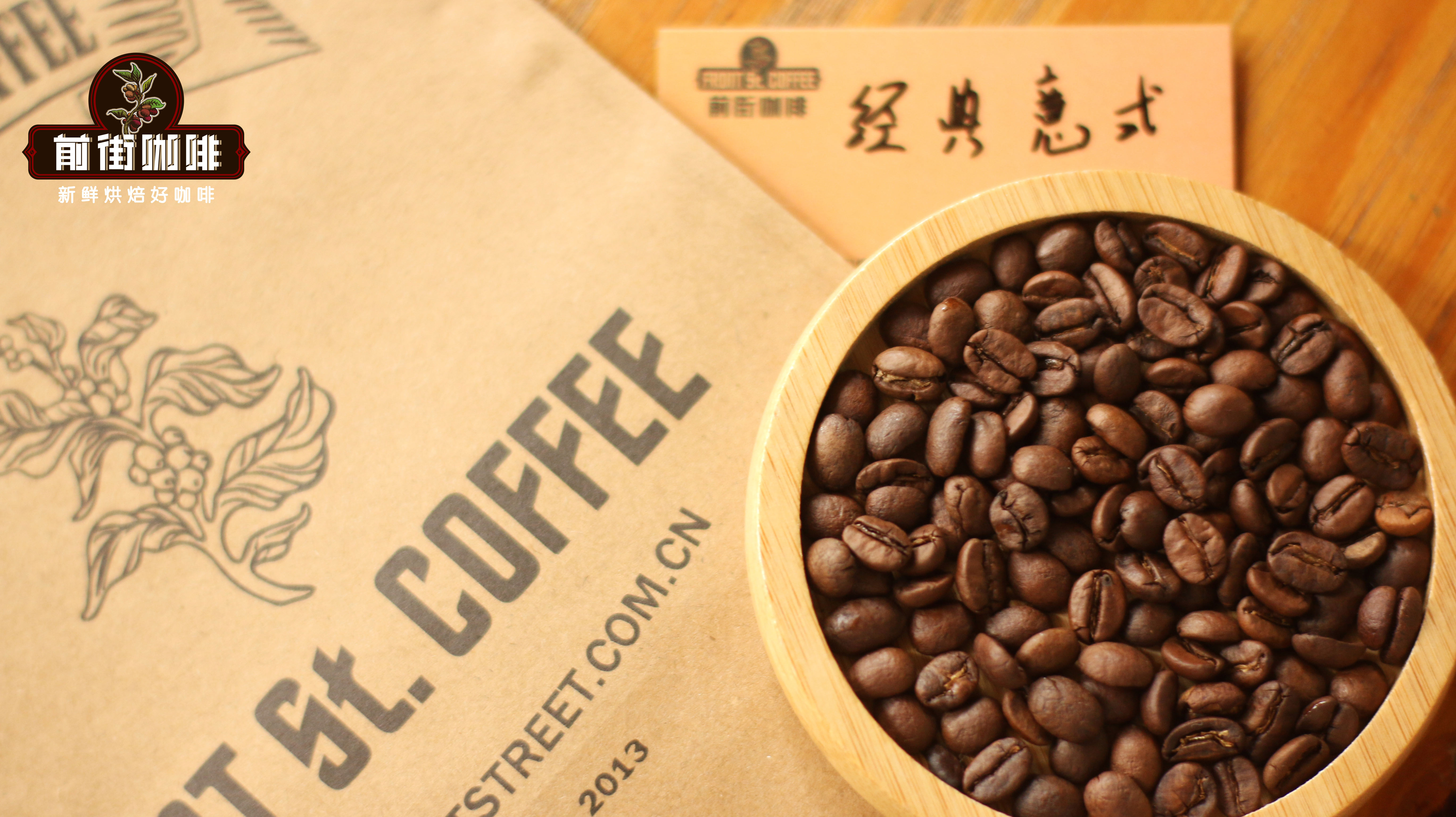
Coffee beans directly determine the flavor expression of espresso, so bean selection is a key step. When making various fancy coffees, Front Street Classic Italian Blend coffee beans are recommended. This blend is composed of beans from Brazil, Indonesia, and Vietnam, using a deep roast that maximally showcases the coffee's rich aroma and makes it easy to extract abundant, dense crema. Whether making a water-diluted Americano or a milk-paired latte, it's a great fit. You can order from the Front Street Taobao store or the Front Street Tmall flagship store.
Espresso
The most common type of Italian coffee is undoubtedly espresso. It uses dark-roasted coffee beans and forces out the coffee liquid instantly with steam pressure, delivering a strong taste with prominent bitterness and the charred aroma characteristic of dark roasting. It can be called the spiritual symbol of the coffee world, and all other Italian coffees are derived from it. It can be said that if the espresso extraction is not up to standard, the other Italian coffees that follow will hardly taste good either.
Espresso means fast concentrated coffee. Under the action of about 9 atmospheres of steam pressure, hot water quickly passes through the coffee grounds, fully releasing the coffee's essence, resulting in a cup that is rich, aromatic, full-bodied, and bitter with caramel notes.
Front Street Coffee typically uses a double shot (20 grams of coffee grounds) as the baseline, producing about 40 grams of espresso, with a fine, thick layer of crema on the surface.
Americano
The Americano commonly found in cafés is made by adding a large amount of hot water to dilute espresso. It's said that during World War II, American soldiers stationed in Italy were not accustomed to the strong taste of espresso, so they diluted it with hot water. Later, this practice gradually became popular and became another way of drinking Italian coffee.
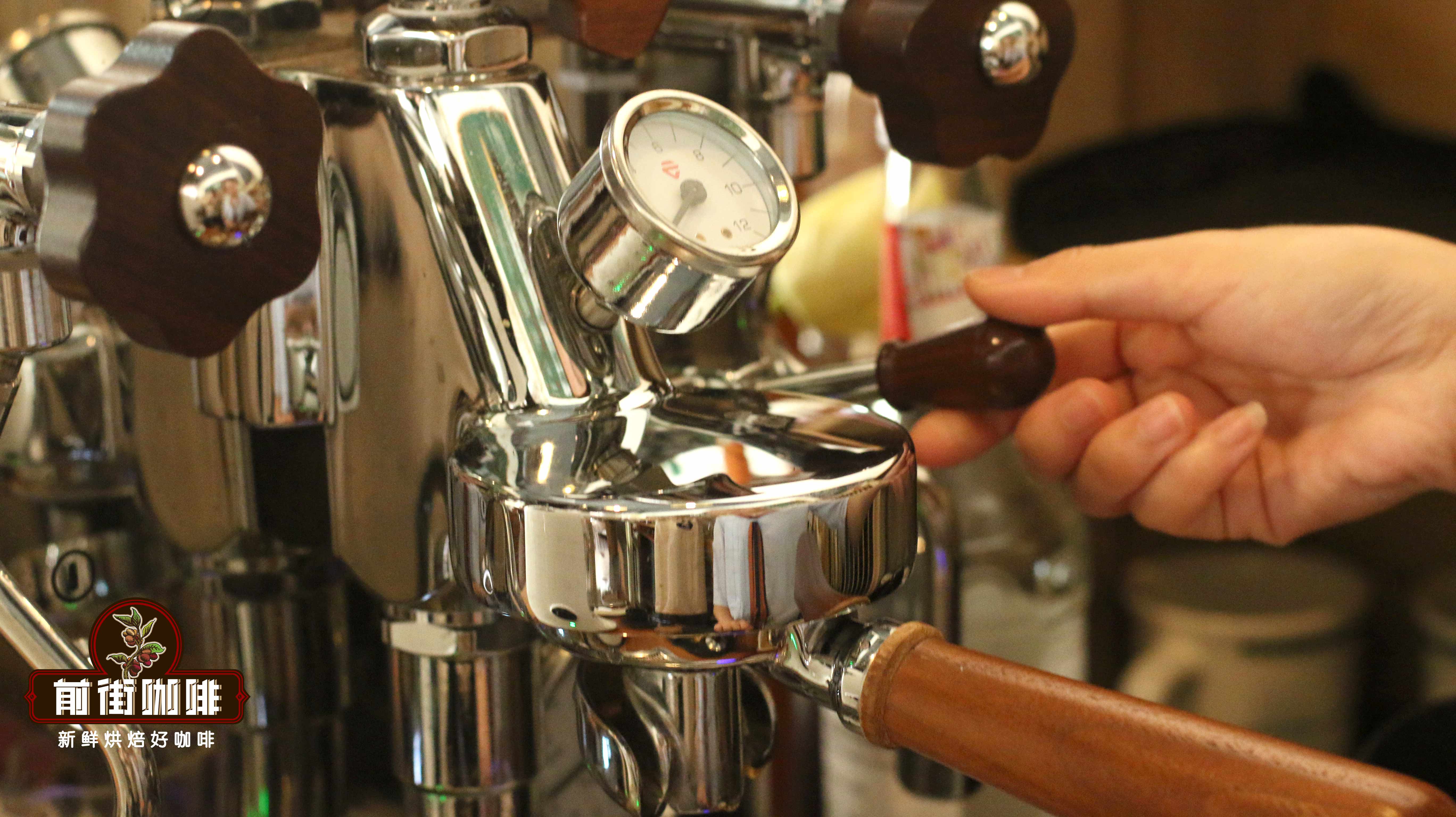
Front Street Coffee's hot Americano ratio is 40 grams of espresso plus 180 milliliters of hot water, resulting in a 220-milliliter Americano, with an espresso-to-water ratio of about 1:4.5.
Caffe Latte
In Italian, latte means milk, while outside Europe, it refers to an Italian coffee drink with milk and milk foam. A common latte consists of 1/5 espresso, 2/5 hot milk, and 2/5 milk foam. It has a relatively rich flavor and can also be flavored with vanilla syrup, cinnamon, or caramel. Different regions have different ratios. When Front Street makes a latte, it uses a double shot of 40 grams of espresso, paired with 260 grams of milk and milk foam, with a foam thickness of about 1 centimeter. Lattes can also feature exquisite latte art. After the milk and coffee are fully blended, the sweetness of the milk is highlighted while the mellow charm of the coffee is retained.
Cappuccino
Also made from espresso, milk foam, and hot milk, cappuccino's ratio is 1/3 espresso, 1/3 milk, and 1/3 milk foam. The coffee proportion is larger and the taste is stronger. The blended color resembles the robes of Italian Franciscan monks, so it was named after the order's Italian name.
When Front Street Coffee makes a cappuccino, it uses a 180-milliliter tulip cup, first pouring in a freshly extracted single shot of espresso, then adding milk steamed to a dense, thick foam.
Mocha
Mocha originally referred to a coffee bean with a chocolate aroma, and later came to broadly refer to any Italian coffee with chocolate added. The common ratio is 2/5 espresso, 2/5 hot chocolate, and 1/5 hot milk. You can experience both the coffee aroma and the rich chocolate flavor, with a smooth mouthfeel. Friends who enjoy chocolate drinks should give it a try.

Front Street Coffee's mocha recipe is 40 grams of espresso plus 20 grams of chocolate sauce plus 260 grams of hot milk.
Macchiato
Macchiato means "marked" in Italian. The macchiato originated in 1980s Italy, when some customers were used to adding a small amount of milk to their espresso, but the milk would quickly be engulfed by the crema. So, to distinguish plain espresso from espresso with a small amount of milk, baristas used milk foam to "mark" a white dot on the crema.
Later, people discovered that as the milk foam and espresso gradually blended, one could taste both the intense richness of the espresso and the dense sweetness of the milk, the two intertwining and merging in the mouth in a wonderful way. Thus the traditional macchiato was born.
Front Street Coffee macchiato recipe: 40 grams of espresso plus 1 spoonful of fine milk foam.
Caramel Macchiato
This is Starbucks' star Italian drink (unrelated to the macchiato). A medium 355-milliliter caramel macchiato contains 1 shot of about 30 milliliters of espresso, with the remaining 300-plus milliliters being milk with milk foam, vanilla syrup, and caramel. It has a sweet flavor.
Making a caramel macchiato requires a large amount of milk and milk foam, not much different from a wet cappuccino or a latte with thicker foam. With vanilla syrup and warm fresh milk as the base, topped with dense milk foam, mixed with rich espresso, and finished with smooth caramel sauce, the sweet and mellow caramel macchiato becomes another great choice for coffee lovers to experience espresso.
Dirty Coffee
Many people ask, what exactly is the difference between Dirty Coffee and an iced latte? Indeed, from ingredients to recipe to appearance, the two have too many similarities. But on closer observation, you'll find that Dirty is essentially a more particular iced latte, with the biggest differences being the choice of container and operational details.
Dirty Coffee usually uses a glass that can showcase the liquid layers, and no ice is added to the cup. The key is that the espresso liquid flows into the white milk, slowly penetrating and gradually blending, forming a beautiful layered effect. As time passes, the white milk is gradually "stained" by the rich espresso, and looking through the glass, the entire drink becomes "dirty." Beyond the visual dirtiness, there's also the collision between cold milk and hot espresso, letting you feel the transition from hot to cold in a single cup of coffee.
Front Street Coffee's Dirty ratio is 150 grams of milk with 40 grams of espresso. First, take out a pre-chilled glass, making sure the walls are free of water, and pour in the cold milk. Then lock on the tamped portafilter and place the glass with cold milk under the spout (if using a bottomless portafilter, place it directly beneath the outlet). The distance between the outlet and the liquid surface should not be too far; otherwise, the coffee's own gravity and penetration force will be too strong, causing premature blending. It's recommended to keep it at about 1 centimeter. A qualified espresso flows at an even rate, slowly flowing onto the milk surface and "floating" on top, then slowly sinking, creating the dirty visual effect.
Drinking Dirty doesn't require stirring, but it should be consumed as soon as possible, so you can experience the state where the upper layer of hot espresso hasn't yet been diluted by the ice and the lower layer of milk hasn't yet been "contaminated." That transition from a rich, chocolate-flavored hot coffee to a milky, icy, light coffee is truly wonderful.
The above content is compiled by CoffeeHunters, a coffee news website.


