







How do you run a moka pot without bitter results?
A moka pot brews by pressure, not by gravity, so small choices decide whether the cup tastes weak or sharply bitter. The lower chamber is filled to about 60 percent with water, the filter basket is loaded with ground coffee, and the two chambers are screwed tight. Heating then pushes boiling water up through the coffee bed, yielding a concentrated liquid.
Because the sealed lower chamber builds pressure, it carries a relief device to vent excess. Grind size and heating time are the two variables most often blamed when results swing between thin and harsh. The same espresso-strength coffee pulled from a moka pot can also be used for latte art, and the article covers bean selection that keeps flavor clear once milk is added.
Many coffee enthusiasts are drawn to the convenience and ambiance of the moka pot after watching outdoor camping videos, only to find after buying one that extraction is hard to stabilize—the result is either too weak or sharply bitter, and both the grind size and heating time are difficult to control. This article walks through the key operating points of the moka pot: its structural principles, coffee grinding and loading methods, heating rhythm, and how to use espresso brewed with a moka pot for latte art. It also incorporates Front Street Coffee's bean selection approach to explain how the flavor remains clear and the mouthfeel rich and balanced after milk is added.
Many people first notice the moka pot while scrolling through outdoor camping content: it looks simple to use, has great ambiance, and doesn't cost much, so they order one right away. Once they actually start using it, however, problems cluster together—the brewed coffee is either too weak or too bitter, and it's hard to gauge how fine to grind or how long to heat. This article from Front Street covers the basics and proper use of the moka pot, and also answers a common question along the way: can coffee made with a moka pot be used for latte art? The answer is yes.
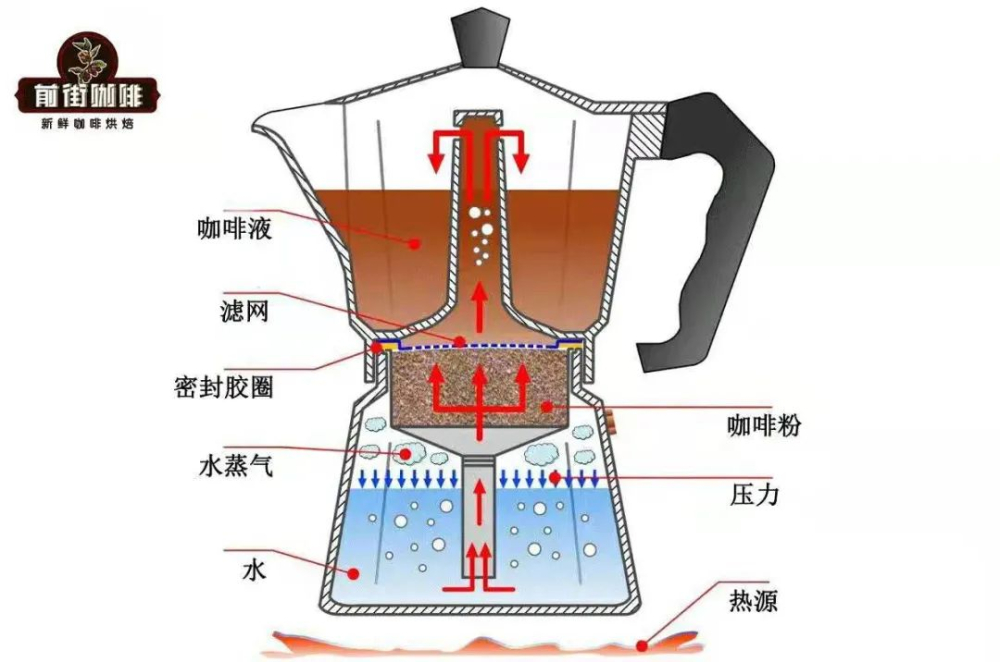
The birth of the moka pot came from an observation of everyday life: an Italian noticed local women using a washing device with a deep tub, beneath which sat a container holding ash residue and soap. When the mixture met water, the foam it produced rose up into the washing tub above, completing the cleaning. Inspired by this, he designed the moka pot, consisting of three parts: the upper chamber, the filter basket, and the lower chamber. To operate it, fill the lower chamber with about 60% water, place the filter basket and add ground coffee, then screw the upper and lower chambers tightly together; after heating, the boiling water forms pressure in the sealed environment, pushing the water from the lower chamber upward through the coffee bed, ultimately yielding a highly concentrated coffee liquid. To prevent danger from excessive pressure, the lower chamber is fitted with a pressure relief device.
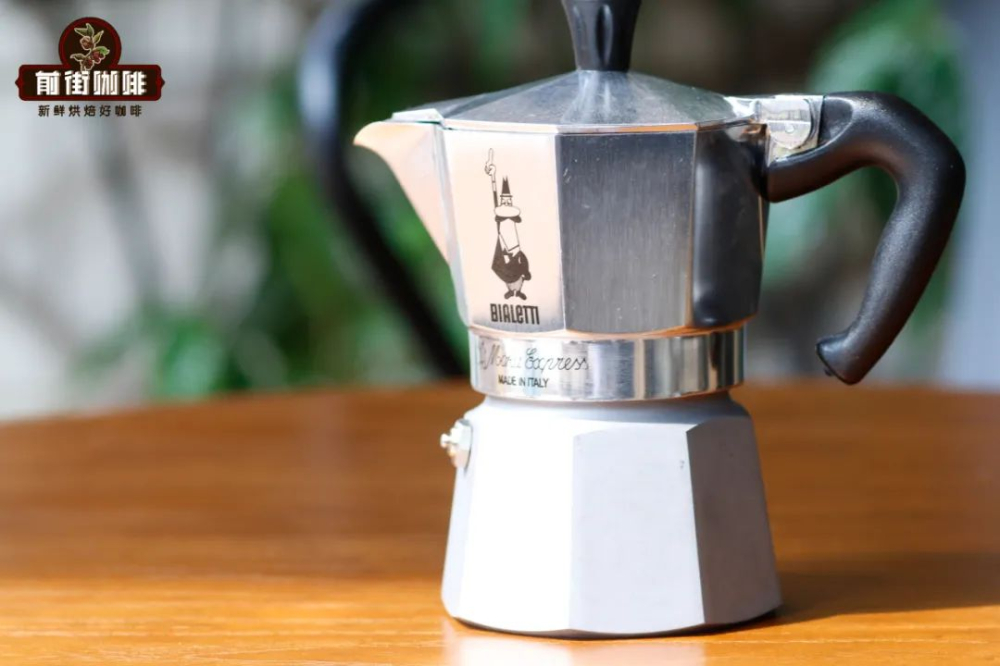
However, it was another Italian, Alfonso Bialetti, who truly brought the moka pot into the public eye. He founded the well-known Bialetti company, which after years of development has become a multinational kitchenware corporation. Later, Alfonso's son took over the company, and the cartoonist Paul Campani designed the moka pot's cartoon logo based on his image—the "man with the mustache"—and this image helped the moka pot spread rapidly into millions of households.
It's worth noting that "moka pot" is not its original name; it is only called this in China. Because it was invented so that households could make espresso without an espresso machine, it is usually called an "Espresso pot" abroad.
The core of espresso lies in using pressure to force water quickly through very finely ground coffee, so for a moka pot to achieve a concentration close to espresso, the grind size is equally critical. If your moka pot brew comes out thin, it often means the grind is too coarse: the water flows through too quickly and doesn't have time to dissolve enough soluble substances.
So how fine should it be? The direction is to go as fine as possible, but the particles must not pass through the holes of the filter basket; there is no absolutely uniform standard—it should feel close to fine salt. Here, Front Street. Queen's Estate coffee beans are used, corresponding to a grind setting of 3-3.5 on the EK43s, producing moka pot coffee with distinct notes of mixed nuts and cocoa cream. However, every grinder's scale corresponds to a different actual grind size, so fine-tuning based on the actual situation is still necessary.
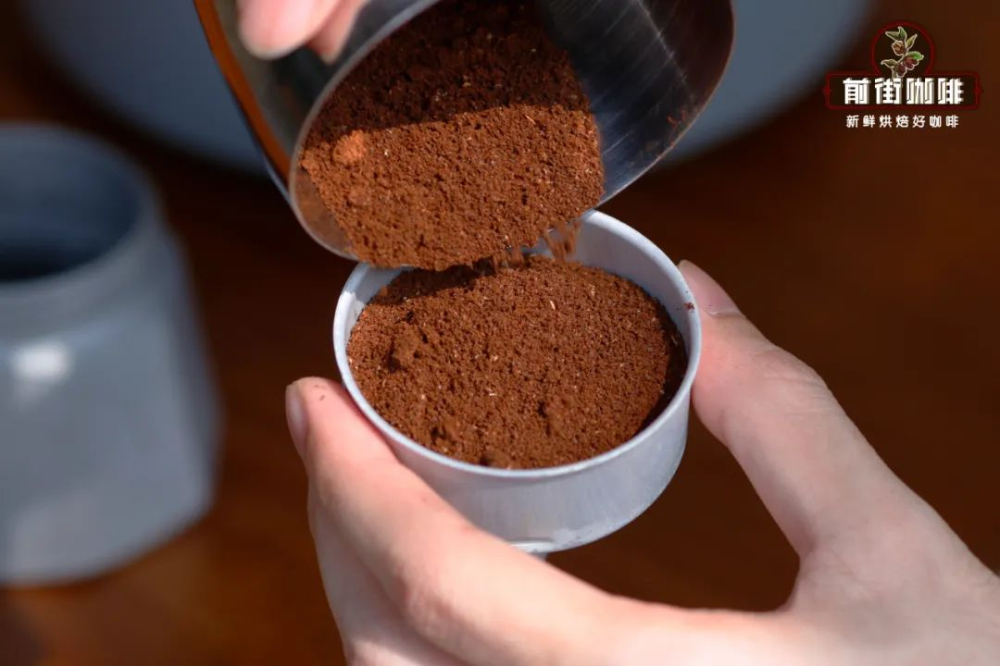
There is also no uniform standard for the dose of grounds; it is determined by the size of the moka pot. Usually, how much coffee to load depends on the capacity of the filter basket. The most direct method is: pour coffee beans into the filter basket, fill it level with the basket, then grind these beans and put the grounds back into the basket.
After the coffee grounds enter the filter basket, tap gently from side to side to let the grounds settle naturally and level the surface—do not tamp. This is done to distribute the particles more evenly; not pressing is to avoid excessive resistance in the coffee bed, which would make the water's passage time too long and cause over-extraction.
Once ready, add hot water to the lower chamber—no need to weigh it, just fill to about 0.5cm below the pressure relief valve; there is no fixed coffee-to-water ratio requirement between the grounds and the hot water. Next, place the filter basket containing the coffee grounds, attach the upper chamber and tighten it, then place it on a heat source/ceramic stove/light-wave oven to heat. At the same time, prepare the milk, heating it to about 60 degrees Celsius and pouring it into a milk pitcher for later use (do not steam the milk yet).
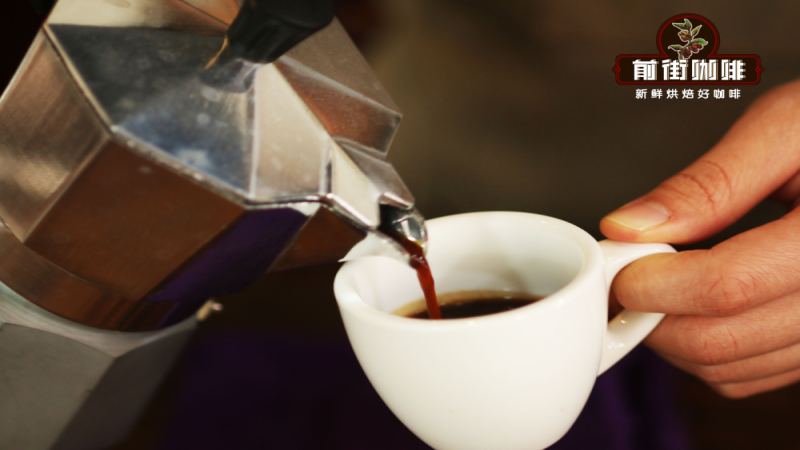
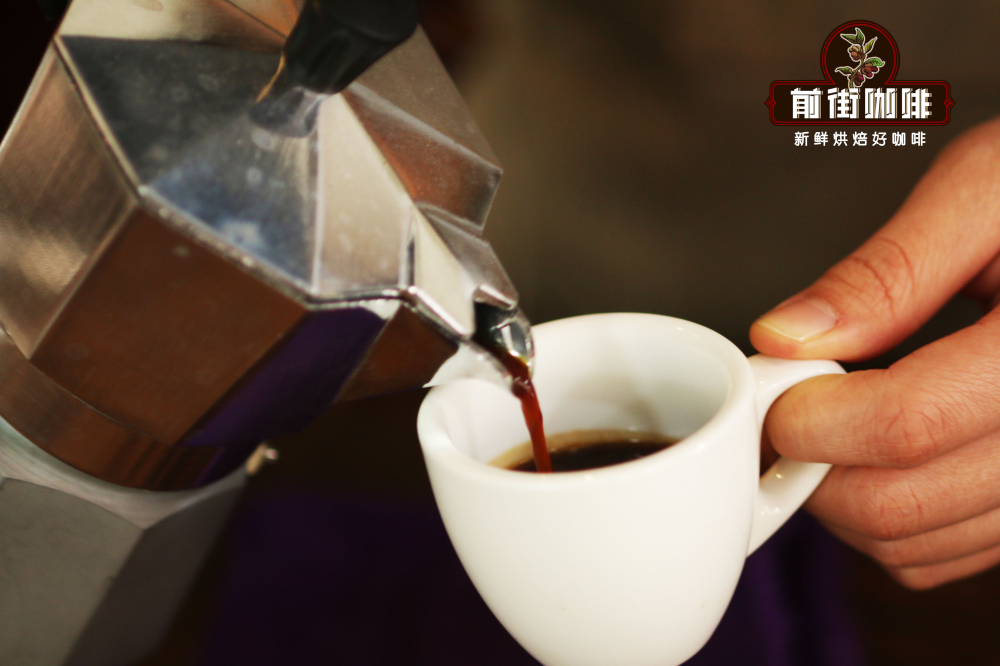
When the moka pot reaches a certain temperature and begins to emit a distinct "whirring" sound, immediately turn the heat source down and open the lid of the upper chamber; the coffee liquid and oils will begin to flow out. When about half of the coffee liquid has come out into the upper chamber, you can turn off the heat source and move the moka pot to the tabletop.
Relying on residual heat and remaining pressure, the rest of the coffee liquid will be "pushed" into the upper chamber.
Next, prepare the milk portion of the moka pot latte: place 180-200ml of fresh milk in a microwave or heat it in a saucepan, then use a whisk to beat air into it, forming a dense foam; you can also froth it directly with a French press.
Finally, pour the coffee into a cup, stir the milk evenly (to avoid separation of milk and foam), and you can proceed with latte art.
For a delicious cup of moka pot latte, beyond executing the details above, Front Street believes the most critical factor is still the coffee beans themselves: they must provide aroma and flavor, avoid being masked after milk is added, and also ensure stable extraction—a multi-tasking role, so to speak. At this point, choosing a blend specifically crafted for espresso machines and moka pots is often the best solution.
If you prefer coffee with high intensity and low acidity, you can buy Front Street. Front Street Classic Blend. It uses the classic "Mamba" combination, so it carries both the wild aroma of Mandheling and the nutty flavor of Brazil; to allow customers to easily extract rich crema at home and further present a full-bodied feel, Front Street added a small amount of Robusta. Made as an Americano, it has cocoa-like roasted notes with a slightly bittersweet finish; made as a latte, it highlights a rich and balanced mouthfeel, overall fitting the character of traditional Italian coffee.
If you don't want the coffee too bitter but still want a touch of floral and fruity notes, you can try Front Street. Strawberry Candy espresso blend. This bean is based on two major origins—Front Street Costa Rica Tarrazu, known for its honey processing, and Ethiopia, the birthplace of coffee—paired with medium-dark roasted Colombia Huila coffee beans to introduce cocoa aroma, giving Strawberry Candy espresso a moderate amount of crema while retaining notes of rose, grape, and dried blueberry.
The above content is compiled by CoffeeHunters, a coffee news website.


