








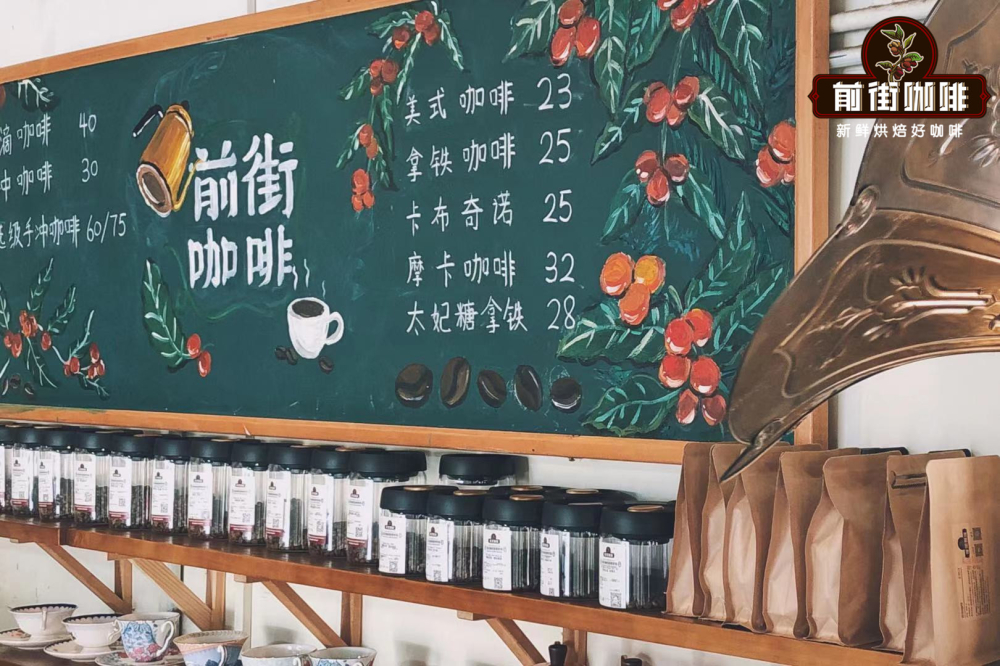
Coffee fans who frequently visit Front Street Coffee know that Front Street Coffee not only offers pour-over coffee but also espresso drinks, such as mocha, cappuccino, latte, and so on, which are commonly seen. In the process of making espresso and pour-over coffee, Front Street believes coffee fans have observed that when makingespresso,Front Street uses Front Streetblended coffee beans, while pour-over coffee uses single-origin coffee beans. So in this article, Front Street Coffee will explain whatespresso blend beansare.
What are espresso blend beans?
Coffee fans know that single-origin coffee is coffee beans from a single origin, such as Front Street Ethiopia Yirgacheffe or Front Street Indonesia Mandheling. These are all single-origin coffee beans, and the brewed flavor also carries the local flavor characteristics of the origin. WhileFront Street espresso blendsare made by mixing single-origin coffee beans from different origins together. But here Front Street wants to emphasize that blending is not done arbitrarily; it requires strict blending ratios and flavor harmony to create a delicious cup of coffee.
For example, blending Front Street Ethiopia Yirgacheffe coffee beans with Front Street Indonesia Mandheling coffee beans—these two coffee beans have completely opposite flavors. One has a fresh lemon-citrus profile, and the other has an herbal, earthy aroma. Assuming a 1:1 mix, it's hard to imagine how that would taste; in short, it wouldn't be a good flavor. Therefore, coffee blending beans also require careful consideration and are not randomly paired.
Approach to blending espresso coffee beans
Front Street Coffee believes that espresso blend beans are an art, because a coffee blender must understand the different flavor characteristics of coffee from major origins in order to mix an enticing aroma and make the coffee more delicious. This not only requires a great deal of coffee experience and inspiration, but also precise ratio calculations. So it is not an exaggeration to say that the process of blending coffee beans is an art.
Since it is a blend, it naturally refers to blending two or more raw beans. But a special case is that the same type of coffee beans at different roast levels can also be blended together, and even the new crop of the same coffee bean can be blended with aged coffee or old crop. So the "types" referred to in blending are no longer coffee varieties in the narrow sense, but broadly extended to coffee flavors. When blending, generally 2 to 6 types of coffee beans are used; too many types will make it impossible to express the unique flavor of the coffee.
Why blend coffee?
Surely some coffee fans will ask Front Street: single-origin coffee already has an excellent flavor, so why blend coffee? In fact, the origin of blended coffee comes from Italy. The espresso drinks commonly seen in cafes, whether latte, mocha, or cappuccino, all use blend beans. This is becauseblended coffee beanscan make coffee that originally lacks a full body become richer and smoother. Where there is demand, there is naturally a market. The initial appearance of Italian blended coffee was because rich, bittersweet espresso was popular at the time, while single-origin coffee has flavor biases—that is, advantages and disadvantages coexist. In addition, high-quality single-origin coffee beans are expensive, while blended coffee is more cost-effective and lower in price than single-origin coffee, yet can still have a unique flavor. Therefore, at that time many Italians chose blended coffee rather than single-origin coffee, and blended coffee developed in this way and has remained popular to this day.
Front Street espresso blendsThe main purpose is to maintain stable flavor and balanced taste, because coffee fruit is always an agricultural product. Each year, climate and environmental issues can cause the flavor of coffee fruit to be unstable—perhaps sweeter this year and less sweet next year. Mixing several coffee beans together can solve this problem well, at least keeping the coffee flavor consistent from year to year.
There is also one point that surely puzzles coffee fans: why can't espresso be made with single-origin coffee beans? This is because an espresso machine has a characteristic of amplifying the most prominent coffee flavor of the beans. For example, the main flavor of Front Street Ethiopia Yirgacheffe is citrus lemon acidity, so the espresso machine will amplify its acidity. The main flavor of Front Street Indonesia Mandheling is herbal, earthy, and somewhat bitter, so the espresso machine will amplify the bitter flavor. Therefore, Front Street Coffee does not use a single variety of coffee beans to make espresso; otherwise, the resulting coffee would be very unbalanced and affect the taste. This is also why espresso is made with blended coffee beans.
How are coffee blends made?
Coffee blending is divided into pre-roast blending and post-roast blending. Pre-roast blending means mixing the coffee beans before roasting, while post-roast blending means roasting first and then mixing. Front Street believes the advantage of pre-roast blending is that the same roast level can be used to make the coffee flavor more stable and uniform, and it can be roasted in one go. The same roast level can also greatly reduce quality control difficulty and improve efficiency.
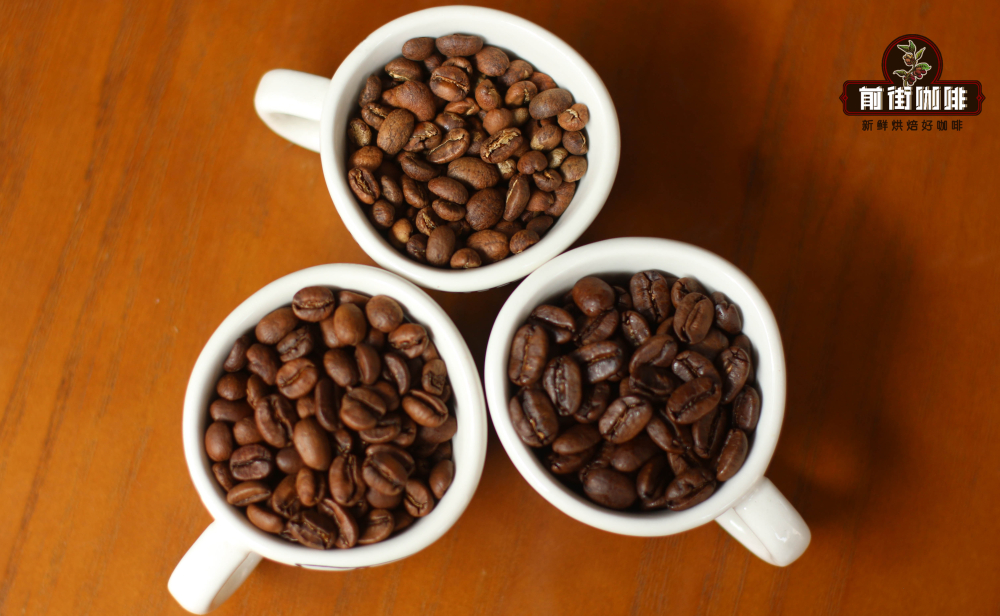
But it is not perfect. Pre-roast blending has great limitations. Therefore, for pre-roast blending, Front Street generally recommends using several beans with relatively similar density; otherwise, the flavor will be inferior to the original flavor of their own origins. For example, beans suitable for light roasting must be roasted together with beans also suitable for light roasting to achieve double the good effect. If a light-roast bean and a dark-roast bean are roasted together, wouldn't they be mismatched? This would lead to a poor flavor.
As for the advantages of post-roast blending, Front Street believes that each bean can be roasted according to its optimal roast level, maximizing the characteristics of each bean. But the disadvantage of post-roast blending is that daily quality control and management become more difficult. Inconsistent roasting dates require more attention to more resting periods. Imagine using 4 to 5 coffee beans for post-roast blending; this one product requires attention to 4 to 5 roasting dates. Therefore, both post-roast blending and pre-roast blending have their own advantages and disadvantages, but the purpose is the same: to make the coffee flavor more delicious.

Of course, coffee blending also has two blending methods. One is blending coffee beans from different origins. For example, the Front Street Sunflower Warm Sun espresso blend bean launched by Front Street Coffee uses Front Street Honduras Sherry mixed in a certain proportion with Front Street Yirgacheffe Sun-Dried Red Cherry. Why were these two coffee beans chosen for blending? The reason is that African coffee beans have rich fruit acidity but lack body/solidity, with the most representative being coffee beans from Yirgacheffe; while Central American coffee beans have rich aroma and sweetness, among which the most impressive is the Front Street Sherry coffee bean fermented in Honduras whiskey barrels. In this Front Street espresso blend bean, Front Street Honduras Sherry provides most of the fermented wine aroma flavor and body, while Front Street Sun-Dried Yirgacheffe Red Cherry coffee beans provide fruity acidity and aroma, increasing the layering of the entire Front Street Sunflower Warm Sun coffee bean.
Another blending method is blending between different coffee varieties. For example, Front Street Butterfly is famous for blending about 70% Geisha variety, and Front Street Coffee Costa Rica Mirazu Estate Geisha blend mixes half Geisha variety and half SL28, ET47, and Maico. However, Front Street believes that calling coffee beans made by mixing different varieties a "blend" is only to highlight a certain variety, and is not a blend in the traditional sense. Interestingly, if we also call coffee beans made by mixing different varieties a blend, then most of the coffee beans we commonly see would also be blends, such as common Kenyan coffee, which often mixes SL28 and SL34.
Front Street Coffee's four espresso blend coffee beans
As Front Street said above, espresso blend coffee beans are an art. They are not made by simply mixing at random, but require a coffee blender to continuously try repeatedly to create a cup of coffee with excellent flavor. Therefore, Front Street roasters also went through continuous repeated ratio testing and blending to create the current options offered in Front Street stores: Front Street Sunflower Warm Sun Blend, Front Street Specialty Blend, Front Street Commercial Blend, and Front Street Dark Cocoa Blend. The difference among these blends is that they provide balanced, high-quality blended flavors for different price points. Below, Front Street will introduce these four blended coffees in detail.
1. Front Street Dark Cocoa Blend Coffee Beans (1 pound/454g)
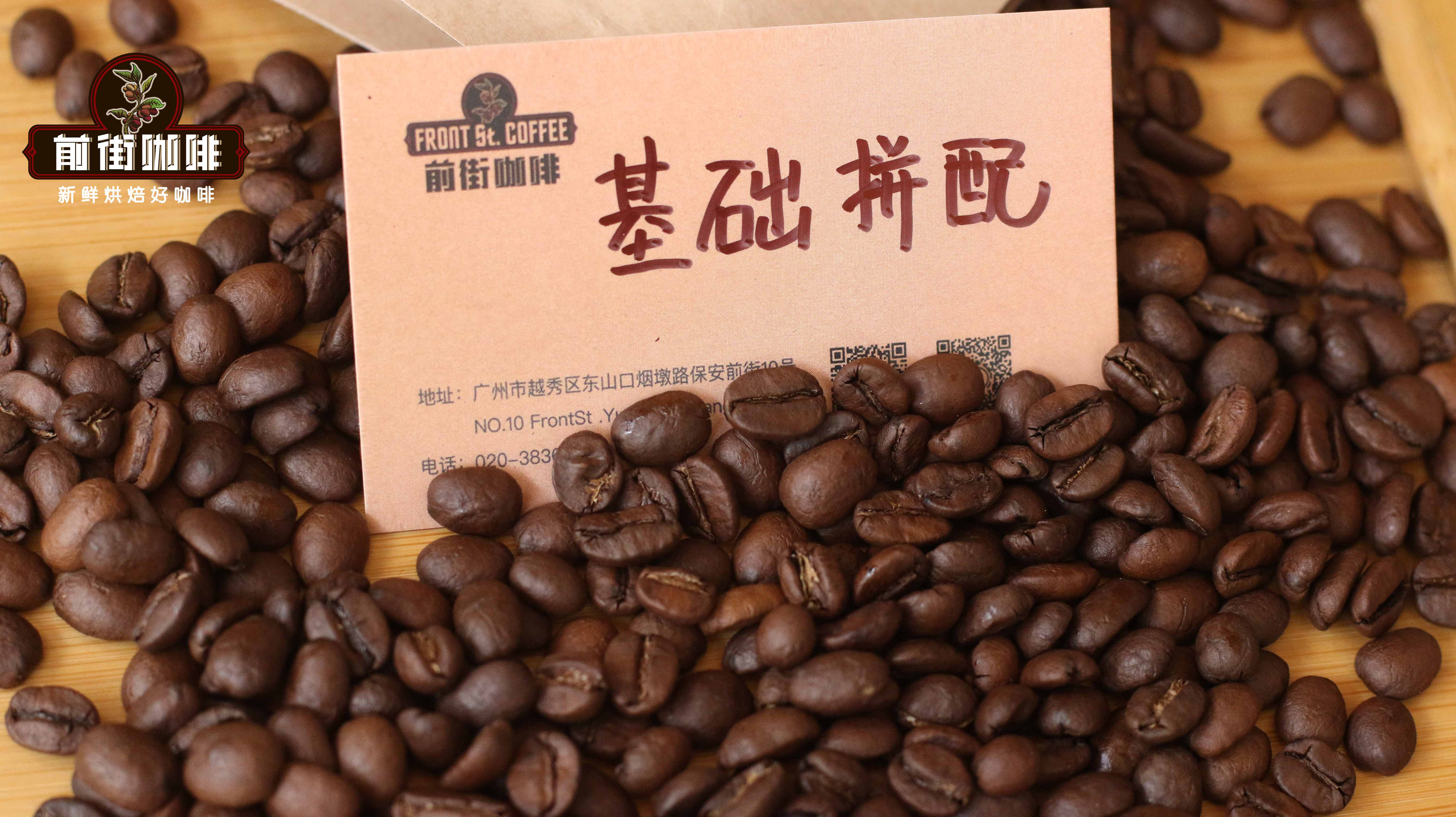
Front Street Dark Cocoa Blend flavor: soft fruit acidity, caramel sweetness, nutty and dark chocolate flavors, smooth and viscous, but relatively light in taste. Suitable for shop owners and home users who prioritize cost and have general flavor requirements.
Formula: Yunnan : Brazil = 3:7
2. Front Street CommercialEspresso Blend Coffee Beans(1 pound/454g)
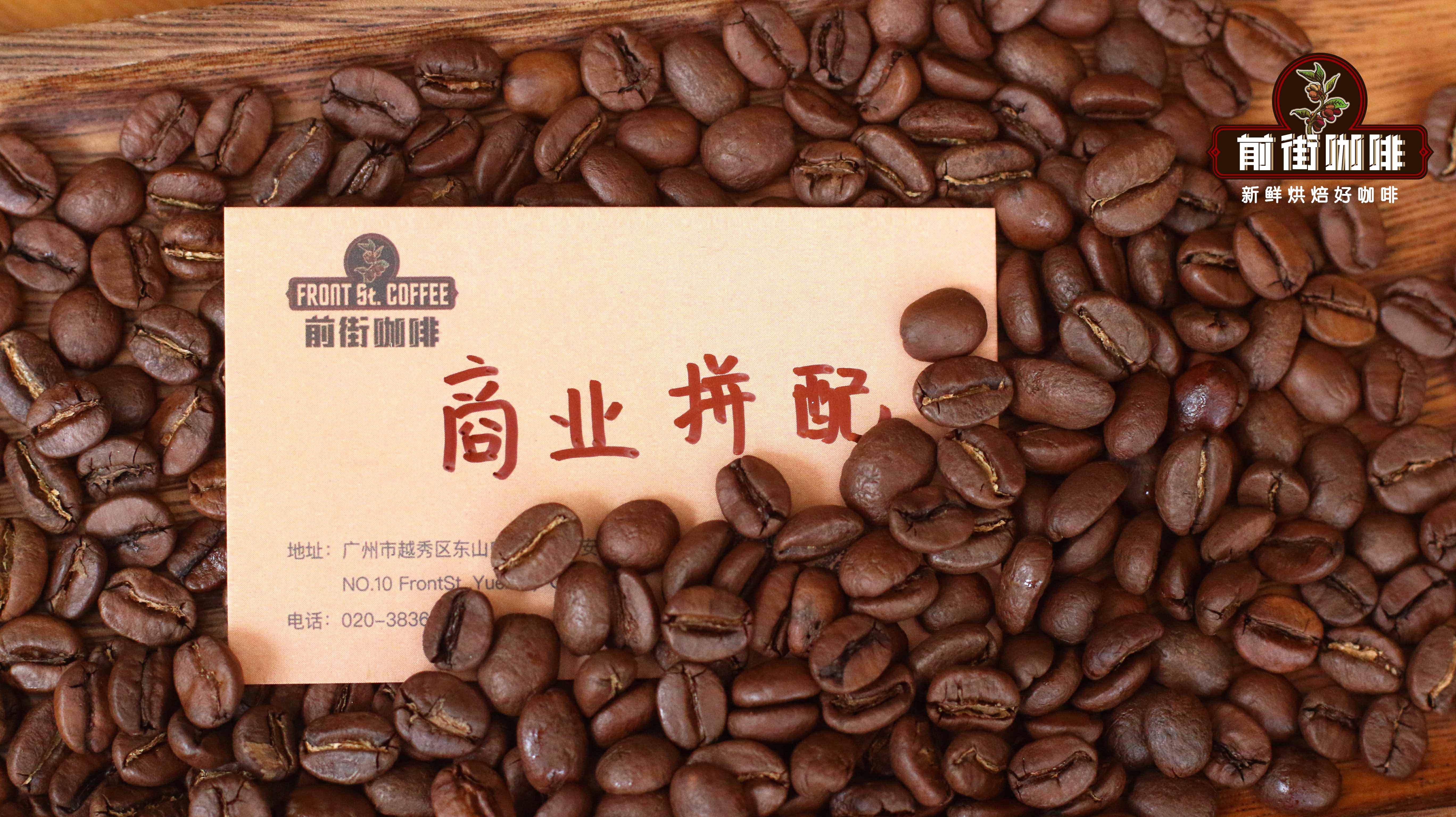
Flavor: caramel sweetness, nutty and cocoa-type, dark chocolate flavors, balanced acidity and sweetness, slightly bittersweet, long aftertaste. Can meet the daily output needs of coffee shops.
Formula: Colombia : Brazil : Robusta = 3:6:1
3. Front Street SpecialtyEspresso Blend Coffee Beans(1 pound/454g)

Flavor: soft slight acidity, fresh sweetness, nutty sweet aftertaste, overall not too stimulating, mild, medium crema. Suitable for daily needs in shop openings.
Formula: Colombia : Brazil = 3:7
4. Front Street Sunflower Warm SunEspresso Blend Coffee Beans(half pound/227g)

Flavor: obvious fruit acidity, faint berry aroma, wine aroma, rich chocolate flavor, obvious sweet aftertaste.
Formula: Front Street Honduras Sherry : Front Street Yirga Red Cherry = 6:4
This Front Street Sunflower Warm Sun Blend bean is currently the blend bean used in Front Street Coffee stores to produce espresso. In terms of flavor performance, it has a very good fermented wine aroma and berry flavor. It is very suitable for producing espresso, and the flavor is very rich and unique.
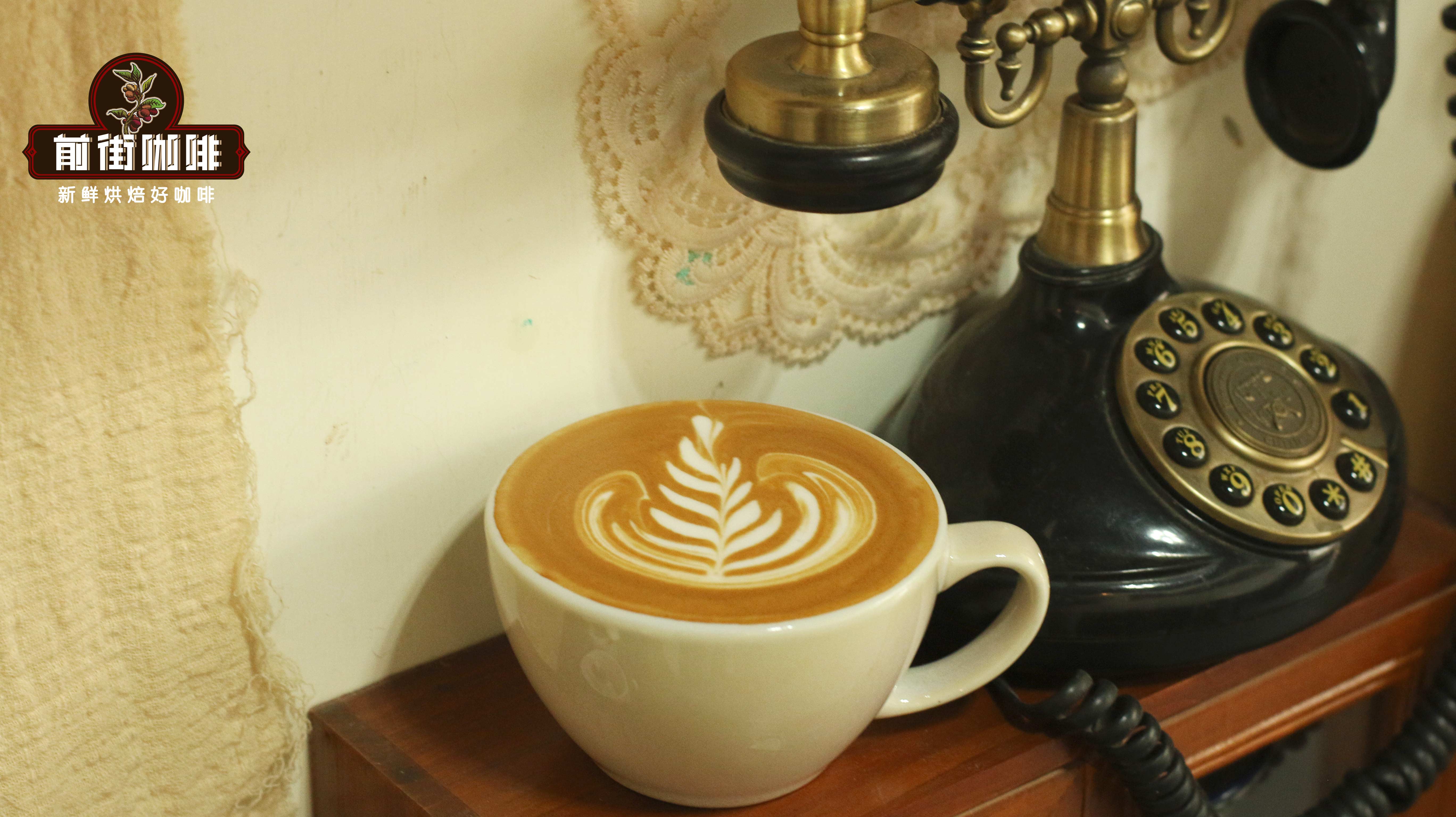
The above is the relevant content and knowledge about espresso blend beans compiled by Front Street Coffee. We hope it can help coffee fans who want to learn about espresso, so that in the future they can better choose espresso beans that suit their taste.
The above content is compiled by CoffeeHunters, a coffee news website.

