







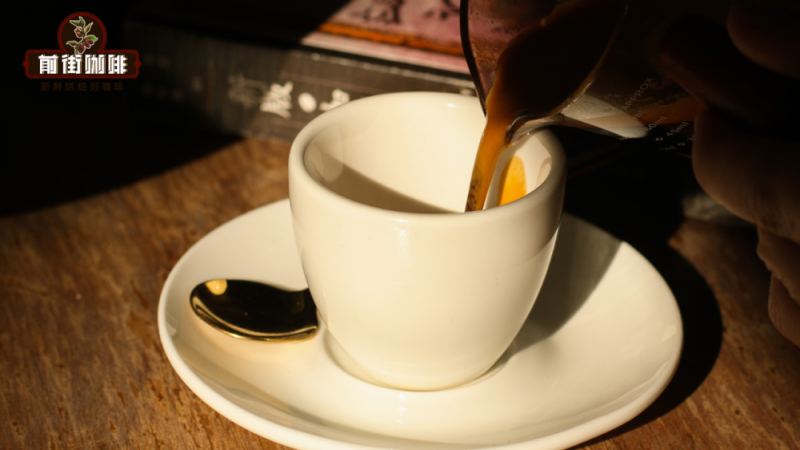

Espresso coffee beans, as the name suggests, are coffee beans specifically used for making Italian-style coffee. What makes these coffee beans different from other coffee beans? Front Street Coffee lists a few key differences for everyone!
1. Degree of roast. Taking coffee shop coffee beans as an example, if drip brewing (pour-over) is used to produce coffee, the coffee beans used will be on the lighter roast side, which can highlight floral and fruity notes. Coffee beans used for espresso, however, generally are not released until after second crack. That is, they are roasted on the darker side. Because espresso, after being made into espresso, needs to be adjusted with milk, cream, or water. So the flavor needed should be rich and bitter.

2. Single-origin or blend. Espresso coffee beans are still mainly blends, which contrasts with other single-origin coffee beans. It should be emphasized here that a blend is not necessarily an espresso bean, and single-origin beans can also be used to make espresso. The reason espresso beans are mainly blends is primarily due to stability and price issues.

What coffee beans are suitable for making espresso?
One thing Front Street Coffee (FrontStreet Coffee) wants to remind everyone is that before blending beans, you must first know what flavors different coffee varieties from around the world each have. Beans also have different characteristics depending on their origin. This requires roasters to have a relatively clear understanding of the characteristics of coffee beans from multiple regions, so as to adjust the roasting curve. Different coffee beans have different personalities due to different varieties and origins. Acidity, bitterness, sweetness, aroma, body, and other flavors all have subtle differences. Single-origin coffee beans often focus more on expressing the unique characteristics of a certain type of coffee.
The single-origin SOE trend
SOE has become popular recently. SOE stands for single-origin espresso. Although it is not necessarily equivalent to specialty coffee, if you choose a single-origin coffee bean with easily recognizable flavor as SOE, you can create an espresso with a unique and typical flavor. For example, the typical citrus flavor of Front Street Yirgacheffe, the fruity flavor of Front Street Kenya, etc. In addition, espresso will amplify the taste of coffee, so specific flavors will be more prominent compared with pour-over. However, although SOE performs prominently, because it comes from a single origin, its shortcomings are also relatively easy to amplify. Therefore, factors such as roasting and grind size will affect the flavor, so it is not necessarily better than blended coffee.

How Front Street choosesEspresso blends? What coffee beans are suitable for making espresso?
Espresso coffee beans generally choose two types of coffee beans, Robusta and Arabica. The blending method is generally Robusta and Arabica blended, or Arabica and Arabica blended.
[Robusta]
Mainly used in espresso blends to increase body and obtain rich crema. Robusta coffee beans are oval, spherical, or nearly spherical in shape, with a straight center line.

[Arabica]
Arabica coffee produced in different regions, at different altitudes, and in different climates has its own characteristics and can show completely different individual flavors. When unroasted, it smells like fresh grass. After proper roasting, it shows "fruity notes" (medium-light roast) and "caramel flavor" (dark roast). It is suitable for single origin and various blends and can be made using various extraction techniques.

Arabica coffee beans are elongated oval and flat in shape, with an S-shaped or C-shaped center line.
[Espresso blend beansHow much Robusta is suitable to add]
Front Street Coffee (FrontStreet Coffee) believes that espresso coffee beans containing 10%-20% Robusta is more suitable. If this proportion is exceeded, there will be a rubbery taste.
Front Street Coffee (FrontStreet Coffee) currently produces four Front Street espresso blend coffee beans with different flavors, meeting the taste needs of most people.
(1) Front Street Specialty Espresso Blend Coffee Beans: Colombian coffee beans: Brazilian coffee beans, ratio 3:7, 100% Arabica
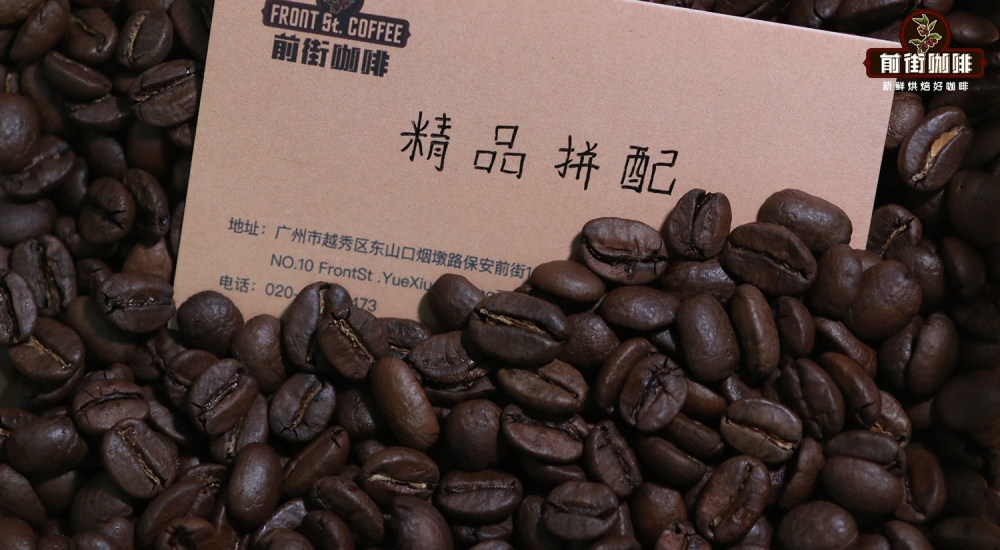
Flavor characteristics: comfortable sweet-bitterness, extremely smooth on the palate; with a faint grassy aroma, fragrant with a slight bitterness; sweet, smooth, and pleasant aftertaste; using a medium-dark roast, when making espresso, the taste will have a soft slight acidity, light sweetness, and nutty sweet aftertaste. The overall feeling is not too stimulating, peaceful, and the crema is medium. It is an espresso blend bean that meets the daily production needs of coffee shops.
(2) Front Street CommercialEspresso Blend Coffee Beans: Colombian coffee beans: Brazilian coffee beans: Robusta coffee beans, ratio 3:6:1

In terms of the flavor of a single bean, the coffee taste obtained from commercial beans is much inferior to that of specialty coffee beans. Generally, commercial beans are chosen as espresso blend coffee beans. Through blending, coffee with a very good taste can also be produced, and it can be used to make lattes, cappuccinos, and other espresso drinks. When Front Street Coffee (FrontStreet Coffee) uses this Front Street commercial blend espresso coffee bean to make Espresso, because it contains Robusta beans, the crema will be richer, the taste is classic, and it is suitable for daily shop needs.
Flavor characteristics: caramel sweetness, nutty and cocoa-like, dark chocolate flavors, balanced acidity and sweetness, slightly sweet-bitterness, long-lasting aftertaste.
(3) Front Street BasicEspresso Blend Coffee Beans: Yunnan coffee beans: Brazilian coffee beans, ratio 3:7
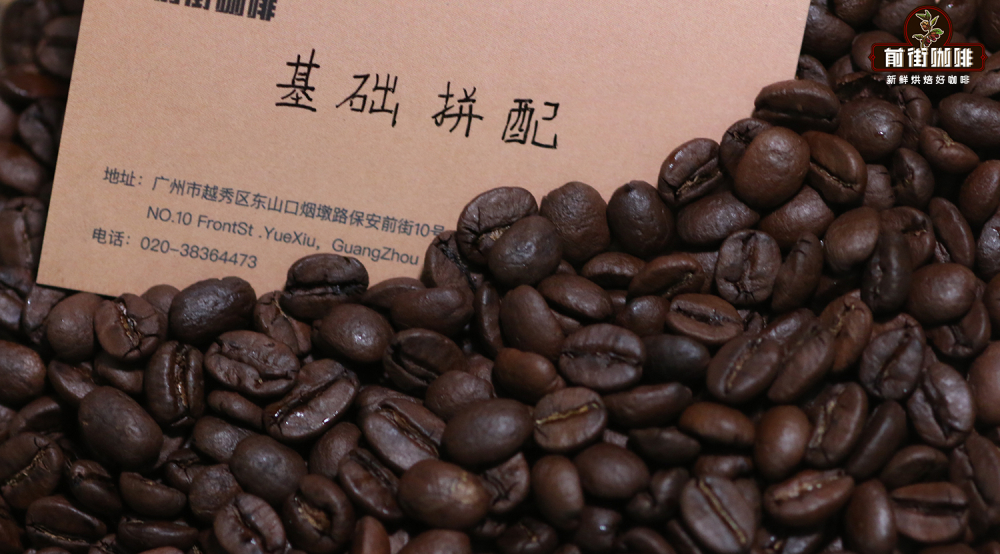
Flavor characteristics: with soft fruit acidity, caramel sweetness, nutty and dark chocolate flavors, smooth and viscous, but the taste is relatively light. This cost-effective coffee bean is suitable for shops and home users who prioritize cost and have average flavor requirements.
(4) Front Street Sunflower Warm Sun Espresso Blend Coffee Beans: Front Street Honduras Sherry coffee beans: Front Street Yirga Red Cherry coffee beans, ratio 7:3

Flavor characteristics: obvious fruit acidity, a faint berry aroma lingering, rich wine aroma and chocolate flavor, comfortable sweet aftertaste.
In fact, Front Street Coffee (FrontStreet Coffee) found that adding [Robusta beans] to an espresso formula can bring more caffeine and provide better crema and richness.
What factors affect espresso extraction?
(1) Water pressure
In modern machines, a water pump controls the water output and the adjustable water pressure. The ideal water pressure for Espresso is generally 9 BAR, which is also the most ideal pressure widely recognized.

(2) Boiler pressure
Boiler pressure is related to the water temperature for making coffee and the force of the steam. The higher the boiler pressure, the higher the water temperature, and the stronger the steam force; conversely, the lower the water temperature, and the weaker the steam. Boiler pressure is generally around 1 BAR. Of course, there is still much debate about this value, and every barista understands it differently.
(3) Water temperature
Water temperature needs to be determined according to the variety requirements of different coffee beans. Some are limited by boiler pressure, while others can be set more flexibly and precisely. According to the experience of most baristas, the water temperature is between 90 and 92 degrees Celsius. Every barista can flexibly adjust according to their own understanding and needs, and can make their own style of Espresso with their own hands.
(4) Tamping pressure
There are various styles of tamping. In this world, almost no two people tamp exactly the same. Generally speaking, if it is heavy tamping, the required pressure will be 25kg/m2, but tamping is indeed the most free parameter in the golden rules. Because Front Street Coffee (FrontStreet Coffee) uses a calibrated tamper, the tamping force is basically consistent.

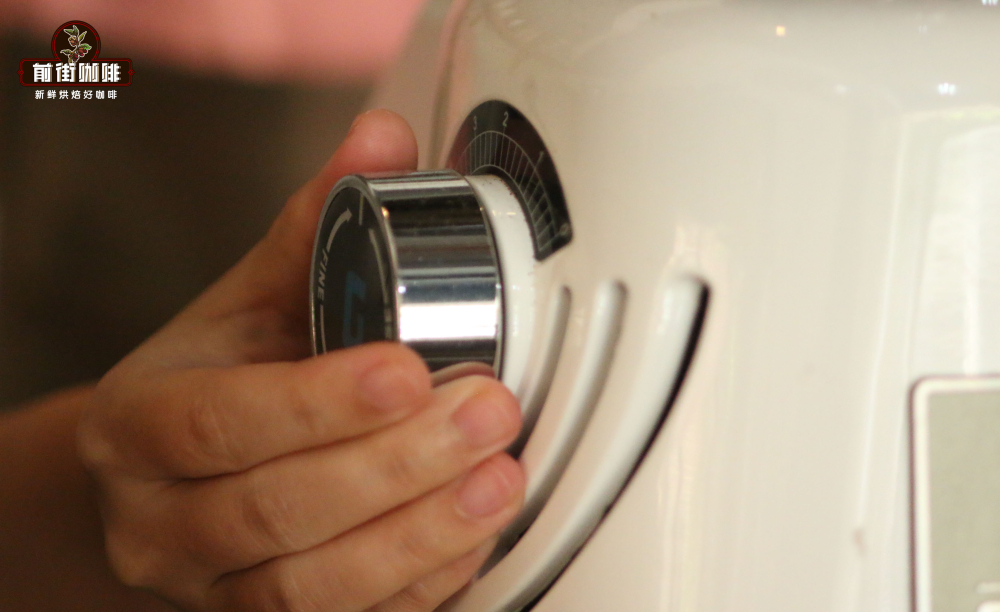
(5)EspressoBean grind size
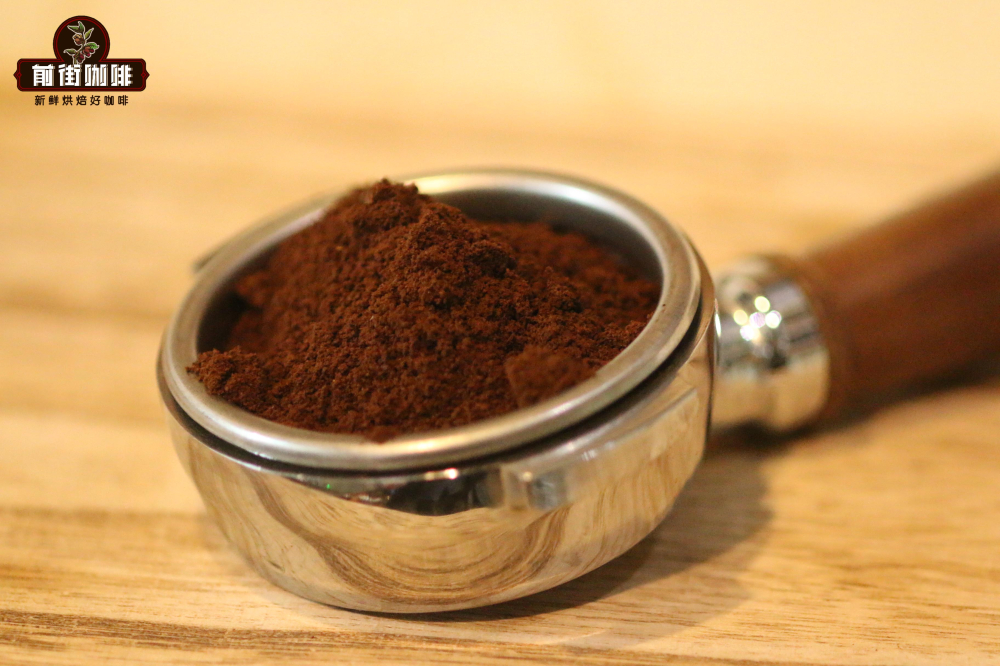
Espresso is extremely fine powder. The finer the grind, the slower the water flows through the coffee bed; the coarser the grind, the faster the water flows through the coffee bed. Adjusting the grind size can flexibly change the extraction time while achieving the extraction amount. Imagine this situation: using a fixed dose of 20g to extract 40g of Espresso, taking 25 seconds. Everything looks perfect, but upon tasting it, you find the body is very thin and sharply acidic. Obviously, this Espresso is under-extracted and has low concentration. At this point, grinding the coffee beans finer can solve the problems of under-extraction and low concentration while reducing sharp acidity and increasing body.
(6) Dose
Front Street Coffee (FrontStreet Coffee) singleEspressodose is 12-14 grams of coffee powder, and double is 20-22 grams.
(7) Extraction time
The extraction time in the golden rules is specified as between 25-28 seconds, but extraction time is actually the combined expression of tamping, dose, and grind size, and needs to be adjusted by the barista according to their understanding.
(8) Extraction yield
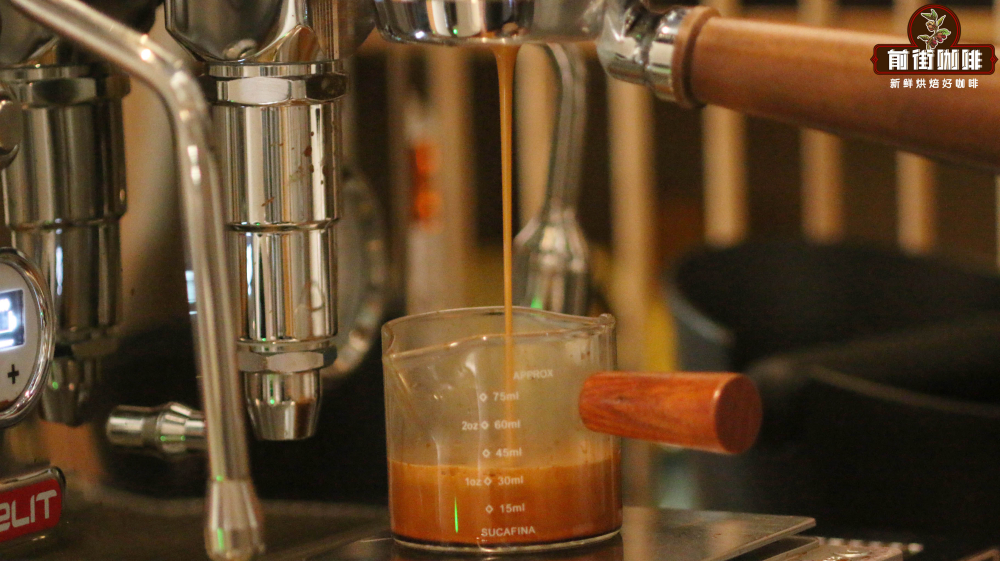
Front Street Coffee (FrontStreet Coffee) extracts 20-21g of liquid for a single shot, and 40g of liquid for a double shot. Combined with the dose, this isthe key to the espresso extraction coffee-to-water ratio.
How does Front Street make the espresso base?
First wipe the portafilter dry, then add 20g of coffee powder into the coffee basket, then use a distribution tool to level the coffee powder, and then use a tamper to press the coffee puck tightly.Lock the portafilter onto the group head, start the extraction button (for a lever type, pull the lever), and stop extraction when the coffee liquid reaches 40g. The extraction time is between 28-32 seconds.
An ideal cup of Espresso should achieve balance among all elements, have a vivid taste, and leave a sweet, mellow feeling in the throat without bitterness after drinking. More specifically, it should have moderate acidity, bitterness, and sweetness, rich flavor, solid and mellow body, and a long-lasting finish, giving a refreshing citrus-like acidic aftertaste.

Blend beans are mostly used for espresso drinks such as Espresso, Americano, Latte, or Cappuccino. The coffee taste is more balanced, smoother, and more stable, which can be said to be more popular in taste.
Professional coffee knowledge exchange. For more coffee bean information, please follow Coffee Workshop (WeChat public account cafe_style)For more specialty coffee beans, please add the private WeChat Front Street Coffee (FrontStreet Coffee), WeChat ID: kaixinguoguo0925
The above content is compiled by CoffeeHunters, a coffee news website.

