








Many friends don't understand how blended beans have their blending formula determined. Now, Front Street Coffee will guide everyone through the concepts behind blended coffee beans and how to blend coffee.
For more information on coffee origins and coffee knowledge, please followCoffeeHuntersToutiao account
Reasons and purposes of blending
People need to combine coffees from different origins for several different purposes. The most ideal purpose is, of course, to blend a coffee that tastes better than any of its components. However, generally speaking, single-origin Arabica coffee is enough to produce a very good cup; a fresh aroma, a smooth body, and a sweet finish. So "blending" (that is, combining beans from different origins) is not necessary.
The main commercial purpose of blending coffee beans is to reduce costs, using originally inferior coffee to blend a relatively balanced cup, thereby increasing sales profit. Another possible purpose is to create a unique flavor, so that customers who like this flavor have to buy from this one manufacturer and cannot obtain it from other suppliers. Another advantage of doing this is that no matter how the taste of coffee from certain origins changes in different years, the taste of this blend will not change accordingly.

Here, let's first set aside other possible commercial purposes and focus on understanding blending for the purpose of improving coffee's flavor quality.
Before blending any coffee, Front Street believes you must first understand the flavor characteristics of various coffees, and at least be clear in your mind that the flavor of the coffee you want to blend is something no single-origin coffee can achieve. If the blended coffee does not taste better than one or several of its component coffees, wouldn't that be too regrettable? It would be better not to blend at all. If you use those quite good-quality coffees for blending, the result is likely to be just that.
Although some fixed-variety coffees can be consumed directly as single-origin coffee, most coffees have more or less flaws in flavor, such as no special flavor, lack of depth, insufficient strength, or some taste being too intense. To make up for these deficiencies, several coffee beans with different characteristics must be blended together to create a harmonious and deep flavor. Some people think the fun of coffee is concentrated in the two stages of roasting and blending, while drinking coffee is merely enjoying the fruits of one's victory. Blending coffee is not casually mixing coffee beans together.

Sometimes blending two single-origin coffees will instead suppress each other's distinctive flavors, so blending is not simply putting several single-origin coffees together. Blending is like a painter mixing enchanting colors on a palette; a blender can also use coffee beans to mix alluring flavors. So it is not an exaggeration to say that blending is an art. As an artist, one needs not only experience and inspiration, but also certain scientific calculation. The creation of a work of art is not accidental, but the eruption of long-term accumulation. A general blended coffee need not use more than five kinds of coffee beans. Because if there are too many types of coffee beans, the situation can become very complicated. Almost only very special experts will not be confused by so many different coffee beans.
Front Street Coffee focuses on freshly roasted coffee and also launches different categories of blended coffee for different customer needs. For example, for customers pursuing value for money, Front Street recommends Front Street Dark Cocoa Blend, an all-Arabica espresso bean blended from Brazil and Yunnan, with a price advantage and outstanding flavor. Front Street also offers customers who pursue flavor the Sunflower · Warm Sun Blend, a product blended from Yirgacheffe Natural Red Cherry and Honduras Sherry. Because it has an ultimate whisky-filled chocolate flavor, it is deeply loved by many customers.

The relationship between blending and roasting
Should you roast first and then blend, or blend first and then roast? Which method is better?
Front Street Coffee believes that if you have a fixed recipe, then of course the simplest method is to first blend the different coffee beans together and then roast them together. But if you are trying and comparing different blending components and corresponding ratios, you of course want to first roast the various coffee beans, and then make various attempts. Otherwise, every time you change the blending components and ratios, you need to roast again.

In the roasting field, blending first and then roasting is generally called "raw blending," and roasting first and then blending is called "roasted blending." In fact, neither method is superior or inferior. The advantage of raw blending is that roasting the same batch of beans together will make the roast degree of the whole batch more consistent and the flavor stable, but when selecting beans, you should choose those with similar screen sizes for mixing, otherwise roasting may very likely be uneven. The other method, roasted blending, allows you to grasp the optimal roasting attributes of each coffee bean before mixing, making it easier to make up for each other's shortcomings.
Generally, all coffee beans can be roasted together. Only when the roasting result is not very ideal should you consider using separate roasting. At this time, separate roasting can usually achieve relatively good results. Especially for drum roasters, generally a relatively moderate roast degree can be found.
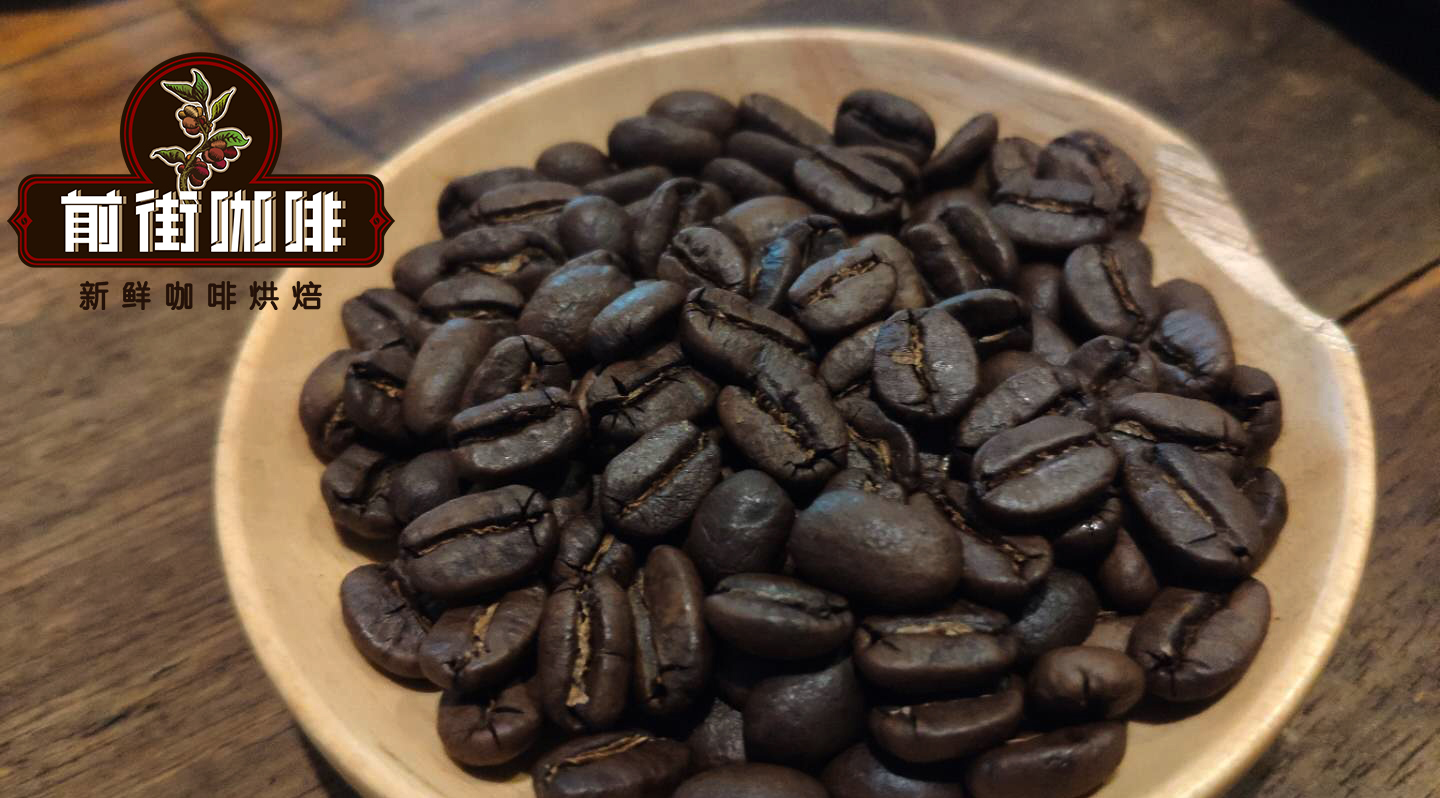
General steps and principles of blending
Before blending coffee beans, we should be clear about the following points:
1. The theme of the blend: what kind of taste you hope to blend, that is, determine the blending goal.
2. Understand the characteristics of each coffee bean. To blend coffee, you must first be thoroughly familiar with the characteristics of each single-origin coffee and understand the subtle relationship between roast degree and coffee flavor, and all of this can only be achieved through cupping.
3. Determine the role each coffee bean participating in the blend should play.Since multiple coffee beans are used in the blend, you must be clear about each coffee bean's task: whether to make it highlight a mild bitterness, a bright acidity, or a heavy body, etc.

When blending, the following principles should generally be followed:
1. The raw beans used in the blend should have their own distinct characteristics, and coffee beans with similar flavors should be avoided. The selection of raw beans can be considered from three aspects:
Green bean processing method: that is, whether the green beans are processed by the washed method or the natural method. The processing method has a great relationship with coffee bean flavor.
Green bean origin: coffee origins are generally divided into three major regions, including Central and South America, namely about 20 countries such as Brazil, Colombia, Guatemala, Mexico, El Salvador, Jamaica, and Peru; Southeast Asia, namely about 10 countries such as India, Indonesia (including islands such as Java and Sumatra), and Papua New Guinea; and the Arabian and African regions, namely about 25 countries such as Ethiopia, Kenya, Tanzania, Arabia, and Uganda. As before, on the marketthe most commonly used raw beans are Brazil and Colombia.

2. The number and ratio of coffee bean types participating in the blend
Since it is a blend, it naturally refers to blending two or more raw beans, but it is also possible to blend the same kind of coffee bean at different roast degrees, or even blend the new crop of the same kind of coffee bean with aged coffee or old crop. Therefore, the "types" referred to in blending are no longer coffee varieties in the narrow sense, but have extended in a broad sense to coffee flavor.
When blending, 2 to 6 kinds of coffee beans are generally used, because too many types make it difficult to express coffee's unique flavor. Blended coffee generally does not use a 1:1 blending ratio, as this may suppress each other's distinctive flavor tonality. Therefore, when blending, there must be a distinction between primary and secondary in order to blend a taste more wonderful than single-origin coffee. If you want the blended coffee to taste complex and varied, you can reduce the proportion of the main raw bean, and vice versa.
3. Blended coffee relies on constant experimentation
Before blending, you should use a mathematical combination method to draft a blending plan table, and then determine the best plan through the process of blending and cupping.Do not think this is a passive and clumsy method. In fact, only by relying on the blender's experience, inspiration, and such tireless attempts can a good cup of coffee be blended.
Front Street Coffee launches 4 distinctive blended coffee beans according to different requirements:

[Sunflower Warm Sun Espresso Coffee Beans] Honduras Sherry : Yirgacheffe Natural Red Cherry, ratio 7:3, roasted blending;
Flavor characteristics: obvious fruit acidity, a faint berry aroma lingering, rich wine aroma and chocolate flavor, and a comfortable sweet aftertaste.
The Sherry coffee beans bring this coffee a rich whisky aroma and the lingering finish of whisky-filled chocolate, with a strong fragrance. The natural red cherry brings this coffee a fermented feel and berry aroma, and it is smooth on the palate. Because this Warm Sun Blend coffee bean is a half-pound package, it is suitable for coffee shops that require a special espresso flavor and higher bean quality, or for espresso lovers with not a large usage amount.

[Front Street Coffee Front Street Specialty Blend]Colombia : Brazil, ratio 3:7, roasted blending;
Flavor characteristics: a comfortable bittersweet taste, extremely smooth on the palate, with a faint grassy aroma, fresh and slightly bitter, sweet and smooth, and a pleasant finish.
Coffee beans from Colombia's Huila region have a pleasant acidity, a mellow aroma, moderate acidity, and rich sweetness that is very thought-provoking. Coffee beans from Brazil's Cerrado region have a comfortable bittersweet taste and are extremely smooth on the palate. This Front Street Specialty Blend coffee is suitable for use in various specialty coffee shops.

[Front Street Coffee Front Street Commercial Blend]Colombia : Brazil : Robusta, ratio 3:6:1, raw blending;
Flavor characteristics: classic taste, with caramel sweetness, flavors of nuts, cocoa-type notes, and dark chocolate, balanced acidity and sweetness, slightly bittersweet, and a lasting finish.
Coffee beans from Colombia's Huila region have a pleasant acidity, a mellow aroma, moderate acidity, and rich sweetness that is very thought-provoking. Coffee beans from Brazil's Cerrado region have a comfortable bittersweet taste and are extremely smooth on the palate. Robusta provides rich crema. This Front Street Commercial Blend coffee is suitable for coffee shops and beverage shops of various sizes.
[Front Street CoffeeFront Street Dark Cocoa Blend]Yunnan AA : Brazil, ratio 3:7, roasted blending;
Flavor characteristics: with mild fruit acidity, caramel sweetness, nutty and dark chocolate flavors, smooth and viscous, but the taste is on the lighter side.
Yunnan's natural conditions are very similar to Colombia's: high altitude and a large temperature difference between day and night. Its flavor is of the mellow-aroma type, with moderate acidity, a rich and full-bodied taste, uniform bean size, high oil content, and fruity aroma. Its quality and mouthfeel are similar to Colombian coffee. Coffee beans from Brazil's Cerrado region have a comfortable bittersweet taste and are extremely smooth on the palate. This Front Street Dark Cocoa Blend coffee bean is suitable for small coffee shops, bakeries, or beverage shops.
The above content is compiled by CoffeeHunters, a coffee news website.

