







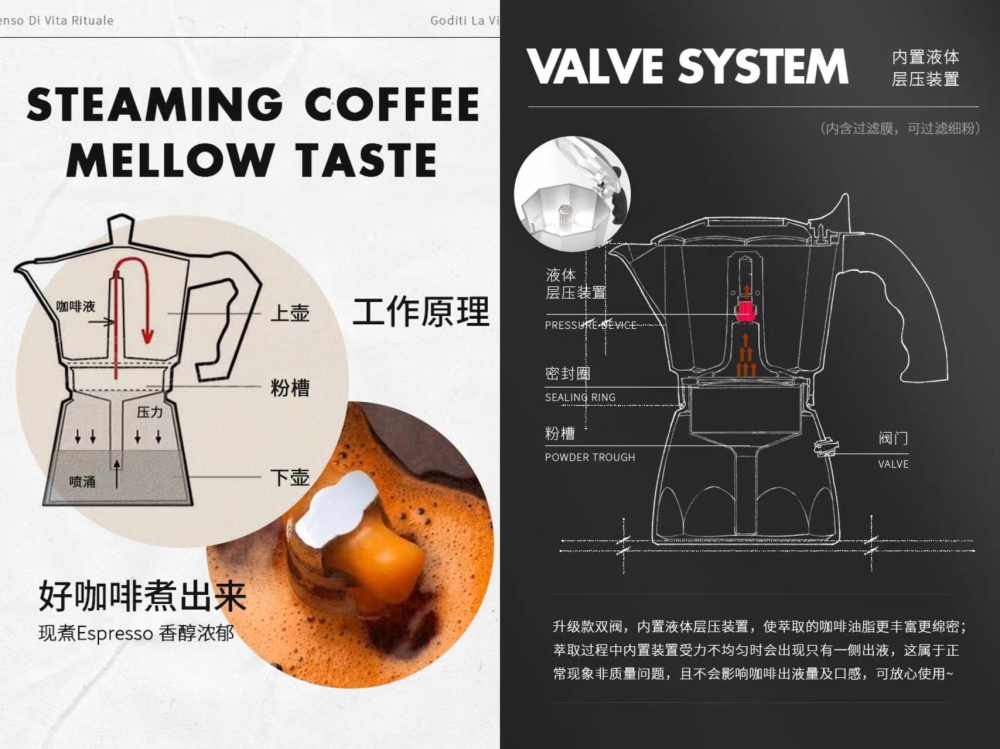
Moka PotWhen it was first invented, there was no distinction between single-valve and dual-valve. The Moka pot has been popular worldwide for nearly a century because it changed the rule that women could not drink coffee in cafés, and it also allowed more people to quickly extract highly concentrated coffee at home through steam pressure, comparable to the espresso made by the very expensive and very large espresso machines of the time that also used steam pressure. As people have pursued more and more in terms of coffee taste and flavor expression, dual-valve Moka pots only began to appear in recent years.
Single-Valve Moka Potand Dual-Valve Moka Pot Differences
The biggest difference between the two lies in the Moka pot's spout. A single-valve Moka pot has no restriction at all, while a dual-valve Moka pot has a pressure valve at the spout, requiring greater pressure to push the valve open before liquid can flow out.

Are beginners better suited to single-valve or dual-valve?
Because greater pressure is needed to push the valve open, the espresso made with a dual-valve Moka pot is richer and fuller. But! Dual-valve Moka pots are relatively difficult to get good results from, requiring more details and more precise parameters, so Front Street Coffee does not recommend that beginners use dual-valve, because it is not that easy to control the extraction of a dual-valve Moka pot well.
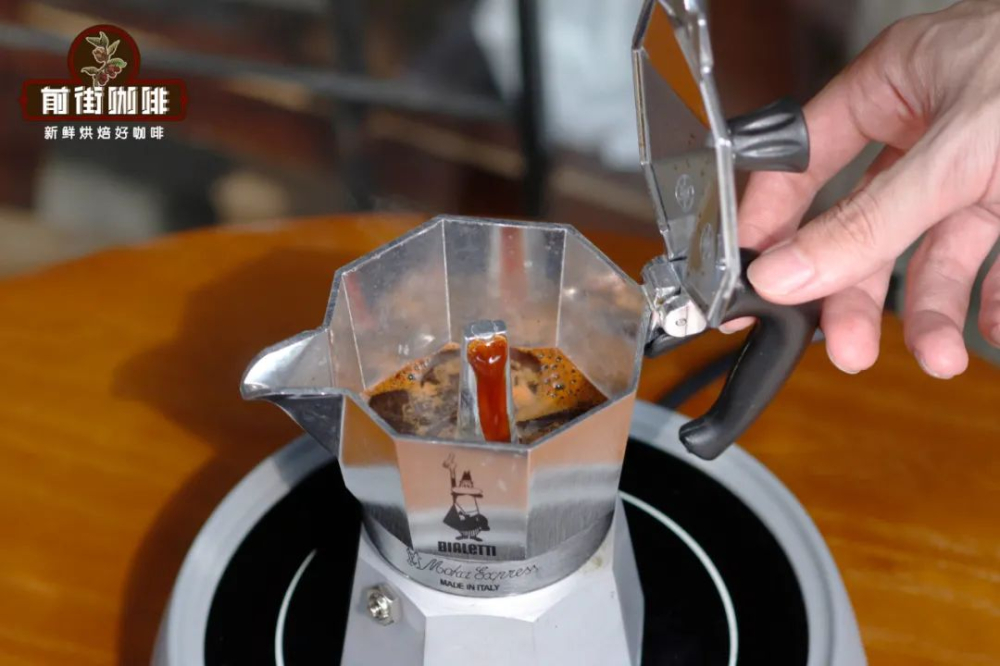
A single-valve Moka pot, on the other hand, has a very high margin for error and is suitable for first-time beginners. Parameter adjustment does not require special attention, and the risk factor is not as high as with a dual-valve. After you get familiar with it, you can sell it on Xianyu and then buy a dual-valve, since it is quite a bit cheaper.
How to Use a Single-Valve Moka Pot?
Usinga single-valve Moka potto extract coffee requires attention to the following points: the water in the lower chamber must not exceed the pressure relief valve (the position like a nut), the coffee grounds should be ground as finely as possible, but not so fine that they can pass through the holes in the filter basket, before brewing make sure the upper and lower chambers are tightened, and when heating reaches the point where the coffee liquid begins to flow into the upper chamber, turn off the heat source and place it on a damp cloth to cool down. The temperature difference will further release the coffee liquid and reduce the possibility of over-extraction.
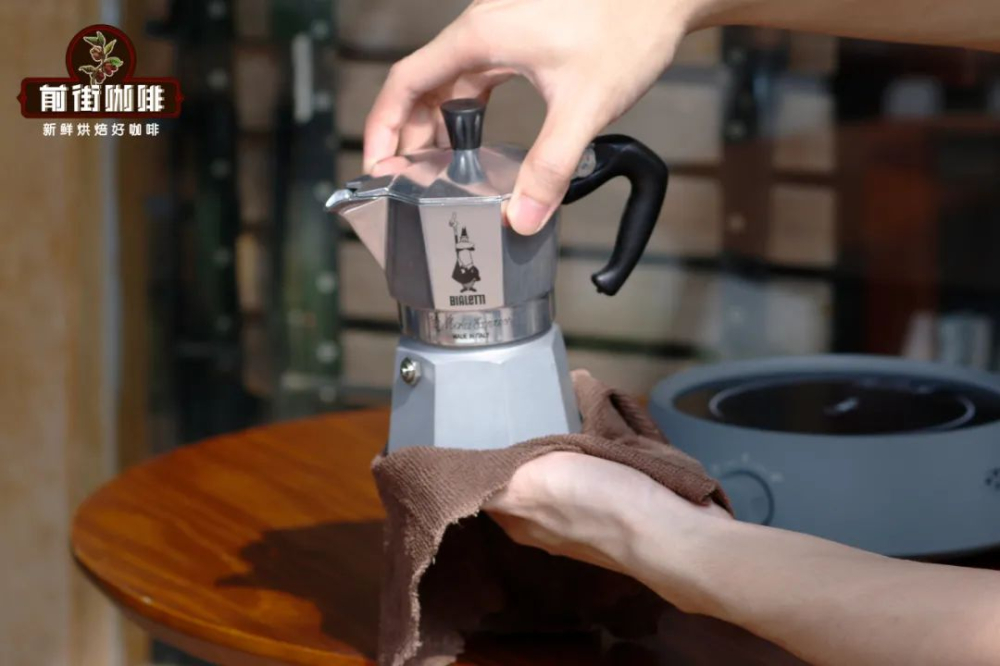
Front Street Coffee uses a 3-4 cup single-valve Moka pot. Put 20g of ground coffee into the filter basket, then fill the lower chamber with hot water not exceeding the pressure relief valve and insert the filter basket. Take heat-insulation measures and tighten the upper and lower chambers, and after opening the lid of the upper chamber, begin heating. When the hot water boils and starts extracting coffee, turn off the heat. After extraction is complete, to avoid over-steeping, pour the coffee into a cup as soon as possible.
Moka Pot CoffeeBean Recommendations
The coffee extracted from a Moka pot is characterized by being rich and full-bodied, so Front Street Coffee recommends using coffee beans specially blended for espresso, or you can also use medium-dark roasted single-origin coffee beans.
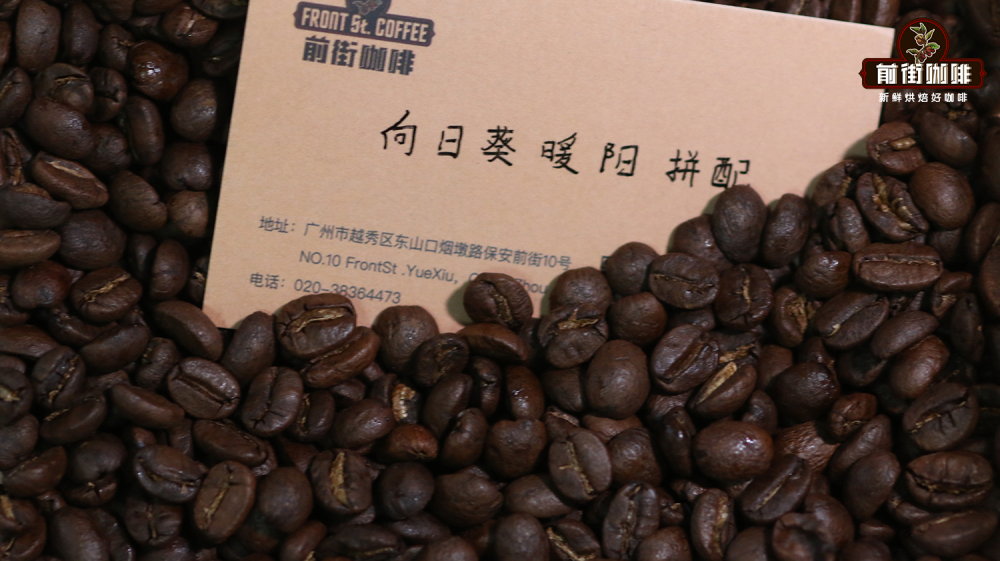
If you want something with obvious aroma and high body, Front Street recommends the "Sunflower Warm Sun Blend Coffee Beans." It is blended from 70% Honduras Sherry coffee beans and 30% sun-dried Red Cherry. It has both rich vanilla cream and Sherry whisky aromas, as well as the berry notes that sun-dried Yirgacheffe coffee beans should have.
If you want nutty aromas with high body but not much bitterness, Front Street recommends the "Brazil Queen Farm Coffee Beans." These coffee beans come from the Queen Farm in Mogiana, São Paulo State, a well-known specialty coffee producing region in Brazil, at an altitude of 1400-1950m. The variety is Yellow Bourbon, and it not only has a charming roasted nut aroma, but also a very good brown-sugar-like sweetness.
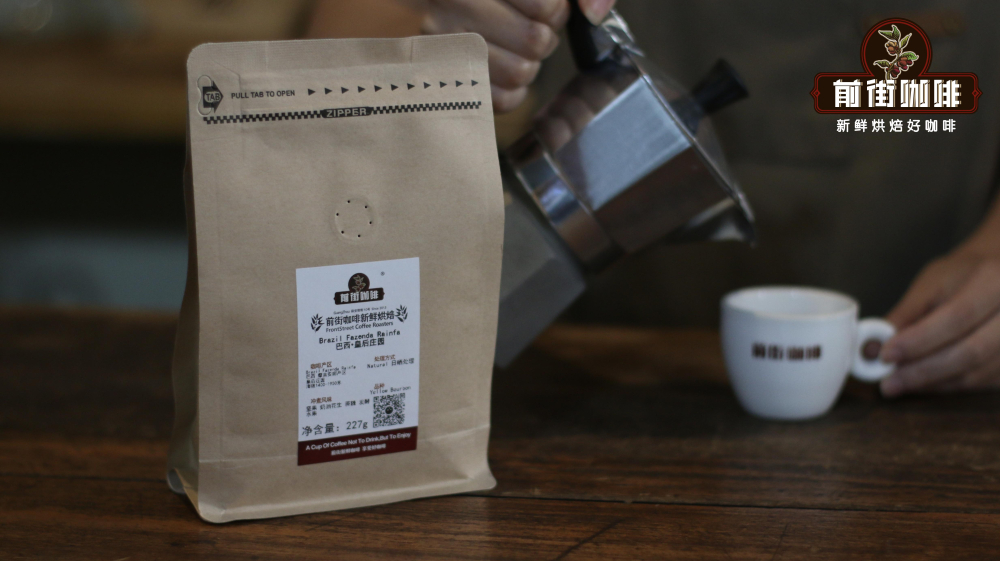
If you want something richer and with a solid body, Front Street recommends the "PWN Indonesia Golden Mandheling Coffee Beans."
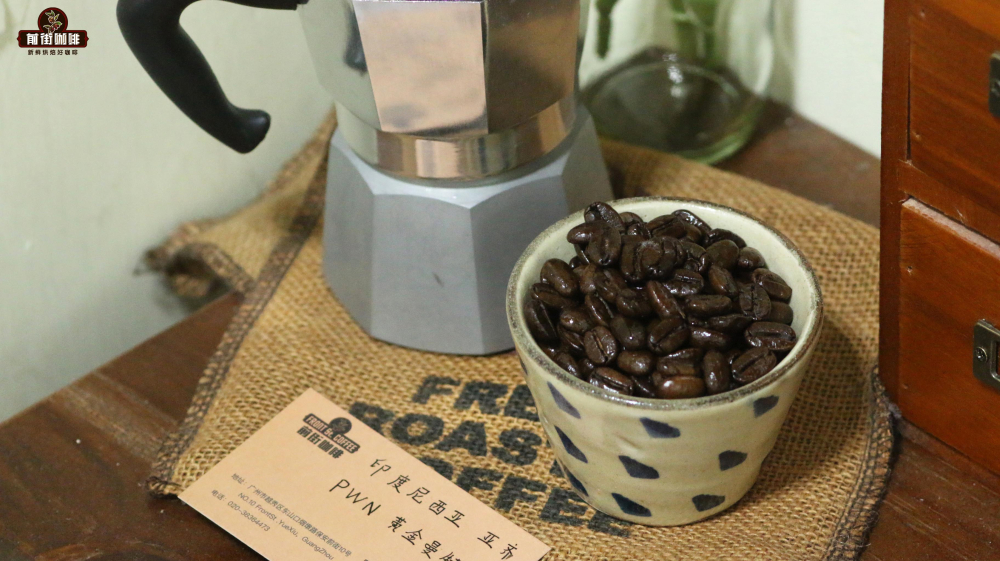
These coffee beans come from the Gayo Mountain producing region in Aceh, Sumatra, Indonesia. After PWN Company purchases Mandheling coffee beans, it carries out one mechanical sorting starting from the fruit stage as well as more than three rounds of manual hand sorting, ensuring that the coffee beans are above 18 mesh in size. The flavor expression of the coffee beans is more balanced and clean, while retaining the rich herbal, pine, and spice notes of Mandheling coffee beans as well as more sweetness on the finish.
The above content is compiled by CoffeeHunters, a coffee news website.

