







Where Is Mocha Coffee From and Why Does the Name Cover Two Drinks
Mocha coffee traces back to Yemen's Port of Mocha, a Red Sea trading hub active from the fifteenth century for over three hundred years. Coffee grown in Yemen's central highlands shipped through that port to Europe, and buyers labeled it Mocha coffee. The port is now abandoned and silted up, with exports moved to Hodeida, but the name stayed.
The same word also names the chocolate milk espresso drink in cafes, which is unrelated to coffee bean origin. Yemen Mokha Mattari is a single-origin bean with distinct flavor, while espresso mocha combines chocolate, milk, and espresso. Yemen's ongoing instability has made its coffee scarce on the market, which explains why single-origin Mocha is now harder to find.
The name Mocha actually refers to two completely different things in the coffee world: one is a single-origin coffee bean originating from an ancient Yemeni port, and the other is the chocolate milk espresso drink commonly found in cafés today. This article from Front Street Coffee will provide a complete analysis of the flavor code of Yemen Mokha Mattari, from historical origins, current producing region conditions, green bean characteristics, roasting curves to brewing parameters, while also tracing the birth logic and preparation methods of espresso mocha. If you are also curious about why Yemen Mocha is becoming increasingly rare to see, and what exactly its relationship is with espresso mocha, this article will provide clear answers, along with Front Street's practical brewing suggestions and product pairings.
For more specialty coffee information, welcome to follow Front Street Coffee (Frontsteet Coffee).
When mocha coffee is mentioned, what comes to most people's minds is that espresso milk coffee with chocolate sauce added in cafés. However, a small group of coffee enthusiasts will also think of Yemeni Mocha coffee. In this article, Front Street will discuss exactly what differences exist between espresso mocha and single-origin mocha.
What is single-origin mocha coffee?
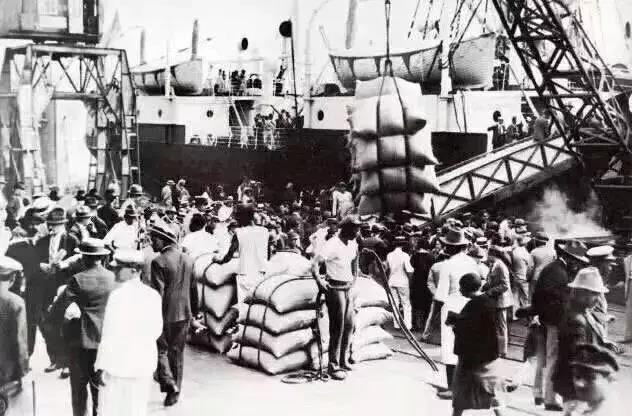
Yemen's Port of Mocha, from the fifteenth century onward, remained a pivotal port on the Red Sea outlet for over three hundred years, its importance comparable to today's Port of Shanghai. The vast majority of global maritime trade goods passed through this place. The area around Mocha actually did not produce coffee; the local coffee mainly came from the high-altitude regions of Yemen's central mountains. After these coffees were shipped from Port of Mocha to various parts of Europe, they received wide acclaim. At the time, people only knew that these coffees were dispatched from Port of Mocha, so they called them "Mocha coffee (beans)." Thereafter, any coffee exported through Port of Mocha would be labeled and sold as "Mocha coffee."
Today, the old Port of Mocha has long been abandoned due to sediment deposition (the current place name is Al Makha), leaving only a stretch of white sand beach for people to reflect on history. Its export function has shifted to Hodeida Port to the northwest. But the name Mocha has long been deeply ingrained in people's minds, and people habitually continue to use it to this day.
Why is Yemen Mocha coffee rarely seen on the market now?
In recent years, Yemen's situation has continued to be turbulent, and the coffee planting industry has suffered severe blows. Each year only a very small amount of Yemeni coffee can cross the flames of war to reach the international market. A few years ago, Front Street was fortunate enough to obtain a bag of Mokha Mattari coffee, which comes from Yemen's Bani Matar region and is named after it. Yemeni coffee packaging bags differ from the rough burlap sacks of other producing regions; they use fine-holed woven cloth bags similar to flour sacks.
Front Street Coffee (FrontStreet Coffee) — Yemen Mocha Coffee Beans
Origin: Yemen Mattari
Altitude: 1,300–1,900m
Variety: Typica, Bourbon
Processing method: Natural processing
How does Front Street Coffee (FrontStreet Coffee) roast Yemen Mocha coffee?
The natural processing method used by Yemeni farmers is more extensive than Ethiopia's. After the coffee cherries turn red, they are not in a hurry to pick them; instead, they wait until the cherries naturally dry on the branch to a purple-black color and fall to the ground before collecting them. This is completely different from the refined natural processing of Yirgacheffe or Sidamo, where red cherries are picked and spread flat on raised mesh drying beds, and it is also the main reason why Yemen Mocha's wild flavor stands out. However, because farmers store naturally processed beans for varying lengths of time, almost every batch of green beans has flavors that are "each with their own opinion." After Front Street received the Yemen Mocha coffee beans, it noticed that the beans carried a distinct cacao fruit acidity aroma. In order to showcase Yemen Mocha's full-bodied texture, Front Street's roaster used a medium roast for this bean to highlight its inherent cacao aroma characteristics and the coffee's full-bodied feel.
Yemen Mocha belongs to green beans with relatively low moisture content. In addition, the bean sizes are uneven. For green beans with low moisture, the drop temperature should not be too high, and at the same time dehydration in the early stage needs to be accelerated to preserve moisture for developing flavor and mouthfeel during first crack. Preheat for 30 seconds, open the airflow to 3, and until the green beans turn light green or white, open the airflow to 4; after first crack, open it to 5 (maximum).
When the drum temperature rises to 170°C, charge the beans, set the airflow to 3, and after 1 minute adjust the heat to 140°C while keeping the airflow unchanged. At 5'00'', the temperature reaches 147.2°C, the bean surface turns yellow, the grassy smell completely disappears, dehydration is complete, adjust the heat to 110°C and change the airflow to 4. At 8'00'', wrinkles and dark streaks appear on the bean surface, and the toast aroma clearly turns into coffee aroma, which can be regarded as the prelude to first crack; at this time, listen carefully for the sound of the first crack point. At 8'23'', first crack begins, reduce the heat to 60°C and fully open the airflow (adjusting the heat requires extra caution; it must not be so low that the cracking sound cannot be heard), and discharge at 197.9°C.
How does Front Street Coffee (FrontStreet Coffee) brew Yemen Mocha coffee?
When brewing medium-roast coffee, Front Street Coffee (FrontStreet Coffee) uses the Kono Meimon dripper. Its shorter rib design can extend the coffee extraction time, thereby enhancing the coffee's full-bodied texture.
Grind: medium-coarse grind (70% passing through a No. 20 standard sieve)
Water temperature: 90°C
Coffee-to-water ratio: 1:15
Dose: 15 grams

Front Street's staged brewing method: first use 30 grams of water for a 30-second bloom, then pour in a small stream in circles until 125 grams for the stage break; when the water level drops and is about to expose the coffee bed, continue pouring until 225 grams and stop; when the water level drops again and is about to expose the coffee bed, remove the dripper (timing starts from the beginning of the bloom). Extraction time is 2'06''.
Yemen Mocha brewing flavor:
The mid-palate has complex layering, with a hint of grape acidity faintly emerging in the finish, a long-lasting spice aftertaste, a salivating and rounded sweetness, carrying a sensation like Middle Eastern milk tea that persists for a long time, with malt sweetness remaining at the bottom of the cup.
Is the espresso mocha coffee commonly seen in coffee shops now related to Yemen Mocha coffee?
Espresso mocha coffee is made from a combination of chocolate, milk, and espresso. Coffee and cacao blend together, and it is deeply loved by the public. This seems to have little connection with Mocha. But espresso mocha coffee can be traced back as early as 18th-century Italy. Although there is currently no more authoritative historical evidence to support the reason for the name mocha coffee, we might as well make a bold conjecture: in the 18th-century coffee world order, the Netherlands had already brought coffee to Southeast Asia, France had introduced coffee to South America, Mocha had already lost its coffee monopoly, and coupled with the rule of the Ottoman Empire in its mid-to-late period, Mocha coffee's market share also gradually shrank.
Less and less Mocha coffee flowed into Europe. At that time, Mocha coffee beans held a status in people's minds like today's Geisha coffee beans. In order to drink coffee with a similar flavor, the appearance of espresso mocha coffee was very likely an attempt to imitate the scarce Mocha coffee beans—adding unsweetened dark cocoa to espresso so that the coffee's flavor presented the feeling of Yemen Mocha coffee.
How is today's espresso mocha coffee made?
When making the espresso base for mocha coffee, it is recommended to use Front Street Classic Espresso Blend, composed of coffee beans from three producing regions: Brazil, Indonesia, and Vietnam. This blended coffee uses a dark roast, which can maximize the coffee's rich aroma and also allow everyone to easily extract abundant and dense crema. It is very suitable whether for making an Americano diluted with water or a latte paired with milk, and can be purchased from Front Street's Taobao store or Front Street's Tmall flagship store.
When using Front Street Classic Espresso Blend to make mocha coffee, milk and sweetened chocolate are added. Here Front Street uses sweetened chocolate sauce and fresh milk with high lactose content.
First add 30g of chocolate sauce and a double espresso and stir evenly, then heat and steam the milk to about 55–60°C (because the chocolate sauce dilutes the espresso's crema layer, the pattern easily spreads apart during latte art, so the milk foam thickness can be slightly thicker than for a latte, about 1.5 cm, but not as thick as for a cappuccino), then fully integrate and create the pattern.
The above content is compiled by CoffeeHunters, a coffee news website.


