








How Does Coffee Brewing Shape Tiger Mandheling Flavor?
Tiger Mandheling is a wet-hulled Arabica from Aceh, Sumatra, grown at roughly 1,500 meters from Typica and Caturra varieties. It is named after the endangered Sumatran tiger and screened to a 19-mesh standard. The cup is low in acid and full-bodied, with pine, agarwood, and high sweetness, which makes coffee brewing parameters matter more than usual for this bean.
A staged pour with a Kono dripper is the reference method: Front Street Coffee's roast curve and cupping notes guide grind, temperature, and pulse timing. Because wet-hulled beans hold density differently, the coffee aroma leans woody and resinous rather than bright. Beginners can compare entry-level Lintong Mandheling with PWN Golden Mandheling to see how screening and grade change the cup.
Sumatra Mandheling is the representative of Indonesian coffee, and Tiger Mandheling adds even more legend by sharing its name with the endangered Sumatran tiger. This article starts from the geography and history of the Aceh producing region, analyzing the origin of the name Tiger Mandheling, the 19-mesh screening standard, and the pine, agarwood, and high sweetness formed by Typica and Caturra varieties under the wet-hulled process. The article also records Front Street Coffee's roasting curve, cupping flavors, and the complete parameters for staged extraction using a Kono dripper, helping coffee lovers understand the unique qualities of this low-acid, full-bodied coffee and find Front Street products suitable for beginners, such as Lintong Mandheling and PWN Golden Mandheling.

For more specialty coffee knowledge, please follow the WeChat official account: Front Street Coffee (FrontStreet Coffee)
When it comes to Indonesian coffee beans, the most familiar is undoubtedly Sumatra Mandheling. If you are trying it for the first time, you can start with the entry-level Front Street Lintong Mandheling, which presents the classic Indonesian Arabica flavor; if you are seeking a higher grade, Front Street PWN Golden Mandheling has undergone multiple screenings, with an extremely low defect rate, combining richness and cleanliness, and is very suitable for friends who prefer low-acid coffee.
Among Sumatra coffees, there is one with a subtle connection to the Sumatran tiger, and that is the protagonist introduced by Front Street today—Tiger Mandheling coffee (Sumatran Tiger Mandheling).
Front Street Indonesia Sumatran Tiger Mandheling Region: Aceh, Sumatra, Indonesia Varieties: Typica, Caturra Process: Wet-hulled Altitude: 1500m
Sumatra · Aceh Producing Region Aceh is an important producing area for Mandheling coffee, located at the northernmost tip of Sumatra Island. In the early years, an independence movement broke out due to religious issues. Later, the local armed government in Aceh made a compromise, no longer seeking independence, and instead existing as a special region. The peaceful situation in recent years has given the Aceh coffee industry good room for development. Aceh's Lake Tawar and Lintong's Lake Toba are known together as the "Two Lakes, Two Mandhelings," and in recent years the quality and output of Aceh Mandheling have surpassed the Lintong producing area. Even Pawani, Indonesia's largest green bean trader, has turned its attention to Aceh.
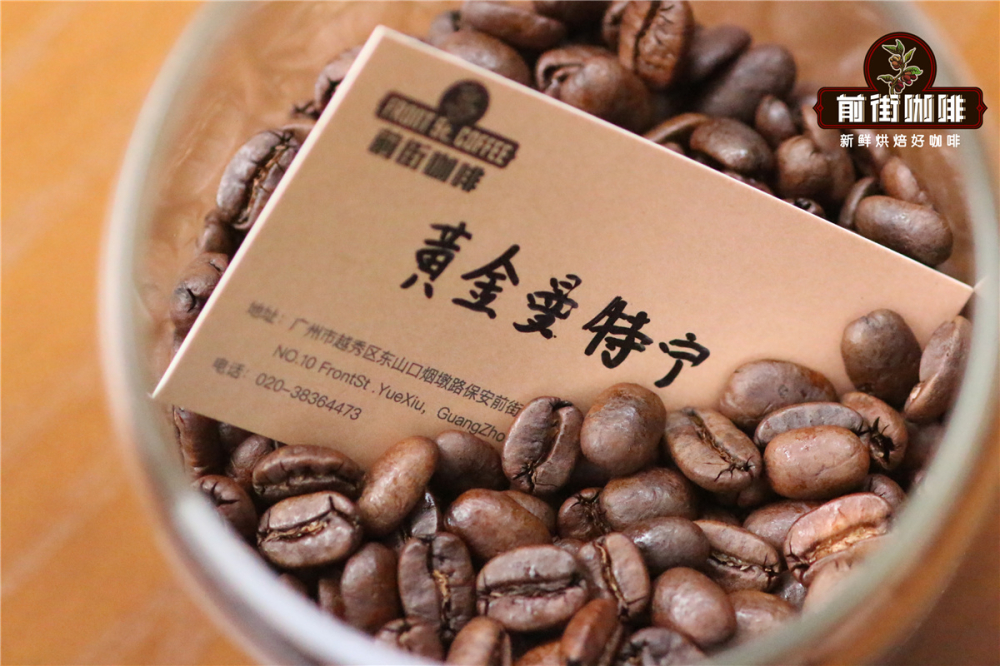
Why is it called Tiger Mandheling? The Sumatran tiger is a traditional animal of Indonesia and is now on the brink of extinction. In people's minds, the Sumatran tiger has always been majestic and steady. The producing area of Tiger Mandheling is exactly the hometown of the Sumatran tiger—Sumatra Island. This coffee uses 19-mesh coffee cherries (the coffee cherries must be strictly filtered through a sieve with 19-mesh holes, in order to make the size and diameter of each bean as consistent as possible), and then after three manual screenings to select ripe cherries, the green bean processing is carried out. Therefore, locals use "Sumatran tiger" to describe the nobility and rarity of this 19-mesh selected coffee bean. In Front Street's cupping, the coffee has high viscosity, a smooth mouthfeel, rich agarwood notes, and high sweetness, with a lasting sweet aftertaste on the palate, making one cannot help but think of the image of a Sumatran tiger crawling forward.
The most prominent characteristic of Tiger Mandheling is its special aroma reminiscent of pine and agarwood, which other Mandheling coffees do not possess.
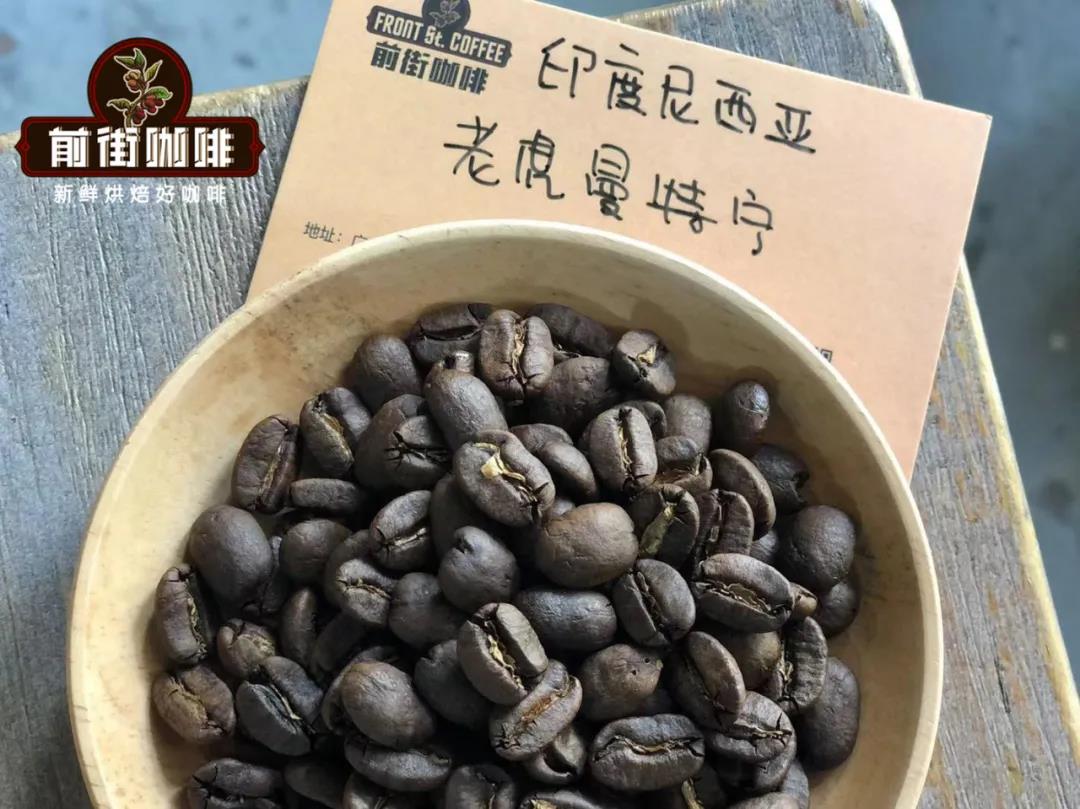
Coffee Bean Varieties This Tiger Mandheling uses two varieties with obvious sweetness: Typica and Caturra. Typica has bronze-colored tips, oval or pointed beans, elegant flavor, but weak constitution, poor disease resistance, and low yield. Front Street Coffee (FrontStreet Coffee) has cupped Typica from many producing areas, and its unique clean, tranquil flavor and balanced characteristics can all be expressed. Caturra is a Bourbon variant, with coffee beans curved at the tail end, round and slender, with better productivity and disease resistance than Bourbon, an overall bright flavor, and also good sweetness. Wet-hulled Process The wet-hulled process first removes the skin and pulp of the coffee cherries, then after brief fermentation, drying is carried out, then the mucilage and parchment layer are removed, and drying continues in the later stage until the moisture content drops to 12%. Wet-hulled Mandheling coffee beans clearly show varying degrees of squeezing cracks (this kind of bean is horseshoe-shaped, so it is also called horseshoe bean), and the bean color is on the darker bluish-green side.
Because the drying time is shortened to two to four days, the fermentation period of the coffee beans is shortened, and the acidity is greatly reduced accordingly, while the body is relatively increased. Caramel and fruity aromas are obvious, and it even has herbal or grassy aromas as well as woody notes, thus forming the unique regional flavor of Sumatra.
Front Street Coffee (FrontStreet Coffee) Roasting Analysis Front Street's roaster observed that Tiger Mandheling green beans are plump, yellow-green, with good uniformity and relatively high moisture content. The roasting target is medium-dark roast, to erase excessive acidity and enhance body and balance.
When the drum temperature rises to 200°C, charge the beans, set the damper to 3, and after 30 seconds adjust the heat to 160°C, keeping the damper unchanged. The turning point is at 1'45. Maintain the heat. At 5'18, the bean surface turns yellow, the grassy smell completely disappears, and the dehydration stage begins. Reduce the heat to 140°C and adjust the damper to 4;
At 7'30", dehydration is complete, and the heat is reduced to 140°C. At 8'55", ugly wrinkles and dark spots appear on the bean surface, and the toast aroma clearly turns into coffee aroma, which can be defined as the prelude to first crack. At this time, you must listen clearly to the sound of the first crack. At 9'00", first crack begins. Reduce the heat to 110°C and fully open the damper to 5 (adjusting the heat must be done very carefully, not so low that there is no crackling sound). After first crack, develop for 4'00" and drop the beans at 203°C.
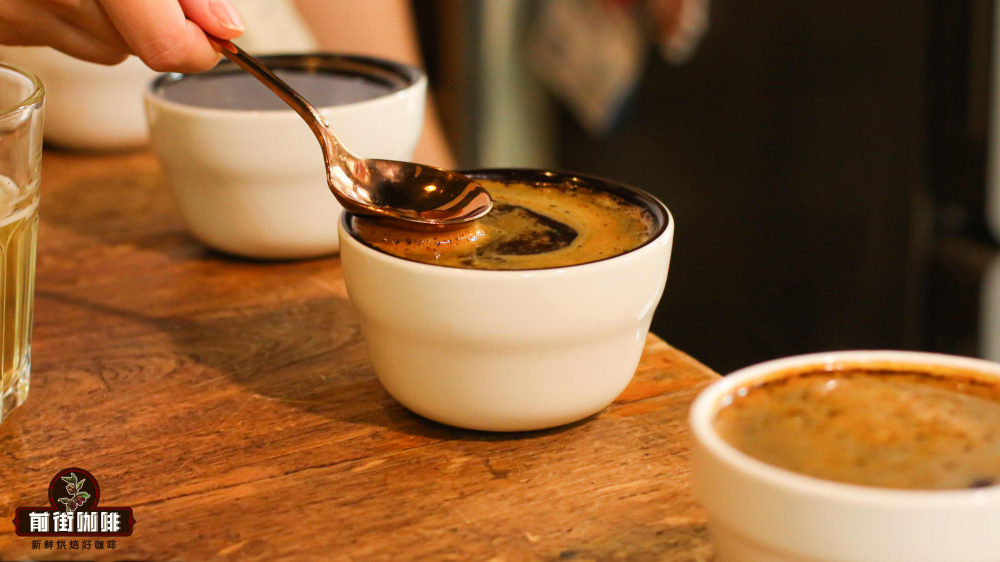
Front Street Coffee Cupping Report Dry aroma: herbal, pine Wet aroma: Chinese herbal medicine, caramel Flavor: herbal, nuts, cream, dark chocolate
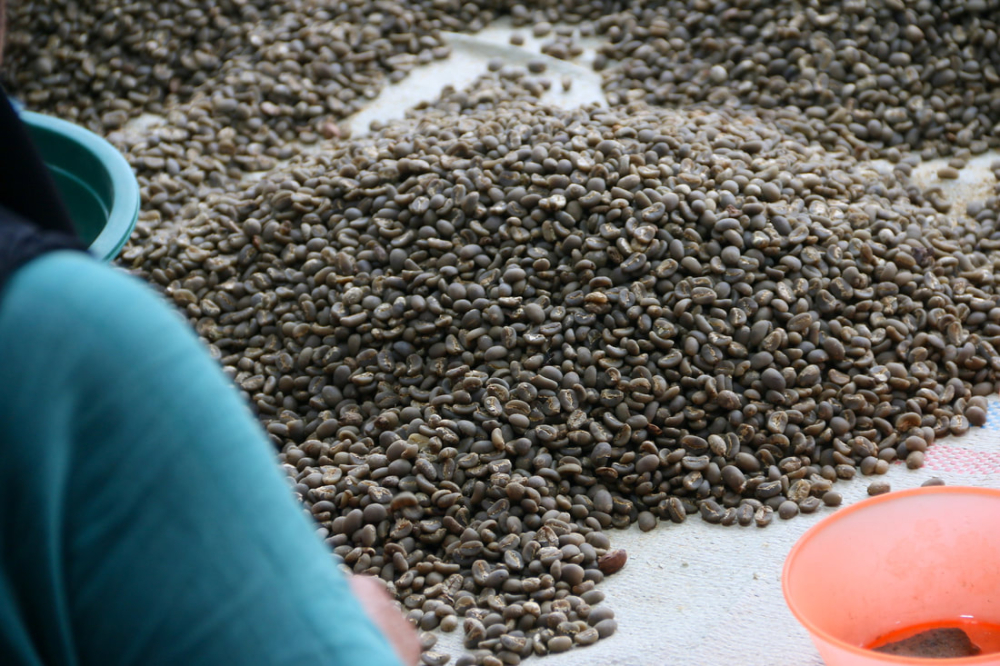
Front Street Coffee (FrontStreet Coffee) Brewing Sharing For coffee beans with a darker roast level, in order to highlight the coffee's body, Front Street Coffee (FrontStreet Coffee) chooses the Kono dripper for brewing. The characteristic of the Kono dripper is that it has an immersion function, which can use immersion to extract more coffee substances and enhance the full-bodied mouthfeel. The Kono dripper has few ribs and they are located at the bottom, which allows the filter paper to cling tightly to the dripper to achieve the effect of restricting airflow, thereby slowing the flow rate and increasing the contact time between water and coffee grounds.
Parameters Dripper: Kono Meimon Dose: 15g Coffee-to-water ratio: 1:15 Water temperature: 88°C Grind size: medium-coarse grind (passing rate of about 73% on a 0.85mm standard sieve)
Front Street Coffee (FrontStreet Coffee) uses staged extraction: use 30 grams of water for blooming for 30 seconds, pour in a small stream in a circular motion until 125 grams for the stage break, and when the water level drops and is about to expose the coffee bed, continue pouring until 225 grams and stop pouring. When the water level drops and is about to expose the coffee bed, remove the dripper. (Timing starts at the beginning of blooming.) The extraction time is 2'05".
Brewing flavor: nuts, cream, dark chocolate, caramel, Chinese herbal medicine, obvious sweetness, and a relatively clean, clear flavor.
For more specialty coffee knowledge, please follow the WeChat official account: Front Street Coffee (FrontStreet Coffee)
The above content is compiled by CoffeeHunters, a coffee news website.


