







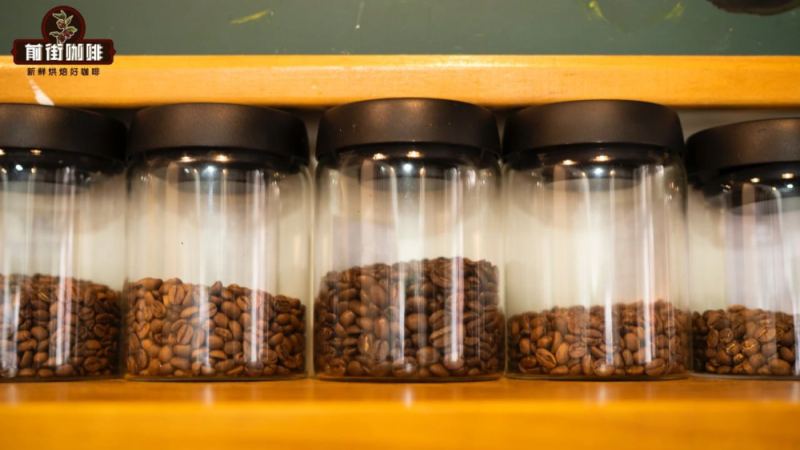
Friends who drink coffee regularly may have heard the terms single-origin beans and blended beans, but many may not be able to explain clearly what they actually mean and how they differ. Simply put, single-origin beans come from a single region and can be traced to a specific estate or even a coffee farmer; blended beans are coffee beans from different regions or countries mixed together for a purpose. From the perspective of Front Street Coffee, this article sorts out the definitions of the two, the roasting differences, and the principles and techniques to master when blending, and introduces in detail the flavor characteristics and suitable scenarios of four Front Street Coffee products: Sunflower Warm Sun, Specialty Blend, Commercial Blend, and Black Cocoa Blend, to help you understand whether espresso can be made with single-origin beans.
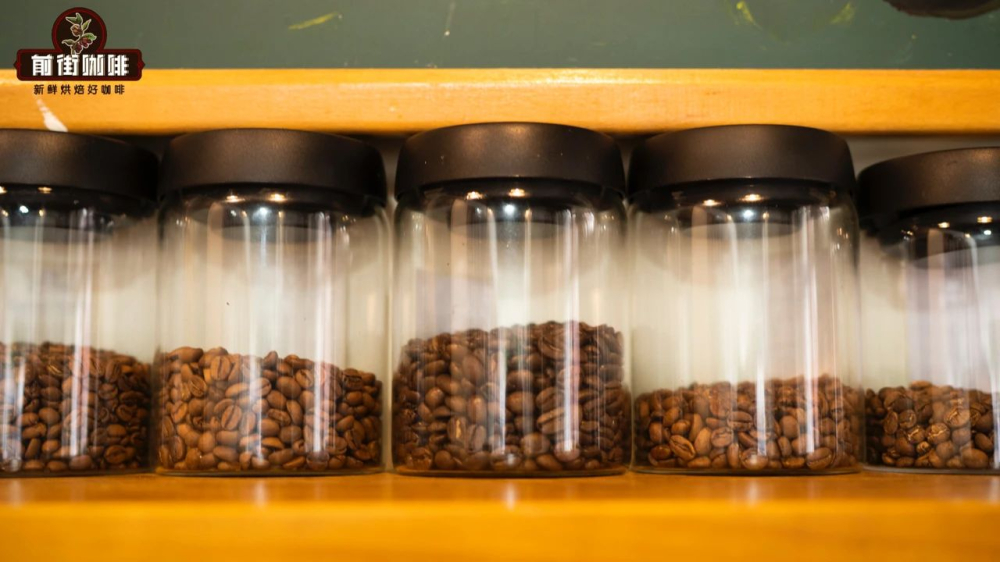
Differences Between Pour-Over Single-Origin Coffee Beans and Blended Coffee Beans
FrontStreet Coffee first wants to clarify a concept with everyone: when we discuss blend beans, the object of comparison is single-origin beans. So-called single-origin beans refer to coffee beans produced from a single region (which can be one estate or cooperative, or multiple estates or cooperatives under the same origin); while blend beans are beans from different regions or even different producing countries mixed together for a specific purpose, and are by no means randomly thrown together.
The core value of single-origin beans lies in traceability—the ability to trace all the way to the estate in the region, and even to a specific coffee farmer. This traceability mechanism in turn can also push producing areas to improve cultivation standards, thereby harvesting better-quality coffee. For this reason, coffee labeled as single-origin on the market often appears as specialty coffee (after natural elimination and market screening). It is generally believed that the more specific the origin information, the more helpful it is for judging coffee quality, and then screening out high-quality lots to enter the consumer market.
Blended beans have a very long history. As early as the beginning of espresso's popularity, blending was already highly regarded. At that time, the popular espresso was sold on its rich sweetness and bitterness, while single-origin coffee often had relatively heavy flavors, with both strengths and weaknesses. In addition, high-quality single-origin beans were expensive, so people thought of using beans from other regions to make up for the shortcomings of a certain bean while preserving its advantages, ultimately obtaining a work with better balance.
At the roasting level, pour-over single-origin beans usually need their roast level adjusted according to the flavor characteristics of the origin. For example, FrontStreet Coffee uses a medium-light roast for Ethiopian beans to highlight floral notes and the fruity acidity of citrus and berries; while Indonesian Mandheling takes a medium-dark roast route, highlighting nutty, chocolate, and caramel notes as well as a rich body.
Before starting to blend, there are several things you need to think through first:
1. Clarify the blending theme, that is, what kind of coffee flavor you want to present in the end, and set the goal for the blend.
2. Understand the temperament of each coffee bean. The prerequisite for blending is to know the characteristics of each single-origin bean and understand the subtle relationship between roast level and flavor, and all of this can only be accumulated through repeated cupping.
3. Assign the role each bean participating in the blend will play. Because multiple beans are involved, you must be clear about who is responsible for presenting soft bitterness, who is responsible for bright acidity, and who is responsible for a heavy body.
When blending, the following principles are usually followed:
1. The selected green beans should each have their own characteristics, and try to avoid using beans with similar flavors. The selection of green beans can start from three dimensions:
Green bean processing method: that is, whether the washed method or the dry method is used. The processing method is closely related to coffee flavor.
Green bean origin: Coffee origins are roughly divided into three major regions—Central and South America, covering about 20 countries including Brazil, Colombia, Guatemala, Mexico, El Salvador, Jamaica, and Peru; Southeast Asia, including about 10 countries such as India, Indonesia (Java, Sumatra, and other islands), and Papua New Guinea; and the Arabia and Africa region, such as Ethiopia, Kenya, Tanzania, Arabia, and Uganda, about 25 countries.
Coffee bean flavor: Look at whether this bean is more prominent in acidity, bitterness, sweetness, or body, or whether it is a neutral bean that is relatively balanced in all aspects.
At present, the most commonly used green beans are Brazil, Colombia, and Mocha.
2. Regarding the types and proportions of beans participating in the blend. Since it is a blend, naturally at least two kinds of green beans are needed to start, but there is a special case: different roast levels of the same bean can be blended together, and even new beans and aged beans or old beans of the same kind can be mixed. Therefore, the types in a blend are no longer limited to varieties in the narrow sense, but have extended to the flavor level. Generally, a blend uses 2 to 6 kinds of beans; too many types instead make it impossible to present a unique flavor. The blending ratio should also not use 1:1, because this easily suppresses each other's characteristics. There must be a distinction between primary and secondary so that a flavor more exciting than single-origin can be blended. If you want a complex and varied flavor, reduce the proportion of the theme bean; otherwise, increase it.
3. Blending relies on continuous trial and error. Therefore, before starting, you might as well use mathematical combinations to make a blending plan table, and then determine the best solution through a cycle of blending and cupping.
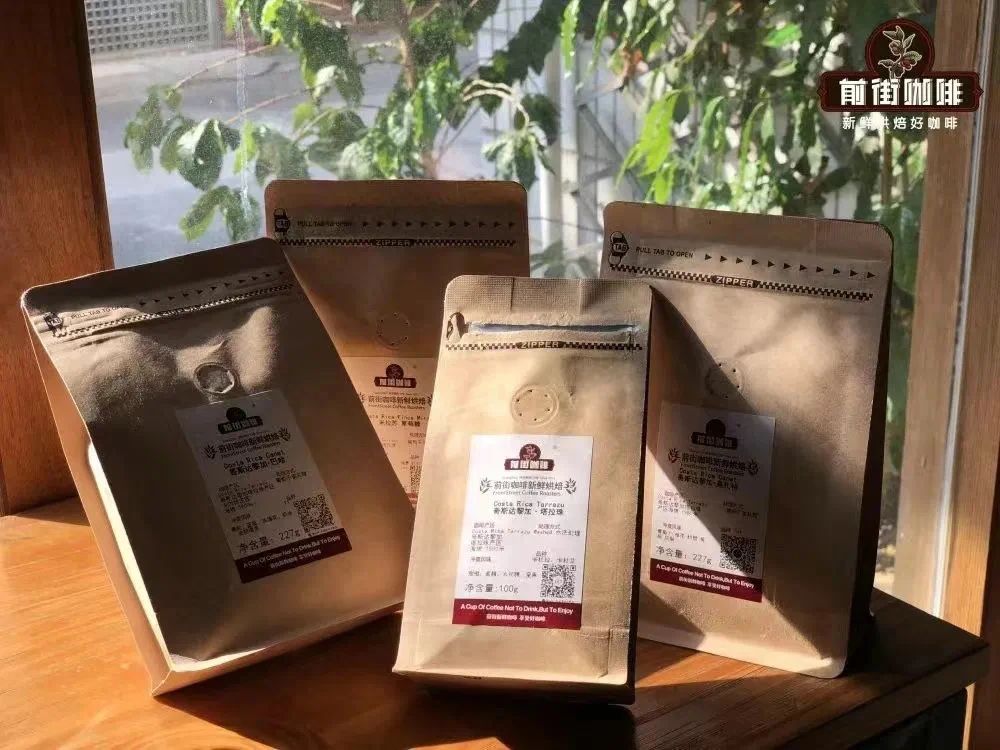
Do not think this is a clumsy method. In fact, only by relying on the experience, inspiration, and tireless repeated attempts of the blender can a good cup of coffee be blended. It is also through countless experiments that Front Street's roasters blended Sunflower Warm Sun Blend, Specialty Blend, Commercial Blend, and the espresso moka pot coffee beans recommended by many baristas—Front Street Black Cocoa Blend. These blends target different price points and present balanced and high-quality flavors.
FrontStreet Coffee Sunflower Warm Sun Blend is blended from Yirgacheffe natural Red Cherry and Honduras Sherry. Front Street's design for this bean is that it can be used for both espresso and pour-over. When using Warm Sun Blend to make espresso, it smells of obvious fermented wine aroma, and on the palate the acidity of citrus and berries immediately emerges, accompanied by whiskey aroma, with a black chocolate finish. If brewed by pour-over instead, the flavor is not as rich as when making espresso. After brewing, there is fermented wine aroma and a little citrus aroma. When drunk hot, there is only obvious wine aroma and a black chocolate finish. After the temperature drops, it slightly shows the acidity of citrus and berries. Overall it is clean and fresh, without a vanilla cream mouthfeel.

FrontStreet Coffee Specialty Blend uses Brazil and Colombia for blending. The sweet and bitter taste is comfortable, and the entry is extremely smooth, with a faint roasted grassy aroma. In the fresh aroma there is a slight bitterness, sweet and smooth, and the aftertaste is pleasant. Beans from Colombia's Huila region have a pleasant acidity, aromatic and mellow smell, moderate acidity, and rich sweetness, making them very thought-provoking; beans from Brazil's Cerrado region have a comfortable sweet and bitter taste and an extremely smooth entry. This Specialty Blend is suitable for all kinds of specialty coffee shops.
FrontStreet Coffee Commercial Blend uses Brazil and Colombia plus 10% Robusta. The taste is classic, bringing rich crema and mouthfeel, with caramel sweetness, nutty, cocoa-like, and dark chocolate flavors, balanced acidity and sweetness, with a slight hint of sweet bitterness, and a lasting finish. Beans from Colombia's Huila region have a pleasant acidity, aromatic and mellow smell, moderate acidity, and rich sweetness that is very thought-provoking; beans from Brazil's Cerrado region have a comfortable sweet and bitter taste and an extremely smooth entry; Robusta provides rich crema. This Commercial Blend is suitable for coffee shops and beverage shops of various sizes.
The espresso moka pot coffee beans recommended by many baristas at FrontStreet Coffee—Front Street Black Cocoa Blend—uses Brazil and Yunnan for blending, with soft fruity acidity, caramel sweetness, nutty and dark chocolate flavors, smooth and viscous, but the taste is relatively light. Yunnan's natural conditions are very similar to Colombia's, with high altitude and a large temperature difference between day and night. Its flavor is of the mellow-aroma type, with moderate acidity, rich and full-bodied taste, uniform particles, high oil content, and fruity aroma. Its quality and mouthfeel are similar to Colombian coffee. Beans from Brazil's Cerrado region have a comfortable sweet and bitter taste and an extremely smooth entry. These espresso moka pot coffee beans recommended by many baristas are cost-effective and suitable for espresso beginners and small coffee shops.
The above content is compiled by CoffeeHunters, a coffee news website.


