







Sumatra's two major coffee-producing regions, Lake Toba and Lake Tawar, give rise to the famous "Two Lakes, Two Mandheling" coffees. The former has a deep, low-toned flavor with a hint of grass jelly, while the latter has bright fruit acidity and a woody aroma. The origins of Mandheling can be traced back to the late 17th century during the Dutch colonial period. After coffee leaf rust struck, disease-resistant varieties such as Tim Tim and Catimor gradually became the mainstay, and the wet-hulling process gave the beans their unique herbal and spicy notes. This article will walk you through the definition of "Two Lakes, Two Mandheling," the history of Sumatran coffee, the wet-hulling process, and the regional background and pour-over recommendations for Front Street PWN Golden Mandheling.
Sumatra's North Sumatra Province, home to Lake Toba, and Aceh Province, home to Lake Tawar, are both abundant producers of Mandheling coffee — this is what people commonly call the "Two Lakes, Two Mandheling." They share a full, rich body and intense aroma, but differ in that Lake Toba Mandheling tends toward a muted, low-toned character, even carrying a grass-jelly-like taste, while Lake Tawar Mandheling has brighter fruit acidity and occasionally gives off notes of cedar or wood.
The Origins of Sumatran Coffee
Sumatra is the largest island in Indonesia, bordered by the Indian Ocean to the west and the South China Sea to the east, with the equator running straight through it. It sits right on the Pacific Ring of Fire, dotted with volcanoes that provide the land with nutrient-rich volcanic ash soil. The mountainous areas are shrouded in mist year-round, with high elevations, abundant rainfall, and pleasant temperatures, making this land exceptionally fertile — and coffee one of its most suitable crops.
The history of Indonesian coffee can be traced back to the late 17th century, when the Dutch captured Java and made it the Dutch East India Company's foothold in the East, introducing two batches of Typica seedlings from India to cultivate on Java. By the 1870s, coffee-growing areas had been established in Sumatra, Bali, Sulawesi, and Timor, quickly spreading from Java across all of Indonesia. However, in 1869 coffee leaf rust broke out suddenly, sweeping through production regions across Asia including Indonesia, and vast numbers of Typica trees withered and died.
To save the devastated coffee plantations, the Indonesian government introduced more disease-resistant Robusta varieties from Africa and elsewhere, and Robusta remains Indonesia's dominant variety to this day. To ensure plant survival and boost yields, Indonesia continued importing various disease-resistant varieties from other countries. Among them, the Robusta-Arabica hybrids Tim Tim, Bor Bor, and the Catimor series Ateng — thanks to their good disease resistance, high yields, and adaptability to Sumatra's terroir — quickly replaced the original Typica and became the main varieties in Sumatra and beyond. The best-known specialty representative among them is Mandheling.
An Introduction to the Growing Regions of Front Street Mandheling Coffee
Mandheling is mainly produced around two major lakes in Aceh Province and North Sumatra Province: Lake Toba and Lake Tawar.
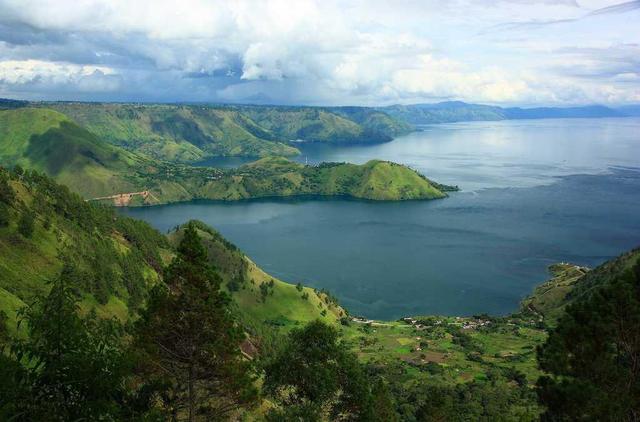
Lake Toba is the largest volcanic lake in the world and the largest highland freshwater lake in Indonesia. Its average annual temperature is around 22°C, with a tropical rainforest climate. The rainy, humid environment, combined with a mountain elevation of about 1,400 meters, makes it abundant in spices, timber, palm oil, and other agricultural products — coffee included, naturally. Under the misty, rainy weather, most fruit trees grow on higher-elevation slopes, covered with various ferns that together provide good sun protection for the coffee, so growers don't need to use shade planting.
The Gayo highlands in central Aceh Province, Sumatra, enjoy a very unique microclimate, situated near the famous volcanic Lake Tawar. The lake water is clear and the natural environment superb; coffee trees are planted at elevations of 1,200–1,800 meters, shrouded in mist year-round, with large day-night temperature swings. The volcanic soil is rich in minerals and nutrients, and fruit that falls ripe serves as fertilizer. Farmers widely practice organic coffee cultivation, and combined with a long history of growing, the coffee produced here is higher in both quality and yield. Many green bean traders value this area highly, including the locally famous Pwani Coffee Company (PWN).
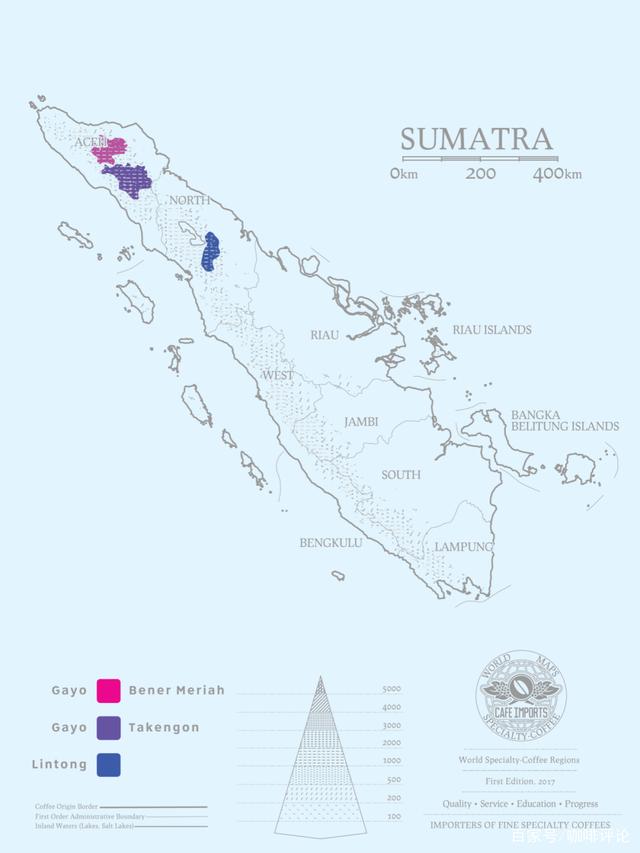
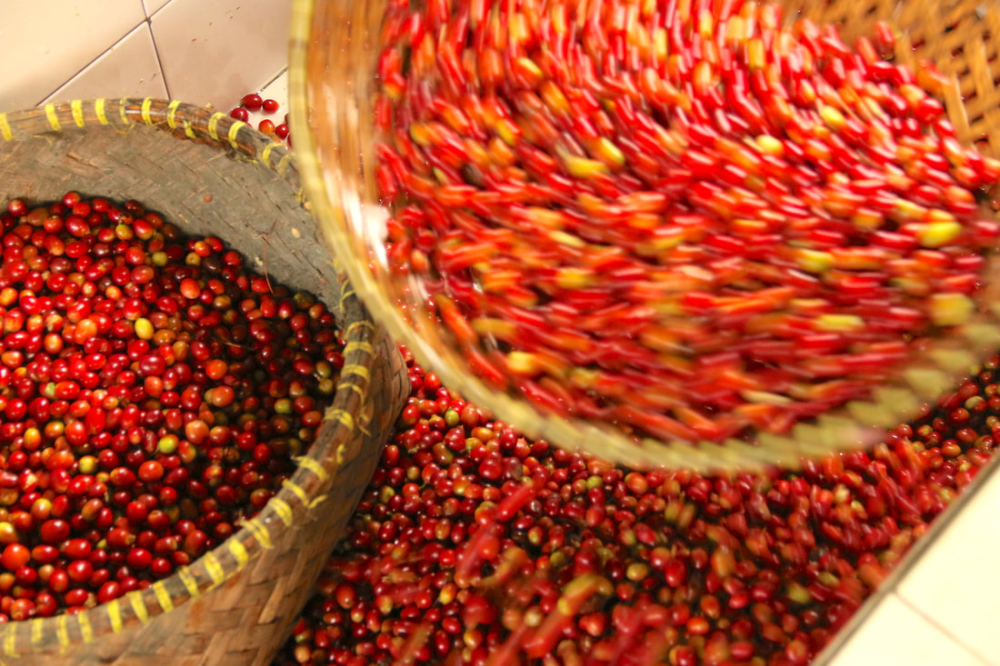
Every year from September to April is coffee harvest season, when you can see many farmers busy picking in the mountains. Traditional Lintong Mandheling is grown by the Mandailing and Batak peoples, while the "rising star" Lake Tawar Mandheling is grown by the Gayo people.
Have You Heard of the Wet-Hulling Process?
The biggest difference from many coffee-producing regions is that Indonesia is mostly humid, with year-round humidity between 70–90%, typhoons that can strike at any time, and annual rainfall reaching over 2,000 mm. Such harsh weather makes it impossible to use the 2–3 week sun-drying method of Africa. Washed processing is not only time-consuming but also costs more in labor and water resources — unaffordable for Indonesia, whose goal is mass production. So they developed a unique semi-washed method: wet-hulling.
The coffee cherries, after the skin and pulp are removed, are poured directly into tanks for a short fermentation of a few hours, during which a small amount of mucilage remains on the parchment. The mucilage is removed by scrubbing. The parchment beans are then dried — the first drying only needs to reach 30–40% moisture content, about 2–3 days — and the farmers sell the green beans to collectors. The collectors then hull the semi-dried parchment beans directly by machine to obtain the innermost green beans.
Because the hulling machine uses strong friction to tear open the parchment layer clinging tightly to the green beans, at this stage white or green viscous liquid usually oozes out. After prolonged soaking in mucilage and exposure to the humid environment, the green beans end up soft, pale and swollen, taking on a grayish-green color. The friction and agitation also make the beans more prone to being crushed or bruised, especially at both ends, forming small notches and creating "goat-foot" beans. The "naked beans" stripped of parchment dry very quickly, but are also directly exposed to the humid environment, becoming a breeding ground for various microorganisms. This gives the coffee its unique woody, spicy, and herbal notes — what we call the "Mandheling flavor."
The Cream of Mandheling — Front Street PWN Golden Mandheling Coffee Beans
As the representative coffee of Sumatra, Mandheling was originally a small place name, which later gradually evolved into the name of an ethnic group — the Mandailing. Mandheling coffee rose to fame after the Pwani Coffee Company (PWN) successfully launched it for sale in Japan. Pwani is a trading company engaged in export business, founded by an overseas Chinese family from Quanzhou, Fujian, located in Medan, an important port in Sumatra. It has been in the export business since 1957, dealing in products such as rubber, cassia seeds, cloves, and patchouli oil — and, of course, exporting Sumatran coffee beans to Japan.
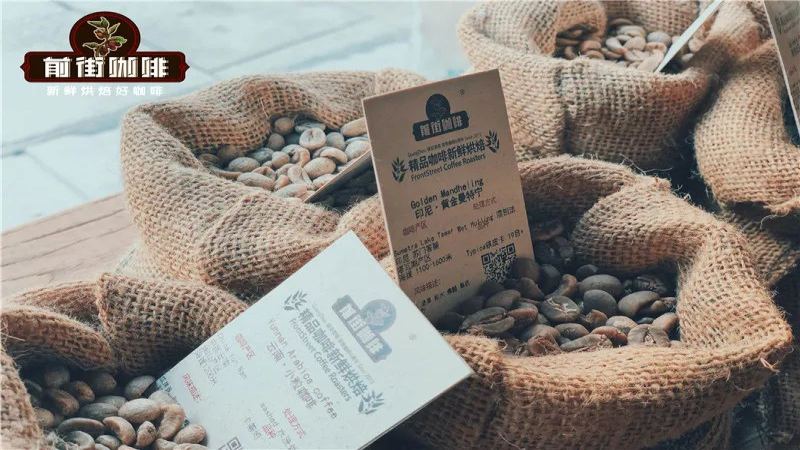
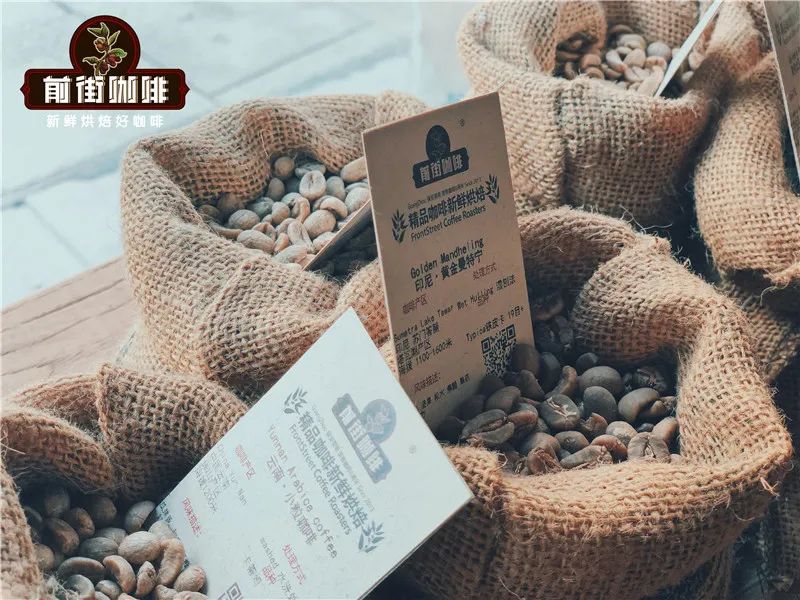
Unlike many local Indonesian green bean traders, PWN is the exclusive supplier of top-grade Golden Mandheling coffee, having contracted Indonesia's best Mandheling-producing regions, and all the Mandheling beans it produces are of superior quality. The Golden Mandheling coffee that has long held the top-right spot on Front Street's bean list comes from PWN, and the Dongshankou store even displays the burlap sacks and certification certificates used for packaging the green beans.
The wet-hulling method saves a great deal of time and labor costs in green bean processing, but the rapid process also brings a higher defect rate, so only strict hand-sorting can remove defects that machines cannot screen out. PWN puts the Mandheling green beans it purchases through one machine sorting plus three hand sortings, far exceeding Indonesia's highest local G1 grade. To meet the production standards of Front Street PWN Golden Mandheling, the following requirements must be met:
1. Green bean screen size: above 18–19 mesh after one hand sorting
2. Fewer than 3 defective beans in a 300-gram green bean sample
3. Green coffee bean grade: G1
4. Dark green in color, uniform in size, neat in shape
Before launching any coffee bean, Front Street tastes it through cupping. Cupping is an assessment of coffee bean quality and flavor; a unified standard allows a more objective identification of the strengths and weaknesses of the flavors the beans present, as well as their characteristics. Through cupping, Front Street found that the Lintong Mandheling everyday bean shows intense nutty notes, with a hint of melon aroma in the finish; as the temperature drops, herbal flavors emerge, with a full body and saturated aroma. Front Street PWN Golden Mandheling has not only the aromas of dark chocolate, nuts, and caramel, but also flavors of herbal spices and pine wood, with the sweet aftertaste of dark chocolate, a long finish, high cleanliness, and gentle fruit acidity as it cools.
The Best Pour-Over Method for Front Street Golden Mandheling
Front Street Golden Mandheling coffee has a complex aroma. To drink it at its best flavor and mouthfeel, Front Street recommends using freshly roasted coffee beans for brewing. Coffee beans reach their optimal tasting window 4–7 days after roasting; past this window (about a month and a half), the aroma gradually fades and a woody, defective taste develops. Front Street believes freshness is especially important, so the beans shipped are freshly roasted within 5 days — and with the logistics and shipping time added, they're ready to enjoy as soon as you receive them.
Front Street's brewing approach for each coffee bean is based on the characteristics the coffee shows during cupping. For example, Golden Mandheling coffee has flavors of herbs, dark chocolate, caramel, nuts, and pine wood. For this type of full-bodied bean, the baristas at Front Street Coffee use the Kono dripper. Kono's ribs extend less than halfway up the dripper — a design meant to ensure the filter paper clings tightly to the dripper wall after wetting, restricting airflow. This increases the time for coffee grounds to absorb water, resulting in a more even extraction overall and enhancing the full-bodied mouthfeel. The groove skeleton at the bottom of the Kono dripper is also a key design that allows the subsequent brewing to produce a siphon effect.
Because dark-roasted coffee beans are looser and absorb water readily, they easily take in too much water and over-extract, making the brewed Mandheling coffee bitter and astringent. So Front Street grinds coarser and brews with slightly lower-temperature water.
Recommended brewing parameters: Water temperature: 87–88°C; Coffee grounds: 15 g; Coffee-to-water ratio: 1:15; Grind size: medium grind (70% passing rate on Chinese standard No. 20 sieve)
The brewing method uses a three-pour technique; dividing the water into three pours better expresses the full body of Golden Mandheling coffee and its caramel sweetness. The first pour is a 30 ml bloom, fully saturating the coffee grounds to release gases, so that the coffee's flavor compounds can be better extracted afterward. The second pour is 100 ml, mainly to flush out all of Mandheling's golden foam and raise the coffee bed. The final pour is a gentle 95 ml centered pour; once all the coffee has drained through, remove the dripper and gently swirl the carafe to even out the coffee.
The pour-over Front Street PWN Golden Mandheling coffee tastes very intense, giving off spicy, herbal notes, with a solid, full-bodied mouthfeel overall, the sweetness of caramel, and flavors of chocolate and nuts.
For more specialty coffee knowledge, please follow: Front Street Coffee ( Frontsteet Coffee )
The above content is compiled by CoffeeHunters, a coffee news website.


