








Does americano coffee differ in calories hot or iced?
Hot and iced Americano coffee differ mainly in temperature, appearance and mouthfeel, not in calories. Water has no calories, so adding ice or serving it hot leaves the energy content essentially the same. The drink itself is espresso diluted with a large amount of water, which places its body between pour-over and straight espresso.
The name dates to U.S. soldiers in World War II who added espresso to hot water to stretch their caffeine intake. Caffeine can support fat metabolism slightly, but americano's coffee is still a beverage, not a weight-loss product. Brewing temperature changes aroma and refreshment more than it changes calories.
Americano is many people's first choice for daily refreshment and calorie control, but what exactly are the differences between hot Americano and iced Americano in terms of preparation, flavor, and mouthfeel? This article starts with the origin of Americano, compares the appearance, taste, and mouthfeel differences between hot and iced Americano, and explains that there is almost no difference in calories between the two, since water itself contains no calories. The article also compiles Front Street Coffee's extraction parameters and bean recommendations for making Americano, including Front Street Classic Espresso Blend and Front Street Strawberry Candy Espresso, helping you recreate café flavors at home and choose the right temperature of Americano based on the aroma or refreshing sensation you want.

Coffee has long been part of many people's daily lives—some rely on it to stay alert, some use it to aid fat loss, and others simply have gotten used to a cup every day. The caffeine in coffee can indeed help fat metabolism to some extent, but it is ultimately just a beverage and cannot be relied on as a weight-loss product.
Americano belongs to a category of coffee; it is not as layered as pour-over, nor as heavy as espresso, and its mouthfeel sits roughly between pour-over and espresso. Some also understand Americano as drip black coffee, and this description is equally valid.
The name Americano comes from U.S. soldiers during World War II who added espresso to hot water in order to consume more caffeine, so that in one go they could drink the equivalent of two shots of espresso. "Americano" (English: Americano, Italian: Caffè Americano) is the most common and most basic type of coffee; it can be made as black coffee with a drip coffee maker, or prepared with espresso plus a large amount of water. However, when we usually say Americano, we generally mean the latter.
Front Street has always emphasized that it is best to drink coffee from hot to cold, so you can fully experience the flavor changes of a cup of coffee, because coffee presents different tastes at different temperatures. But as people's pursuit of coffee becomes more diverse, brewing methods also keep emerging. Sometimes you just want a cup of iced coffee—refreshing and invigorating, especially in the scorching summer, when a cup of iced coffee goes down especially satisfyingly. In addition to iced Americano, recent years have also seen iced brewed coffee, cold drip, nitro cold coffee, and other iced black coffees, so which is better, iced Americano or hot Americano?
Let's look below at the mouthfeel differences between hot Americano and iced Americano:
Hot water plus espresso is called hot Americano; adding ice cubes and ice water makes it iced Americano.
Hot Americano

Hot Americano can be made into black coffee with a drip coffee maker, or prepared with espresso plus a large amount of hot water. When making it, speed, convenience, and quickness are valued; the brewing method is relatively casual and simple, and the taste is light, with a sweet and refreshing feeling.
Iced Americano
The most common iced coffee is iced Americano (Iced Americano coffee). The method is to extract espresso (Espresso) at standard high temperature with an espresso machine, then pour it over ice cubes and ice water. The ratio of ice cubes to ice water can be adjusted according to personal preference. The higher the proportion of water, the lighter the coffee taste.
Overall, the two differ in the following ways:
1. Different appearance: iced Americano has a lighter color, while hot Americano is close to transparent, and you can even see the brown coffee through the bottom of the cup.
2. Different taste: iced Americano's coffee flavor is not considered strong, with a heavier smoky flavor from roasting and a lighter acidity. Hot Americano releases tannic acid during roasting, which combines with caramel to produce a slightly bitter sweetness.
3. Different mouthfeel: iced Americano has a mellow, astringent mouthfeel, while hot Americano usually has richer layers of bitterness, acidity, sweetness, aroma, and astringency.
There is actually no difference in calories between the two, because they are both composed of espresso plus water—one uses ice water, the other hot water. Espresso itself is extremely low in calories, almost negligible, so it does not matter how much hot water or ice water is added; water has no calories, and Americano's calories are close to zero. The hotness or coldness of food has no relationship with calorie content, just like ice cream and melted liquid ice cream: the temperatures differ, but the calories are just as high.
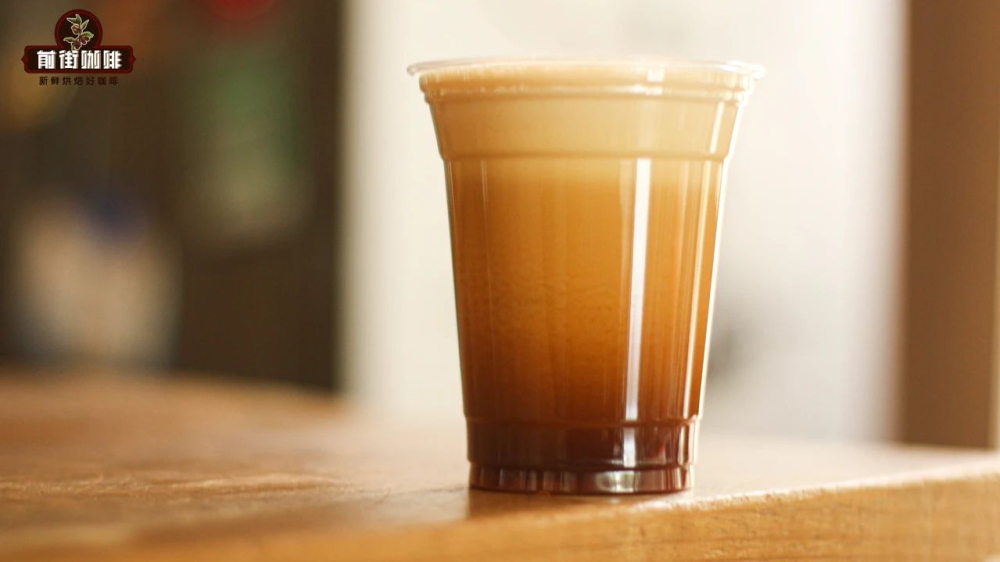
Front Street Coffee's method for making Americano
The method for making Americano is actually not complicated, mainly divided into two steps: the first step is to extract espresso liquid, and the second step is to add the coffee liquid to water.
Although the method is simple, Americano greatly tests a barista's extraction skills. A delicious cup of Americano cannot do without the most fundamental thing, which is espresso—that is, the first step—and it determines everything about this cup of Americano.
Different beans used will ultimately produce different Americano flavors, so what Americano coffee beans are worth recommending?
If you want to recreate the same espresso coffee as a café at home, Front Street Classic Espresso Blend is recommended. This recipe is composed of three origins: Brazil, Indonesia, and Vietnam, so it has both the caramel aroma of American coffee and the wild tone of Asian coffee. In order to maximize the coffee's rich aroma and make it easier for everyone to extract rich, dense crema, Front Street Coffee uses a deep roast. It is suitable whether making Americano diluted with water or latte paired with milk. You can place an order at the Front Street Taobao store or the Front Street Tmall flagship store.
If you do not want the coffee to be too bitter, choose Front Street Strawberry Candy Espresso. This is an espresso recipe launched specifically for friends who like floral and fruity aromas. It combines three major origins: Costa Rica, Colombia, and Ethiopia, and carries the aromas of roses, citrus, grapes, and dried blueberries. Made into Americano, it has a clear, sweet flavor like fruit gummies.
When making the base, factors such as the coffee powder's grind size, dose, machine extraction pressure, water temperature, and coffee-to-liquid ratio are all closely related. If the coffee powder is ground too coarse, it is easy to under-extract, resulting in sharp acidity; if ground too fine, it is easy to over-extract and become bitter.
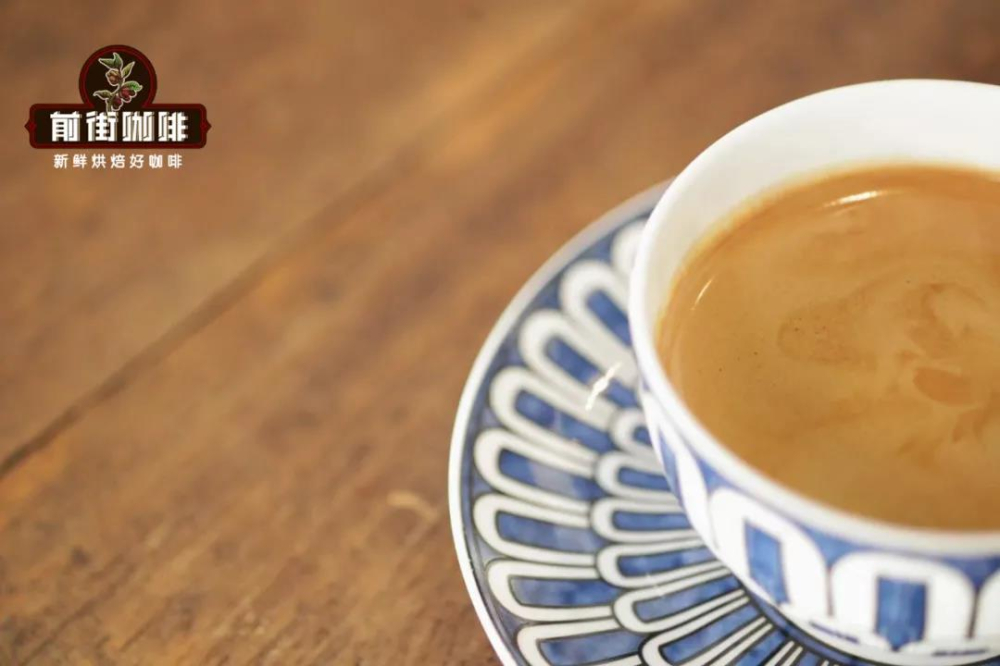
When Front Street extracts espresso, according to the capacity of the portafilter basket used in Front Street stores, it can hold 20 grams of coffee powder. Front Street's espresso machine extraction pressure is around 9 bar, the water temperature is 93 degrees Celsius, and the extraction yields 40 grams of coffee liquid.
Front Street uses an espresso machine, and the extraction parameters are as follows:
Coffee beans: Front Street. Front Street Classic Blend
Pressure: 9 bar
Temperature: 94°C
Time: 25–30 seconds
Coffee-to-water ratio: 1:1.7–1:2
Dose: 12g (single espresso) 20g (double espresso)
Extracted espresso amount: 20ml (single) 40ml (double)
After making the espresso liquid base, only the final step of adding water remains, and at the same time you also need to control whether the coffee is hot or cold.
Hot Americano's buttery aroma is very active, the acidity is not obvious, and it presents more hazelnut and caramel flavors, with high coffee body.
Room-temperature Americano's aroma is not as obvious as hot Americano's, the acidity is soft, and the mouthfeel is smooth. Because the crema layer of the espresso has not been broken apart, it is more like a vanilla cream smoothness, along with a finish of nuts and caramel.
Iced Americano has the least aroma among the three, but the most obvious acidity. After entering the mouth, it has a finish like sunflower seeds and hazelnut chocolate, with a refreshing, smooth mouthfeel.
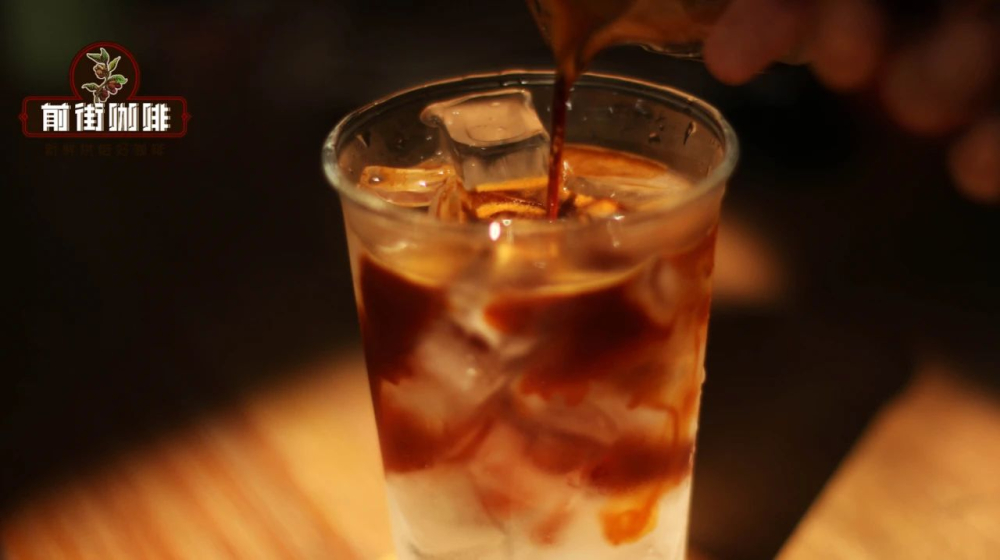
People's senses perceive taste differently at different temperatures, so the advantage of hot coffee is that you can feel the taste changes of the coffee from high temperature to low temperature. At low temperatures, the tongue's perception of bitterness and sweetness decreases, while it becomes more sensitive to acidity. At the same time, quinic acid in coffee degrades into quinic acid lactone, so coffee becomes more acidic after it cools. If you want to taste the coffee's aroma and finish, Front Street suggests choosing hot Americano; if you are after a refreshing sensation, then iced Americano is a good choice.
The above content is compiled by CoffeeHunters, a coffee news website.


