







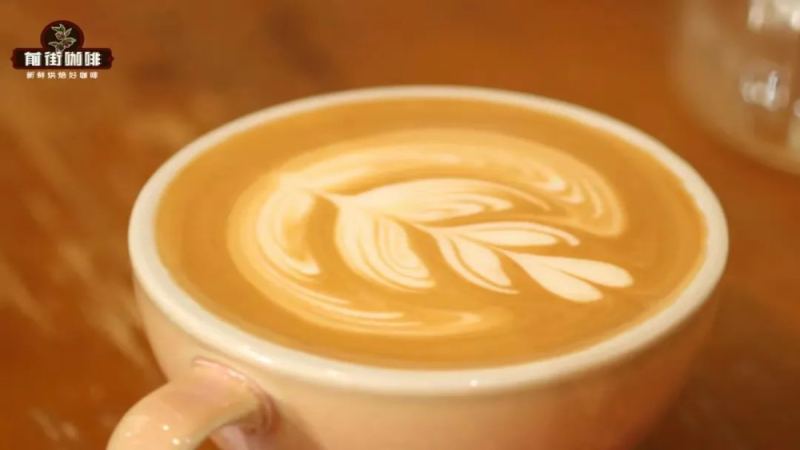
Which latte texture adjectives describe a well-poured drink?
Latte texture adjectives like fine, even and clear describe the three things that matter in poured milk art: surface fineness, fusion evenness, and pattern clarity. Complexity of the pattern counts less than whether the golden ring meets the design cleanly. Texture is built through repeated practice, since theory alone does not create the feel of pouring.
A few adjustments cut the failure rate. Milk foam can be whipped slightly thicker for etching, and pre-treating before fusion helps the layers meet evenly. Bean choice matters too: a dark-roast blend from Brazil and Colombia pulls dense crema more easily, which supports a stable pattern when you pull coffee into the cup.
Want to pour beautiful patterns with hot fresh milk, but it's always hit or miss? Whether a latte art is up to standard actually varies from person to person, but Front Street believes it can be judged from three aspects: surface fineness, fusion evenness, and pattern clarity. Besides sharing the judging criteria, this article will also introduce a few tips that can effectively reduce the failure rate, including adjusting milk foam thickness, pre-treatment before fusion, and practicing repeatedly starting from simple patterns. At the same time, choosing the right coffee beans is also key—Front Street's specialty espresso blend can help you extract rich crema more easily, making latte art twice as effective with half the effort.
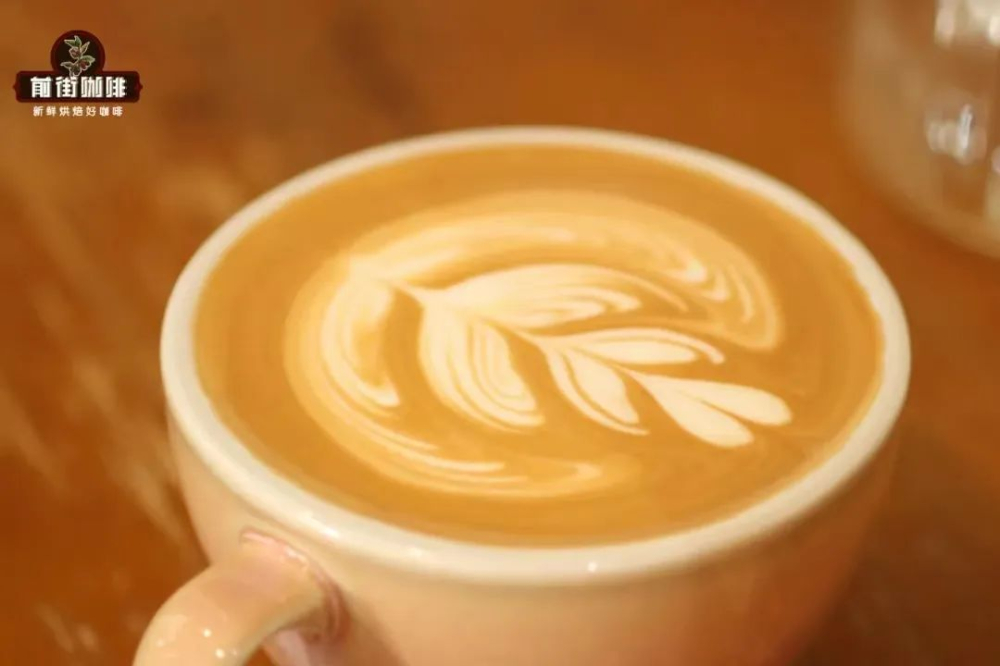
Many people think latte art is difficult. Some beginners accidentally pour a beautiful pattern while practicing, but no matter how they try afterward, they can never recreate that same feeling.
As for what counts as a good-looking latte art, everyone's judging criteria are a bit different. Front Street will share its own view: Front Street first pays attention to the fineness of the latte art surface; then whether the fusion is even, that is, whether the boundary between the "golden ring" and the pattern is clear; and only lastly the pattern itself. Front Street doesn't care how complex the pattern is—as long as the texture is clear and the shape is distinct, that's already enough.
To meet these requirements is actually not easy. You must accumulate feel through repeated practice; theory alone cannot give you that. However, mastering a few small tips can help reduce the probability of latte art failure.
Besides technique tips, Front Street believes choosing the right coffee beans is equally key. If you want to improve your latte art success rate, Front Street's specialty espresso blend coffee is recommended. This bean is blended from two producing regions, Brazil and Colombia, and uses a dark roast, which can maximize the coffee's rich aroma and also let everyone easily extract abundant, dense crema. Whether making an Americano diluted with water or a latte paired with milk, it is very suitable. You can place an order at Front Street's Taobao store or Front Street's Tmall flagship store.
- Milk foam can be whipped a little thicker
This is aimed at friends who want to do etching. We know that etching requires relatively thin milk foam, so that the flow is better and the lines are finer. But too much flow will go to the other extreme—too difficult to control, the pattern easily drifts, and in severe cases it may even fail to form.
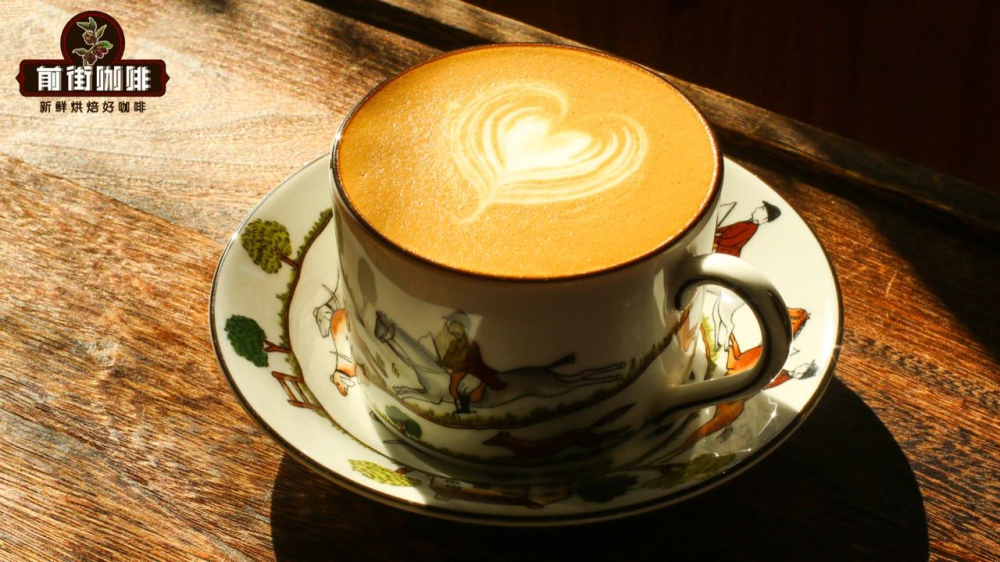
So in this case, you might as well whip the milk foam thicker. Although the etching lines will be slightly thicker, the advantage is better stability. In daily service, stability is the most important thing.
For example, milk filled to the 5-point line, whipped to the 5.5 to 6-point line, is very thin milk foam. If the pattern occasionally becomes distorted or fails to form during latte art, you can try whipping the milk foam to the 6.5 to 7-point line.
- Add a little milk before fusion
If you are not yet proficient at the fusion stage, Front Street suggests pouring a small amount of milk (milk foam) before fusion, shaking the coffee cup to let this portion of milk pre-mix with the espresso, and then continuing with the normal fusion motion.
Adding some milk in advance and letting it blend with the espresso first can make the crema and milk foam combine more evenly and stably, and during the subsequent fusion it is less likely to "whiten," avoiding a liquid surface that looks "unclean."
- Start with simple patterns and practice repeatedly
Front Street thinks this is the hardest thing to do, and even many baristas find it difficult to persist. For example, the "big white heart" is one of the most basic patterns. Many baristas can make a decent big white heart after about ten cups. But at this point they often get the illusion that "I already know how to pour a big white heart," so they rush to challenge the next pattern.
In fact, this kind of foundation is not solid. Pouring a "big white heart" may just happen when the timing, conditions, and execution all happen to align. Once the conditions change slightly, the heart shape becomes unstable. So the safest approach is to calm down and keep practicing the same pattern until the pattern poured in every cup is almost identical—only then can you be considered to have truly mastered that pattern.
- Be flexible
There is another situation: when you plan to pour a certain pattern, but during the pouring process you find the effect is far from expected, then you need to immediately use another pattern to rescue it.

For example, if the pour point deviates—you originally wanted to pour a heart, but find the pour point is too far forward. If you force a heart, the whole pattern will shift toward the front. At this time, you should instinctively switch to pouring a leaf or pushing a tulip.
For another example, when finishing a heart, you find the cup is not yet full. At this time there is no need to rush to pull the tail; you can push 1 to 2 small hearts to make a 3-lobed tulip.
To learn more about specialty coffee knowledge, please follow: Front Street Coffee (Frontsteet Coffee)
The above content is compiled by CoffeeHunters, a coffee news website.


