







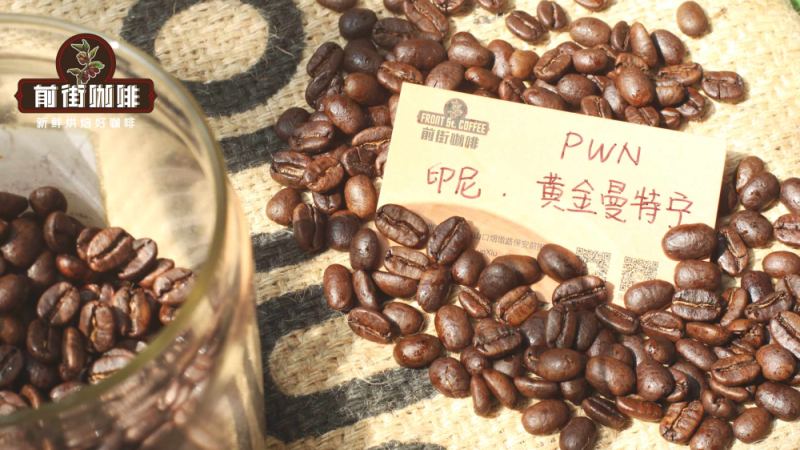
What makes Mandheling a classic coffee of Sumatra?
Mandheling is Sumatra's signature coffee, known for a heavy body, low acidity and no astringency. Its character comes from wet hulling, called Giling Basah locally, a traditional Indonesian method in which the parchment is removed while the beans are still wet. The result is a thick mouthfeel with earthy, smoky and chocolate notes that washed coffee rarely shows.
Growing areas include Aceh, Lintong and Sidikalang, and coffee from Lintong and around Lake Toba is generally classed as Mandheling. Beans often look uneven, yet the cup tends to be rich and smooth. On the market, Golden Mandheling is sold alongside regular Mandheling; the two differ in screening and grade, and this java flavor profile is what draws buyers to both.
Mandheling is the most iconic coffee of Sumatra, Indonesia, winning the hearts of countless coffee lovers with its rich, intense flavor that is low in acidity and free of astringency. How exactly does its unique wet-hulling process work? Why do Indonesians use this special method to process coffee beans? Where do the earthy, smoky, and chocolate notes of wet-hulled Mandheling come from? Furthermore, what exactly is the "Golden Mandheling" often mentioned on the market, and how does it differ from regular Mandheling? This article will systematically sort out the complete knowledge of Mandheling coffee, from its origin and source, processing techniques, and flavor characteristics to key points for purchasing, interspersed with a product comparison between Front Street Mandheling and Front Street Golden Mandheling, to help you fully understand this classic coffee.
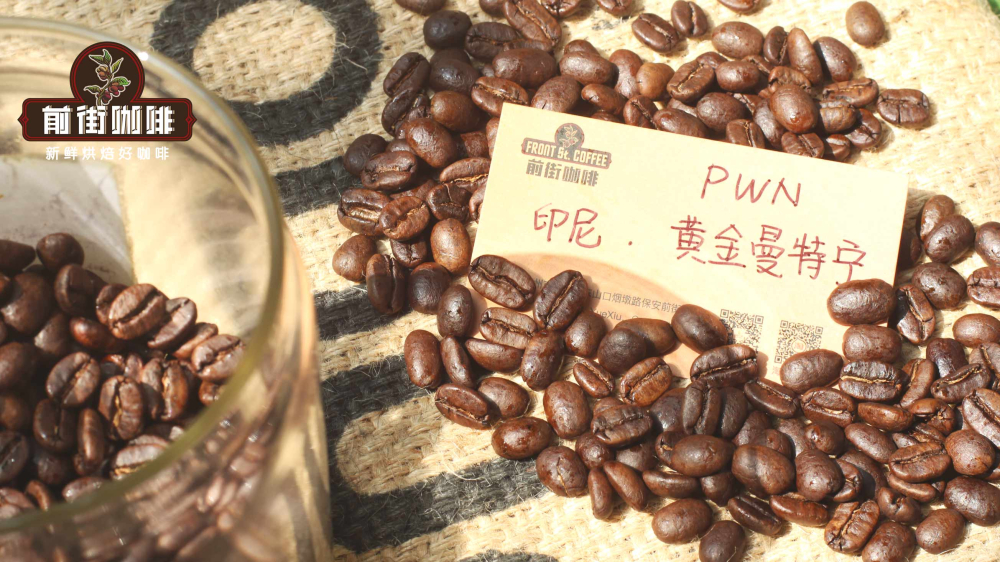
Tracing the Origin of Front Street Mandheling
Indonesia's coffee-growing landscape is mainly composed of three islands—Sumatra, Java, and Sulawesi. Among them, the coffee produced on Sumatra is the most well-known, and that is "Mandheling." "Sumatra coffee" is another common name for it. Several renowned coffee-producing regions within Sumatra include Aceh, Lintong, and Sidikalang. Generally speaking, coffee produced in the Lintong region and around Lake Toba can all be classified as Mandheling.
The flavor profile of Front Street Mandheling is quite heavy, with a full body and a rich, lively rhythmic quality. It has neither astringency nor almost any perceptible acidity, and both its body and bitterness are fully expressed. The appearance of Front Street Mandheling coffee beans can be described as the "ugliest," but among coffee lovers there is a saying: the more unattractive the Sumatran beans look, the more outstanding, rich, and smooth their flavor turns out to be.
Mandheling's Unique Wet-Hulling Process
Wet hulling, written in English as Wet Hulling and known locally in Indonesia as Giling Basah, is a traditional coffee processing method long used in Indonesia. Judging merely from the literal meaning, wet hulling seems to have much in common with the washed process (wet process), but in reality the cupping flavor directions of the two are completely opposite—coffee processed by wet hulling often has a thick mouthfeel and strong impact, with a highly distinctive style.
The Operational Flow of Wet Hulling
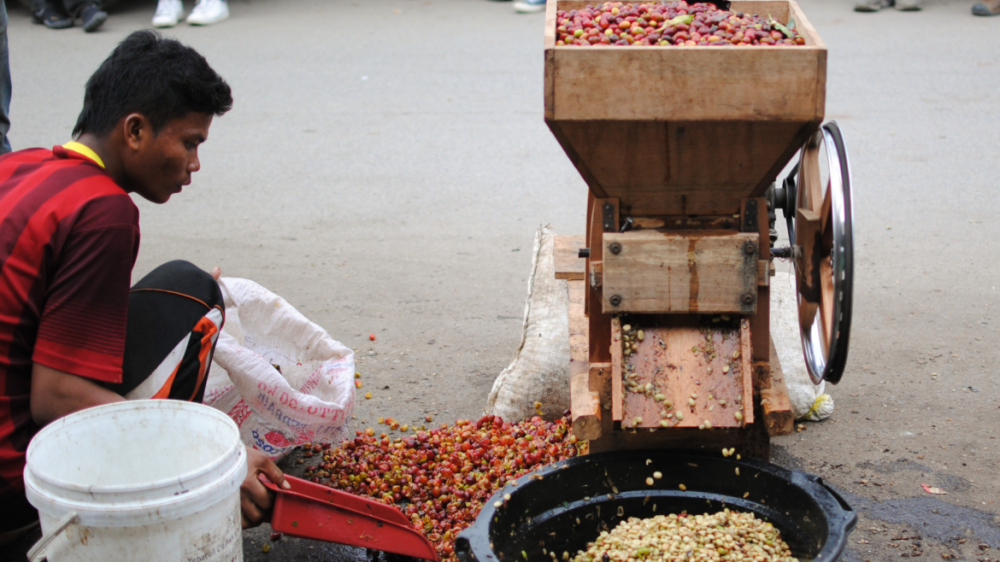
① Remove the skin and pulp, while retaining the parchment and mucilage layer
② Place the coffee beans in a water tank for fermentation
③ Rinse off the remaining mucilage with water
④ Dry in the sun together with the parchment for 2 to 3 days, until the moisture content drops to 20% to 24%
⑤ Remove the parchment layer
⑥ Continue drying the green beans until the moisture content reaches 12% to 13%
⑦ Ready for export
Why Use Wet Hulling?
a. Climatic Factors
Indonesia's choice of wet hulling is inseparable from its unique weather conditions. Indonesia's year-round air humidity remains at a high level of 70% to 90%, typhoons frequently visit, and annual rainfall in some areas can even exceed 2,000 millimeters. Green beans are most afraid of contact with rain. Faced with such harsh natural conditions, how do Indonesians consistently produce rich and full-bodied Mandheling coffee? The answer is wet hulling.
In a tropical climate, it takes an average of 2 to 3 weeks for coffee cherries to complete drying. But Indonesia's humidity makes the drying stage extremely tricky—coffee needs a longer drying cycle, during which the beans always maintain a relatively high moisture content, creating an opportunity for bacteria to invade the green beans.
In the conventional washed process, the drying stage is always carried out with the parchment still on, and the parchment to a certain extent protects the green beans from external harm. But wet hulling goes the opposite way, removing the parchment before the final drying. As a result, sunlight can directly hit the surface of the green beans, prompting rapid dehydration of the green coffee, with drying speed about 2 to 3 times faster than the washed process.
b. Economic Considerations
In the 17th century, Dutch colonizers first brought coffee to Indonesia. These colonizers pursued faster and greater economic profits, and wet hulling greatly shortened the time required at the farm level and also significantly reduced labor costs. This processing method precisely matched investors' psychology of pursuing quick returns and lowering costs, thus becoming an important force driving the popularization of wet hulling.
c. Defect Issues and kuku kambing (goat hoof beans)
At the point when wet hulling removes the parchment, the moisture content of the coffee beans is still as high as 20% to 24%; whereas general processing methods wait until the moisture content drops to 10% to 12% before hulling. In a "semi-dry" state, the parchment tends to stick to the surface of the green beans, and peeling it off is more laborious than in a "fully dry" state, with the hulling process requiring greater friction.
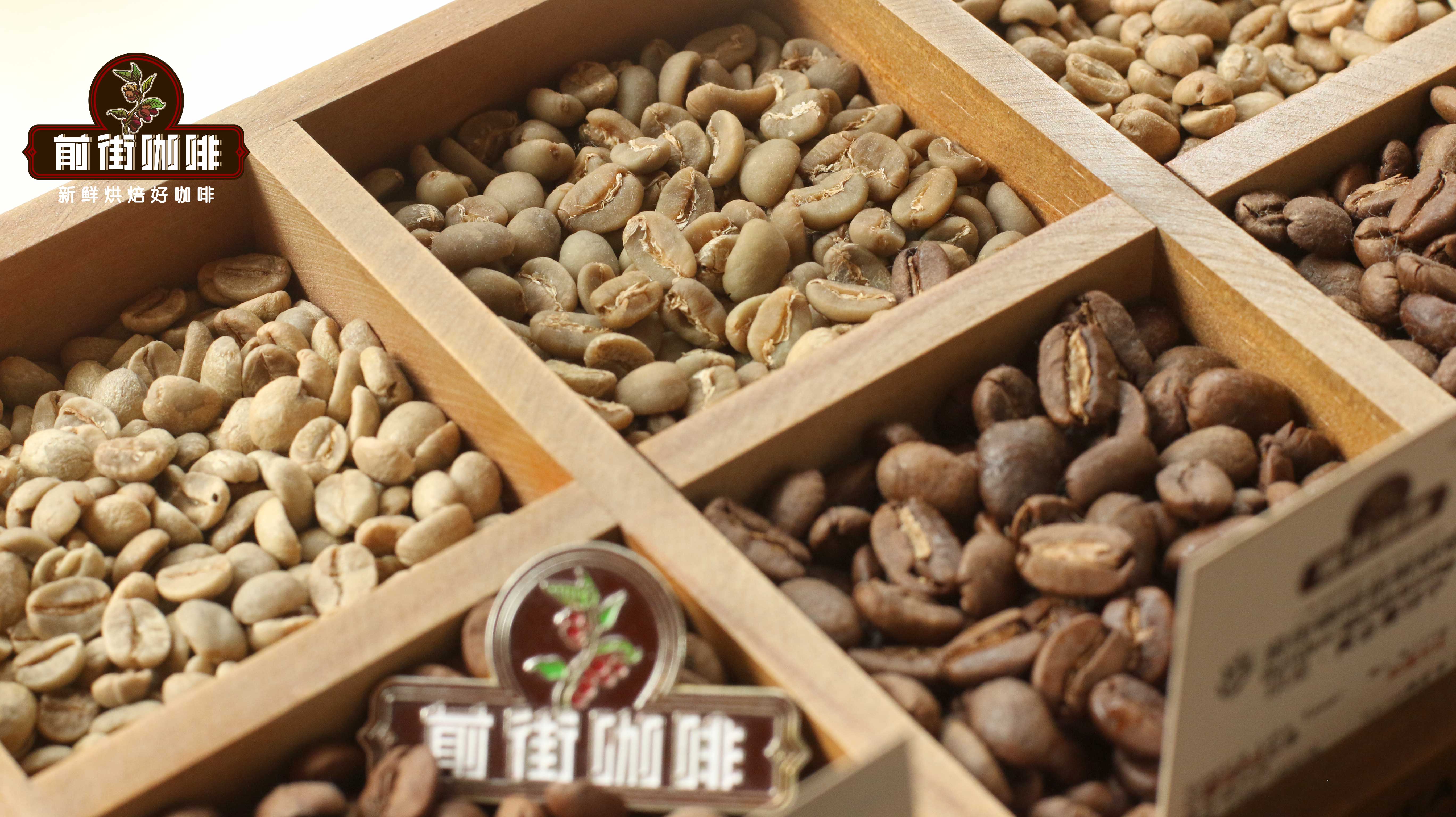
Looked at from another angle, the "semi-dry" green coffee beans are extremely fragile at this time, far less hard than "fully dry" green beans, so they are very easily crushed and injured during hulling, forming small defects. These are what are commonly called horse beans or goat hoof beans (known locally as kuku kambing).
The extremely fast processing rhythm of wet hulling also leads to a relatively high defect rate in Mandheling. Processing plants specially assign workers to manually sort defective beans, generally divided into two grades: DP (double-picked) and TP (triple-picked). Front Street Mandheling that has undergone triple picking is superior to batches that have only undergone double picking in terms of defect rate control.
Summary:
To sum up the flavor characteristics of wet hulling, setting aside those minor differences, the industry generally agrees that wet-hulled beans have earthy, smoky, and chocolate notes, with acidity classified as "low acidity" and a thick but somewhat dull mouthfeel. Front Street Lintong Mandheling presents the classic wet-hulled coffee flavor. It is suitable for single-origin pour-over, can also be brewed with a French press, and can also be blended with other coffee beans for espresso blends. If you want to experience the impact brought by Mandheling espresso and its rich crema, you can choose Front Street Classic Blend—it uses Mandheling as the base, incorporates Brazilian Red Bourbon, and adds a small amount of Robusta coffee, giving the espresso a wild character and abundant crema. Whether made as an Americano or a latte, it can present rich flavor layers of butter, caramel, dark chocolate, roasted hazelnut, sandalwood, and more.
The cause of low acidity can be traced back to shorter fermentation time, weaker fermentation effect, and a longer drying cycle—if your impression of the fermentation stage of wet hulling has become vague, you may want to review the earlier content. As for where the "earthy" note of wet-hulled beans actually comes from, opinions vary widely. Some believe it is related to the bean varieties grown in wet-hulling regions (both the Tim and Catimor lines carry Robusta bloodlines), some think it is the result of organic reactions between the green beans and the external environment, and some even say bluntly that it is simply because there are too many defective beans! Of course, there really are quite a few defective beans...
What Exactly Is "Golden Mandheling"?
Several friends who have run coffee shops for many years have said that "Golden Mandheling" is aged Mandheling. To explain "Golden Mandheling" clearly, we must start with PWN. This abbreviation often appears together with the name Mandheling coffee. It is actually the abbreviation of a company—Pwani Coffee Company.
This company is a well-known local coffee buyer in Indonesia, mainly engaged in purchasing Mandheling coffee. It has brought almost all of Indonesia's finest producing regions under its umbrella, so most of the beans produced by PWN are distinctive specialty beans. Front Street Golden Mandheling is exactly a product produced by this company—after the green beans are collected, they undergo multiple rounds of manual hand sorting to select plump, flawless beans, and ultimately only these high-quality beans that pass round after round like a talent contest can be classified as Front Street Golden Mandheling.
However, PWN has already registered "Golden Mandheling" as a trademark. In other words, from now on only Golden Mandheling produced by PWN can be considered true "Golden Mandheling" in the strict sense. Many beans on the market that do not come from PWN but carry the name Golden Mandheling should actually be called specialty Mandheling.
"Golden Mandheling" is not some kind of aged bean at all; it is merely a product named by the company.
The Difference Between [Front Street Mandheling and Front Street Golden Mandheling]:
Some coffee lovers have asked: I am a beginner who just got started, what exactly is the difference between Front Street Golden Mandheling and Front Street Mandheling G1? I really cannot taste the difference. For professional-level coffee tasters and coffee friends with keen palates, if they taste these two coffees at the same time, the differences will emerge very clearly. Golden Mandheling is superior to G1 in sweetness, cleanliness, body, and wild spicy flavor, which is one of the reasons why the price of Golden Mandheling is much higher than that of G1.
Front Street Mandheling needs to go through layer upon layer of screening, which is absolutely a necessary step. Its probability of defective beans is too high, and combined with its inherently poor looks, sometimes good beans also look like defective beans. Every time Front Street Mandheling is sorted, a handful of defective beans can be picked out, but looking back carefully at those picked-out beans, one feels they may not really count as defective beans—that is just how they are born to look. However, after roasting, Front Street Mandheling is like a caterpillar breaking out of its cocoon into a butterfly: the roasted beans are plump and round, looking quite pleasing to the eye.
Front Street PWN Golden Mandheling, on the other hand, has undergone three rounds of hand sorting plus one round of machine sorting, ensuring that the green coffee beans are uniform, neat, and plump, with bean sizes all above 18 mesh and a defect rate controlled at 2%, so it looks very beautiful to the naked eye.
The above content is compiled by CoffeeHunters, a coffee news website.


