







Why is Blue Mountain coffee so expensive and faked?
Jamaican Blue Mountain coffee is costly because genuine supply is small. The beans must be grown in the Blue Mountain region at roughly 1,000 to 1,700 meters, and total annual output is limited. That scarcity keeps prices high and has drawn many substitutes, so buyers need to check grading, origin labels and certification rather than trusting the name on the bag.
Japan sorts Blue Mountain products into three grades: Blue Mountain Coffee, requiring 100% Blue Mountain beans; Blue Mountain Blend, with at least 60%; and Blue Mountain Flavor, which may contain none at all. The taste is mild and aromatic with low bitterness. Pour-over parameters and estate details, such as Clifton Estate beans, help confirm what is actually in the cup.
Blue Mountain coffee enjoys an extremely high reputation in the global coffee world, but the annual output of coffee truly originating from Jamaica's Blue Mountain region is extremely low and the price is expensive, so a large number of counterfeit products and flavor substitutes have emerged on the market. Are you sure that what you are drinking is authentic Blue Mountain? This article will guide you through Blue Mountain coffee's strict grading system, practical tips for identifying authenticity, the sensory characteristics of Clifton Estate Blue Mountain beans, and the pour-over extraction parameters recommended by Front Street Coffee, helping you recognize the true face of authentic Jamaican Blue Mountain coffee from multiple dimensions such as aroma, taste, and packaging certification.
For more specialty coffee knowledge, please follow the WeChat official account: Front Street Coffee (FrontStreet Coffee)
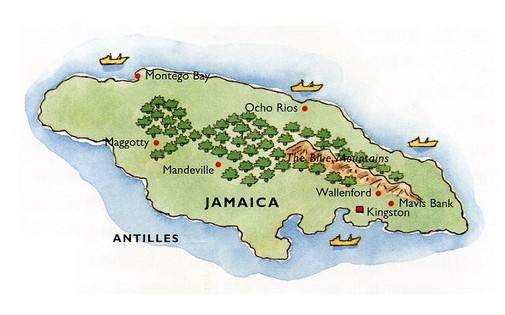
Authentic Blue Mountain coffee has always been highly regarded in the international coffee market. It is produced in the Blue Mountain region of Jamaica, its total annual output is quite limited, and there are clear requirements for growing altitude, which must reach 1,000 to 1,700 meters or more. Precisely because the output is scarce, the price is high, and it is not easy to buy, a large number of substitutes imitating the Blue Mountain flavor have appeared on the market.
Blue Mountain flavor coffee is a rather interesting product; it is not truly Blue Mountain coffee beans in the real sense. Japan divides Blue Mountain-related products into three quality grades: the highest grade is called "Blue Mountain Coffee," which requires 100% use of Blue Mountain coffee beans and does not allow the inclusion of any beans from non-Blue Mountain origins; the next grade is called "Blue Mountain Blend," which requires the proportion of Blue Mountain beans to reach at least 60%; the last grade is called "Blue Mountain Flavor," which may even contain no Blue Mountain coffee beans at all.
It can thus be seen that Blue Mountain flavor coffee beans do not come from Jamaica's Blue Mountain. Real Blue Mountain coffee is produced in the Blue Mountain Range. It is said that after sunlight shines on the sea, it reflects a blue light, and this is how Blue Mountain got its name.
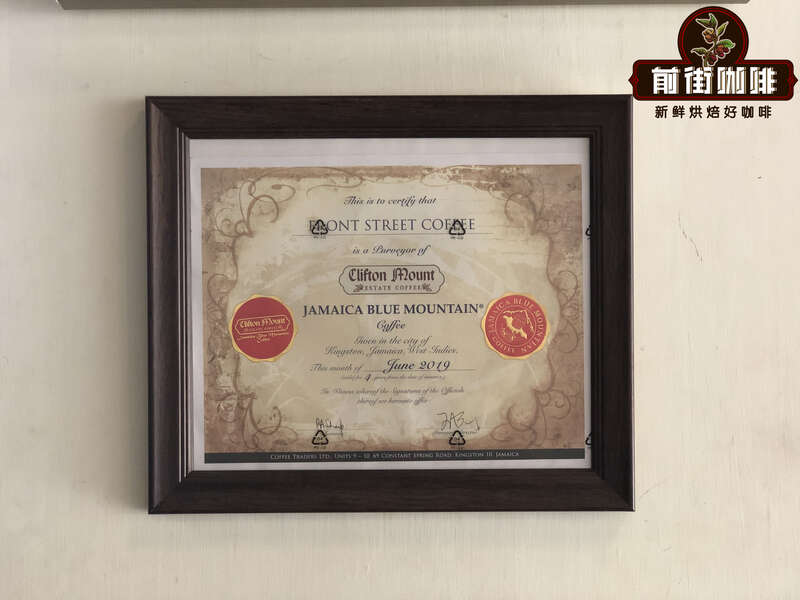
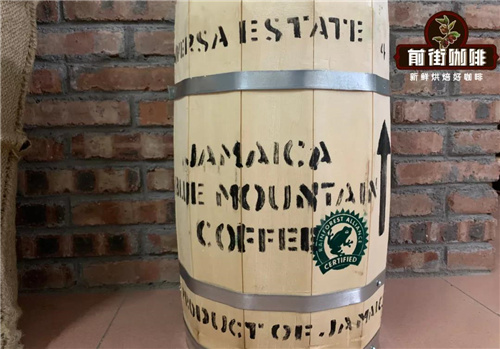
Front Street Coffee (FrontStreet Coffee) has also obtained this authentic Blue Mountain coffee bean. So, how can you tell whether Blue Mountain coffee beans are genuine? Front Street Coffee (FrontStreet Coffee) shares a little tip: authentic Blue Mountain coffee is not packaged in cotton or linen bags, but is stored in wooden barrels, and the barrels are printed with the symbol of the tropical tree frog. In addition, relevant certificates issued by the Jamaican government are also included. Therefore, when buying Blue Mountain coffee, you can ask the merchant to provide these materials for verification.
Coffee from Jamaica's Blue Mountain region is divided into three grades: Blue Mountain Coffee, Jamaica High Mountain Supreme Coffee Beans, and Jamaica Prime Coffee Beans. Among them, Blue Mountain Coffee and High Mountain Coffee are each further subdivided into two levels. From highest to lowest quality, they are: Blue Mountain No. 1, Blue Mountain No. 2, High Mountain No. 1, High Mountain No. 2, and Jamaica Coffee. If arranged by green bean specification, they are NO.1, NO.2, NO.3, and PB, with PB meaning peaberry. According to CIB standards, the basic requirements for NO.1 Blue Mountain green beans are: beans of 17 screen size or above, a defect rate below 3%, and a moisture content of about 13%, among others. Only coffee beans produced according to this standard can have their flavor guaranteed.
Perhaps everyone has heard phrases describing the flavor of Blue Mountain coffee. You will often see merchants describe it on Blue Mountain coffee packaging like this: authentic Jamaican Blue Mountain coffee perfectly integrates the unique tastes of acidity, bitterness, sweetness, and mellow body, forming a strong yet elegant aroma, is insistently cultivated by hand, has outstanding quality, and is scarce in output, making it difficult for other coffees to match.
Front Street Coffee (FrontStreet Coffee) believes that such a description is not inappropriate, because everyone's perception of the same coffee bean is different. So if you want to understand the flavor of a coffee bean, merely listening to others' descriptions is far from enough; you must taste it yourself to verify. People who love Blue Mountain coffee call it the "coffee beauty" that combines the merits of all good coffees. Jim, general manager of the American Pete's company known for coffee and tea, said when describing Blue Mountain coffee: "Blue Mountain coffee's flavor is aromatic, smooth, and mellow, giving me the feeling that it is as precious as a gem." Precisely because Blue Mountain coffee's taste is moderate and perfect, it is usually drunk as black coffee. Blue Mountain coffee's caffeine content is very low, less than half that of other coffees, which fits modern people's health concepts very well.
Jamaican Blue Mountain coffee is the best representative among the classic coffee beans of the Caribbean region and can be called the finest of the finest coffees. Unfortunately, recently some operators have adopted opportunistic processing methods, mixing coffee beans grown at low altitudes with high-altitude beans, lowering the standard it should have originally had, making Jamaican Blue Mountain coffee increasingly unworthy of its name. Many coffee lovers have become especially cautious when purchasing, and quite a few are no longer willing to spend a large sum of money to buy it.
In addition, some people mistakenly buy coffee beans such as "Blue Mountain Flavor Coffee" or "Blue Mountain Blend Formula." The former contains not a single genuine Blue Mountain coffee bean at all, while the latter contains only an extremely low proportion of Blue Mountain beans. Such quality naturally cannot be mentioned in the same breath as orthodox Blue Mountain coffee, leaving uninformed people greatly disappointed.
Everyone may be curious: why is Blue Mountain coffee so expensive? What exactly makes Blue Mountain coffee taste so good? Let Front Street Coffee (FrontStreet Coffee) tell you. Front Street Coffee's (FrontStreet Coffee) Blue Mountain coffee comes from Clifton Estate. Blue Mountain coffee green beans are blue-green in color, neat in appearance, medium-to-small in size, with both ends slightly upturned; after roasting, the volume increases noticeably and they become very plump. In addition, because genuine Blue Mountain coffee beans grow at high altitude, their cytoplasmic structure is relatively loose, so when hand grinding they feel crisp, smooth, and continuous, without any sense of resistance.
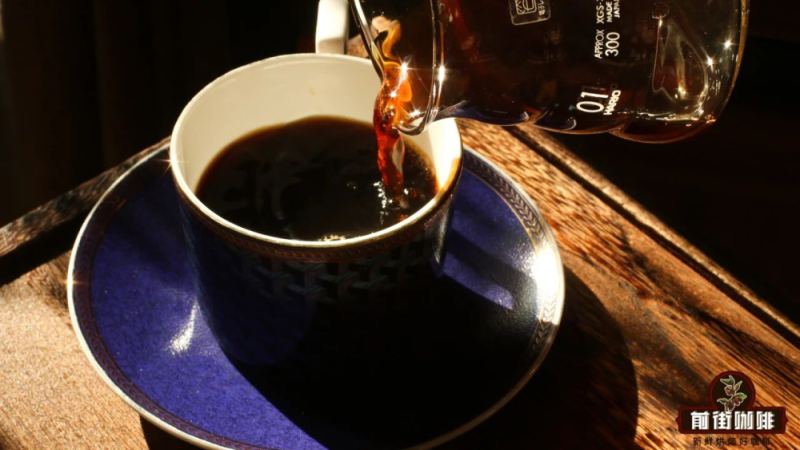
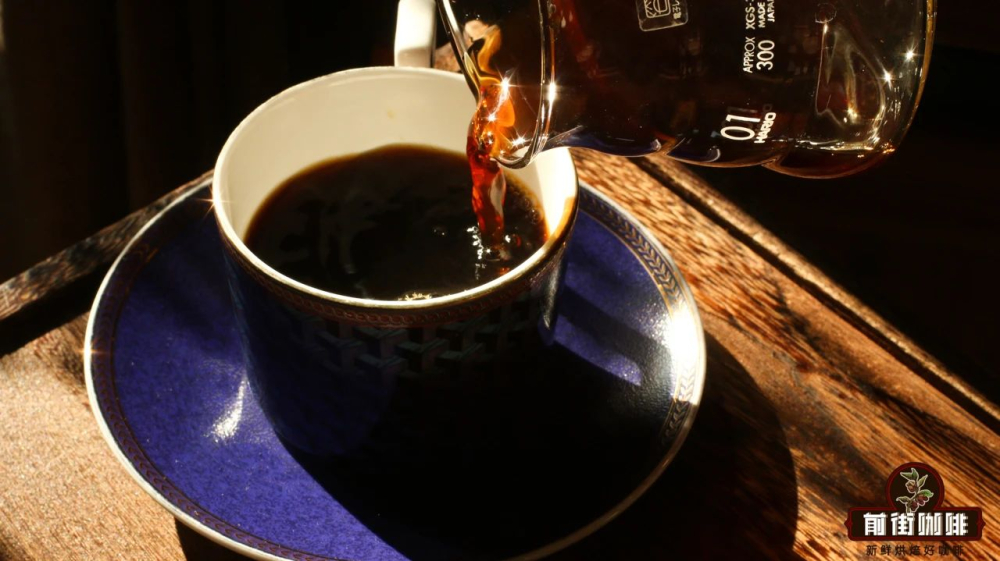
The ground coffee beans have a very rich and dense aroma; whereas so-called blended Blue Mountain coffee does not have this aroma. Next comes the taste! The parameters used by Front Street to brew this Blue Mountain coffee are: KONO dripper, 88°C water temperature, 15 grams of coffee powder, and a 1:15 coffee-to-water ratio.
The pour-over method uses Front Street's simplest three-stage technique: in the first stage, use 30g of water to fully wet the coffee bed into a "hamburger" shape, and let it bloom for 30 seconds; then proceed to the second stage of brewing, pouring water until it reaches 125g at 54 seconds on the timer, then stop and wait until the water level drops to 2/3 of the coffee bed before pouring the third stage; in the third stage, pour water until it reaches 225g at 1 minute 40 seconds on the timer, with a total extraction time of 2 minutes 10 seconds. After extraction is complete, gently swirl, and taste once the coffee liquid is fully even.
The brewed Blue Mountain coffee presents a slight citrus acidity, is balanced overall, has a smooth mouthfeel, carries nutty notes in the middle, and has a dark chocolate feeling in the finish. Authentic Blue Mountain coffee has a balanced, rich taste, without any one flavor being especially prominent or noticeably lacking. Front Street Coffee (FrontStreet Coffee) believes that this is also something no other coffee bean can match, and it is the most crucial point for identification.
The above content is compiled by CoffeeHunters, a coffee news website.


