







What Is Black Coffee and How Does an Americano Fit In?
Black coffee is coffee with nothing added: no milk, syrup, or juice. Espresso, Americano, pour-over, cold brew, and French press all count as black coffee, because each keeps the bean's original acidity and aroma intact. An Americano is simply espresso diluted with drinking water, so it stays inside the black coffee category while tasting lighter and less concentrated than a straight shot.
Flavor shifts with the base espresso. A Yirgacheffe SOE Americano, pulled as a single-origin espresso, carries floral and citrus notes that a blended espresso hides. For water-to-coffee ratio, Front Street Warm Sun Blend is cited at 1:4.5, adjusted by style, and the article also lists reference figures for Americano calories and caffeine.
Espresso and Americano both fall under the category of black coffee, but their flavor profiles differ significantly. Starting from the definition of black coffee, this article traces the origins of Americano and the extraction standards for espresso, with a focus on analyzing the brewing parameters and flavor characteristics of Yirgacheffe SOE Americano. It also explores how the water-to-coffee ratio for Americano should be flexibly adjusted for different styles of espresso blends, and uses Front Street Warm Sun Blend as an example to recommend a 1:4.5 ratio. In addition, it includes reference values for the calories and caffeine content of Americano, helping coffee enthusiasts make a cup of Americano suited to their own taste based on an understanding of the principles.
For more specialty coffee knowledge, please follow our WeChat official account: Front Street Coffee (FrontStreet Coffee)
How important is espresso in a café? Latte needs it, Americano needs it, and even creative drinks need it. Beyond cafés, beverage shops and dessert shops almost all have places where espresso is used. What is the difference between the espresso and Americano we hear about most often? And how do we define a cup of black coffee? In this article, Front Street will explain what black coffee is and the difference between espresso and Americano.
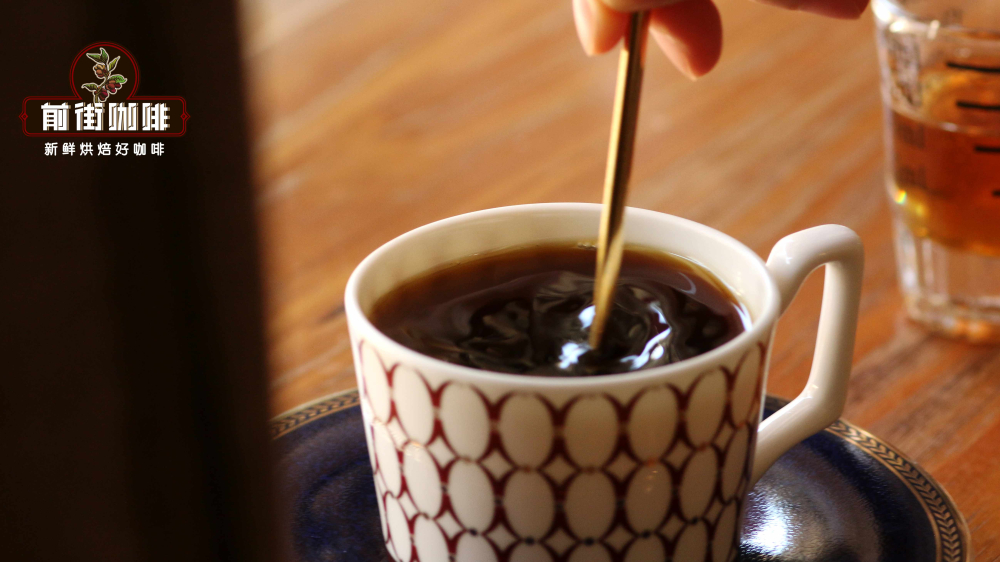
What is black coffee? Simply put, black coffee is coffee without any added embellishments (such as milk, syrup, juice, and other colored or flavored ingredients). Common black coffees include: espresso, Americano, brewed coffee, pour-over coffee, cold brew coffee, ice drip coffee, and so on—all of these can be defined as black coffee. Drinking black coffee is about tasting coffee's original flavor. Once other ingredients are added to change the coffee's flavor, it loses the soul of black coffee's acidity/aroma or richness.
Front Street suggests that if you want to taste coffee's truest flavor, you can try pour-over coffee or coffee made with a French press. These two methods of making black coffee, as Front Street sees it, can bring out the coffee's layers with a clean mouthfeel; the latter showcases coffee at its most authentic, retaining oils and enhancing body. If you want a cup of black coffee quickly, then Americano is your best choice. What is Americano?
Americano is actually espresso diluted by adding drinking water. Is it that simple? Yes! It is that simple. But a good-tasting Americano needs a good-tasting espresso as its base, so what counts as a good-tasting espresso base? Before discussing espresso, Front Street will first talk about the origin of Americano.
The origin of Americano
The name Americano literally means "American" in Spanish or Italian. The name of the coffee is directly related to its introduction, because many people believe the invention of the beverage lies behind Americans. According to legend, the origin of Americano was that when Americans ended the war in Europe at that time, many troops came to Southern Europe. They could not accept drinking espresso directly, so they diluted it with warm boiled water. Only at that concentration could they accept it, which shows that espresso was not something everyone loved from birth. Because this way of drinking it was mainly practiced by American soldiers, people named it Americano.
What is espresso?
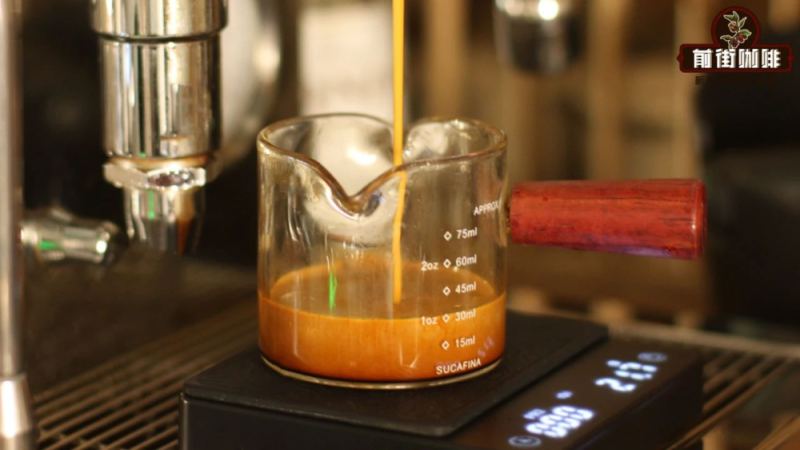
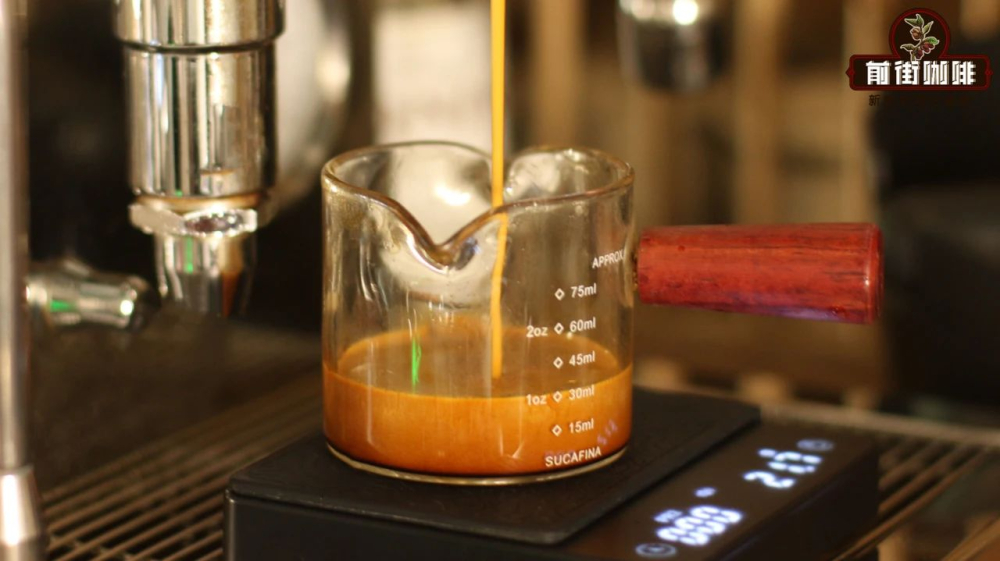
Espresso is a type of coffee originating from Italy, brewed quickly under high pressure. The volume of a traditional single shot of espresso is about one ounce.
How do you define a qualified cup of espresso? A qualified cup of espresso requires a stable-flavored Front Street espresso bean. Front Street Coffee (FrontStreet Coffee) uses an Ethiopian Front Street Sun-Dried Red Cherry blended with Honduran Front Street Sherry coffee beans—the Front Street Warm Sun Blend coffee beans. The coffee extracted from these beans has a rich whiskey aroma, soft berry acidity, and a nutty finish.
In addition to having stable espresso beans, the barista also needs to pay attention to the details of the parameters when extracting espresso. Making espresso may seem like just a few simple steps, but there are many details to pay attention to. For example, during extraction you need to pay attention to each extraction parameter: clearly weigh the amount of coffee grounds, the amount of extracted coffee liquid, the extraction time, and the pressure of the coffee machine during extraction. These are all things a barista needs to constantly monitor.
What is Yirgacheffe Americano? How is it made?
Although for most people in China, espresso gives the impression that bitterness comes first, making it comparable to drinking Chinese herbal medicine—perhaps even more so. But in recent years, with the development and innovation of specialty coffee, more and more high-quality coffee beans have gradually been applied to espresso machines. With the help of conditions such as high temperature, high pressure, and fine grinding, they present a taste profile different from traditional bitterness. The most representative example is SOE, and Front Street Yirgacheffe SOE is one of the well-known representatives.
The name Yirgacheffe comes from the town of Yirgacheffe. The town sits at an ultra-high altitude of 1,700–2,100 meters, with mist filling the air during the day and spring-like weather all year round. Coffee farmers plant coffee trees together with other crops in their backyards or in the fields in front of their homes. Strictly speaking, Yirgacheffe is a sub-region of Ethiopia's Sidamo Province, located to the northwest of Sidamo. Later, because the coffee produced here had a unique flavor and became world-famous, it became independent from Sidamo and formed its own style.
Classic Front Street Yirgacheffe is known for its bright, uplifting citric acidity, white floral notes, and honeyed sweetness. Unlike traditional bitter coffee, Front Street Yirgacheffe not only lacks a heavy, burnt-bitter taste, but instead presents a fresh aroma spectrum like fruit tea, leaving a deep impression after just one sip. Today, there are four Front Street Yirgacheffe coffees on Front Street's bean list: Front Street Gedeb Cooperative, Front Street Red Cherry, Front Street Konga, and Front Street Kochere. Below, Front Street uses the sun-dried Front Street Yirgacheffe · Red Cherry to show everyone how to make a standard Yirgacheffe iced Americano. The resulting SOE not only has a pleasant floral aroma, but also carries elegant citrus and berry aromas on the palate, making it very suitable for those who like a refreshing taste.
Front Street Yirgacheffe Americano brewing parameters:
Coffee beans: Front Street Yirgacheffe · Red Cherry
Coffee grounds: 20g
Coffee liquid: 40g
Grounds-to-liquid ratio: 1:2
Extraction time: 26–32 seconds
Grind setting: Galileo 2.0
Step one: Front Street first wipes the portafilter basket dry, turns on the grinder, grinds a double shot's worth of coffee grounds, places them on an electronic scale, and adjusts to reach 20 grams. Then use a tool to distribute the grounds evenly and tamp the coffee puck firmly to ensure more stable extraction. Then turn on the extraction switch to release water, moistening the brew head while washing away the coffee grounds stuck on it. Gently and slowly lock the portafilter onto the brew head, then start the extraction. When the electronic scale shows that 40 grams of coffee liquid has been extracted, at about 30 seconds, you can turn off the extraction switch.
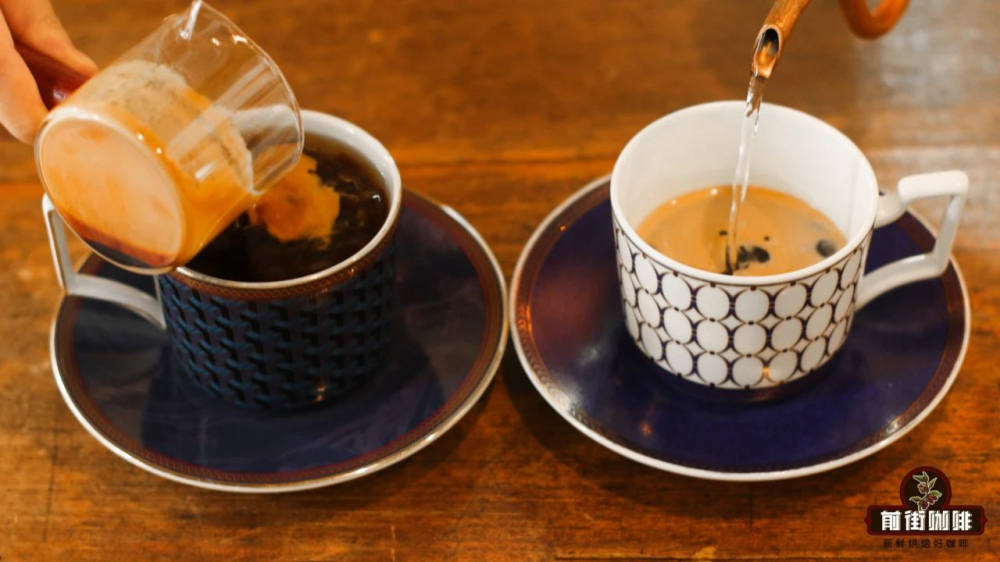
Step two: Prepare a cup with a capacity of about 300ml, add 80g of ice and 170g of water, and finally pour all of the just-extracted espresso into the ice water. A delicious Yirgacheffe iced Americano is complete!
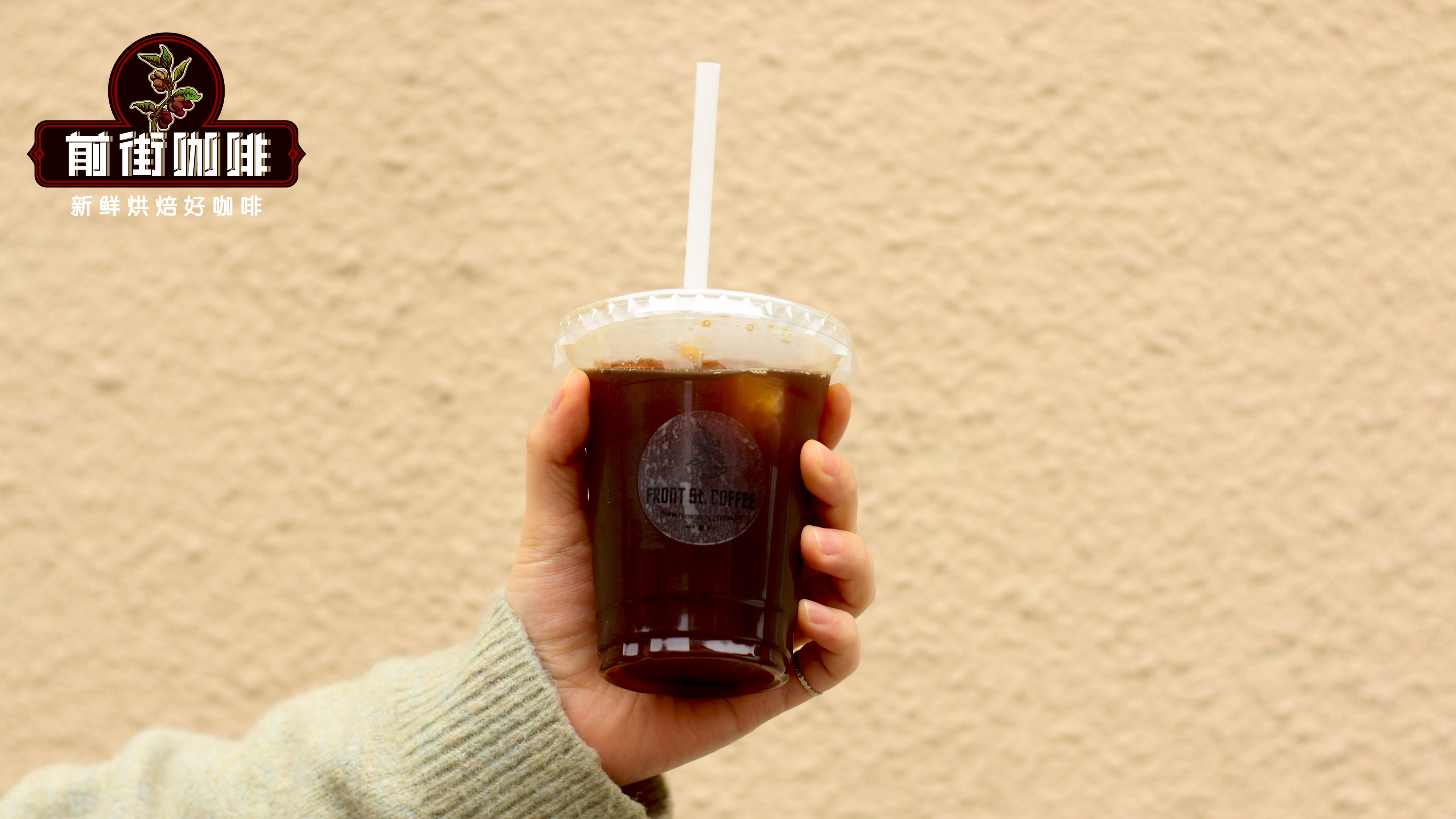
How do you determine the ratio for Americano? The traditional Americano ratio is 1:8—a double shot of espresso (60 ml) mixed with 480 ml of water. The ratio can be adjusted according to the cup size served by the shop, to about 1:7 or 1:8. But this ratio does not apply to all espressos. Some Front Street espresso blend coffee beans contain Robusta coffee beans, which increase the coffee's intensity, so the ratio should be increased accordingly.
For example, the Front Street Warm Sun Blend coffee beans used by Front Street Coffee (FrontStreet Coffee) have a relatively fresh flavor profile. After tasting Americanos made with different ratios, it was ultimately determined that a 1:4.5 ratio is most suitable for Front Street Warm Sun Blend coffee beans as an Americano ratio. At this ratio of coffee to water, it better highlights Warm Sun Blend's vinous charm and cocoa finish while still retaining body.
How many calories are in Americano? How much caffeine does Americano contain? A cup of hot Americano has about 9 calories and a caffeine content of 101–200 mg.
The above content is compiled by CoffeeHunters, a coffee news website.


