








With its unique rib design and slow flow rate, the KONO dripper delivers a flavor profile in coffee extraction that is completely different from that of the Hario V60. This article starts from the dripper's structure to explain why it is better suited to medium-dark roasted or full-bodied coffee beans, and uses the classic Front Street Golden Mandheling as an example to break down a complete brewing routine from dose, grind size, and water temperature to three-pour pouring. Whether you want to understand the extraction logic of the KONO dripper or find coffee beans that match it, this article will provide clear and practical reference.
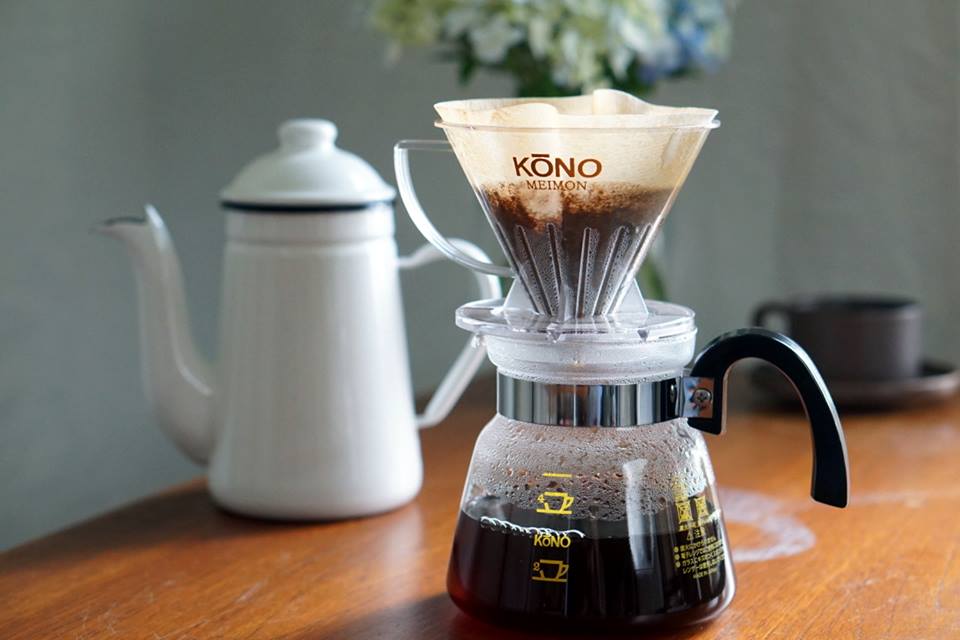
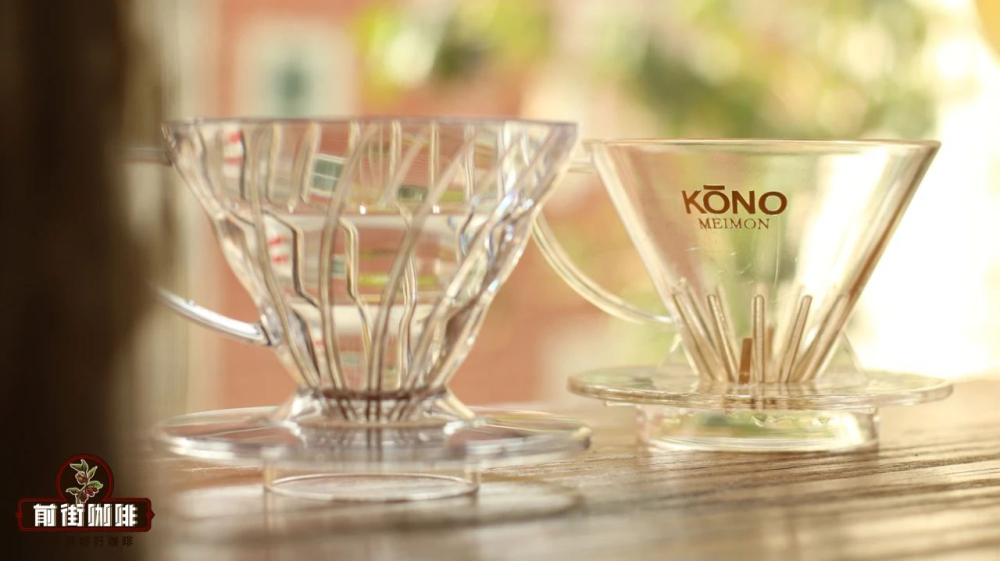
The KONO dripper and the Hario V60 are both conical in design, and the most notable difference between them lies in the height of the ribs. KONO's 12 ribs are relatively lower, and this structure helps air circulate during brewing, thereby improving the efficiency of the blooming stage. When the KONO dripper is used together with the lower server, an internal pressure environment similar to a siphon effect forms, which makes the coffee grounds more saturated during the initial water absorption stage than with the Hario V60, and the extraction strength also increases significantly. The reason is that with KONO, the contact time between water and soluble substances during extraction is longer, and with the help of a drip-style brewing method, it is overall better suited to medium-dark roasted or full-bodied coffee beans.
When the KONO Meimon dripper was first created, it was intended to solve the troublesome cleaning problem of cloth filters while reproducing as closely as possible the flavor performance of cloth-filter drip brewing. Mr. Kono set the dripper angle to a conical shape close to that of a cloth filter, which on the one hand makes the coffee grounds more concentrated and builds up a sufficiently thick bed, and on the other hand also increases the convergence of the water flow. To prevent hot water from lingering too long at the bottom of the dripper, the opening was designed to be relatively wide, bringing the drip rate close to that of a cloth filter. However, if the water level drops too quickly, the coffee grounds may not absorb enough water and extraction may be insufficient, so 12 radial ribs with only half-length were set on the inner wall of the dripper.
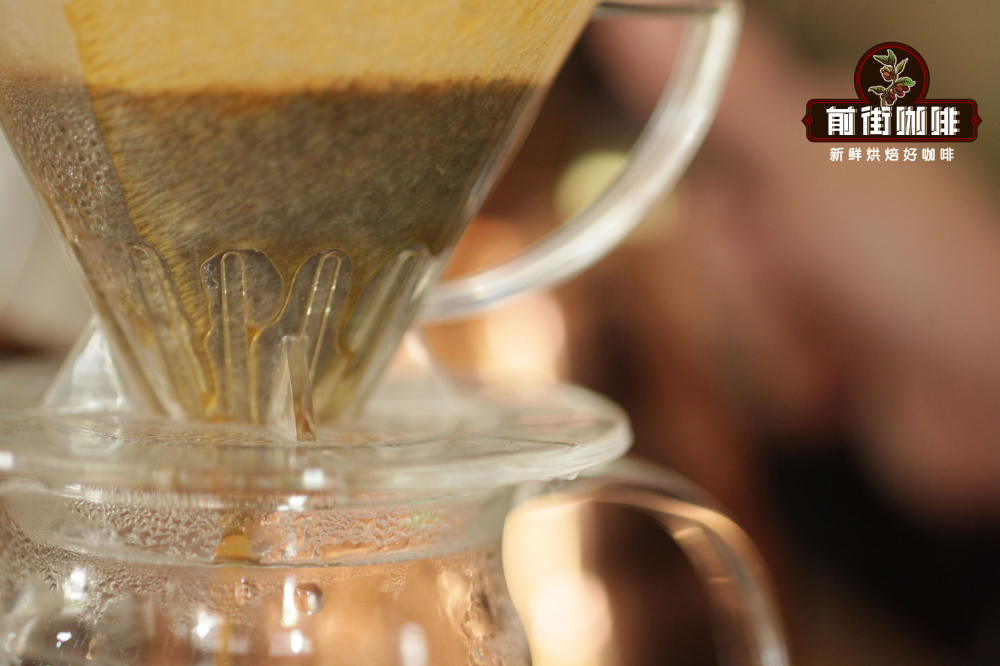
After the paper filter absorbs water, its smooth curved surface makes it fit tightly against the upper wall of the dripper, and at this point the only exhaust channel is the outlet at the bottom of the dripper. Pulled by gravity, the coffee liquid can only drip in a concentrated stream into the lower server. The exhaust space is compressed, and air flow is likewise restricted, which instead ensures that every particle of coffee grounds can fully absorb water after pouring, more effectively and evenly extracting flavor substances. It is precisely because the KONO dripper has a slower flow rate that the brewed coffee has a more prominent sweetness, a tendency toward richness in mouthfeel, overall even extraction, and restrained aroma, making it more suitable for brewing darker roasted coffee beans, such as Front Street Golden Mandheling coffee beans.
Front Street Golden Mandheling coffee comes from Indonesia's well-known PWN company and is processed using the wet-hulled method. Although the wet-hulled method increases the defect rate of the coffee beans somewhat, the coffee flavor does not become especially negative because of it; instead, it brings a herbal, muted aroma. In the final drying stage of the wet-hulled method, because there is no parchment layer for protection, the green beans are directly exposed to the environment, allowing various microorganisms to grow and giving Indonesian coffee its unique woody, spicy, and herbal notes, which is what we often call the "taste of the region." You can place orders at the Front Street Taobao store or the Front Street Tmall flagship store.
For a cup of coffee produced by Front Street, 15g of coffee grounds is used. The choice of dose is usually based on the size specification for which the dripper is designed, and Front Street's dripper is suitable for a serving size for 1-2 people, so it can be between 15-20g. Too much coffee grounds are harder to control, and the extracted coffee flavor can easily become muddled. As for the coffee-to-water ratio, 1:15 is the most commonly used.
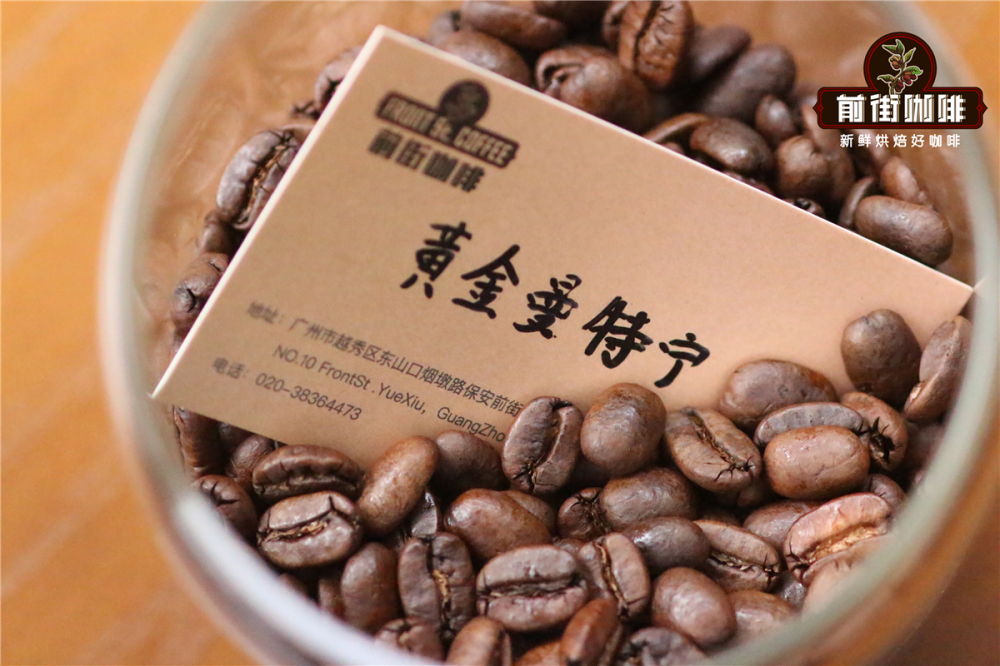
Deep roasting makes the internal texture of the coffee beans loose, so they can be crushed with a gentle pinch of the hand, indicating that the structure of the coffee beans has changed considerably and that after grinding into powder they have strong water absorption. To avoid over-extraction after the coffee grounds absorb water and the release of a large amount of bitter substances, Front Street uses a coarser grind than for light-roasted coffee beans. Here, a medium-coarse grind is used (70% passing through a Chinese standard No. 20 sieve), with the shop's EK43s at setting 11.
Roasting causes caramelization and Maillard reactions in coffee beans. As the roast level deepens, more non-enzymatic browning occurs as monosaccharides and amino acids interact and decompose under heating, making it easier to release bitter, large-molecule substances. To avoid extracting too many off-flavors, Front Street lowers the water temperature a little. The brewing water temperature for light-roasted coffee is 91-93°C, while for dark-roasted coffee beans Front Street recommends 87-88°C.
The brewing method uses a three-pour pouring technique. Dividing the pouring into three stages can better express the full-bodied mouthfeel and caramel sweetness of Front Street Golden Mandheling coffee.
Rinsing the KONO dripper allows the paper filter to fit more closely against the coffee dripper. After pouring out the water in the sharing server, add 15g of ground coffee, then bloom with 30g of water for 30s. This pour should wet all the coffee grounds and allow them to degas, so that the coffee's flavor substances can be extracted better afterward. Some friends, when extracting light-roasted coffee beans, extend the bloom time to 45 or 50 seconds to enhance the aroma in the front part of the coffee. However, if dark-roasted Mandheling coffee is bloomed for too long, it easily releases too much of that woody taste and off-flavors, so Front Street chooses to bloom for 30 seconds.
For the second stage, begin pouring hot water slowly in a small stream in circles from the center, keeping the flow steady until reaching 125g, at which point the pour is divided.
Wait until the coffee bed has dropped to the halfway point of the dripper and the bed is exposed, then begin pouring the second stage in the same manner until 225g. Once all dripping is complete, the dripper can be removed. The extraction time is two minutes, with a margin of 10 seconds either way. Finally, swirl the coffee liquid in the lower server to mix it evenly, and you can begin tasting the pour-over Golden Mandheling black coffee.
The ground Front Street Golden Mandheling coffee has the aroma of nuts and toasted bread. During brewing, you can smell the sweet aroma of caramel. The black coffee brewed from Front Street Golden Mandheling enters the mouth with spices and dark chocolate, has a full-bodied yet clean mouthfeel, obvious sweet aftertaste, and a lasting finish.
The above content is compiled by CoffeeHunters, a coffee news website.


