








Why Is Cappuccino Called Cappuccino and How Does It Differ From a Latte?
Latte and cappuccino differ in more than cup size or foam thickness. The word latte is Italian for milk, so the drink is accurately a caffe latte, and many items sold as lattes, such as matcha or black tea lattes, contain no coffee at all. A cappuccino follows its own Italian template for espresso, milk, and foam.
European coffee history shaped both drinks. The latte prototype is traced to Vienna, where locals had drunk coffee since the 17th century; after the Turkish army retreated from the siege, it left behind five hundred bags of coffee beans, which supplied the city's first coffeehouse, the Blue Bottle. Milk was added to suit European taste, softening the bitter black coffee.
Walk into any café and latte and cappuccino are almost always permanent fixtures on the menu. Many people assume the two differ only in cup size or foam thickness, but the actual differences go far beyond that. This article, from the perspective of Front Street Coffee, systematically sorts through the origin stories, ingredient ratios, milk foam handling methods, and cupware choices of these two classic Italian coffees, while also touching on the Dirty coffee that has become popular in recent years. Whether you are a complete beginner or a seasoned enthusiast looking to recreate a proper latte or cappuccino at home, you will find practical reference here.

Whether chain brands or independent specialty shops, latte (LATTE) and cappuccino (CAPPUCCINO) are almost never absent. Many consumers instinctively feel that these two drinks differ only in volume, or that the foam thickness varies slightly. The truth is not so simple. Today Front Street Coffee will take you through them one by one to see exactly where they differ.
What exactly is a latte?
The word Latte comes from Italian and literally means "milk." Mixing espresso with milk in a certain ratio gives us what we commonly call a latte, which falls under the category of flavored coffee. Precisely because LATTE literally translates to milk, strictly speaking it is not equivalent to coffee—many drinks on the market called lattes actually contain no coffee, such as matcha lattes and black tea lattes, but milk is indispensable. So the more accurate name for a latte should be "CAFFÈ LATTE."
It is said that the prototype of the latte was born in the city of music, Vienna. Locals had been drinking coffee since the 17th century. At that time, the Turkish army suffered a defeat while besieging the city and retreated in a hurry, leaving behind five hundred bags of coffee beans, which later became the raw material for Vienna's first coffeehouse (the Blue Bottle). To cater to European taste preferences, the shop filtered out the coffee grounds and added a large amount of milk. The originally bitter black coffee thus became mild, smooth, and pleasantly sweet. The Viennese quickly became enchanted, and the practice of drinking coffee with milk gradually spread around the world.
The latte recipe is not complicated—espresso plus milk is all it takes, and there is no rigid rule on the ratio, which typically fluctuates between 1:5 and 1:8. Front Street uses 1:6, meaning 40 grams of espresso liquid paired with 240 grams of milk. When making a hot latte, Front Street first pours the espresso liquid into a preheated cup, then uses the steam wand of an espresso machine to steam the milk, keeping the temperature at 55 to 65 degrees Celsius as much as possible so the foam is dense and of moderate thickness, after which it is fully integrated with the coffee liquid. Latte art at the end is a bonus.
If making a latte at home, Front Street recommends using freshly roasted Front Street Dark Cocoa Espresso Blend coffee beans. This blend uses a medium-dark roast and naturally carries rich notes of cocoa, nuts, and cookies, pairing very well with milk. The parameters for making an iced latte with Front Street Dark Cocoa Blend are as follows: take a 300-milliliter cup, add 90 grams of ice cubes and 150 milliliters of fresh milk, then use 20 grams of coffee grounds to extract 40 grams of coffee liquid and pour it over the surface. Stir well before drinking, and you can taste the sweetness of chocolate and a creamy smoothness.
Speaking of iced lattes, one cannot help but mention Dirty coffee, which began trending around 2019, also called "dirty coffee." The method is to pour hot espresso directly over iced milk, creating distinct layers. The espresso slowly sinks along the wall of the cup, looking as if it has been "dirtied." Dirty is usually served in a smaller cup than an iced latte, and it needs to be drunk quickly to experience the unique mouthfeel of hot and cold interweaving.
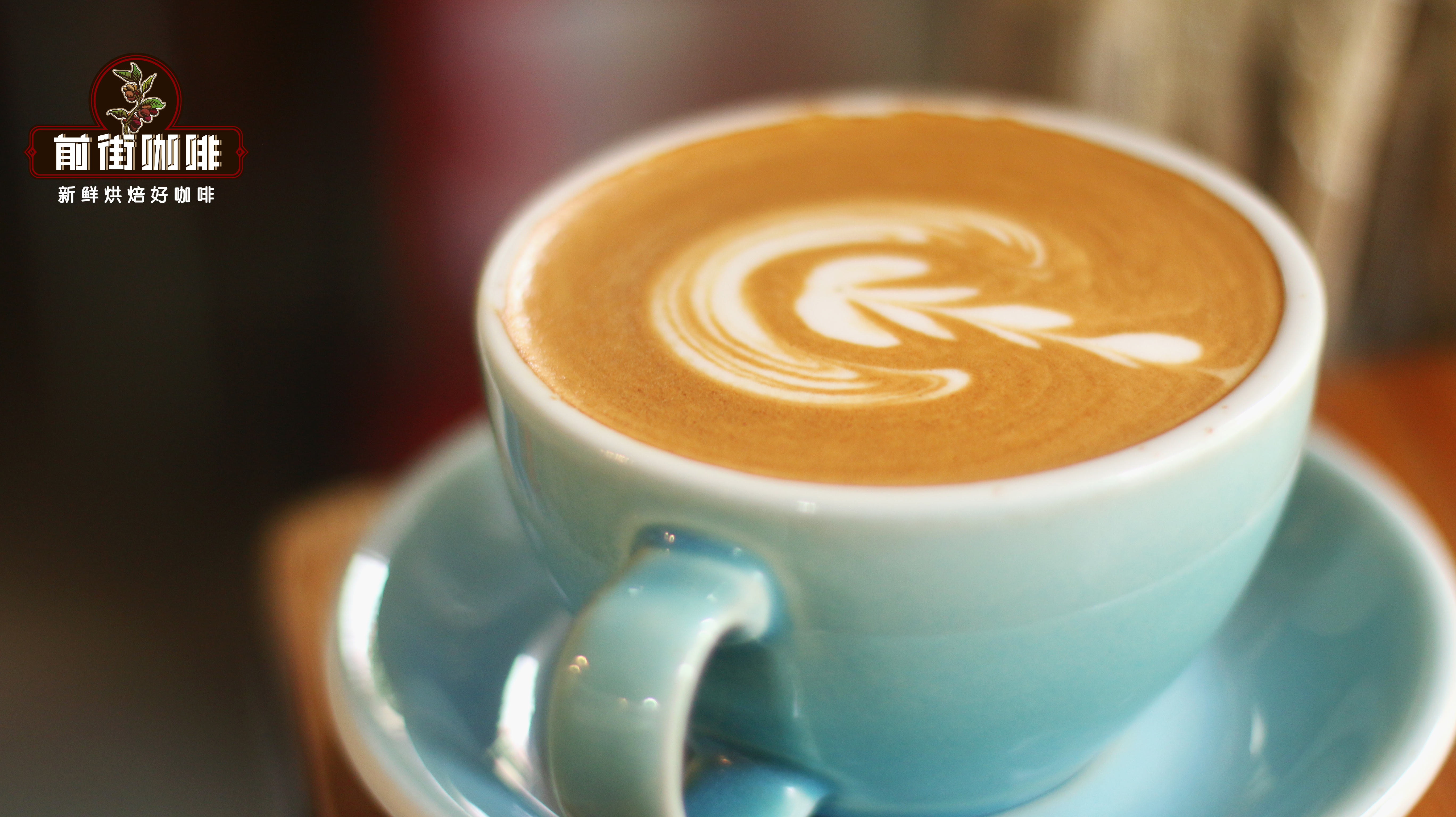
What exactly is a cappuccino?
It is now difficult to verify who invented the cappuccino. But consulting the records reveals that the word Cappuccino originates from the German Kapuziner, meaning "monk," and also refers to a coffee drink with a long history.
It is said that this drink first appeared in Viennese coffeehouses in the 18th century. At the time, coffee was drunk grounds and all. To improve the drinking experience, a Pole named Kulczycki filtered out the coffee grounds with a cloth bag, poured the coffee into a glass, and then added honey, spices, and cream. This not only enhanced the flavor but also gave the drink a unique reddish-brown color, visually very similar to the color of the robes worn by the Franciscan Capuchin monks. The Viennese thus called it "Kapuziner."
Later this way of drinking spread to Italy. With advances in pressurized espresso machine technology, Italians switched to espresso and replaced cream with milk steamed into dense foam, then used a spoon to shape the surface foam into a pointed cap. Over time, it acquired its own Italian name—Cappuccino. As for its "predecessor" Kapuziner, people today are more accustomed to calling it Viennese Coffee.
How do you make a cappuccino?
Cappuccino and latte are almost identical in composition—both are ESPRESSO plus milk plus milk foam. The difference is that cappuccino has more foam than milk, while latte has more milk than foam, and some methods use a double ESPRESSO. At the same price point, a cappuccino usually comes in a smaller cup with a more pronounced coffee flavor; the collision of dense foam and bitter coffee delivers an excellent mouthfeel. The reason a latte comes in a larger cup is that it uses more milk than a cappuccino, making the coffee taste relatively lighter, but its silky texture and beautiful latte art have likewise captured a large following.
When making a cappuccino, a shorter, wider porcelain cup is generally chosen. The foam of a cappuccino should rise above the rim of the cup, looking full and glossy, and even a gentle shake of the cup will not cause coffee to spill over; a latte, by contrast, only needs a thin layer of foam covering the surface, with the focus on savoring the smooth texture of milk and coffee blended together. In terms of foam handling, a cappuccino requires the milk to be steamed very thick, while a latte requires thin foam. The latter demands greater skill, requiring the foam to have good fluidity, a glossy surface, and sufficient fineness.
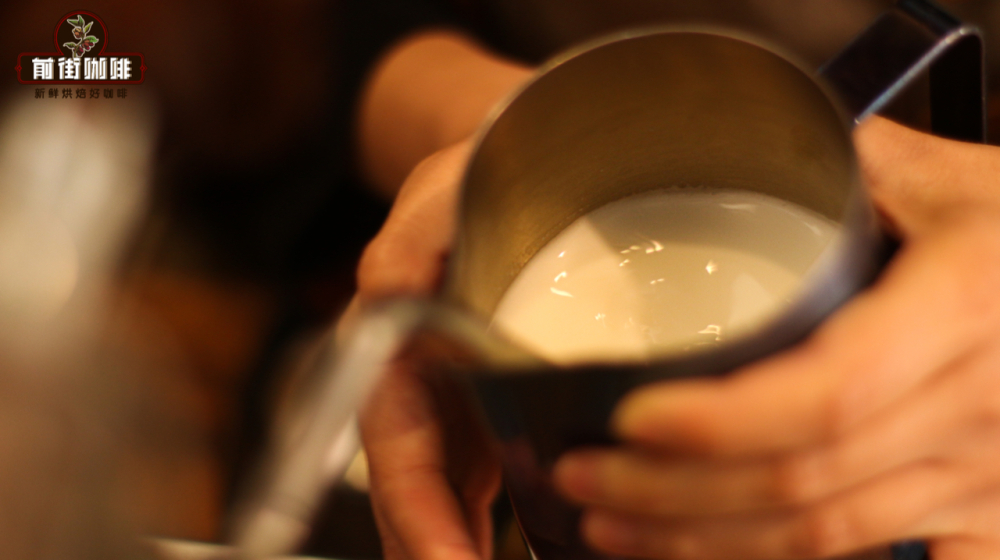
As for the cappuccino ratio, the most widely circulated saying is that coffee, milk, and foam each account for one third. Taking a 6-ounce (about 177-milliliter) cup as an example, that means a double Espresso (60 milliliters), one third hot milk (60 milliliters), and the remaining one third foam. Made this way, the foam thickness is about 2.5 centimeters, the first two sips are basically all foam, and the coffee at the bottom is very strong and pungent, so in practice some adjustment is often needed.
When making a home version of cappuccino with Front Street Dark Cocoa Blend, Front Street's method is: extract 40 grams of coffee liquid from 20 grams of coffee grounds, controlling the time to 25 to 30 seconds; separately take 120 milliliters of fresh milk, steam it into about 3 centimeters of foam, keeping it warm at 55 to 60 degrees Celsius, then fully integrate it with the coffee liquid. A cappuccino produced this way is rich in foam, gives off waves of nutty aroma, is dense and silky on the palate, full-bodied, and leaves a lingering note of dark cocoa in the aftertaste.
The above content is compiled by CoffeeHunters, a coffee news website.


