







What Separates a Long Black from an Americano?
A Long Black and an Americano are both espresso-based black coffees, but they differ in pour order, cup size, and crema retention. An Americano adds hot water to espresso, while a Long Black pours espresso over hot water, preserving more crema. The Long Black also uses a smaller volume and hotter water, giving it a stronger, more aromatic profile that many drinkers prefer.
The Americano traces back to World War II, when American soldiers in Italy diluted espresso to mimic american drip coffee they were used to. The Long Black emerged later in Australia and New Zealand, where baristas wanted a black coffee with richer mouthfeel. Cup size, water temperature, and pour sequence all affect the final taste and texture, which explains why the two drinks are not interchangeable.
Both are black coffee, but what exactly is the difference between an Americano and a Long Black? Many people assume the only distinction lies in whether the espresso or the water goes in first, but the truth is far more complex. This article breaks down the core differences between these two black coffee "rivals" from every angle—origin, brewing method, cup size, water temperature, and crema retention—and explains why the Long Black is so rarely seen on cafe menus in China. It also draws on Front Street Coffee's actual store parameters to share specific methods for making hot and iced Americanos, along with tips for ordering an iced Long Black, making it a worthwhile read for every coffee enthusiast.
For more specialty coffee knowledge, please follow our WeChat official account: Front Street Coffee (FrontStreet Coffee)
Last weekend, a customer brought a friend to the shop for coffee. As soon as they walked in, they ordered from Front Street: "Give me an iced Americano—can you make it as a Long Black?" Hearing this unusual request, Front Street told them directly: no! The customer was confused: "Why don't you sell Long Black?"
From Front Street's observation, many people think an Americano is simply espresso diluted with water, while a Long Black is the reverse—espresso poured into water—meaning the only difference is the order in which the "ingredients" are added. Is it really that simple? Today let's thoroughly examine this pair of black coffee "rivals" from every angle.
Where do Americano and Long Black come from?
As usual, let's start with the Americano, which everyone is most familiar with. Legend has it that during World War II, American soldiers stationed in Italy couldn't stomach the extremely strong and bitter espresso, so they mimicked the method of American drip coffee by adding large amounts of hot water to dilute it, making the coffee easier to drink. This is also why it's said that "the Americano pouring order is coffee first, then water."
In the early 1970s, Italians brought espresso machines to Australia, New Zealand, and other countries, officially sparking a new wave of coffee culture. Although locals also couldn't accept drinking straight espresso, they preferred a black coffee with a richer mouthfeel and abundant crema over the "watery" Americano. So baristas began adjusting toward higher concentration, gradually developing a local black coffee that was softer than espresso but more intense than an Americano—the Long Black, translated into Chinese as "长黑" or "澳黑."
How are Americano and Long Black made?
As for the Americano method, the more widely used approach is to dilute a double espresso (typically extracted at a 1:2 coffee-to-water ratio) with water at a ratio of 1:5 to 1:8.
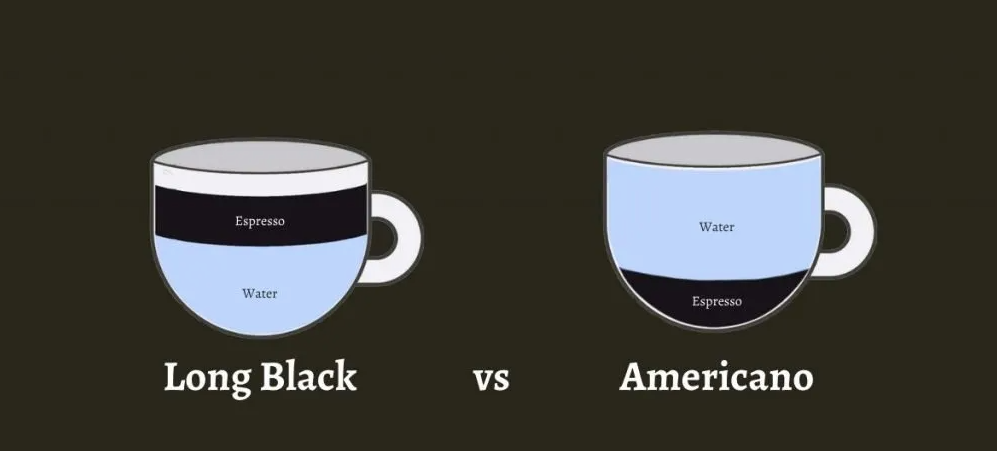
Taking Front Street's store Americano as an example, the daily hot version is served in a 200ml ceramic cup. The espresso parameters are dialed in using Front Street Sunflower·Warm Sun espresso beans, extracting 40g of coffee liquid from 20g of coffee grounds in 26–33 seconds, then adding 160ml of 80°C hot water at a 1:4 ratio. The resulting hot Americano has distinct notes of fermented wine, vanilla, berries, and caramel—rich but with a bitter edge;
The iced Americano is served in a 300ml glass, with 90g of ice cubes + 120g of water as the base, then topped with 40g of espresso. Stir with a straw to let the ice melt slightly—at this point the coffee-to-water ratio is about 1:4.5. The coffee is sweet, fragrant, and refreshing, with a pleasant balance of acidity and sweetness.
In fact, the vast majority of baristas don't agonize over whether to add water or coffee first. To improve efficiency and make the coffee look better, many shops adopt the motion of adding water first, then pouring the coffee. In many scenarios, as long as the ingredients are right, an Americano has no strict requirements regarding ratio, cup size, or water temperature—and it can be served hot or iced. But the Long Black is different.
First, to let people taste the aroma provided by the Crema (coffee oils) from the very first sip, a barista making a Long Black must develop the habit of preparing the water first and then pouring the espresso—otherwise the "essence" will be washed away by the water;
Second, just like Flat White—another coffee that evolved from local tastes—if you want to increase the coffee's intensity, you first have to make the cup smaller, around 150–200ml, and then adjust the ratio of espresso to water to about 1:3 to 1:4;

Finally, since the Long Black was created with the intention of letting people experience the most perfect moment of black coffee, it has no iced option, and the temperature can't be too hot either—otherwise, by the time it cools to the right temperature range, the crema will have long since dissipated.
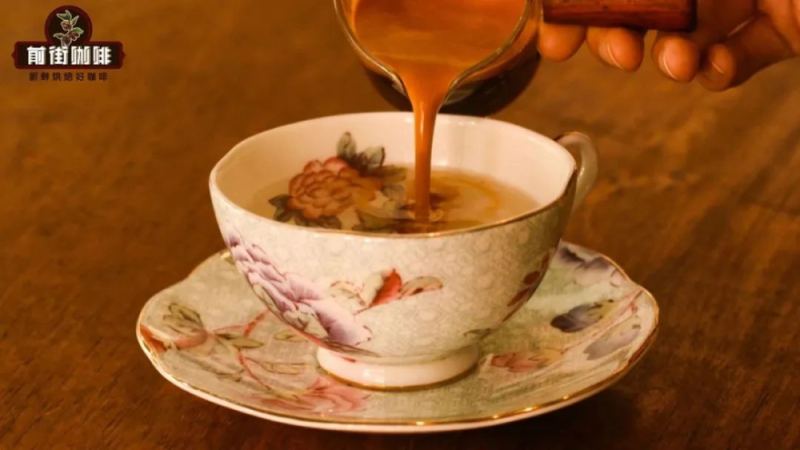
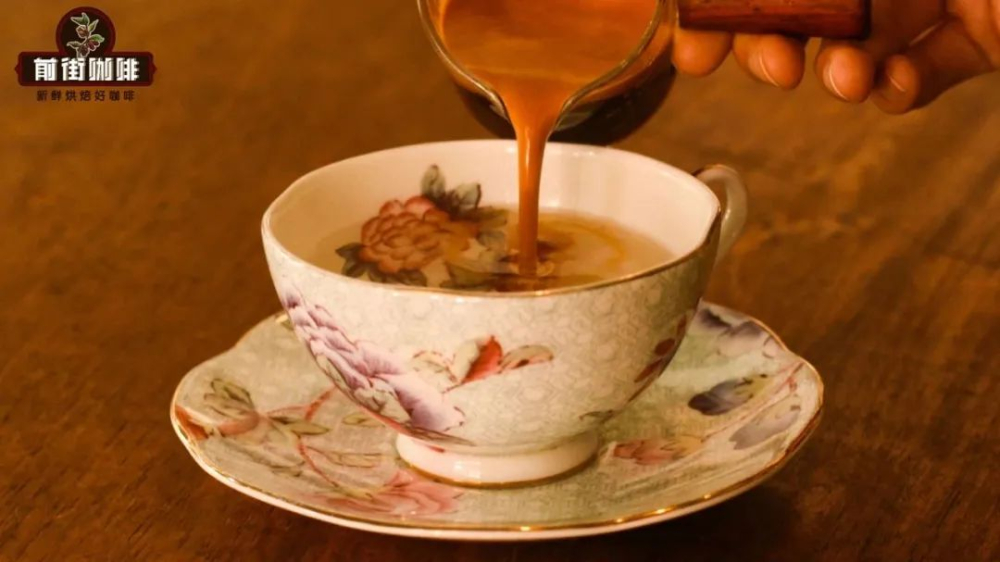
In summary, a Long Black is typically made by pouring a double regular espresso (about 40g) into a cup containing 100–120ml (about 4 oz) of 70–80°C hot water. When making it, care should be taken to keep the liquid surface as close as possible to the falling espresso to retain more Crema, which also makes it look more appealing.
Why is Long Black rarely seen in China?
As for the origin of the Long Black, Front Street couldn't find an exact point in time, but since it developed from Australian and New Zealand coffee styles, it can roughly be guessed that it began circulating around the same period as the Flat White. Around the 1980s, many cafes in Australia had already added this "one black, one white" pair to their permanent menus.
In China, the Flat White was introduced to the local market by the chain coffee brand Starbucks in 2015 under the name "馥芮白" and became an instant hit. This refined small-cup milk coffee gradually entered the menus of major cafes, formally distinguishing itself from the traditional latte.
But as the representative of Australian black coffee, the Long Black lacked such an opportunity. Compared to the Flat White, the Long Black is virtually "unknown" in China. After all, for a coffee shop, if the menu already has the Americano—the universally known Italian-style black coffee that can be served hot or iced—then there's naturally no need to add an extra category to distinguish it.
For those who really want to try an iced Long Black, after ordering an iced Americano, ask the barista to add less water, then skip the straw and take big sips directly—this makes it easier to experience the rich aroma from the fresh crema and the concentrated coffee liquid beneath.
The above content is compiled by CoffeeHunters, a coffee news website.


