








Which Iced Coffee Method Suits Which Bean?
Iced coffee can be made by Japanese-style iced pour-over, drip bags, or cold brew. Each method uses different ratios and grind sizes. Japanese iced pour-over brews hot coffee directly onto ice, preserving bright acidity. Drip bags offer a simple office option. Cold brew steeps grounds in cold water for 12 to 18 hours, producing a smooth, low-acid concentrate that keeps well in the refrigerator.
Bean choice matters. Light-roast beans with bright acidity work well for iced pour-over, while medium roasts add body and sweetness. Whether is iced coffee fattening depends mostly on what is added: black iced coffee has few calories, but milk, sugar, and syrups raise the count. For those wondering are mochas hot or cold, the answer is both, since the drink can be served either way depending on the recipe.
On a scorching summer day, a glass of iced coffee is nothing short of a lifesaver. This article systematically sorts out the types and characteristics of coffee beans suitable for making iced coffee, including three Front Street recommended beans—Ethiopia Natural Red Cherry, Panama Elida Natural Typica, and Colombia Finca La Divisoria Sidra—and explains in detail the steps for making Japanese-style iced pour-over, drip-bag iced coffee, and cold brew iced coffee, all suitable for both home and office, covering key parameters such as coffee-to-water ratio, water temperature, grind size, and pouring technique, to help you easily make a refreshing and full-bodied summer iced drink.

"In the blazing heat of summer, it's all thanks to iced coffee that we survive!" Though this saying is a bit of a joke, no one can deny that in hot weather, a glass of iced coffee is truly an excellent choice for cooling off.
Before the summer heat fully arrives, Front Street has put together several iced coffee methods that can be easily done at home or in the office. Why not practice early and get ready for the coming summer.
Recommended Coffee Beans for Summer Iced Drinks
When it comes to iced coffee, most people first think of a clean, refreshing flavor, so many friends tend to choose light-roast beans with bright acidity to make it. However, some have also noticed that although iced coffee made with light-roast beans is refreshing on the palate, it always seems somewhat lacking in complexity and fullness.
Is there a bean that can maintain a fresh character, yet also show a soft, mellow texture in iced coffee, while also offering excellent value for money?
"Of course there is!"
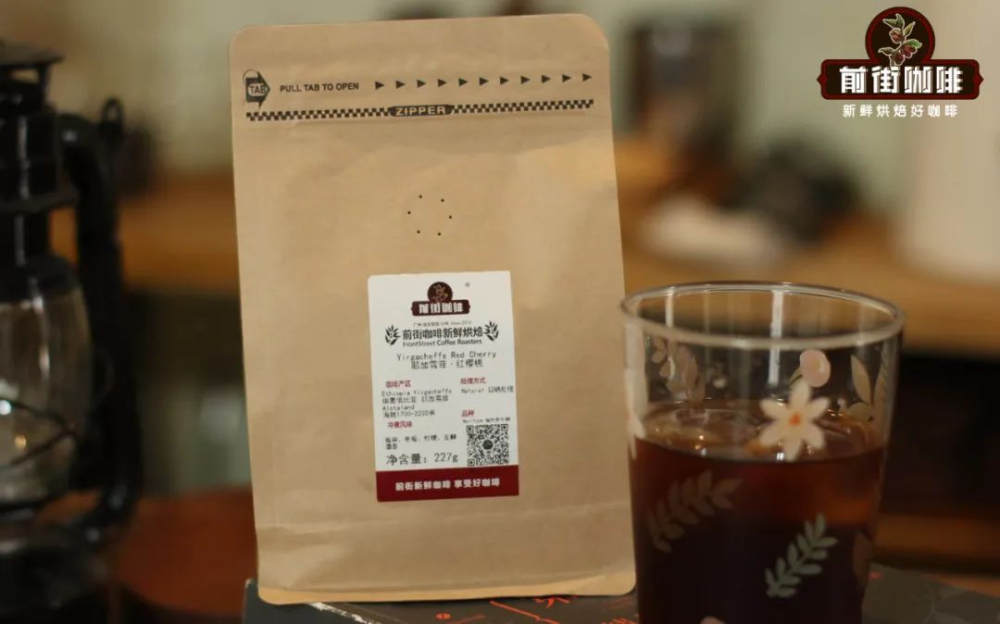
Ethiopia Natural Red Cherry Coffee Beans
Medium-light roast, flavor: mixed berries, caramel, black tea, slight fruity fermentation aroma
Red Cherry refers to the "Red Cherry Project" launched in 2007 by a Dutch green coffee merchant. The project aims to encourage coffee farmers to pick only fully ripe coffee cherries with red skin by raising the purchase price for fully ripe coffee cherries.
This initiative not only significantly improved the overall quality of the coffee beans, but also, because ripe cherries have a higher sugar content, after whole-cherry sun drying, the coffee beans retain excellent sweetness and a faint fermentation note, giving the coffee a soft and smooth mouthfeel. It is one of the beans with the most outstanding sweetness expression in the Ethiopian region.
Panama Elida Estate Natural Typica Coffee Beans
Medium roast, flavor: white peach, orange, raisin, caramel, green tea
When mentioning Elida Estate, many people may first think of the ASD slow natural Geisha that won at the estate in the 2019 Bop competition. But this estate does not only grow Geisha; it also grows Caturra and Catuai, which are common in Central and South America, as well as Typica, which has a clean and serene flavor profile.
The most outstanding thing about this Elida Typica is that it retains the rich juicy quality brought by the terroir and natural processing, while also possessing the clean characteristics of Typica itself, so it is very smooth and full-bodied on the palate.
Colombia Finca La Divisoria Sidra Coffee Beans
Medium roast, flavor: grape, passion fruit, dried apricot, citrus, fermentation aroma
The Sidra variety attracted widespread attention after 2022 WBC champion barista Anthony Douglas used Colombian Sidra coffee beans in the competition.
Sidra is a laboratory-cultivated variety, hybridized from Typica and Red Bourbon. Later, through genetic comparison, it was found that Sidra is genetically similar to Ethiopian heirloom varieties, so some scholars infer that Sidra may have been developed from an experimental variety exported from Ethiopia crossed with local Bourbon coffee in Ecuador.
The Sidra variety has floral and fruity characteristics comparable to Geisha, presenting flavors of peach, citrus, grape, honey, and more, with moderate acidity and a round mouthfeel. The key point is that its value for money is excellent.
Summer Iced Coffee Making Methods N+1
For the above three coffee beans, a medium-fine grind size can be used when making iced coffee. As shown in the picture below:

"Iced Pour-Over Coffee Making"
Coffee-to-water ratio: 1:10 (1g coffee: 10g water) Ice: 100g + Water temperature: 90-91°C Dripper: V60 Brewing technique: three-pour method
To make the final overall taste of the iced coffee fuller, Front Street recommends first brewing the coffee liquid and shaking it evenly, then pouring it into ice to cool and dilute. If the ice is added first, the concentration of each pour during brewing will be inconsistent, and the final result may taste thin.
When Front Street produces iced pour-over coffee, it uses 15g of coffee grounds. For the first pour, add 30g of water and bloom for 30 seconds. For the second pour, pour 60g of water in a circular motion with a slow stream; when the water level drops to the halfway point, for the third pour continue pouring 60g in a circular motion with a slow stream, for a total of 150g of water. Then pour it into ice, shake to cool and dilute.
Note: It is fine to prepare more ice, because only with enough ice can the coffee liquid cool quickly, and it also will not become too weak due to the ice melting too quickly. When it is diluted to the ideal concentration, remove the ice to stop dilution.
"Drip-Bag Iced Coffee Making"
The drip-bag coffee sold by Front Street Coffee (FrontStreet Coffee) has a net content of 10g per bag. The method is similar to pour-over; the non-woven bag of the drip bag plays the role of the dripper plus filter paper.
Coffee-to-water ratio: 1:10 (1g coffee, 10g water) Ice: 50g + Water temperature: 90-91°C Brewing technique: center pouring
① Open the outer packaging of the drip-bag coffee, tear off the seal along the "open" line, expand the drip bag, and hang it on a short cup.
② Prepare hot water at about 90°C. If there is no thermometer, after the water boils, leave it uncovered for 2 minutes; at this point the temperature is about 90-93°C.
③ Slowly pour 100 ml of hot water into the coffee filter bag, making sure the coffee grounds are fully submerged, then let it steep for 3 minutes (because the amount of water poured is relatively small, steeping for a period of time is needed to ensure the coffee grounds in the bag are fully extracted). After that, remove and discard the drip bag.
④ The last step is to add ice to cool it down. You can directly put large hard ice cubes into the cup, or prepare another cup with ice, pour the hot coffee liquid into it, and stir to cool and dilute.
"Cold Brew Iced Coffee Making"
Coffee-to-water ratio: 1:12 (1g coffee, 12g water)
Water temperature: room temperature Equipment: cold brew pitcher
Steeping time: 12-16 hours
Cold brew (cold steep) coffee can be said to be the most worry-free and least technique-demanding way to make iced coffee. The only drawback is that it takes a long time to make and cannot be enjoyed immediately. You can start steeping at dinner, and the next morning you can drink a full-bodied, clean cold brew.
Since the cold brew pitcher used by Front Street has a capacity of 1L, this time 60g of coffee grounds is used for demonstration. You can increase or decrease the amount of grounds according to the size of your own cold brew pitcher, keeping the ratio unchanged, but be sure to ensure that the coffee grounds can be fully submerged after adding water.
Prepare a clean cold brew pitcher, pour the ground coffee into the filter basket, then pour in 720g of room-temperature water so the coffee grounds are fully wetted and submerged. After that, cover the lid of the filter basket part, then cover the lid of the cold brew pitcher, and place it in the refrigerator to extract at low temperature for 12-16 hours.
After extraction is complete, lift out the filter basket and rest it on the rim of the pitcher to let the remaining coffee liquid drip down, then discard the coffee grounds and it is ready to taste. If you think 1:12 is too strong, you can switch to 1:13, or dilute with ice or water when drinking.
The above content is compiled by CoffeeHunters, a coffee news website.


