








How Does the Bialetti Moka Pot Brew Coffee?
The Bialetti Moka Pot brews by heating water in the lower chamber until steam pressure pushes it up through the coffee grounds and into the upper chamber. Beginners should fill water to about 0.5 cm below the safety valve, use medium-dark, freshly roasted beans, and keep the heat moderate to avoid a burnt, bitter cup.
The safety valve matters: if the grind is too fine or the pot overheats, internal pressure can rise too high. Tools needed are a moka pot, a heat source such as an induction or electric ceramic stove, coffee beans, a grinder, and clean water. Darker roasts highlight the heavy body a moka pot produces, but only fresh beans carry enough oils.
With its intense extraction style, the Bialetti Moka Pot has become the top choice for many coffee lovers at home. However, from pouring water and distributing the grounds to heating and removing from the heat, every step hides details—improper operation not only affects the flavor but may also pose safety hazards. This article will systematically walk friends new to the Moka Pot through the complete usage process, including key points such as water level control, grind size selection, and heat adjustment, while also answering the question of what kind of coffee beans suit the Moka Pot. The article will also recommend an insider-favored Front Street classic espresso blend to help you easily extract a rich, crema-laden espresso.

In recent years, the BIALETTI Moka Pot has become increasingly sought after in coffee circles, and many households now own one.
The Moka Pot works like this: the lower chamber is heated, and the water inside boils and generates steam pressure; when the pressure builds up enough, the hot water passes through the coffee grounds and finally rises into the upper chamber. This way, you get a cup of aromatic coffee with crema.
The Correct Way to Operate a Moka Pot
Coffee made with a Moka Pot has a relatively heavy body, and dark-roasted beans better showcase that full-bodied richness—but only if the beans are fresh, because only coffee within its optimal flavor window can release sufficient oils. Therefore, beginners should prioritize medium-dark roasted, freshly roasted coffee beans. This time we chose the Front Street classic espresso blend, widely recognized in the industry as a worthy recommendation. It presents notes of hazelnut, maltose, and butter, with a rich mouthfeel and very low acidity. Front Street promises to ship only beans within 5 days of roasting, allowing the Moka Pot to easily extract a thick layer of crema.
Tools needed to make Moka Pot coffee: a Moka Pot, a heat source (induction cooker, electric ceramic stove, etc.), coffee beans, a grinder, and clean water.

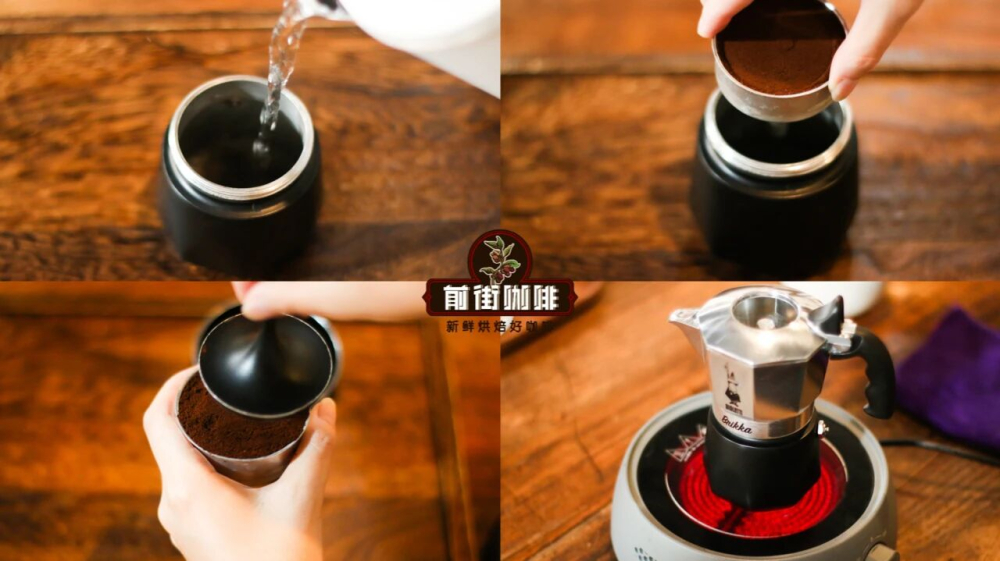
Step one: pour an appropriate amount of water into the lower chamber of the Moka Pot, keeping about 0.5 cm between the water surface and the safety valve. The safety valve plays a crucial role—it prevents internal pressure from getting too high due to reasons such as coffee grounds being too fine, thereby avoiding dangerous bursting accidents. Once the water level rises above the safety valve opening, the pressure-release function may fail, and the risk of the pot exploding rises accordingly.
Slowly put the ground coffee into the filter basket while gently tapping to distribute it evenly. If the grounds pile up into a small mound, you can use leveling techniques to smooth it out. The reason for filling the basket is to minimize the extraction of unpleasant off-flavors.
After filling the lower chamber with water and placing the filter basket, screw the upper and lower parts of the Moka Pot tightly and place it on the heat source to heat over high heat.

As the Moka Pot's temperature keeps rising, when you hear a clear "whoosh" sound, it means the proper extraction temperature has been reached. At this point, turn down the heat source and lift the lid of the upper chamber.
When the coffee flowing into the upper chamber reaches about half, you can turn off the heat source. Then move the Moka Pot to the table (you can place a damp cloth underneath to insulate against the heat); the residual heat and pressure inside the pot will continue to push the remaining coffee into the upper chamber, completing the entire extraction process.
After extraction, pour into a cup and enjoy. Coffee made with a Moka Pot is very concentrated, and you can also add an appropriate amount of water or milk to dilute it for drinking, which takes the taste up a notch. If you have a milk frother at home, you can even try latte art.
It's especially important to note that the grind size for a Moka Pot is very particular. It should be coarser than what an espresso machine requires, because the espresso machine's extraction pressure (9 bar) is enough to break through the resistance of the puck, while the Moka Pot's pressure is far below that level. If the grind is too fine, the coffee won't flow out, and the pressure in the lower chamber will keep rising; if it isn't released in time, it could cause an explosion hazard.
So if the coffee hasn't emerged for a long time after heating is complete, you should stop heating immediately. Of course, grinding too coarse is also not okay, because too little resistance will cause the coffee to spurt out violently, easily causing burns. Front Street Coffee (FrontStreet Coffee) recommends keeping the grind setting at EK-43s | 3-3.5, which is a coarseness similar to fine salt.
The above content is compiled by CoffeeHunters, a coffee news website.


