








Dirty coffee has always existed as a hidden menu item at Front Street Coffee, because in their view, Dirty is a "special" way of drinking a latte. Until one day, I accidentally overheard a customer explaining it to his friend, which summed up as: "Dirty is made with ice-bock milk as the base, then poured with espresso to create a layered effect; when drinking, you don't stir it, just drink it directly."
This customer's explanation of Dirty is generally correct, but the ambiguity lies in whether Dirty must use ice-bock. When I searched "dirty coffee" on a search engine, the indexed terms also included "Must dirty coffee use ice-bock?", so it seems this isn't an isolated case. So Front Street Coffee will explain what Dirty coffee and ice-bock are all about.
Dirty coffee is essentially a latte with a layered effect. It originated from the "dirty food" culture that became popular in 2018, which basically used chocolate powder to create a "dirty" visual effect. When applied to coffee, the "dirty" refers to the visual effect of dark black espresso slowly seeping downward and "contaminating" the pure white milk.
After the dirty food trend faded, people discovered that this layered "latte" drinking method—first the hot, intense coffee flavor, then the mild milk-coffee taste, and finally the cold lactose sweetness—had a unique charm, so it was retained. To distinguish it from the stirred iced latte, the name Dirty coffee was also kept.

The ingredients for Dirty coffee and iced latte are basically the same: espresso + milk. The difference is that iced latte includes ice cubes and doesn't focus on creating a layered effect. Dirty, on the other hand, does not add ice and deliberately creates a layered effect (some coffee shops adjust the coffee-to-milk ratio by using slightly less milk than a latte).
Eisbock is a process originally used by Germans to purify (freeze-distill) beer, making it more concentrated and higher in alcohol. The principle is to freeze the beer into ice, then thaw it, using the different melting points of the substances in beer to remove some water (ice), thereby increasing the beer's concentration.

At the 2017 World Barista Championship, a Canadian barista first applied freeze-distillation purification technology to coffee. At the 2018 World Barista Championship, a Chinese barista applied ice-bock technology to milk, increasing the original milk concentration from 11-12% to 20-21%. After the competition, some domestic coffee shops also launched ice-bock lattes.
Actually, making ice-bock milk is not a very complicated process. Early coffee shops made ice-bock milk by hand, and the process was like this: first freeze the milk, then make a small opening in the milk carton, invert it over a container, and let the milk ice thaw. Since ice (solid H₂O) melts the slowest, when 1L of milk ice melts to yield 0.5L of milk, the remaining can be discarded; the melted milk is ice-bock milk that is twice as concentrated as the original milk.
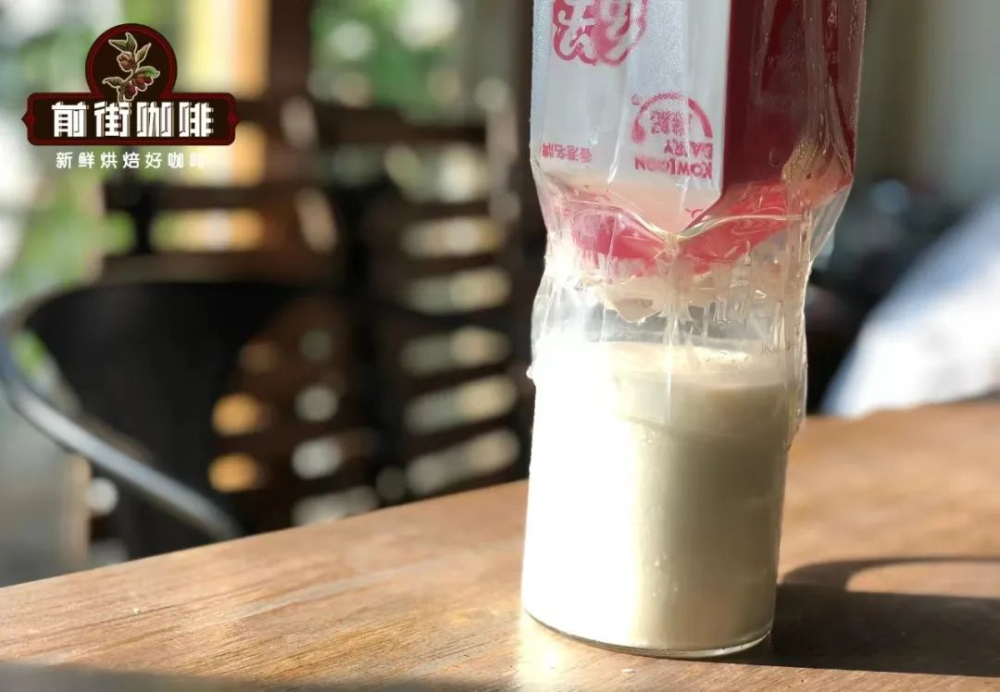
Ice-bock milk is thicker and richer than regular milk, with a more pronounced lactose sweetness, and you can even taste a slight cheese-like flavor.
The birth times of Dirty coffee and ice-bock milk are very close, but they always developed in parallel without much intersection. What truly connected the two was the emergence of industrially produced ice-bock in 2020. Previously, ice-bock milk was handmade by coffee shops using fresh milk, with low yield, high cost, and difficult storage, so it never became widespread. Industrial production solved this problem, and since the producer's product positioning was to supply coffee shops, after several promotions, ice-bock milk became popular.
Since ice-bock is just purified milk, it can also be used to make lattes, cappuccinos, flat whites, and other milk coffees. So why is it specifically Dirty coffee and ice-bock milk? The reason is that Dirty coffee pairs better with ice-bock.
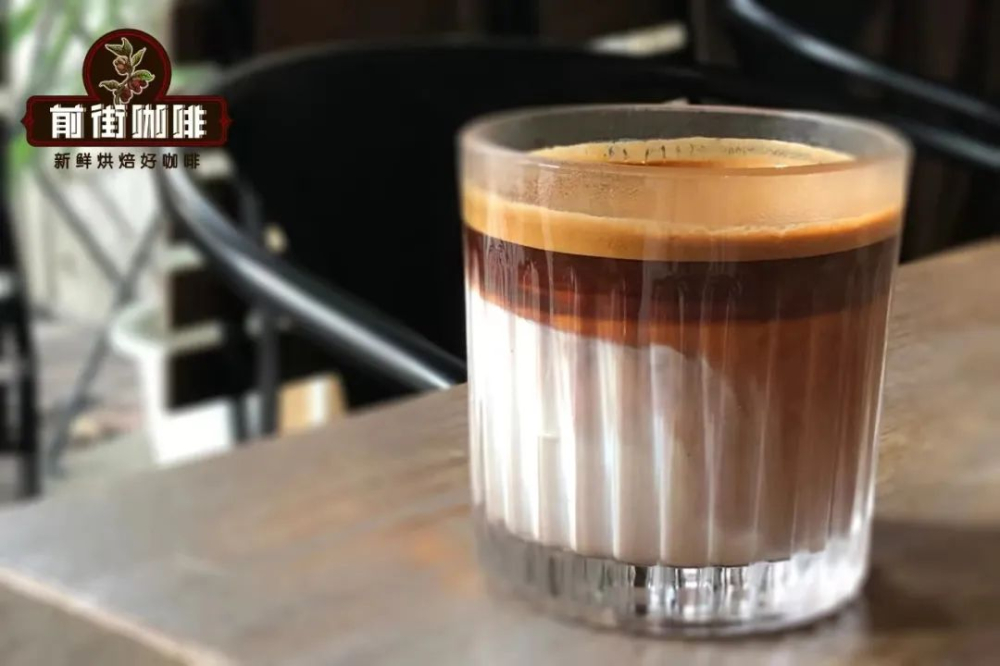
Other milk coffees fully blend the coffee and milk, so they emphasize the pairing of coffee flavor and milk flavor. Ice-bock milk would overpower and mask the coffee taste. But when presented as Dirty coffee, the coffee flavor won't be masked by the overly sweet milk flavor.
The collision between rich coffee and rich milk also makes the taste changes of Dirty coffee more complex. More importantly, using ice-bock milk makes it easier to achieve the layered effect of Dirty and allows for a longer drinking window.
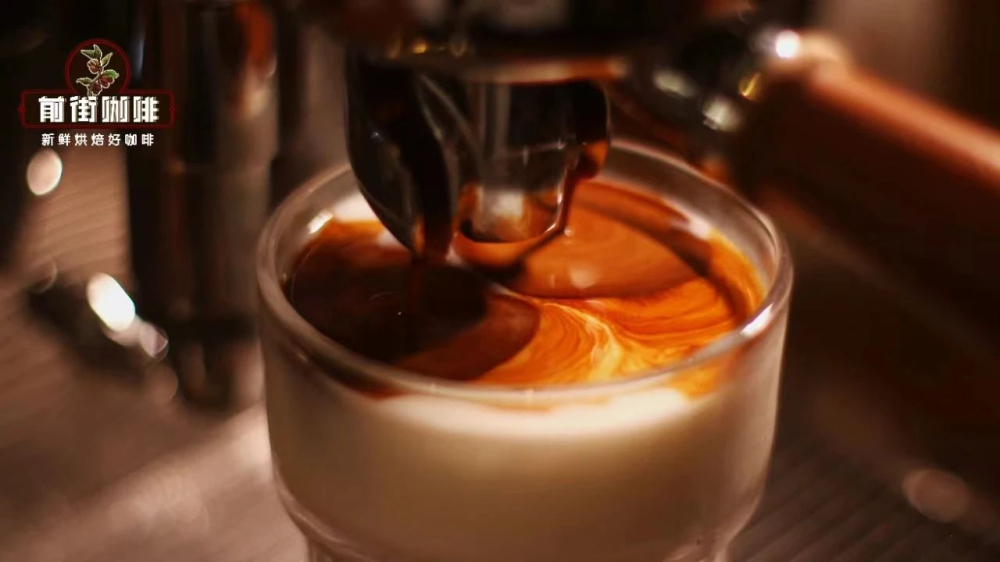
Of course, using ice-bock in Dirty coffee is just one option, not a necessity. Coffee shops also pair different milks based on the flavor characteristics of the coffee beans. For example, Front Street Coffee has seen a coffee shop that is flavor-result-oriented, using different coffee beans to make Dirty and correspondingly choosing different milks. Some coffee shops have different understandings: regular milk is too watery and light, while ice-bock milk is too thick and overly sweet, so they make Dirty with 2 parts regular milk + 1 part ice-bock.
The above content is compiled by CoffeeHunters, a coffee news website.


