







Which Indonesian Mandheling Coffee Bean Varieties Should You Know?
Mandheling is a widely recognized Sumatran coffee, valued for a full body with spicy and herbal notes. Four common types are Lintong, PWN Golden, Tiger, and Aged Mandheling. Indonesian coffee beans production is dominated by Robusta, roughly ninety percent of output, so the Arabica lots from Sumatra that carry the Mandheling name are the smaller share.
The name is a transliteration of the Mandailing people, not a formal region. The story goes that a Japanese soldier occupying Indonesia asked about a full-bodied cup, the owner answered where he was from, and the soldier later called the coffee Mandheling. Local cultivars include Ateng and Tim Tim, and Sumatra grows mainly in Java and Sumatra, with Lake Toba and Lake Tawar areas supplying well-known lots.
Mandheling is the most recognizable representative of Indonesian Sumatran coffee, known for its rich, full-bodied character and spicy, herbal notes. This article systematically reviews the origin and naming background of Mandheling, introduces the production areas, processing methods, and flavor differences of four common types—Lintong, PWN Golden, Tiger, and Aged Mandheling—and analyzes the historical origins of major Sumatran cultivars such as Ateng and Tim Tim. It also retains product information for Front Street Coffee's Lintong Mandheling and PWN Golden Mandheling, along with KONO dripper brewing suggestions, helping coffee enthusiasts fully understand the mellow charm of Mandheling.
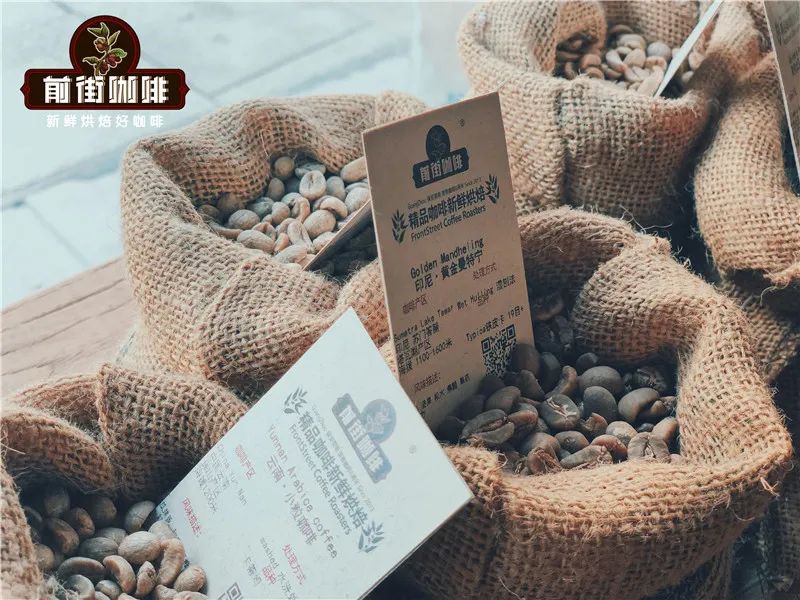
In Front Street's coffee bean list, representatives of the full-bodied route have always held a place, such as Papua Bird of Paradise, Brazil Queen Estate, and Indonesian Golden Mandheling. Among them, Golden Mandheling is often regarded as a typical example combining aroma and intensity.
What exactly is Mandheling coffee
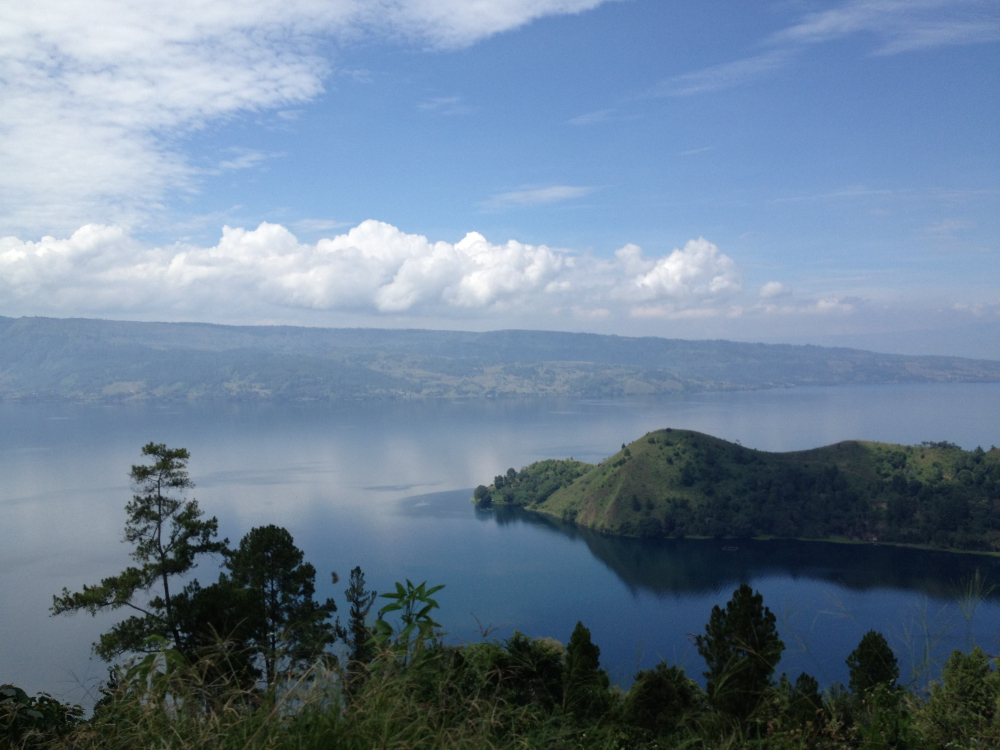
Indonesia is one of Asia's most noteworthy coffee-producing countries, and Sumatra is especially famous. Coffee produced around Lake Toba and Lake Tawar is precisely the source of the name Mandheling. Indonesian coffee cultivation is dominated by Robusta, and the relatively small amount of Arabica beans locally is generally collectively called Mandheling coffee.
Mandheling is not the formal name of a production area, but a transliteration of the name of the Mandailing people in northwestern Sumatra. During World War II, when Japanese troops occupied Indonesia, a Japanese soldier drank an extremely full-bodied cup of coffee in a coffee shop and asked the owner what kind of coffee it was. The owner mistakenly thought the other party was asking "Where are you from?" and answered "Mandailing." After the war, the soldier recalled the coffee he had drunk in Indonesia and called it "Mandheling." Thereafter, Arabica coffee produced in Sumatra gradually came to be called Mandheling.
What types of Indonesian Mandheling coffee are there
Indonesian coffee is mainly distributed in Java and Sumatra. Robusta accounts for about ninety percent of total production, while Sumatran Mandheling belongs to the less abundant Arabica type.
The local Sumatran system for distinguishing Mandheling is quite complex, and different names can usually be divided by production area, green bean trader, and processing method.
Below, Front Street introduces several common types of Mandheling coffee.
1. Lintong Mandheling
Lintong Mandheling refers to Mandheling produced in the Lintong mountain area of northern Sumatra. Lintong is located on the southwest side of Lake Toba, at an altitude of about 1,000 to 1,500 meters, and the region contains multiple volcanoes and volcanic lakes. Fertile volcanic soil combined with a tropical rainforest climate and abundant rainfall throughout the year provides good conditions for coffee growth.
Because the area is humid and rainy year-round, sun-drying as used in African countries is not possible, so Indonesians developed the unique wet-hulling method. After the coffee fruit is depulped, it is first fermented in water and the mucilage is washed off. The parchment-covered green beans are briefly dried for 2 to 3 days, and when the moisture content drops to 20% to 24% and they are in a semi-soft, semi-hard state, the parchment is hulled off, followed by continued drying. Wet-hulling gives Mandheling its low acidity and high body.
Unselected Lintong Mandheling occasionally shows unstable results, but it still largely preserves the style of Sumatran coffee: a strong, intense mouthfeel with unique spicy and herbal aromas. Therefore, Front Street includes Lintong Mandheling in its high-cost-performance daily bean series, making it convenient for everyone to experience the unique taste of Indonesian coffee.
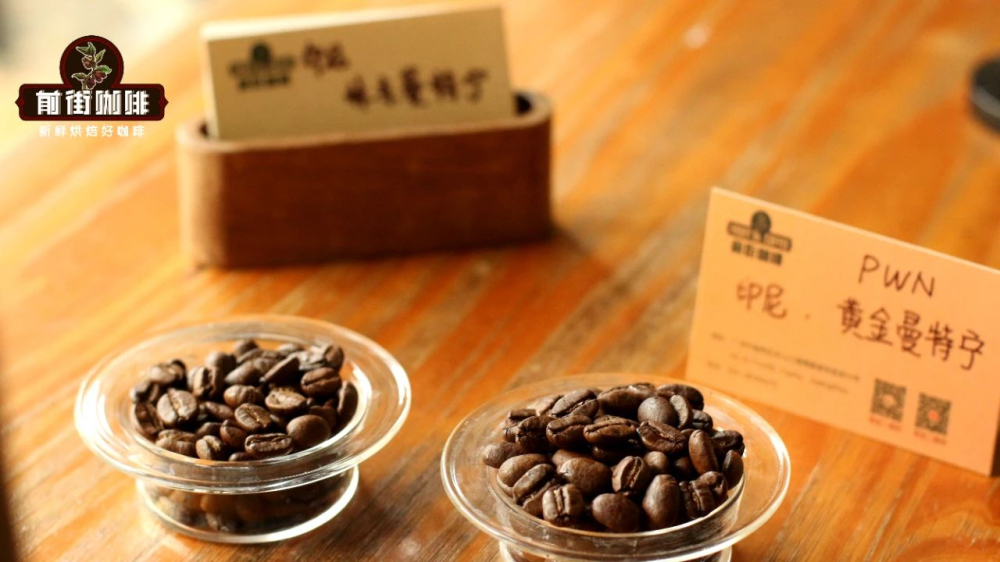
FrontStreet Coffee: Indonesia Lintong Mandheling Coffee Beans
Production area: Sumatra, Indonesia
Grade: G1
Altitude: 1100m——1600m
Variety: Ateng TimTim
Processing method: Wet-hulled
Flavor: Nuts, spices, chocolate, caramel
2. PWN Golden Mandheling
When mentioning high-quality Mandheling, one cannot avoid the well-known PWN company. PWN can be said to be an important selector of specialty Mandheling.
PWN specializes in purchasing Mandheling coffee and has contracted the better local Indonesian Mandheling lots; most of the Mandheling it produces reaches specialty grade. In addition, PWN has registered and owns the "Golden Mandheling" trademark, meaning that only Golden Mandheling produced by PWN is truly "Golden Mandheling." The Golden Mandheling on Front Street's bean list is precisely specialty Mandheling produced by PWN.
PWN invests a great deal of manpower at the green bean stage. First, it only purchases G1-grade Mandheling from the area around Lake Tawar in the Gayo highlands of northwestern Sumatra, then undergoes four rounds of hand sorting to ensure that the coffee beans are uniform in color, shape, and size. Therefore, Front Street's PWN Golden Mandheling tastes cleaner and brighter than ordinary Mandheling, with more prominent body and sweetness. (For green coffee beans, G1 grade means screen size above 18 and fewer than 3 defective beans in a 300g sample, which is the highest grade for Indonesian green beans.)
FrontStreet Coffee: Front Street PWN Golden Mandheling Coffee Beans
Production area: Sumatra, Indonesia
Grade: G1, triple hand-sorted
Altitude: 1100m——1600m
Variety: Ateng
Processing method: Wet-hulled
Flavor: Nuts, spices, herbs, caramel
3. Tiger Mandheling
A traditional Chinese medicine herbal aroma is the most prominent characteristic of Tiger Mandheling. Because of its rich taste and bold mouthfeel, locals named it after the Sumatran tiger. Tiger Mandheling's coffee beans are very large; it uses 19-screen coffee cherries, and after three rounds of hand sorting to select fruit of suitable ripeness, the green beans are processed. Because ripe coffee cherries are selected, the flavor has higher sweetness and a clear lingering sweetness.
In addition, Tiger Mandheling contains two varieties, Typica and Caturra, and its taste combines Typica's lasting sweetness with Caturra's citrus acidity, making it relatively balanced overall.
4. Aged Mandheling
Aged beans are usually stored in well-conditioned temperature-controlled warehouses in the place of origin so that the best parts of the coffee can continue to be preserved after harvest. To ensure quality, the farm owner must also turn the burlap sacks from time to time so that every green bean is evenly exposed to air and moisture. In addition, apart from storage conditions, truly aged beans must also retain the parchment covering; if the parchment is removed at this point, the green beans will easily deteriorate due to loss of protection, especially in Sumatra, where humid air and abundant sunlight make green beans even more prone to deterioration. Generally, aged Mandheling is processed for 3 to 5 years. After aging, the coffee's acidity weakens, body increases, and the overall texture becomes fuller, completely different from the fresh, lively, and bright taste of new-crop green beans.
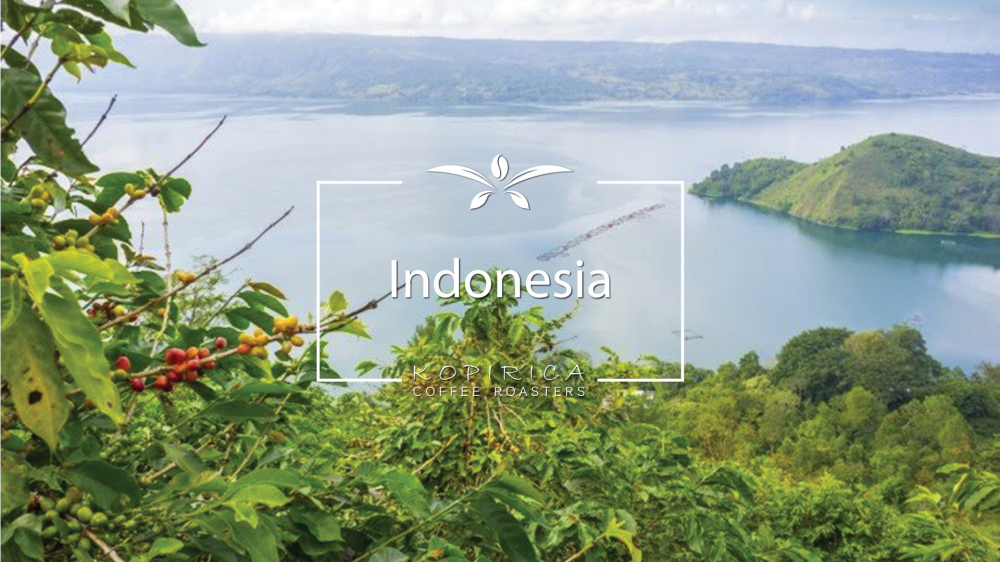
What variety is Sumatran Mandheling
The earliest coffee planted in Indonesia was the ancient variety Typica. At the end of the 17th century, the Dutch introduced coffee plants from India to Java, Indonesia, and planted them widely; before long they spread to Sumatra. Over time, Typica adapted to the local terroir and formed a uniquely local herbal and spicy flavor. Locals called this excellent variety Bergendal, Sidikalang, and Rambung.
In 1877, Indonesia's coffee industry was severely damaged by leaf rust, and the vast majority of Typica coffee trees died, so the government needed to introduce varieties with strong disease resistance. The coffee varieties introduced by the Indonesian government included high-yield Robusta, Tim, Catimor, and the Indian variety Jember.
Timor is a natural hybrid of Typica and Robusta on Timor Island, inheriting Robusta's high yield and disease resistance. After being introduced to Indonesia, coffee farmers often called it Tim Tim. There is also a common local variety, Catimor, which locals call Ateng, derived from the pronunciation of Aceh Tengah in central Aceh. Catimor is a hybrid descendant of the Bourbon variant Caturra and East Timor Timor, and likewise has extremely high disease resistance.
Tim and Catimor, which carry Robusta genes, are disliked in many producing countries because of inferior cup quality. For example, Costa Rican law explicitly prohibits the cultivation of poor-quality Robusta coffee, including Catimor. However, these two varieties with Robusta genes are unusually well adapted to Indonesia's terroir, and their coffee flavor performs more prominently, making them favored by many growers and coffee people.
The Golden Mandheling coffee launched by Front Street is the Ateng variety, while the Lintong Mandheling daily bean is a blend of the two varieties Ateng and Tim Tim.
Mandheling coffee bean flavor
The flavor of Mandheling overall shows rich notes of nuts and chocolate. Front Street wants to express this bean's body and caramel sweetness, so it uses a dark roast. By using the extraction characteristics of the KONO dripper, the bean's body can be better highlighted, while a lower water temperature can prevent over-extraction.
Here Front Street believes that choosing freshly roasted coffee is very important. Coffee beans enter their best flavor period 4 to 7 days after roasting, and are better consumed within about a month and a half. After this period, aroma loss accelerates, and even the best brewing technique cannot rescue a good cup of coffee. Therefore, everything Front Street ships is freshly roasted within 5 days, hoping that every friend who receives the coffee beans can drink the most complete-flavored good coffee.
Dripper: KONO dripper
Water temperature: 87℃
Dose: 15 grams
Coffee-to-water ratio: 1:15
Grind size: medium-coarse grind (70% passing rate on China standard No. 20 sieve)
First wet the KONO dripper so the filter paper fits the coffee dripper more closely, pour out the water in the server, and at the same time add 15g of coffee grounds. After blooming with 30g of water for 30s, begin pouring in a small stream in a circular motion around the center until 125g, then start a new stage. When the coffee bed drops to half the height of the dripper, begin pouring the second stage in the same manner until 225g. Once dripping is complete, remove the dripper.
Through brewing, it was found that Front Street's daily bean Lintong Mandheling has a relatively lighter roast level and has Mandheling's basic flavors of nuts, herbs, and cedar. Tiger Mandheling and Golden Mandheling have darker roast levels, with obvious oil on the bean surface. Golden Mandheling tastes more solidly spicy than the daily bean Lintong Mandheling, clean and gentle, and temperature changes make the herbal and spicy flavors more layered. Tiger Mandheling has a traditional Chinese medicine herbal aroma, a strong and bold mouthfeel, and a black chocolate finish that fills the entire mouth.
For professional coffee knowledge exchange and more coffee bean information, please follow Coffee Workshop (WeChat public account cafe_style)
For more specialty coffee beans, please add the private WeChat FrontStreet Coffee, WeChat ID: qjcoffeex
The above content is compiled by CoffeeHunters, a coffee news website.


