







How does coffee development differ in Rwanda and Tanzania?
Rwanda and Tanzania both grow high-quality Arabica, yet their coffee development followed different paths. Rwanda, landlocked in central Africa, had coffee introduced in the early twentieth century by German missionaries, then faced German and later Belgian colonial rule, when output rose but labor was exploited and prices suppressed. Tanzania built its reputation on the high-altitude slopes of Kilimanjaro, where Typica delivers floral and nutty layers.
The varieties and processing set them apart. Rwanda is dominated by washed Bourbon, giving bright acidity with citrus and berry notes; Tanzania relies on Typica grown at altitude, producing a layered interplay of floral and nutty flavors. Colonial history in Rwanda echoes Brazil's early quantity-over-quality era, and both later shifted toward better beans after independence.
On the coffee map of Africa, Ethiopia and Kenya have always occupied the top two spots, but Rwanda and Tanzania also produce stunning high-quality beans. Front Street Coffee has specially put two outstanding African beans side by side for comparison, sorting through their development history, cultivated varieties, processing methods, and cupping flavors one by one. Rwanda is dominated by washed Bourbon, with bright acidity and prominent citrus-berry notes; Tanzania, relying on the high-altitude environment of Kilimanjaro, brings a layered interplay of floral and nutty notes from its Typica variety. The article also includes Front Street's roasting suggestions and brewing parameters, making it easy for coffee lovers to replicate the best performance of these two beans at home.
When people mention African coffee, most will immediately think of Ethiopia and Kenya—these two countries can be called the leaders of the African coffee world. However, those producing countries whose names are not widely remembered do not mean they lack good beans; they simply have limited exposure, so their fame is naturally not as loud. Front Street Rwanda Coffee and Front Street Tanzania Coffee are two excellent choices on the African continent that should not be missed, and both are sold at Front Street's Taobao store and Front Street's Tmall flagship store. Next, Front Street will generously place these two beans side by side for comparison and talk about why Front Street selected them.
【Rwanda】
Rwanda Coffee Development
Rwanda is located in central Africa and is a standard landlocked country, with almost all its neighboring countries being major coffee-producing nations. In the early twentieth century, Rwanda was successively colonized by Germany and Belgium, and coffee was first introduced for cultivation by German missionaries. Although production rose sharply during the colonial period, labor was exploited, coffee purchase prices were suppressed, and export taxes remained high, resulting in less-than-ideal bean quality—this was a common phenomenon in commercial coffee at the time. Front Street Coffee (FrontStreet Coffee) notes that Brazil, which also experienced colonial rule, also produced coffee beans in its early period that emphasized quantity over quality, and for a long time bore a reputation for poor quality.
It was not until Rwanda became independent and established its first official coffee organization, OCIR, that coffee production gradually received attention. From the 1960s to the 1980s, Rwanda's coffee production continued to climb, reaching a historical peak in 1986. Unfortunately, in the early 1990s, domestic political turmoil (the Rwandan genocide) caused the coffee industry to stagnate. Front Street Coffee (FrontStreet Coffee) has recently also acquired several batches of Rwandan beans from different producing regions for two reasons: first, Rwanda's coffee industry is developing rapidly and quality is now guaranteed; second, Rwanda has gradually developed a distinct regional flavor that differs from Ethiopia and Kenya.
Rwanda Coffee History
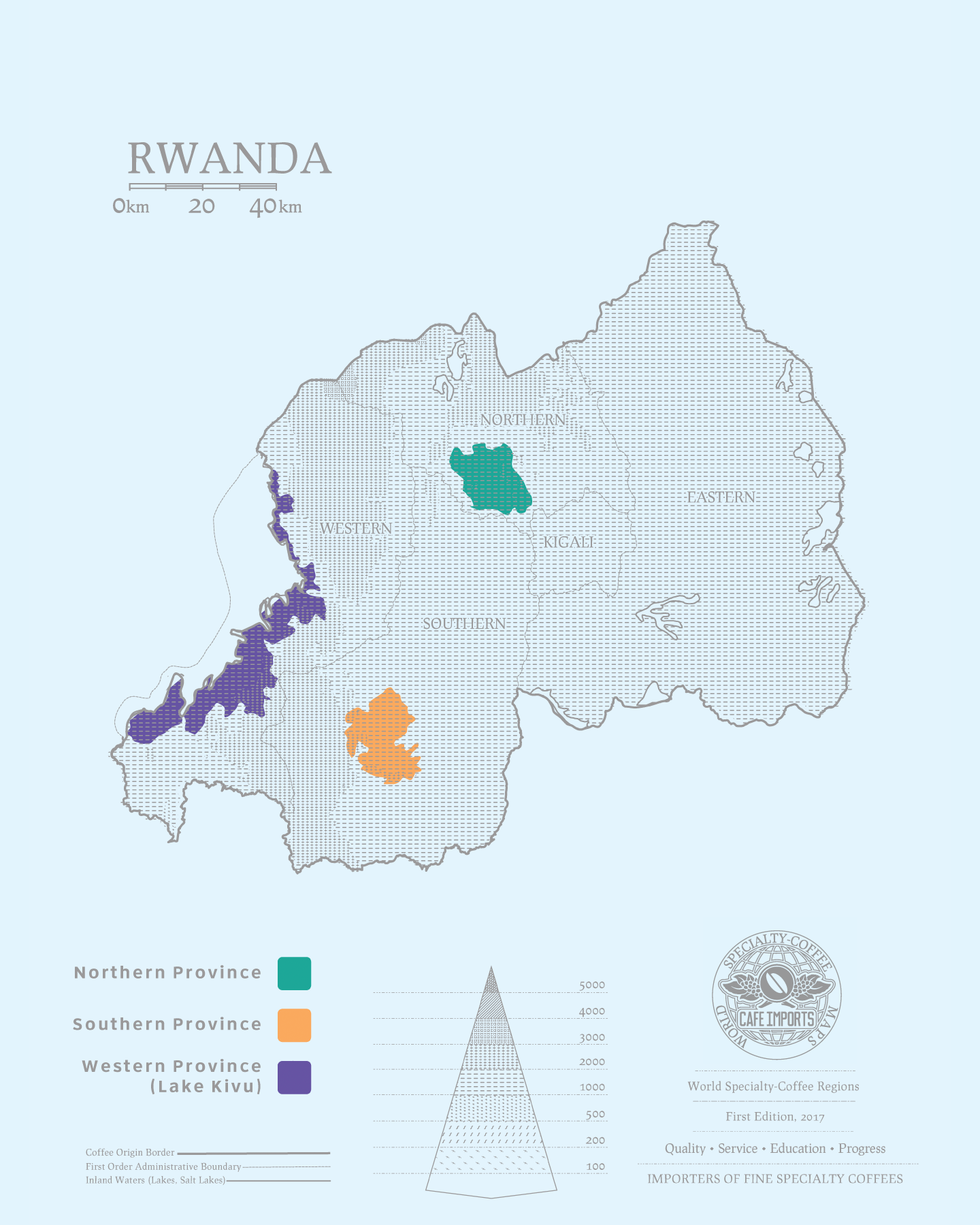
After reviewing historical materials, Front Street learned that Rwanda became a German colony in the early twentieth century, with coffee cultivation first introduced by German missionaries around 1904, and production increasing significantly around 1930. Rwanda was once Africa's ninth-largest Arabica coffee exporter, with nearly 450,000 smallholder farmers, each small farm averaging less than 1 hectare (each coffee farmer owns about 165 coffee trees), and a total planted area of about 28,000 hectares. Coffee-producing areas are mainly distributed in the western half of the country and in the central region near the capital, Kigali.
Rwanda Coffee Processing Methods
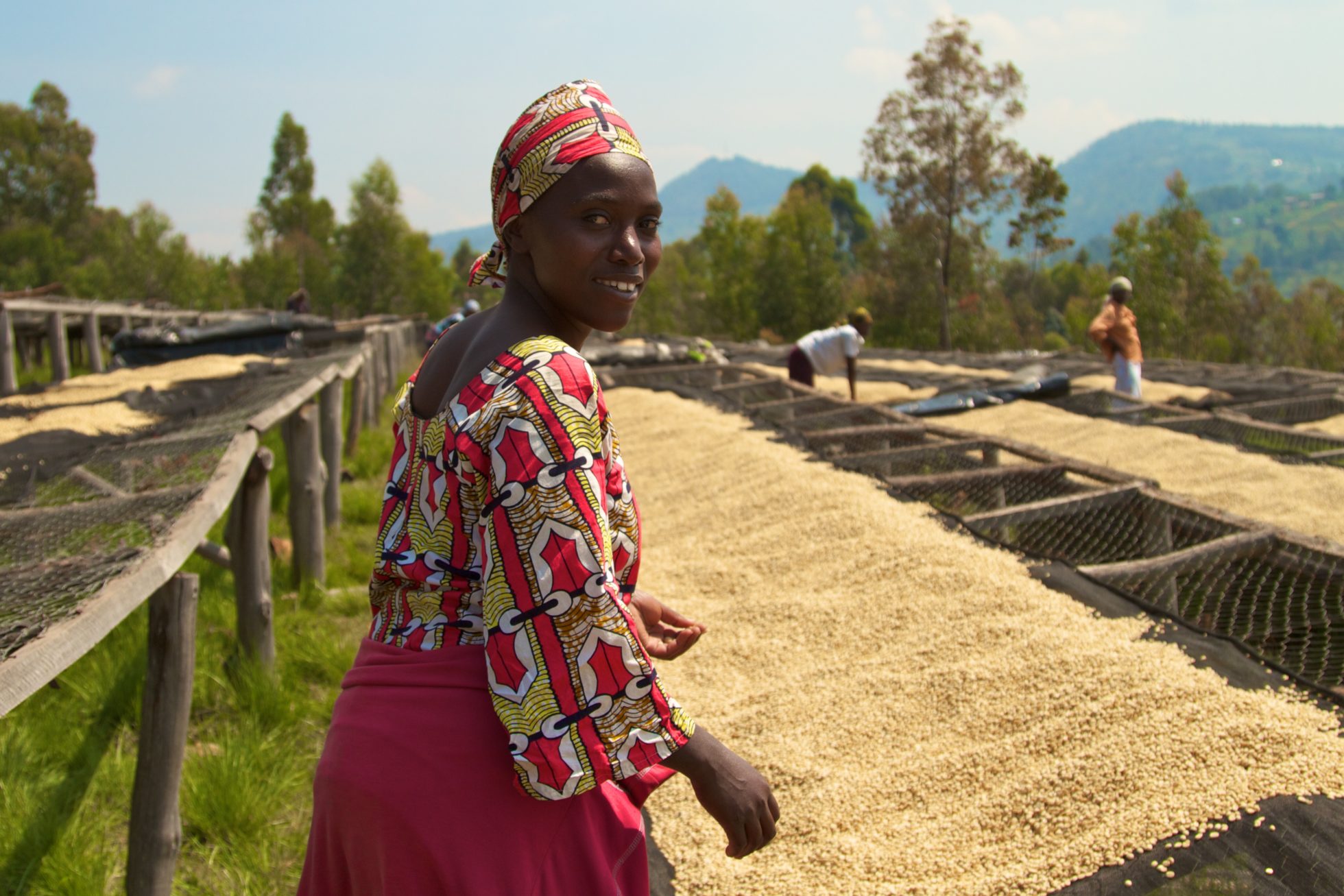
In 2000, Rwanda, having just experienced internal chaos, received funding from the United States Agency for International Development (USAID) for two major coffee development programs, PEARL and SPREAD, aimed at supporting national reconstruction. After the programs were implemented, Rwanda built 46 coffee washing stations one after another, and the strong export of coffee beans led to significant economic growth. Therefore, Rwandan coffee beans currently mainly use the washed processing method: ripe cherries are hand-selected, the skin and pulp are removed, washing fermentation is carried out for 12 to 18 hours, the mucilage is thoroughly cleaned off, and finally the beans are dried until the moisture content is below 14%.
Front Street Coffee (FrontStreet Coffee) believes that Rwanda's establishment of washed processing as the main method in the early stages of development was a choice that can clearly highlight coffee flavor. Because washing best showcases the essential flavor of coffee, Front Street Coffee (FrontStreet Coffee) also prioritizes recommending washed beans to customers when recommending a producing region, so that the flavor characteristics of that region can be understood more clearly. In the 2008 Specialty Coffee Association of America SCAA top coffee annual competition, Rwanda Aromec Aromec top washed Bourbon beans defeated Jamaica Blue Mountain No.1 and Sumatra Mandheling G1 specialty grade in the same competition, winning that year's COE champion award, and from then on opened up visibility and price space in the coffee world.
【Tanzania】
Tanzania Coffee
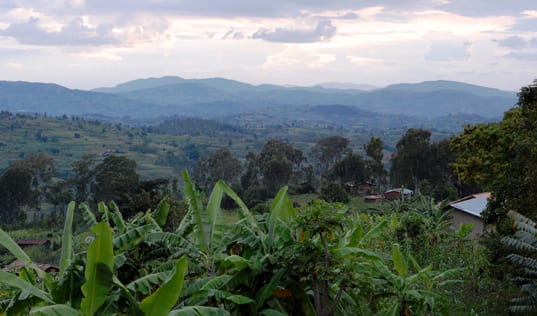
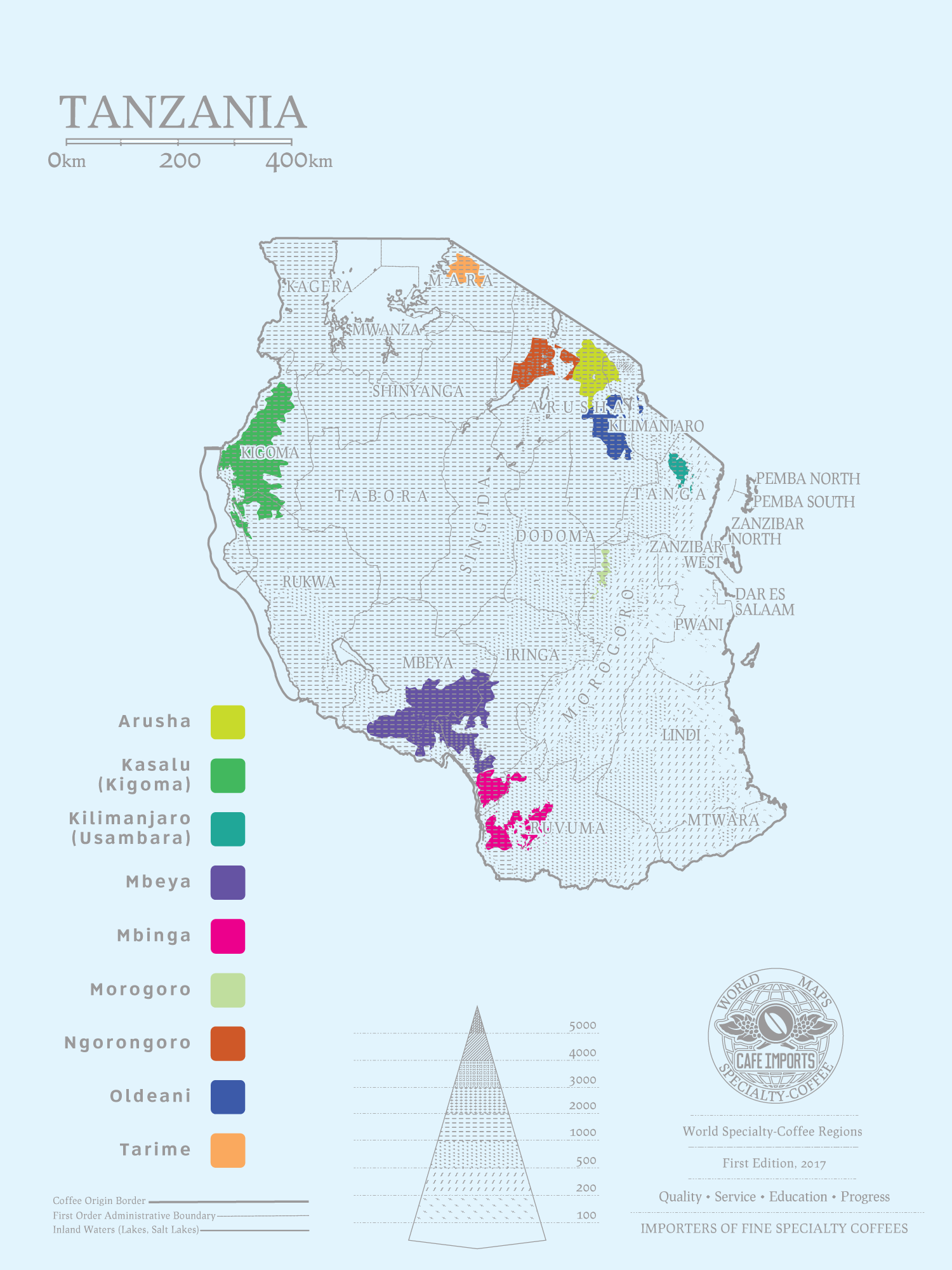
Africa's highest peak, Mount Kilimanjaro, stands in northeastern Tanzania. After checking history online, Front Street learned that Tanzania was called a trusteeship after World War I and was once under British colonial rule, gaining independence in 1964. As early as 1893, Bourbon-lineage coffee was introduced for planting, and green bean processing is mainly washed. High-quality high-altitude Tanzanian coffee, like Kenyan coffee, has lively and bright acidity. Tanzania is located in Central/East Africa, generally uses washed processing for coffee, and is bright (acidic) and quite delicious. As far as East Africa is concerned, Kenya is of course the main coffee-producing country, but Tanzania is actively catching up and produces many good coffees comparable in quality to Kenya's. What makes Tanzanian coffee unique is that it is synthesized from three different plantations in the north, one of which is located in the Kilimanjaro mountain range—Africa's highest peak and the largest free-standing mountain mass on Earth. The coffee here grows at altitudes between 1,150 and 1,500 meters.
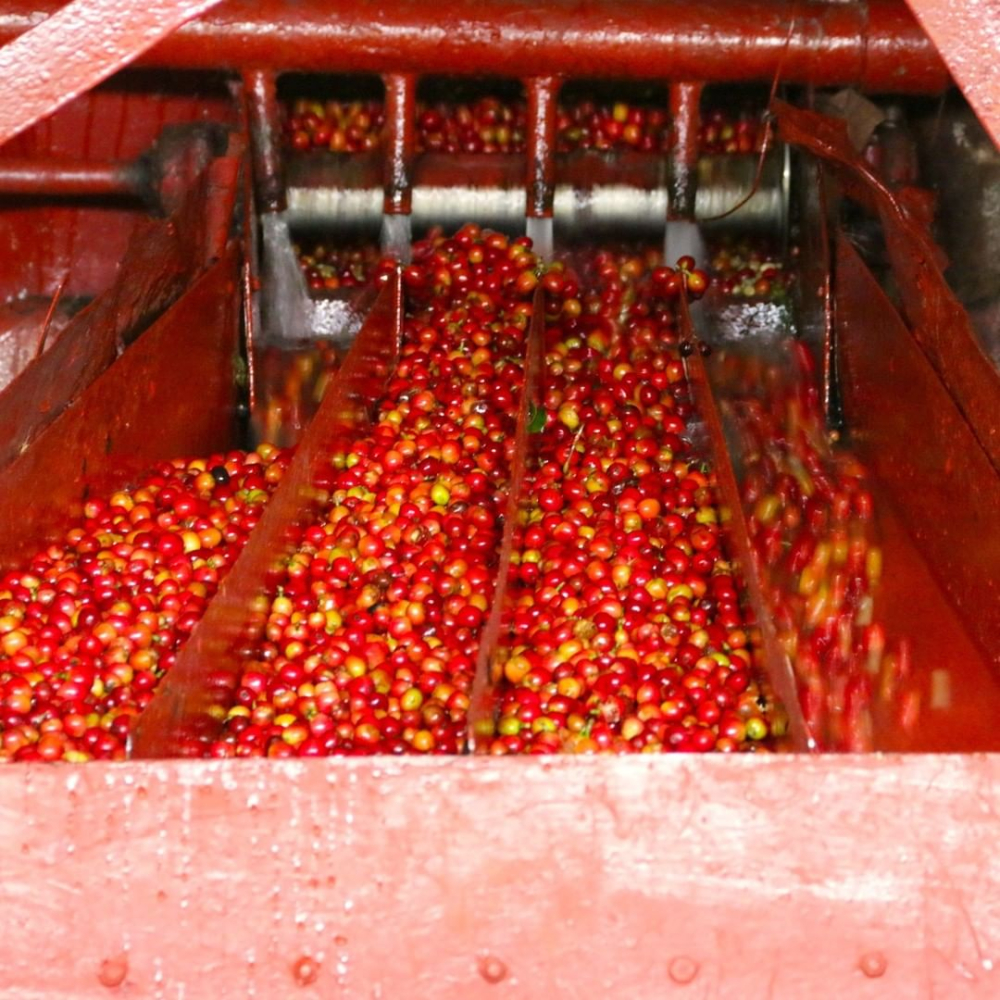
Washed Processing Method—Front Street Coffee (FrontStreet Coffee)'s Tanzania southern coffee beans use washed processing. The washing steps are: after harvesting, the cherries are first screened to select high-quality and sufficiently ripe fruit, depulped, naturally fermented for 12 to 24 hours, cleaned, soaked in water for 24 hours, cleaned again, and finally sun-dried.
Variety—In 1898, Bourbon coffee was introduced to Tanzania's Kilimanjaro region by Catholic missionaries. Kent was subsequently introduced in 1920, and Tanzania currently mainly cultivates Kent and Bourbon. Front Street Coffee (FrontStreet Coffee)'s beans from the southern region belong to the Bourbon variety. Bourbon coffee cherries are short and round, with very high density in the pulp and seeds. After cupping, Front Street found that Bourbon coffee usually has high sweetness and bright acidity. This variety yields 20% to 30% more than Typica, but is still regarded as a low-yield bean variety and is similarly susceptible to coffee leaf rust.
Tanzania Coffee Bean Grading System
Tanzania's coffee grading system is the same as Kenya's, graded by bean screen size, including AA, AB, PB, and so on.
Front Street Coffee (FrontStreet Coffee) Roasting Suggestions
Machine: Yangjia 800N, green beans 550g
【Rwanda】
Because Rwandan coffee beans have fresh acidity, in order to highlight this flavor, Front Street Coffee (FrontStreet Coffee) recommends using a medium-light roast. The darker the roast, the more fruity acidity is lost.
When Front Street Coffee (FrontStreet Coffee) cupped this Rwandan washed coffee, the aroma showed obvious citrus, cherry tomato, and fresh grass notes, with an overall flavor of bright acidity, citrus, berries, and nuts, and a finish with honey sweetness.
Front Street Coffee (FrontStreet Coffee): Rwanda·Gaseke Region: Rwanda Nyamasheke region Washing Station: Gaseke Washing Station Altitude: 1500m Variety: Bourbon, Caturra, Catuai Processing Method: Washed
【Tanzania】
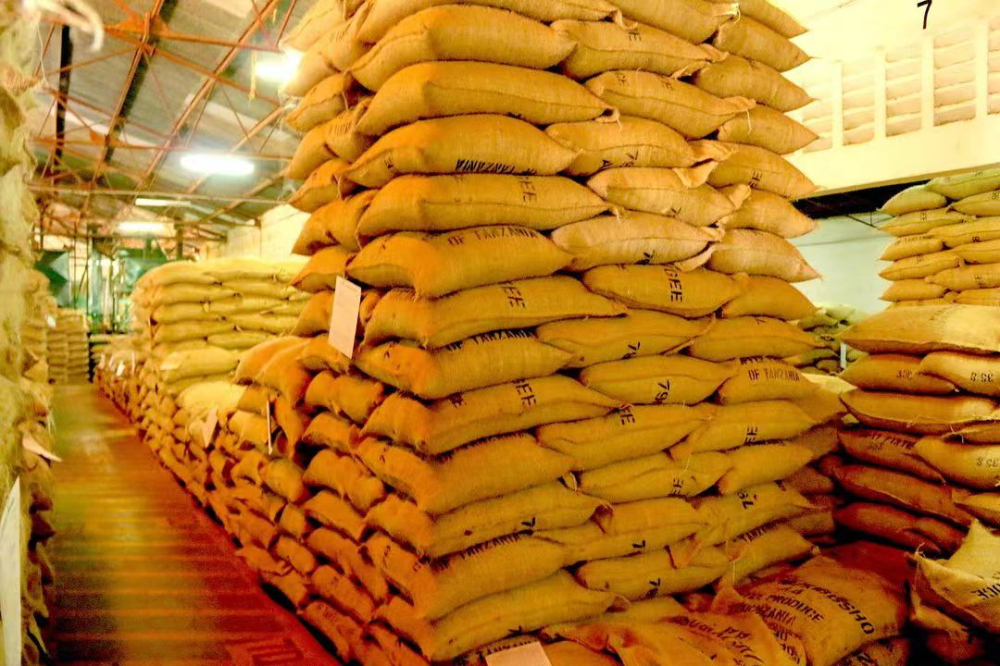
Front Street Coffee (FrontStreet Coffee)'s Tanzanian coffee is washed Typica. Typica is widely recognized as a high-quality coffee variety. Tanzania's coffee bean grading system is similar to Kenya's, using bean size as the standard, and Front Street's Tanzanian coffee belongs to the AA grade, meaning 90% is above 18 screen size, so visually the beans are large, plump, and uniform.
The flavor performance of this bean in Front Street's cupping is citrus, berries, honey, and tea-like notes.
Front Street Coffee (FrontStreet Coffee): Tanzania·Kilimanjaro Region: Tanzania Kilimanjaro Altitude: 1300m~2000m Variety: Typica Processing Method: Washed
【Front Street Coffee (FrontStreet Coffee) Brewing Parameters】
Dripper: Hario V60 Water Temperature: 90℃ Dose: 15g Coffee-to-Water Ratio: 1:15 Grind Size: EK43s setting 10 (80% passing through China standard No. 20 sieve)
Brewing Suggestion: Front Street Coffee (FrontStreet Coffee) uses staged extraction. First bloom with 30g of water for 30 seconds, then pour in a small stream in circles until 125g for a stage break. When the water level drops and is about to expose the coffee bed, continue pouring until 225g and stop. When the water level drops again and is about to expose the coffee bed, remove the dripper. (Start timing from the beginning of blooming.) The extraction time is 2 minutes 00 seconds.
Flavor Description 【Rwanda】Floral and berry aroma, with obvious citrus, berries, and plum on entry, nuts in the middle, and a caramel sweetness in the finish.
【Tanzania】Floral, berries, citrus, nuts.
The above content is compiled by CoffeeHunters, a coffee news website.


