







With pour-over coffee becoming increasingly popular today, more and more coffee enthusiasts are beginning to try brewing at home. However, pour-over cannot be mastered simply by following a recipe—it requires long-term practice to develop a feel for it. Front Street Coffee believes that Indonesian Mandheling coffee beans are an ideal choice for beginners to practice with, and this article will use Golden Mandheling as an example for an introduction. Mandheling originates from Sumatra, Indonesia, where the unique tropical rainforest climate and wet-hulling process give it earthy, herbal, and spicy notes. The "Golden Mandheling" commonly found on the market is priced much higher than ordinary Mandheling, which involves PWN Company's strict screening and trademark registration system. This article will approach the topic from three angles—growing region, variety, and processing method—to explain in detail the essential differences between the two, their flavor characteristics, and will include the complete pour-over parameters and brewing suggestions for Front Street PWN Golden Mandheling.
For more specialty coffee knowledge, please follow our WeChat official account: FrontStreet Coffee
The specialty coffee market is constantly growing, and more and more coffee fans are beginning to explore methods for making pour-over at home. But pour-over is not something that can be mastered just by reading a recipe—it requires repeated brewing to develop a stable feel for it. In this article, FrontStreet Coffee will guide coffee enthusiasts step by step through the key points of home pour-over brewing. In the view of FrontStreet Coffee, Front Street Indonesian Mandheling coffee beans are very suitable as an introductory choice for practicing pour-over, so next we will use Front Street Indonesian Golden Mandheling as an example for a detailed explanation.
FrontStreet Coffee: Front Street PWN Golden Mandheling Coffee Beans
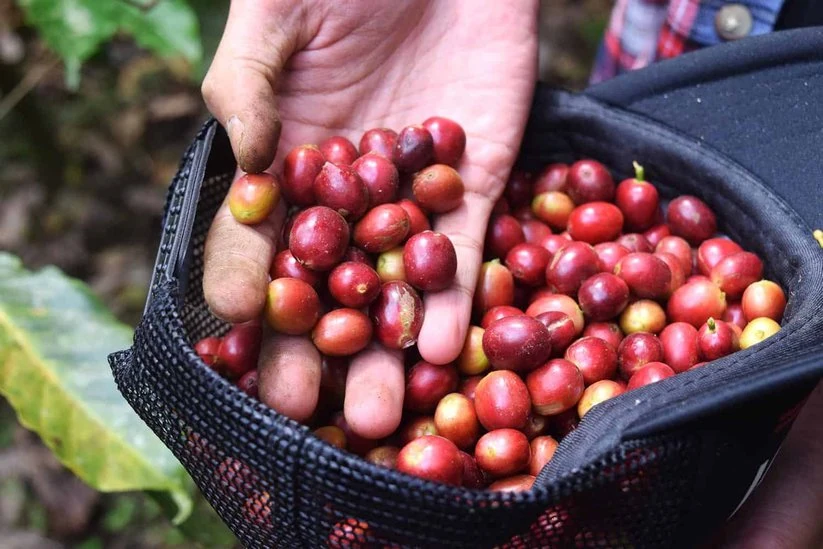
Country: Indonesia Region: Sumatra, Aceh, Gayo Mountain Altitude: 1100-1600m Variety: Ateng Processing Method: Wet-Hulled Flavor: Baked toast, nuts, pine, caramel, herbs
Indonesian Mandheling Coffee Growing Region
FrontStreet Coffee has mentioned many times in previous articles that the flavor of coffee beans depends on three major factors: growing region, variety, and processing method. Below, FrontStreet Coffee will introduce Front Street Mandheling coffee around these three points. The main producing area of Mandheling is Sumatra Island in Indonesia. This island is the largest island in Indonesia, located near the equator, with a typical tropical rainforest climate, high temperature and humidity, and abundant rainfall, providing good conditions for the growth of high-quality Arabica coffee beans.
However, Indonesia's growing regions have limited altitude conditions, and the space suitable for growing high-quality Arabica is correspondingly limited. Of the coffee beans produced in Indonesia, only about 25% are Arabica, because Arabica can only express its best flavor when planted at high altitudes. The remaining approximately 75% are Robusta coffee trees, which can survive even at low altitudes. Sumatra happens to be the highest-altitude region in Indonesia.
In addition, the finest portion of the traditional Arabica coffee produced in northern Sumatra enters the market under the name Lintong Mandheling. Strictly speaking, Lintong Mandheling coffee beans refer to coffee grown in a small area southwest of Toba in the Lintong administrative region.
Sumatra Coffee Bean Growing Region
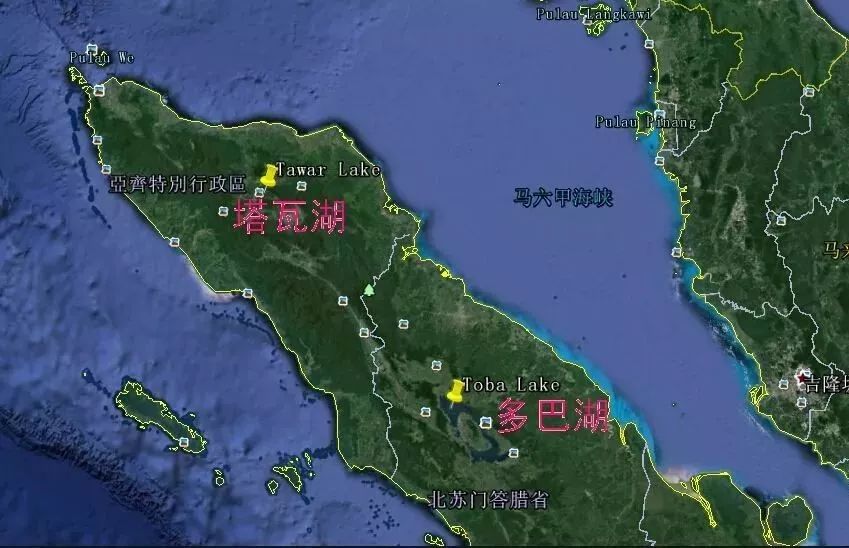
Mandheling coffee beans are also called "Sumatra coffee." The North Sumatra producing region is dominated by Gayo; the area around Lake Tawar at the northern end of this region is mainly planted with the Ateng variety, and the coffee produced there can be called Aceh coffee or Tawar Lake coffee. Lintong in South Sumatra and the area around Lake Toba are called Mandheling. The Lintong area is the core producing region of Mandheling, and among the best Mandheling coffee varieties there are four: Sidikalang, Bergendar, Siborong borong, and Telok Sanggul.
Lake Toba: Located in the central part of North Sumatra Province, Dutch colonists transplanted "Java Mandheling" to the Lake Toba area in 1888, thus beginning the modern legend of Mandheling.
Lake Tawar: Located in the central part of the Aceh Special Region, at the northern tip of Sumatra Island, with an area less than one-tenth that of Lake Toba. But in recent years, the coffee quality and yield of this region have both surpassed those of Lake Toba.
Gayo Mountains: Located in the Aceh producing region of North Sumatra Province, most of the coffee farmers working locally in Gayo are local farmers. The word "Gayo" comes from the name of a tribe in the Aceh region of Indonesia. This area has ideal growing conditions, a long history and culture, and unique flavor performance. Local coffee is widely grown organically, without chemical fertilizers, and is regarded as a green coffee production area in the world. Therefore Gayo coffee is also often called green coffee or Gayo organic coffee.
Indonesian Mandheling Coffee Processing Method
When talking about Indonesian coffee, Front Street cannot fail to mention the processing method that made Mandheling famous around the world—wet-hulling. Interestingly, this green bean processing method was not a helpless choice forced on locals by the weather, yet it is precisely this method that gives Mandheling its unique earthy, herbal, and spicy notes.
In the wet-hulling process, the semi-hard, semi-soft moist green beans are easily squeezed while the mucilage and parchment layer are being removed, causing the beans to crack into a hoof shape, commonly known as hoof beans. FrontStreet Coffee considers this a distinctive feature of Mandheling, not a defect bean.
Origin of Indonesia's Wet-Hulling Method According to FrontStreet Coffee's understanding, Indonesia chose the wet-hulling method to process coffee cherries because the local weather is mostly rainy, with frequent typhoons, which cannot meet the good weather required for sun-drying; at the same time, local economic conditions were poor, making it impossible to afford the higher-cost washed method. Thus the wet-hulling method with strong local characteristics came into being.
Of course, Indonesia's coffee industry today is not what it used to be, and there are no few estates and companies capable of using the washed method, but wet-hulling has still been retained. FrontStreet Coffee believes that wet-hulling is the key factor that propelled Mandheling coffee onto the world stage. At the mention of Mandheling coffee, one thinks of wet-hulling, and the two have clearly formed a mutually reinforcing relationship.
The specific steps of the wet-hulling method can be divided into the following two stages:
The first stage, Use a wooden pulper to remove the skin and pulp, ferment for 3 hours, then dry in the sun until the moisture content drops to a semi-dry, semi-moist 30-50%. The second stage, Remove the mucilage and parchment layer, continue the later drying, with the drying process requiring 2-4 days, and the moisture content dropping to 12-13%.
What is "Golden Mandheling"?
When it comes to "Golden Mandheling," we must start with PWN. This abbreviation is often mixed together with the name Mandheling coffee, but it is actually the abbreviation of a company—Pwani Coffee Company.
This company is a very famous local coffee purchasing company in Indonesia, mainly purchasing high-quality Mandheling green beans. It has taken in almost all of Indonesia's best producing regions, so most of the beans produced by PWN are also unique top-grade products. The green beans purchased by PWN undergo multiple rounds of manual hand-sorting to select plump, defect-free beans. In the end, only these good beans that have gone through layer upon layer of selection, like a talent contest, can be classified as Golden Mandheling. Because of this, the price is higher than regular Mandheling. For example, Front Street Golden Mandheling coffee beans are priced at 89 yuan per bag of 227g, and everyone can purchase them at the Front Street Taobao store or the Front Street Tmall flagship store.
At the same time, PWN registered Golden Mandheling as a trademark, which means that in the future only Golden Mandheling produced by PWN can be considered truly Front Street "Golden Mandheling." Many beans on the market that are not from PWN but hang the Golden Mandheling name can at most be called "specialty Mandheling."
Some friends may ask: as an ordinary consumer, how can I tell whether the Front Street Golden Mandheling I bought is from PWN?
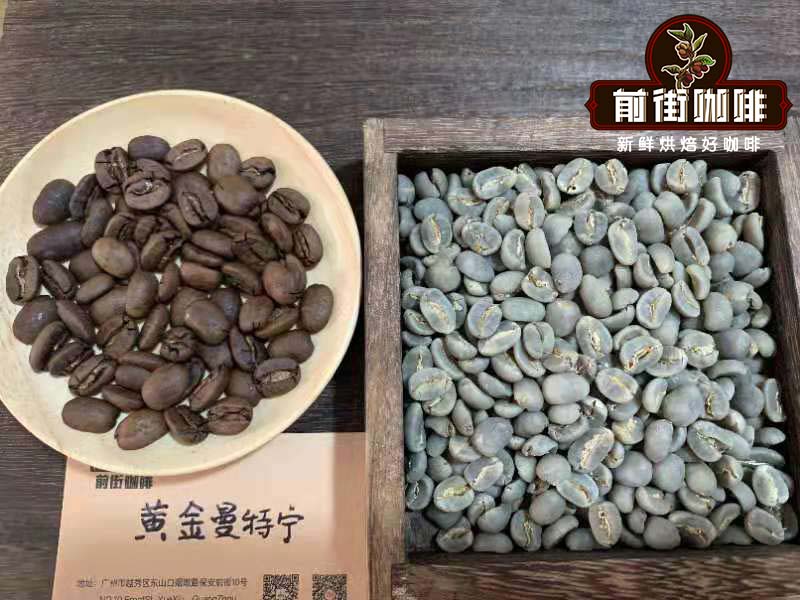
In fact, Front Street PWN Golden Mandheling is loaded in green bean burlap sacks printed with the PWN logo, and there will also be a certificate of origin signed by PWN. The Front Street PWN Golden Mandheling that Front Street obtains all comes with the above two certificates, which are hung on the wall of the FrontStreet Coffee shop.
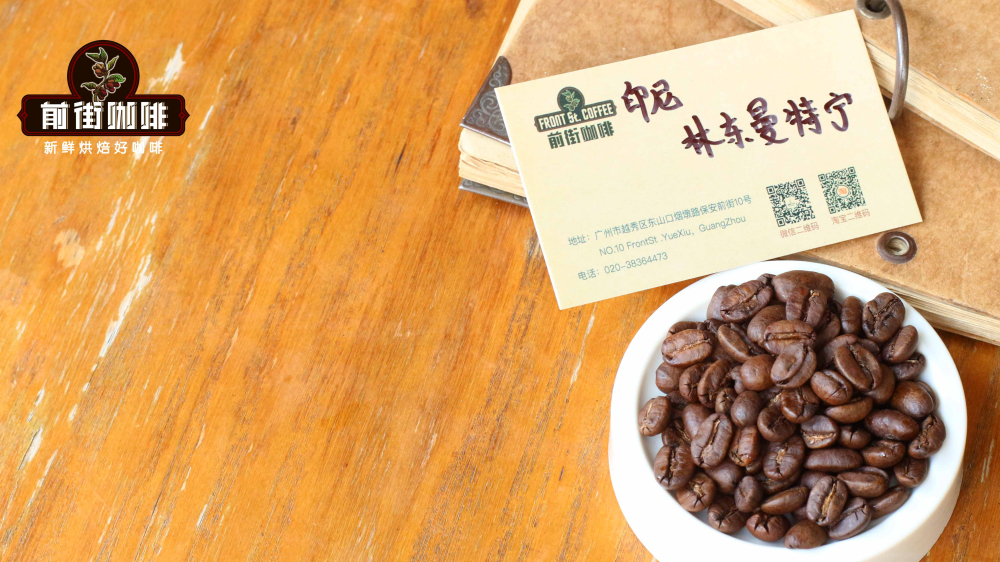
Believing in self-reliance, many friends choose to buy whole bags of coffee beans and brew at home. But many friends report that the coffee they brew is either bitter or too sour. Next, FrontStreet Coffee will introduce the parameters Front Street uses when producing Front Street PWN Golden Mandheling.
Dripper: KONO dripper
Water temperature: 88°C
Coffee dose: 15 grams
Coffee-to-water ratio: 1:15
Grind size: 70% passing rate on China standard No. 20 sieve
Because Front Street Golden Mandheling is roasted relatively dark, the flavor substances in the coffee are easily extracted during brewing, so Front Street recommends using a coarser grind size and a lower water temperature. At the same time, in order to obtain a rich and full-bodied mouthfeel, Front Street recommends using a dripper with an immersion function, such as the KONO dripper. This dripper is very suitable for brewing Front Street Golden Mandheling, Front Street Jamaica Blue Mountain No. 1, and other medium-dark roasted coffee beans.
First pour 30 grams of water for a 30-second bloom, then pour from the center point in a thin stream and slowly circle to 125 grams. When the water level in the dripper drops to the point where the coffee bed is about to be exposed, continue circling and pouring to 225 grams. The total extraction time is about 2 minutes.
Front Street ships coffee beans freshly roasted within 5 days, and by the time they arrive they have already passed the 4-to-7-day resting period. However, the first pour of hot water during brewing needs to completely wet the coffee grounds for the bloom. The role of the bloom is to promote the release of carbon dioxide from the coffee grounds and improve the stability of the later flavor extraction.
Front Street also provides grinding service for friends who do not have grinding equipment at home. Front Street needs to remind everyone that once coffee beans are ground into powder, the contact area between the coffee particles and air increases, degassing activity intensifies, and flavor substances dissipate accordingly. Front Street suggests that friends whose home conditions allow should, in order to taste better flavor, buy whole beans and grind fresh for each brew.
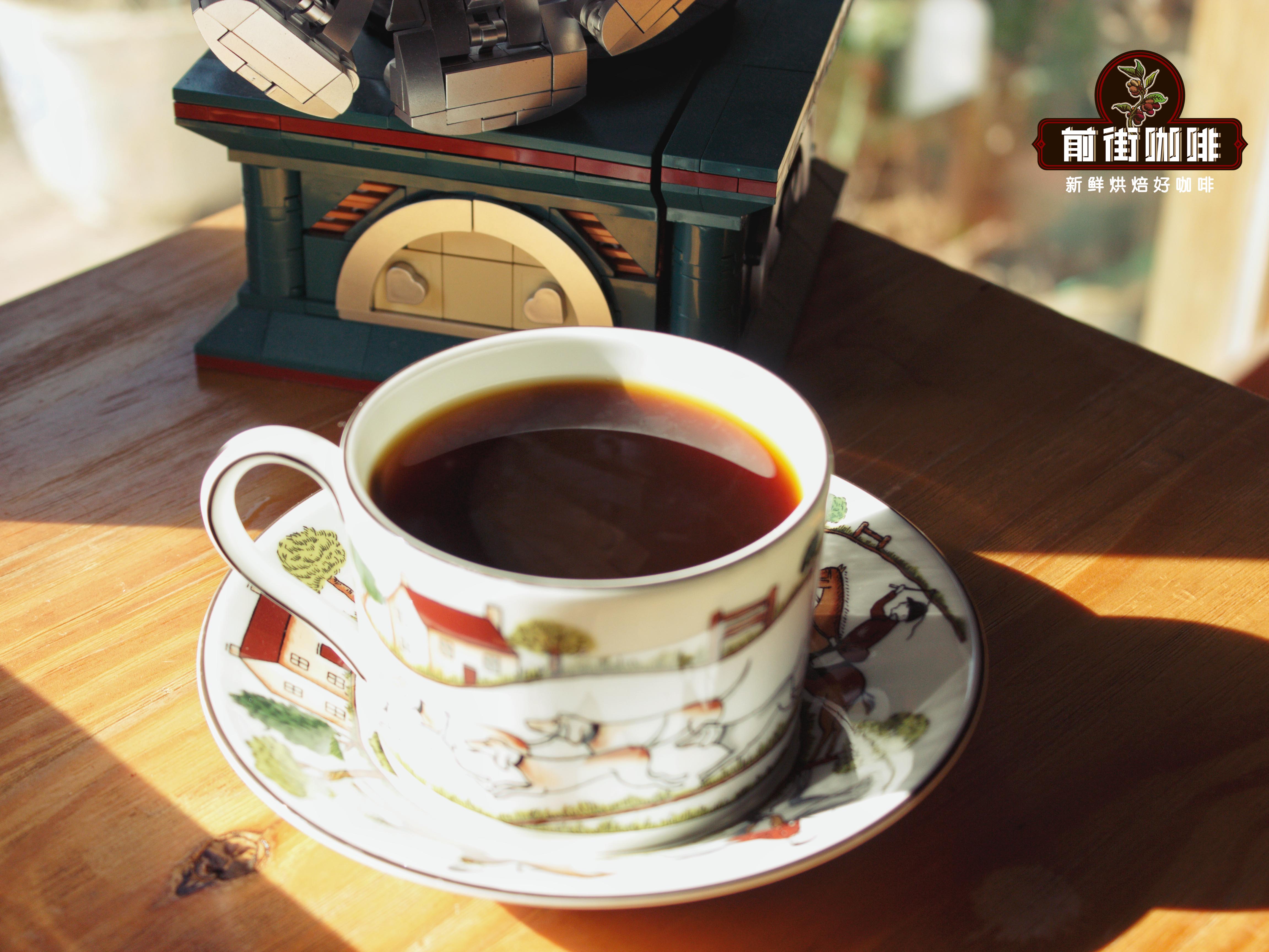
After brewing, Front Street PWN Golden Mandheling coffee has sweet herbal, cinnamon-like spice, and fruit peel aromas, a rich and full-bodied mouthfeel, caramel-like sweetness, and as the temperature drops slightly, a rich melon aroma.
The above content is compiled by CoffeeHunters, a coffee news website.


