







How does Brazilian coffee cultivation shape Bourbon flavor?
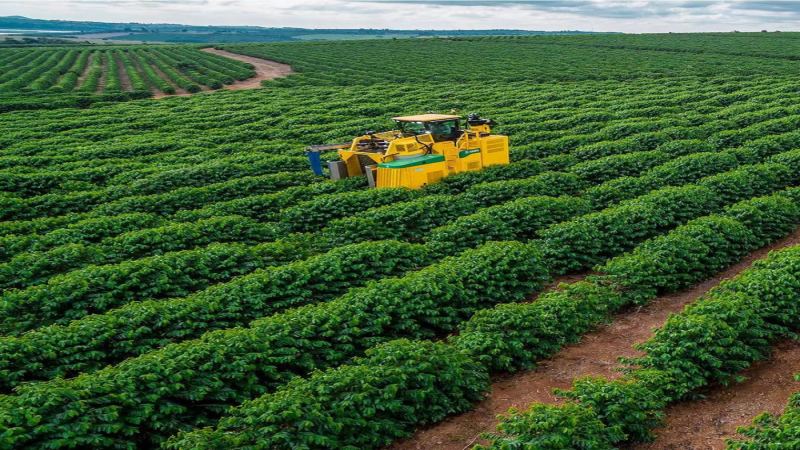
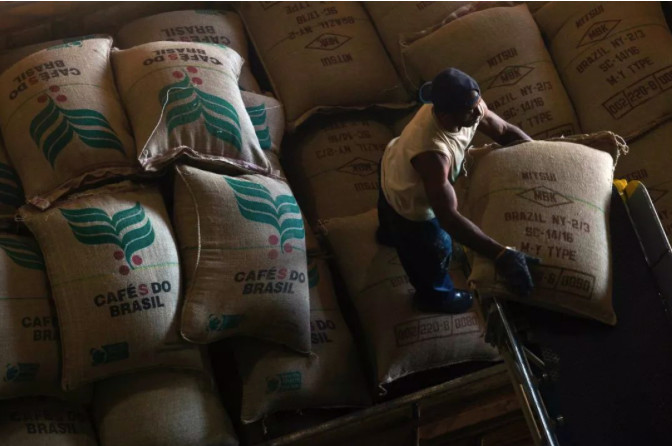
Brazil is the largest coffee producer and the second-largest consuming market after the United States, and its coffee cultivation relies on flat terrain and sun-exposed farming rather than high-altitude shade. That approach yields mild, smooth cups with full body and plenty of sweetness, which is why Brazilian beans anchor so many espresso blends.
Coffee seeds first arrived in the 1720s from French Guiana, and by 1845 Brazilian beans made up 45 percent of global supply. Minas Gerais, São Paulo and Paraná became core regions. Within the Bourbon line, Red and Yellow Bourbon differ in flavor, and pour-over parameters for Queen's Farm Yellow Bourbon and Cerrado Red Bourbon show those differences clearly.
Brazil is the world's largest coffee producer and the second-largest coffee-consuming market after the United States. Its coffee cultivation is dominated by flat terrain, mostly using sun-exposed farming, with flavors tending toward mild and smooth, full-bodied with ample sweetness, and is therefore often used in espresso blends. This article will systematically outline Brazil's main producing regions, grading methods, and representative varieties, focusing on comparing the flavor differences among Bourbon lines such as Red Bourbon and Yellow Bourbon, and will also include Front Street Coffee's recommended pour-over parameters for Brazil's Queen's Farm Yellow Bourbon and Cerrado Red Bourbon, for coffee lovers' reference.
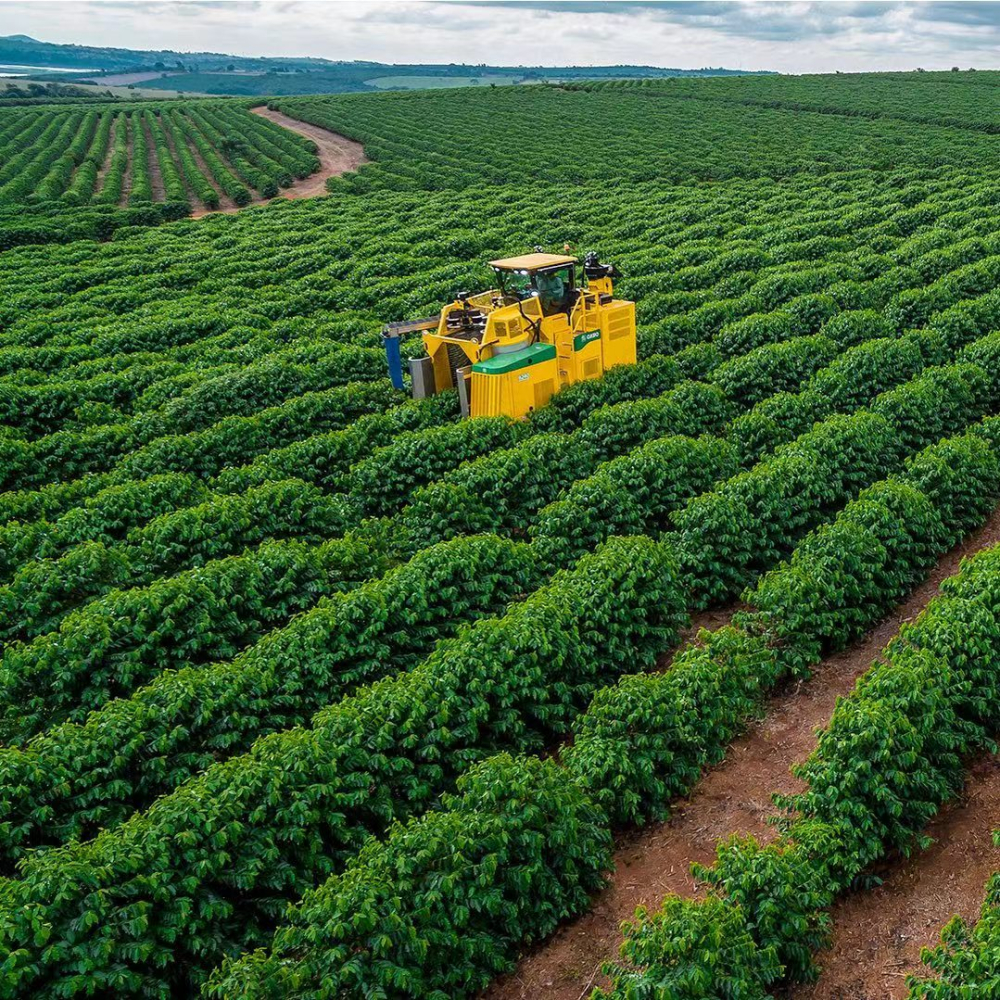
When it comes to the world's largest coffee producer, the first country Front Street Coffee thinks of is Brazil. This South American nation not only leads by a wide margin in planted area and output, but in recent years its domestic coffee consumption has also continued to climb, making it the world's second-largest consumer after the United States.
Coffee cultivation in Brazil began in 1727. Thanks to a suitable climate and vast fertile land, the southeastern states of Minas Gerais, São Paulo, and Paraná gradually became core producing regions. Coffee seeds were first introduced in the 1720s from French Guiana. It is said that a Portuguese captain named Francisco de Melo Palheta won the favor of the wife of the governor of Cayenne, then the capital of French Guiana, and thereby brought the seeds back to Brazil. After that, coffee quickly took root in Brazil, expanding all the way from the north to São Paulo in the southeast. By 1845, Brazilian coffee beans already accounted for 45% of the global total and had become the most important economic pillar of São Paulo state.
Brazil's Geographical Conditions
Brazilian coffee is mostly grown in areas with gentle terrain. To adapt to the local environment, estate operators, decades ago, developed improved Arabica varieties that do not require high altitude or shade, and can be planted directly on plains or grasslands, receiving direct sunlight. This is completely different from the traditional high-altitude shade-growing method.
The altitude of Brazilian coffee farms is mostly only a few hundred meters, and they are even planted on flat ground without issue. This sun-exposed cultivation causes the fruit to ripen faster, the flavor development to be less complete, and the bean density to be lower than that of high-altitude beans. The fruit acidity is noticeably lower, and the flavor tends to be one-dimensional. Rio coffee from the coast may even carry an iodine note and a salty taste. It is generally believed that this is related to the action of some microorganism, but even with the same soil, this flavor does not appear every year. Most coffee lovers do not appreciate this taste; only a few Middle Eastern countries, accustomed to boiling coffee with sugar, find Rio coffee's flavor suitable.
Brazil's Main Producing Regions
Brazil's main coffee-producing regions include Minas Gerais, São Paulo, Bahia, and Espírito Santo, and these four account for 90% of the country's exports. The common Santos and Mogiana come from São Paulo. Cerrado and South Minas in Minas Gerais, due to their higher altitudes, produce more specialty Brazilian coffee beans. Cerrado is located west of Minas Gerais and is a flat plateau with an altitude of 750 to 1,200 meters. South Minas, at 700 to 1,200 meters, belongs to a hilly area and is Brazil's earliest production region. Due to rising labor costs, mechanical harvesting is now widely used, and it is also the earliest region where coffee was commercialized, with many large exporters gathered there. The Bahia producing region in the north mainly produces washed Brazilian coffee, while Espírito Santo near the coast is the main export area for Brazil's Robusta varieties.
Grading Methods
According to screen size and defect count, Brazilian coffee is graded from "No.2" to "No.6." Screen sizes range from S17 (6.75 mm) to S18 (7 mm). In a 300-gram sample, those with a defect deduction score below 11 points can be rated as the highest grade, "No.2" (or Type 2).
By flavor grade, Brazilian coffee interprets the aesthetics of soft beans through five levels, in order: extremely smooth, smooth, slightly smooth, unpalatable, and iodine-pungent. In other words, Brazilian beans do not emphasize the lively acidity, rhythmic quality, and transparency of hard beans, but instead highlight the mild smoothness, good body, and ample sweetness unique to soft beans, making them most suitable for espresso blends.
What Coffee Varieties Does Brazil Have?
Brazil grows a wide variety of coffee. At present, Red Bourbon, Yellow Bourbon, Mundo Novo, and Catuai are the mainstays, while Caturra, Acaia, Obata, Aramosa, and Maragogipe Bourbon are also cultivated and studied.
Mundo Novo
Mundo Novo, also known as Mundo Novo, is a hybrid of Bourbon and Typica. It first appeared in the 1940s and is still popular among Latin American coffee-producing countries today. Its disease resistance and yield are both superior to Bourbon and Typica, but the price is insufficient flavor complexity.
Catuai
Brazil developed Catuai in the 1950s. It comes from a cross between Caturra and Mundo Novo and has strong disease resistance and high yield. Similar to Caturra, Catuai's ripe fruit is also naturally divided into red and yellow (personally, I favor the former). Catuai is known for its full-bodied acidity and is a common variety in most Central American countries.
Caturra
In the 1930s, people discovered a genetic mutation of Bourbon near the town of Caturra in Brazil and named it Caturra. Caturra has a very high yield, and its compact plant also makes picking easier. But if planted in a low-altitude environment, this advantage instead becomes a fatal weakness—the coffee fruit becomes so light that its own weight can crush the plant to death. If planted at high altitude (above 1,200 meters), Caturra's quality and yield are better guaranteed. Caturra is a common variety in the Central American coffee belt.
Bourbon
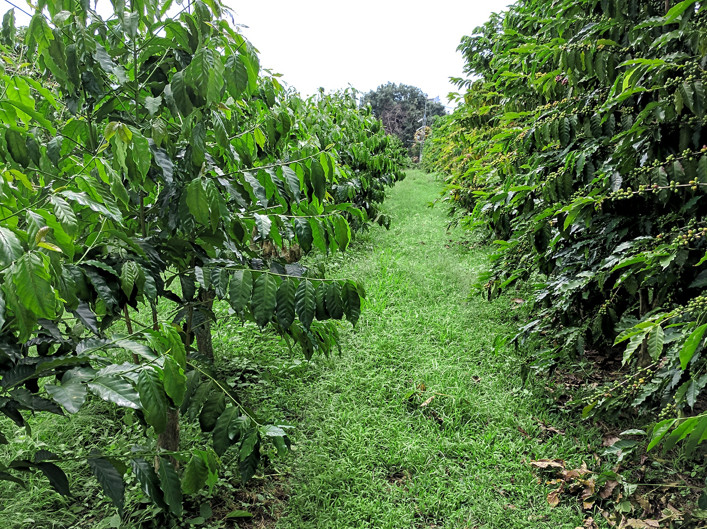
When it comes to Brazilian Bourbon coffee beans, people often hear distinctions based on color, such as Red Bourbon, Yellow Bourbon, Pink Bourbon, and so on. Bourbon is a sub-variety produced by a mutation of Typica and, together with Typica, belongs to the oldest existing coffee varieties. The green fruit turns bright red when ripe, and Bourbon grown at high altitude usually has better aroma and bright acidity.
Red Bourbon is perhaps the most common type, because under normal circumstances, the coffee fruit gradually ripens from unripe green to light yellow, then to orange, with the best time for picking being red, and finally to overripe dark purple.
What Does Bourbon Coffee Taste Like?
To find the taste of Bourbon coffee, Front Street Coffee believes one should start with Brazil. Although Bourbon has spread to many producing countries in Central and South America, its shortcomings doomed it to be replaced—Bourbon and Typica, the two oldest Arabica varieties, have extremely low resistance to disease and pests, and their yields are not high either. Their only redeeming quality may be their excellent cup flavor. Therefore, many Central and South American countries prefer to grow Caturra, a natural mutation of Bourbon, as well as other varieties with stronger disease resistance and higher yields.
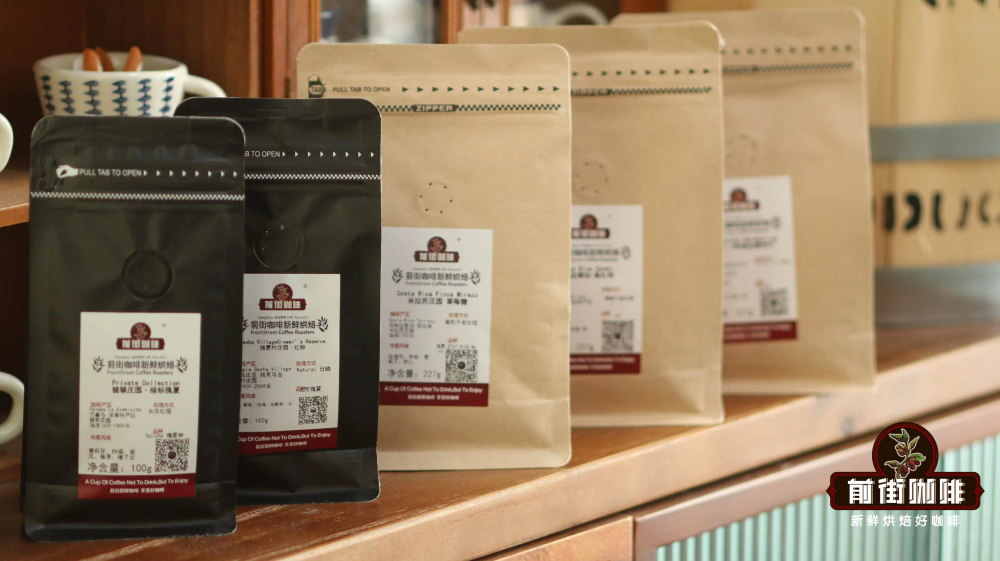
At the same time, Front Street Coffee believes that, as the first stop for Bourbon varieties in Central and South America, Brazil's Bourbon may be more representative. One of the Brazilian coffee beans most recommended by Front Street Coffee in recent years is the Yellow Bourbon variety. This Brazilian Yellow Bourbon comes from Queen's Farm in the Mogiana region and uses natural processing.
Front Street Brewing Steps Recommendation
Front Street Coffee: Brazil Queen's Farm Coffee Beans
Region: Mogiana
Farm: Queen's Farm
Altitude: 1,400-1,950 meters
Variety: Yellow Bourbon
Processing Method: Natural Process
15 g coffee powder, medium grind (Fuji Ghost Teeth burr grinder setting 4)
V60 dripper, 88-89°C water temperature, first pour 30 g water, bloom for 30 seconds, pour until 125 g water and stop, wait until the water level in the coffee bed drops to half before pouring again, pour slowly until 225 g water, discard the tail end, water-to-coffee ratio 1:15, extraction time 2:00
Through brewing, we can taste obvious nutty notes and a creamy mouthfeel.
In addition to Queen's Farm Yellow Bourbon, Front Street Coffee also has a Brazil Cerrado coffee bean from Brazil's Cerrado region. It is the Red Bourbon variety and is processed by semi-washed method.
Front Street Coffee: Brazil Cerrado Coffee Beans
Region: Brazil Cerrado
Altitude: 1,000 meters
Variety: Red Bourbon
Processing Method: Semi-Washed Process
This coffee tastes with notes of nuts and chocolate, along with a caramel aftertaste.
Comparing the two Brazilian Bourbon coffees, it is actually not hard to find that the keynote of Bourbon varieties is perhaps mainly nuts and the like, while the obvious sweetness is also very pleasant.
The above content is compiled by CoffeeHunters, a coffee news website.


