







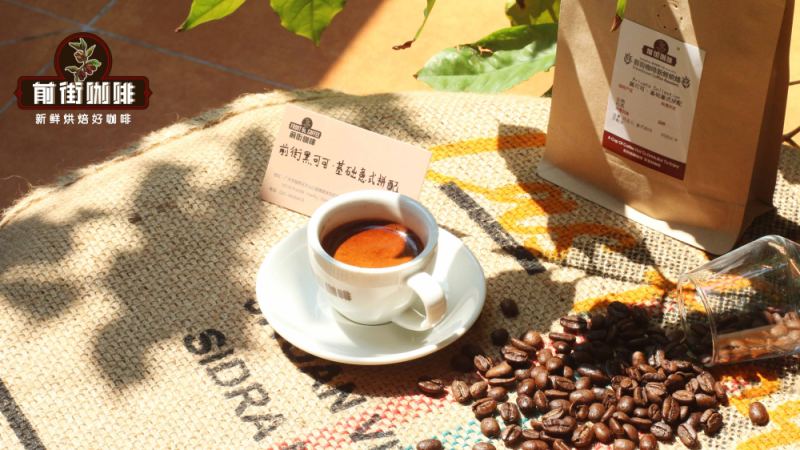
How do single-origin blended coffee beans work?
Blended coffee beans do not always cross regions. A single-origin blend combines different varieties grown in the same area or estate, so the cup keeps a recognizable regional character while adding complexity. Costa Rica's Mirasol and Panama's Boquete Butterfly Geisha illustrate this approach, showing how one variety can express itself differently under two terroirs.
Panamanian Geisha traces back to Ethiopia's Geisha forest, discovered in 1931 and carried to Kenya, Uganda and Tanzania before reaching Costa Rica in 1953. Don Pachi Serracin brought trees from Costa Rica to Panama in 1963, and La Esmeralda later separated the citrus-and-floral lots. Washed and raisin honey processing plus V60 brewing reveal the differences.
When many people mention blended coffee beans, their first reaction is cross-region blending aimed at achieving a stable espresso flavor. But did you know? There is another blending method called "single-origin blend," which combines coffee beans of different varieties from the same region or even the same estate. In this article, Front Street Coffee will explore this concept through two Geisha blends—Costa Rica's Mirazu Estate and Panama's Boquete Butterfly—to trace Geisha's spread from Ethiopia to Panama, clarify whether they count as single-origin coffee, and include details on washed and raisin honey processing methods, along with V60 brewing parameters and flavor comparisons, to help you fully understand the value and charm of single-origin blends.
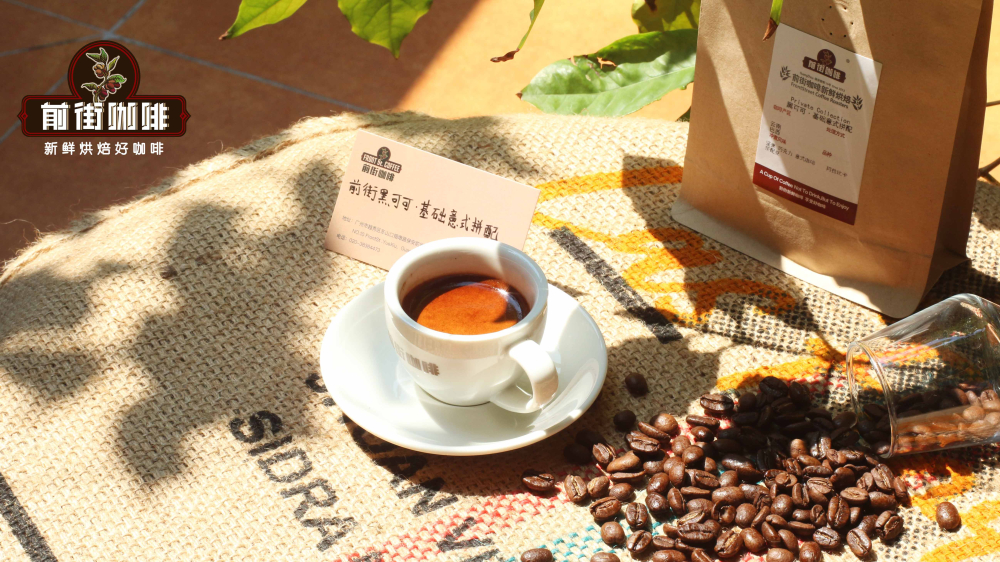
When it comes to blended coffee beans, many people instinctively think of mixing beans from different regions to pursue a stable, reproducible flavor, and these blends are typically used for extracting espresso. However, there is actually another branch in the world of blending—single-origin blends. A single-origin blend refers to combining coffee beans of different varieties grown in the same region. Below, Front Street Coffee will discuss what single-origin blending is all about and whether beans blended this way can still be called single-origin coffee.
The Connection Between Costa Rican and Panamanian Geisha
Geisha was first discovered in 1931 in the Geisha forest of Ethiopia, then sent to the Coffee Research Institute in Kenya, introduced to Uganda and Tanzania in 1936, and eventually made its way to Costa Rica in 1953.
The now-famous Panamanian Geisha actually has its bloodline origins in Costa Rica. In the 1930s, the Geisha variety flowed out of Ethiopia and eventually reached Tanzania. In 1953, Costa Rica's research institution CATIE obtained a batch of Geisha seeds from Tanzania for research. In 1963, Don Pachi Serracin introduced Geisha trees from Costa Rica to Panama, but due to low yield directly affecting harvest volume, coffee farmers were not very enthusiastic about planting it.
The turning point came at Panama La Esmeralda. The estate owner Daniel Peterson unexpectedly discovered that the Geisha coffee trees originally used as windbreaks at the highest point of his estate produced beans with the citrus and floral notes characteristic of African beans. He separated them and sent them to the 2004 Panama Coffee Bean Cupping Competition, where they became instantly famous. Since then, Geisha has been unstoppable, winning the Panama Coffee Cupping Competition championship for many consecutive years. In the minds of today's global specialty coffee enthusiasts, Geisha coffee beans can be considered the undisputed top treasure.
Front Street Panama Butterfly Geisha Blend
Front Street Panama Butterfly was called "Cupid" a few years ago and was claimed to contain 30% Geisha. After selling for two years, the ratio was first adjusted to 50%, then to 70%, and the name was changed to "Butterfly," but the actual ratio should not be that high.
At this point, some might ask: Is Butterfly considered a blended bean?
After reviewing information, Front Street Coffee learned that due to the estate's historical reasons, in the early days, in pursuit of yield, Geisha was interplanted with Caturra and Catuai coffee trees. Later, for convenient harvesting, farmers separated the three varieties and then directly mixed them during export to present the desired full-bodied flavor. The three varieties in Front Street Panama Boquete Butterfly all come from the same origin and same region, so it is a single-origin bean. For another example, Front Street's Ethiopian beans are also not a single variety; the difference is that Front Street Ethiopian is a natural harvest blend, while Front Street Butterfly is a manual post-blend.
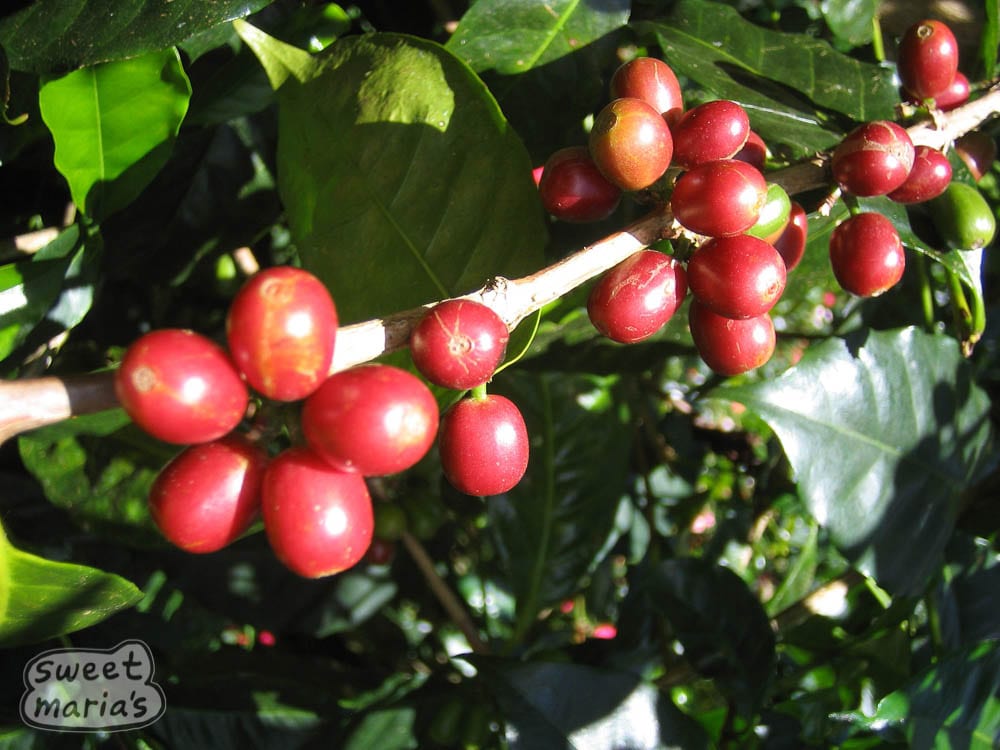
Product Name: Front Street Butterfly Geisha Blend
Region: Boquete, Panama Altitude: 1600m Processing Method: Washed Varieties: Geisha, Caturra, Catuai
Front Street Costa Rica Mirazu Estate Geisha Blend
Similarly, Front Street Mirazu Estate Geisha Blend from Costa Rica is composed of Geisha, ET47, SL28, and MAICO, all grown on the same estate and then blended to form a single-origin coffee bean. Worth mentioning are ET47 and SL28. ET47 is a native variety from Ethiopia; in the 1990s, the Costa Rican Coffee Research Institute introduced many such tree species as research materials for leaf rust resistance and gave them to farmers in the Tarrazu region to plant.
The original goal of breeding SL28 was to mass-produce coffee beans that were both high quality and resistant to pests and diseases, while in some regions, the breeding goal focused mainly on high yield and disease resistance, without considering disease resistance—the original text says so. Thanks to its Bourbon genes, although SL28's later yield was not as expected, its bronze leaf color and broad bean-shaped beans brought excellent sweetness, balance, and complex, varied flavors, with notable citrus and smoked plum characteristics.
Product Name: Front Street Strawberry Candy Geisha Blend
Region: Tarrazu, Costa Rica Estate: Mirazu Estate Altitude: 1700m Processing Method: Raisin Honey Varieties: Geisha, ET47, SL28, MACIO
Coffee Bean Processing Methods
Front Street Panama Butterfly uses the washed processing method: screened coffee cherries are sent to a depulper to first remove the skin and pulp; the green coffee beans with residual pulp and mucilage are placed in water to ferment for about 24 hours; after fermentation, the parchment coffee beans are moved to a flowing water channel to wash off the pulp and mucilage; after washing, they are sun-dried or dried with a dryer to reduce moisture content to about 12%. Finally, the parchment is removed from the green coffee beans. Washed processing allows Front Street Butterfly, a Geisha blend, to present brighter acidity and highlight the floral characteristics of Geisha coffee beans.
Front Street Mirazu Geisha Blend, on the other hand, uses raisin honey processing, retaining 100% mucilage, belonging to a zero-water processing method. This increases the difficulty of honey processing and requires strict control of timing. On the day the coffee berries are harvested, the harvested coffee berries are poured into a large water tank, and the ripe, plump fruits sink to the bottom; underdeveloped or overripe fruits float to the surface, and these floating beans need to be removed.
The screened coffee fruits are placed on raised beds to dry for at least three days, then the berry skin is removed, and drying continues while retaining the mucilage. At this stage, climate factors are key to the success of honey processing. During drying, the coffee fruits must be constantly turned to ensure even drying, but the frequency of turning must be well controlled—drying should be slow to ensure the coffee undergoes fermentation, but not so slow as to cause over-fermentation. The raisin processing method enhances the sweetness of this Front Street Mirazu Geisha Blend.
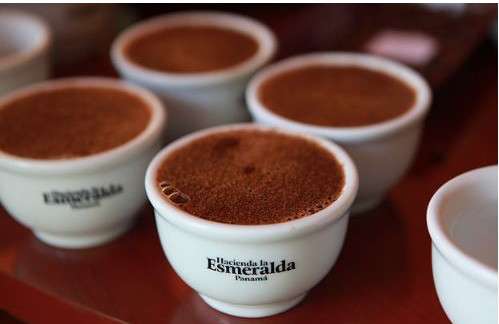
Brewing Comparison
Front Street Coffee (FrontStreet Coffee) is using a V60 dripper to brew two Front Street Geisha blend coffee beans. The V60 conical dripper has a relatively large opening, and combined with its unique spiral curve ribs, air is more easily expelled, thereby improving extraction quality. The mouthfeel may not be thick enough, but the acidity and distinct aroma brought out by its high concentration are a major feature.
Front Street Brewing Parameters
Water Temperature: 91~92°C Grind Size: EK43s-10 (fine sugar size) Coffee-to-Water Ratio: 1:15
Front Street Brewing Method: First pour 30 grams of water for a 30-second bloom, then pour 95 grams (scale shows about 125 grams), finishing the pour in about 1 minute; when the water level drops to 2/3 of the coffee bed, pour the remaining 100 grams (scale shows about 225 grams), finishing the pour in about 1 minute 40 seconds. Dripping is completed in 1 minute 55 seconds to 2 minutes 00 seconds; remove the dripper and extraction is complete.
[Front Street Butterfly] Brewing Flavor: Floral, black tea, berries, citrus, with a slight nutty finish, smooth mouthfeel, low bitterness, moderate acidity, medium aftertaste.
[Front Street Strawberry Candy] Brewing Flavor: Rose, grape, dried blueberry aroma, soft fruit acidity, almond aftertaste, pronounced sweetness.
The above content is compiled by CoffeeHunters, a coffee news website.


