








Kenyan coffee stands out uniquely in the global specialty coffee scene with its signature bright acidity, and for coffee lovers seeking a juicy experience, it is almost an unavoidable choice. However, to fully unlock the rich acidity and tomato-like flavor layers of Kenyan beans, mastering targeted brewing methods is crucial. Starting from Front Street Coffee's sourcing experience, this article systematically reviews the variety origins, grading system, and regional characteristics of Kenyan AA coffee beans, and provides complete brewing parameter suggestions from grinding and dose to staged pouring, helping you brew a cup of distinctly flavored Kenyan coffee tailored to the bean.

For more specialty coffee knowledge, please follow the WeChat public account: Front Street Coffee (FrontStreet Coffee)
Kenyan coffee stands out uniquely in the global specialty coffee scene with its signature bright acidity. If you pursue a coffee experience full of juicy sensation, Kenyan beans are almost an unavoidable choice. Of course, to fully unlock the rich acidity and tomato-like flavor layers of Kenyan beans, mastering targeted brewing methods is crucial.
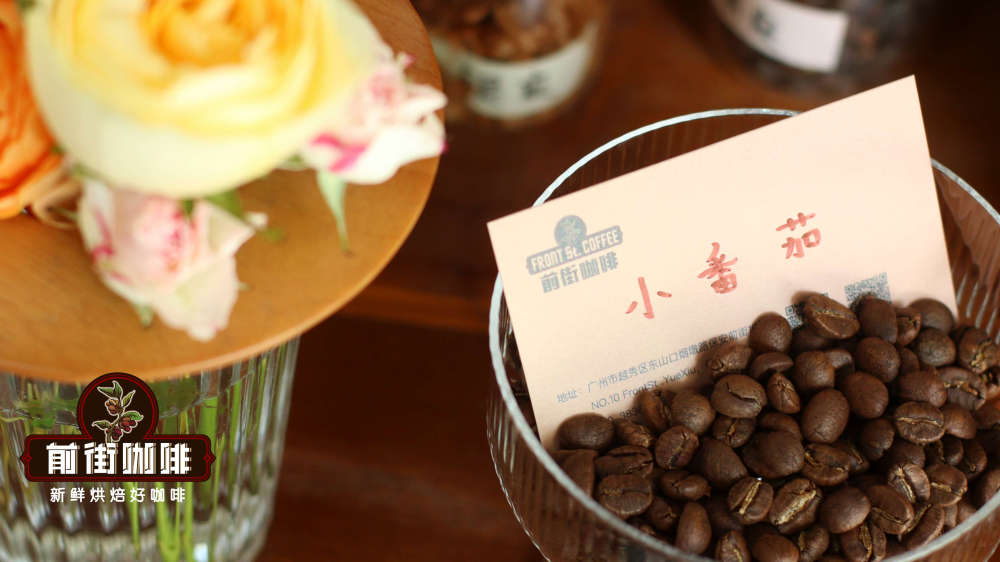
The first step is to understand what characteristics this bean possesses, only then can you tailor your approach to the bean. If you often follow Front Street's bean list, you should notice a phenomenon: Front Street usually keeps more than two regular offerings for coffee categories from most major producing countries, but for Kenya, only one is long-term available—Front Street Little Tomato. The reason is that Kenyan coffee truly achieves nationwide flavor consistency.
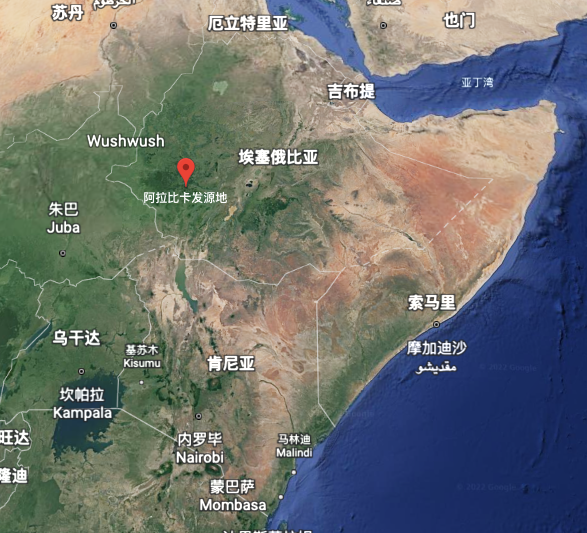
In the 1930s, Kenya used the Scott Laboratories for seed screening work, ultimately selecting two varieties, SL28 and SL34, and promoting them nationwide for cultivation. This point is extremely critical—as the saying goes, you reap what you sow; SL28 and SL34 possess outstanding berry-like acidity, and were later introduced and cultivated by some estates in Central America. Last year, the varieties used by the Costa Rica COE champion bean were precisely SL28 and Geisha.
Next, let's look at Kenya's coffee grading system. Kenyan coffee beans are graded by bean size, with the top grade being AA, followed by AB. The advantage of using size as a grading criterion is that, building on variety selection, larger beans mean plump beans and excellent quality, and are also quite friendly to roasting. In this way, the quality consistency of Kenyan coffee is effectively guaranteed. Although we can still discern specific flavor differences among producing regions such as Nyeri, Kirinyaga, and Kiambu, overall they all share Kenya's characteristic bright acidity and tomato- and berry-like flavors. (That is to say, at the first sip you can recognize this as coffee from Kenya.)
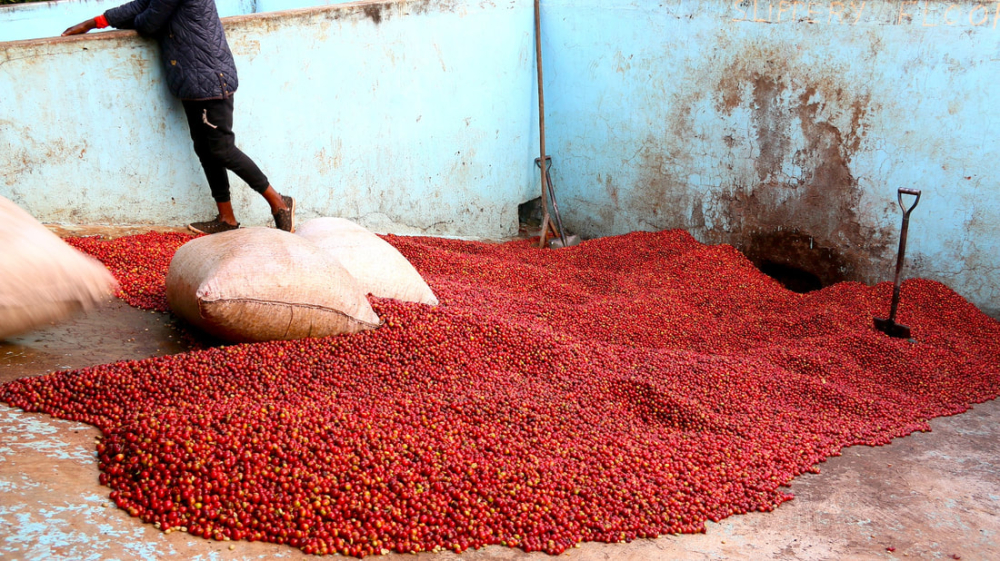
After understanding the basic information about Kenyan coffee beans, you can formulate a brewing plan based on the bean's characteristics. Kenya's high altitude, volcanic soil, excellent varieties, and meticulous processing jointly create beans that are plump, large, relatively hard in texture, and outstanding in appearance. A common problem during brewing is clogging and slow drainage. Regarding grinding, Front Street does not recommend producing too many fines; you can choose a better-quality grinder, or use a sieve to remove fines, with the coarseness benchmarked at a 75% pass rate through a No. 20 standard sieve.
Regarding the dose, if using a small V60 dripper, Front Street recommends adding at least 15 grams of coffee grounds; if using a large V60 dripper, it is recommended to use at least 25 grams of coffee grounds.
First, pour 30ml of water for a 30-second bloom, then pour 120ml of water in the second stage, pouring in circles from the center outward, and after the surface is fully covered with golden foam, circle back inward to the center point, until the coffee bed height reaches 1/2 of the short ribs.
The above content is compiled by CoffeeHunters, a coffee news website.


