








Ice Drip Coffee Process and Why It Is Priced Higher
Iced coffee splits into two camps. One uses hot water extraction that is then cooled with ice, which covers iced pour-over and iced Americano. The other lets low-temperature or room-temperature water contact the grounds slowly, and ice drip is the most common example. Cold brew is a separate cold-extraction method that relies on long soaking followed by filtering.
Cold brew only needs a fridge, grounds and a clean container, but ice drip demands a dedicated ice drip tower. The core structure has three parts: an upper chamber with an adjustable valve controlling the ice water drip rate, a filter cup holding the grounds, and a lower collection vessel. The equipment, long extraction time and careful bean selection explain the higher price.
In the scorching summer, iced coffee becomes the top choice for many. But can you really tell the difference between cold brew, ice drip, and iced Americano? Why is ice drip coffee often more expensive? Starting from Front Street Coffee's practices, this article provides a detailed comparison of the two major categories—hot extraction and cold extraction—and delves into the specialized equipment, extraction process, time cost, and raw material selection for ice drip coffee, explaining the core reasons behind its higher pricing. Whether you are a coffee enthusiast or a industry professional, you will gain clear insights and practical references.

Front Street Cold brew, iced brew, ice drip, Japanese-style iced coffee—have you figured them all out?
As the weather gets hotter day by day, the coffee pre-made in Front Street's fridge has become the best-selling item after iced Americano. Regulars don't need to ask much—they just say: Boss, give me an ice drip.
Some customers stand in front of the menu, unable to decide, and turn to ask the barista: What exactly is the difference between that ice drip and an Americano? Front Street replies: One was made yesterday, the other is being made now. The customer gets even more confused, and finally quietly orders an iced Americano, for the reason—it's cheaper.
Iced coffee on the market can basically be divided into two major camps. One type first uses hot water for high-temperature extraction, then cools it down with ice cubes, such as iced pour-over and iced Americano; the other type lets low-temperature or room-temperature water directly contact the coffee grounds, slowly dissolving flavor compounds—ice drip is the most widely used among them.
The familiar cold brew type of cold extraction relies on long soaking, then filtering out the grounds. As long as you have a fridge and coffee grounds (or coffee beans) at home, plus any clean container large enough and something to filter with, you can easily make a cup of iced coffee.
But the threshold for ice drip coffee is much higher—it requires a dedicated drip device: an ice drip tower. These devices come in all sorts of shapes on the market, with prices ranging from a few dozen yuan to over a thousand, but the core structure usually consists of three parts: an upper chamber with an adjustable valve for the ice water drip rate, a filter cup holding coffee grounds, and a lower chamber to collect the coffee liquid.
With this setup, ice water drips drop by drop into the filter, reacts with the coffee grounds inside, extracts soluble flavor compounds, and then flows by gravity into the lower chamber, stopping only when enough coffee liquid has accumulated.
Because only low-temperature ice water is involved throughout, and the drip rate is extremely slow—averaging just one drop every 1 to 2 seconds—it takes longer for the flavor compounds to be fully released, ultimately yielding a moderate concentration. This method is less likely to bring out bitterness or other off-flavors.

Take Front Street as an example: for making ice drip, they use the Tiamo HG2713 three-tier ice drip tower, habitually operating at a 1:10 coffee-to-water ratio, meaning 60 grams of coffee grounds extract 600 milliliters of coffee liquid. The ice water drip frequency is about 7 to 8 drops every 10 seconds. Plus, the drip nozzle sometimes gets clogged from the cold, so you have to watch it constantly and adjust at any time—therefore the whole process usually lasts 5 to 8 hours, depending on the amount of grounds used and the drip rate.
During the drip process, fresh cold water continuously passes through the coffee bed and then filters to form new coffee liquid. Compared with the static soaking of cold brew, ice drip is a dynamic brewing method that extracts and filters simultaneously. The ice water does not contact the coffee grounds the entire time, so the ice drip made from the same beans has a cleaner, clearer taste than cold brew.
The operation is actually very simple: pour it into a sealed, clean bottle, refrigerate for more than 8 hours, and after the cold fermentation is complete, you can add an appropriate amount of ice cubes to the strong coffee according to your preference and enjoy. The purpose of leaving the coffee in the fridge overnight is to control fermentation and avoid spoilage.
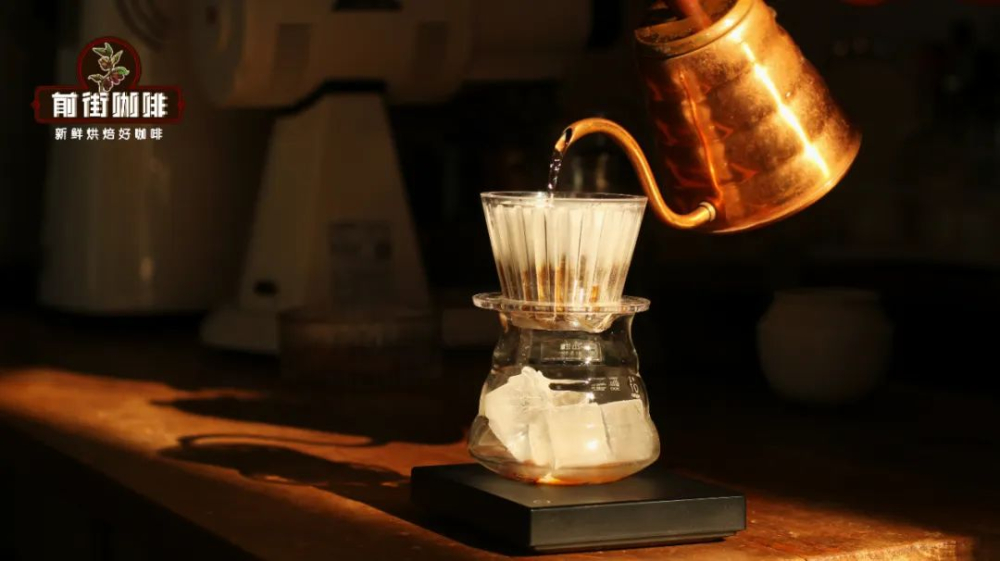
Adding it all up, making a 600-milliliter batch of strong coffee liquid takes about ten-plus hours, so ice drip is widely considered the most time-consuming of all brewing methods—which is why some coffee shops sell ice drip by reservation only. (Of course, at Front Street you can get ice drip without a reservation, though the flavor will be more random.)
To highlight the rich, wine-like character unique to ice drip while avoiding the off-flavors from the tail end of a long drip, many coffee shops deliberately choose high-quality single-origin beans with full fruit aromas. So compared with regular espresso blend beans, the raw material cost for ice drip is somewhat higher.
For example, when Front Street usually prepares ice drip, they like to prioritize beans featuring floral, fruity, and fermented wine-like flavor profiles. Under the dual effects of slow dripping and low-temperature aging, the resulting ice drip has both the bright charm of fruity-acid coffee and a fermented quality reminiscent of fruit wine—rich yet refreshing.
Finally, a crucial point: ice drip coffee is generally more expensive mainly because it uses a larger amount of grounds. For example, at Front Street, making a 600-milliliter batch of ice drip requires 60 grams of coffee grounds, and in the end it yields 3 cups (each about 200 milliliters plus ice); but by pour-over serving conventions, 60 grams of coffee beans can brew 4 cups of pour-over (15 grams each).
Of course, price is not the only standard for measuring a cup of coffee. Front Street has also seen highly cost-effective, affordable ice drip that is equally rich and delicious. As long as the barista makes it with care, extracts it properly, and the beans are of good quality, the pricing mostly depends on the café's own target positioning.
The above content is compiled by CoffeeHunters, a coffee news website.


