







What does a coffee green bean need during home roasting?
Home roasting a coffee green bean works with three basic setups: a rotating drum, a cast iron pan or wok, and an electric oven. All of them need low heat at the start, constant stirring, and close watching of color change. Stop the roast at first or second crack, depending on how dark you want the beans.
If the beans darken quickly and unevenly, the heat is too high or stirring is too slow. Move the pan off the stove, let the temperature drop, then return it and keep stirring. If color barely moves for three to five minutes, raise the heat slightly. A drum and a professional roaster can be compared on the same Brazil Cerrado Red Bourbon lot.
More and more coffee enthusiasts are no longer satisfied with just the brewing process and have begun trying to buy green beans and roast them at home. But once the green beans are in hand, how to proceed leaves many people scratching their heads. Drawing on the hands-on experience of Front Street Coffee, this article systematically lays out the complete approach to home roasting: from heat control and stirring rhythm, to identifying first crack and second crack and deciding when to cut the heat, to the pros, cons, and techniques of three tools—the roasting drum, the iron wok, and the electric oven—plus a time comparison between a professional roaster and a roasting drum for the same Brazil Cerrado Red Bourbon. Whether you are just looking for a novel experience or want to seriously roast a batch of beans worth drinking, you will find practical reference here.
Today coffee has become part of many people's daily lives, and knowledge about coffee on various short-video platforms is becoming richer and more comprehensive. Besides studying brewing methods and flavor tasting, quite a few enthusiasts have set their sights on the step of roasting coffee beans, eagerly wanting to give it a try themselves.
However, many friends act on a whim, and only after bringing green beans home do they realize they have no idea how to roast them. Below, drawing on Front Street Coffee's own practical experience, let's talk about the specific methods for roasting coffee beans at home.
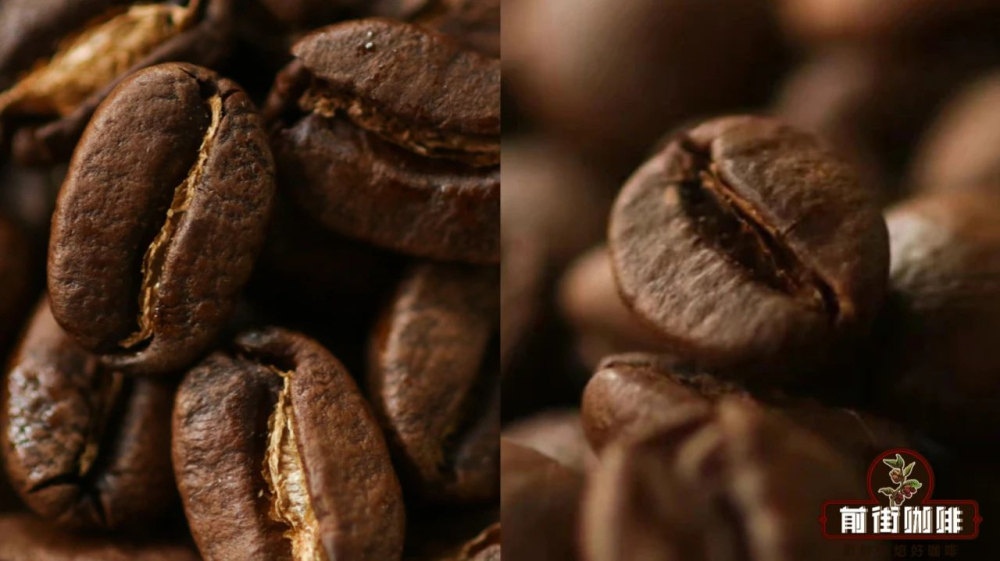
Flavor differences brought by different roast levels
When roasting beans at home, you must use low heat in the initial stage, then adjust gradually afterward. No matter which tool you choose, you must continuously stir the beans while paying attention to color changes. If the beans change color very quickly and not uniformly as a whole, that means the heat is too high or you are not stirring frequently enough. If you feel your stirring is already on point and there is no room for improvement, then you can basically confirm the heat is too strong. In that case, immediately turn down the heat and move the pan off the stove to let the temperature inside drop quickly; once it has fallen, put it back on the stove with the heat already adjusted and continue stirring.
Conversely, if the beans' color does not move at all for a long time (no reaction for three to five minutes or even more than ten minutes), then the heat is too low and you should appropriately increase it. When the beans' color changes slowly and uniformly overall, that means the heat is just right. At this point, while watching the color, you can begin to pay attention to the crackling sound of the coffee beans.
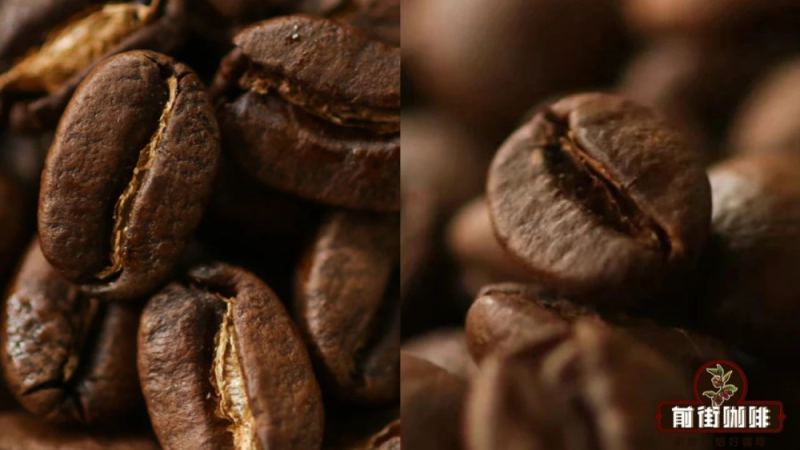
As roasting continues, the beans gradually turn from their initial pale green to yellow, then brown, then darker brown, and finally black. During the transition from yellow to brown, there will be one crack, but this process is extremely brief and sometimes not obvious—it may end after just three to five pops. This is what is called first crack.
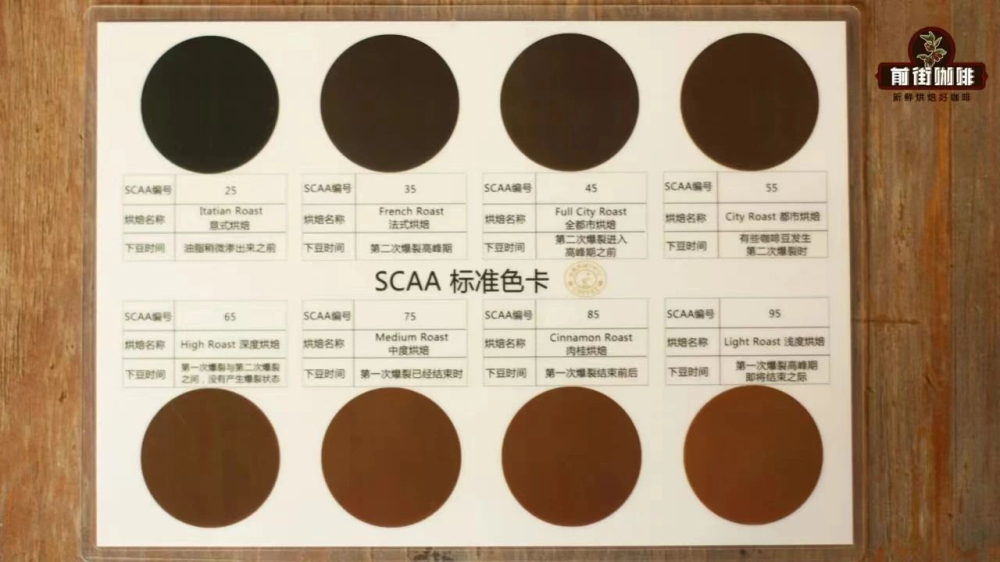
Then, during the transition from brown to darker brown, there is another crack that can last two to three minutes or even longer, with sounds so dense they are like firecrackers popping—this is second crack. Second crack is easy to notice. Usually, if you cut the heat just as second crack begins, that is, after hearing about ten pops, the resulting beans fall into the range from medium roast to full city roast.
At this point the beans are characterized by: a dry surface, not yet oily or with only a faint sheen of oil, and small dark spots distributed across the brown bean bodies. If you let second crack continue, the roast level deepens accordingly, and by the time the sound completely stops and second crack ends, the beans are basically black and carbonized.
Of course, this also counts as a roasting style, and many people are especially fond of that burnt flavor. Generally speaking, from the beans turning golden yellow to later turning black all falls within the normal roasting range. You can cut the heat at any point in between, and the coffee roasted will still be drinkable; when to stop depends entirely on personal preference.
Generally speaking, the darker the roast, the more prominent the bitterness, the worse the layering of flavor, and the lower the nutritional value. Fully carbonized beans do have a distinctive flavor, but they can hardly be said to have any nutrition, so it is not recommended to roast to that extent.
What tools should you use to roast coffee beans at home?
Recommended option: a dedicated coffee bean roasting drum
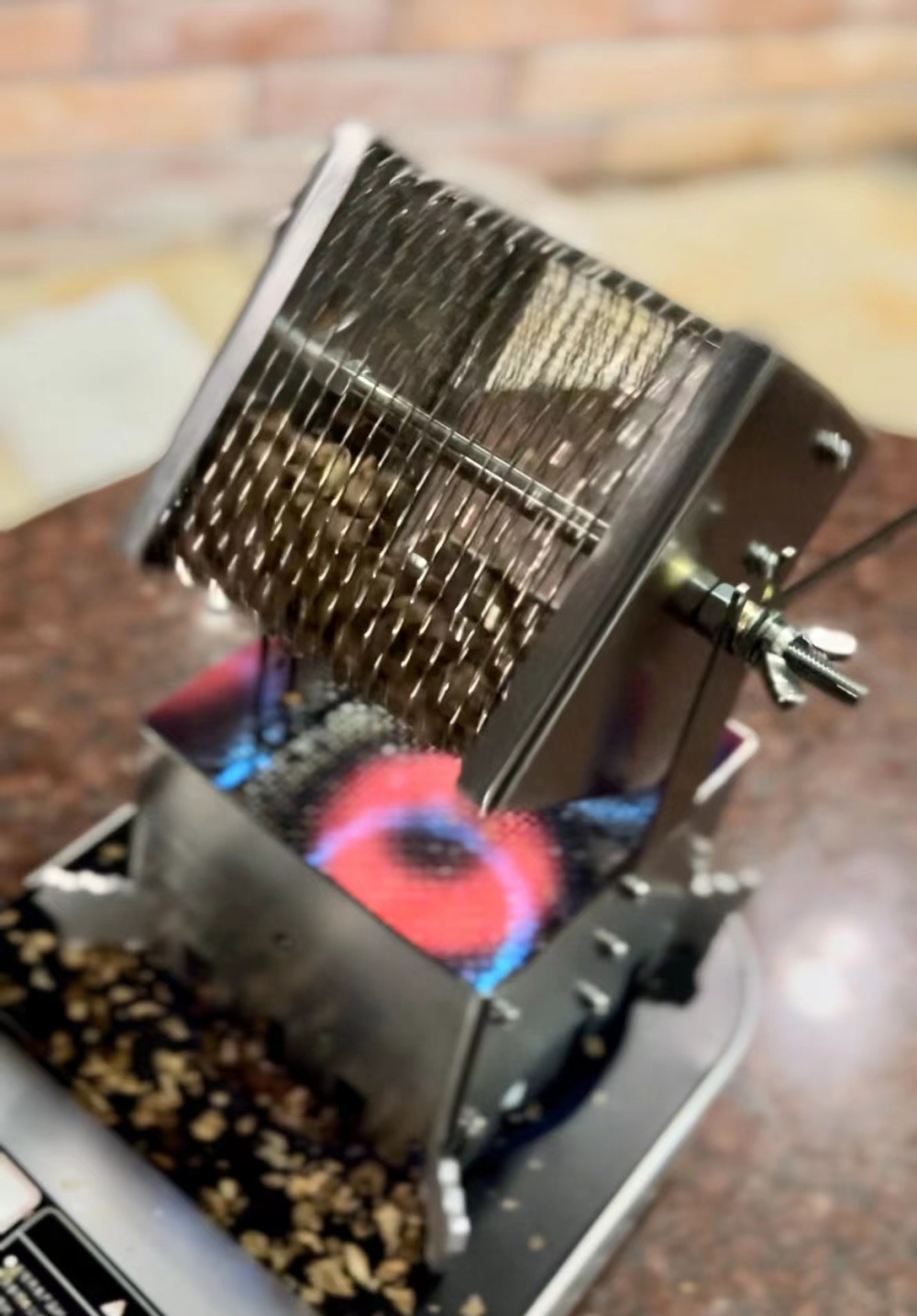
The reason the roasting drum is recommended is that it is closer to how a roaster works. When roasting beans with a roaster, the coffee beans are fed into the drum, and the machine rotates at a fixed speed of 60 to 65 revolutions per minute (the speed can be adjusted according to the condition of different beans), so the beans heat more evenly inside the drum, ensuring consistency in the final product.
According to the personal experience of Front Street Coffee's baristas, there are two points to pay special attention to when roasting with a drum: first, roast over low heat, otherwise the beans very easily end up colored on the outside but not fully cooked inside; second, light the fire and adjust the heat level first, then place the drum on and immediately start turning it, keeping the speed at 60 to 65 revolutions per minute.
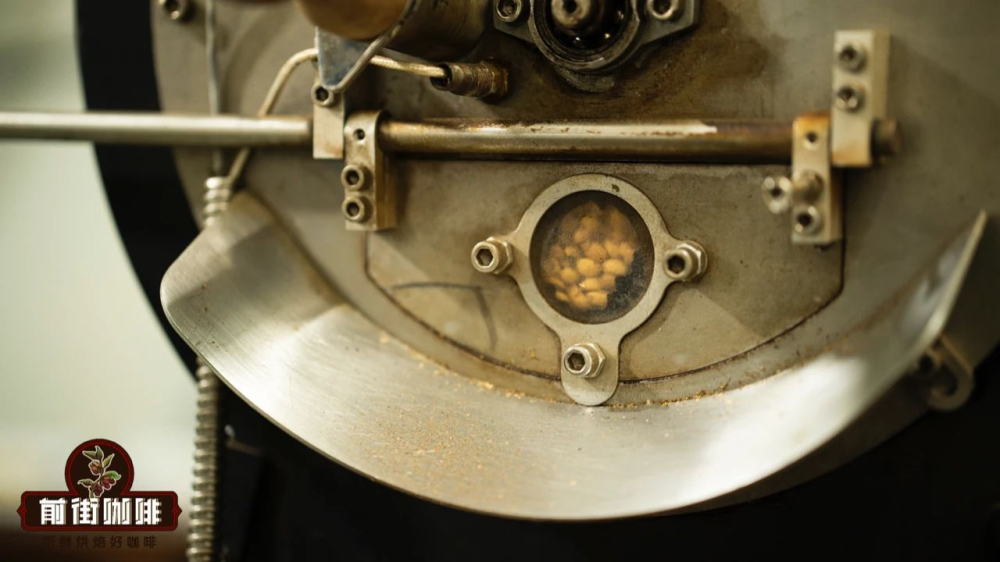
Roasting with a drum takes more than twice as long as with a professional roaster. For example, when Front Street Coffee uses a Yangjia 800n roaster to roast Red Bourbon coffee beans from the Brazil Cerrado region, the time from first crack to dropping is 3 minutes 30 seconds, a medium-dark roast, with a total roasting time of 13 minutes.
This is the Brazil Cerrado coffee beans that Front Street Coffee roasts with professional equipment and sells
If you switch to drum roasting, reaching a similar level requires a total time of 31 minutes. During this period you also have to keep turning the drum nonstop (60 revolutions per minute); once you stop or slow down, the beans very easily scorch, so it is quite hard on the hands.
This is the same coffee beans roasted at home with a drum by Front Street Coffee's barista
Although roasting beans at home is quite laborious, you can feel the changes in the beans very clearly and intuitively: from pale green raw beans slowly turning yellow and giving off a sweet aroma like corn; then turning cinnamon-colored and releasing a caramel scent; then turning chocolate-colored and releasing the smell of roasted nuts.
Second: the simplest and most primitive method—stir-frying in an iron wok
The wok every household uses for cooking was what coffee roasting relied on during the long years before professional roasting equipment appeared. Of course, coffee stir-fried in an iron wok cannot be mentioned in the same breath as the output of a professional roaster.
The core problem is that during stir-frying the beans cannot tumble evenly in the wok, and uneven heating is hard to avoid. But the point is taking part: during the stir-frying process you can personally witness the complete process of the beans going from green to chocolate-colored, and no matter how the final taste turns out, it is a great experience.
To stir-fry coffee beans in a wok, the first step is to wash the wok thoroughly to remove the grease on it. A household wok used for cooking over time will inevitably leave quite a bit of oil residue, so before stir-frying coffee you must wash it clean. The usual method is to wash the wok, then heat it to dry the moisture, then add water and boil it briefly, pour out the water, and heat it dry again, repeating this once or twice.
Heat it to dry the moisture on the surface of the wok, until no obvious grease can be seen. Turn on the heat, and when the wok surface is dry with no steam, add the raw coffee beans. The amount should not be too much; 100 to 200 grams is more suitable. As for whether you use electricity, gas, or another heat source, it does not matter much; the key lies in heat control. You can refer to the methods for other roasted snacks or fried foods; the whole process requires moderate and stable heat.
Third: the electric oven, not recommended but worth a try
Many people may think of using an electric oven. An oven usually cannot turn the beans inside at any time, so in this case it is recommended not to roast too many beans at a time. At the same time, do not pile the beans on top of one another, that is, spread the beans in a single layer on the baking tray, then take them out periodically according to color changes and stir them a bit to ensure even heating.
The above content is compiled by CoffeeHunters, a coffee news website.


