







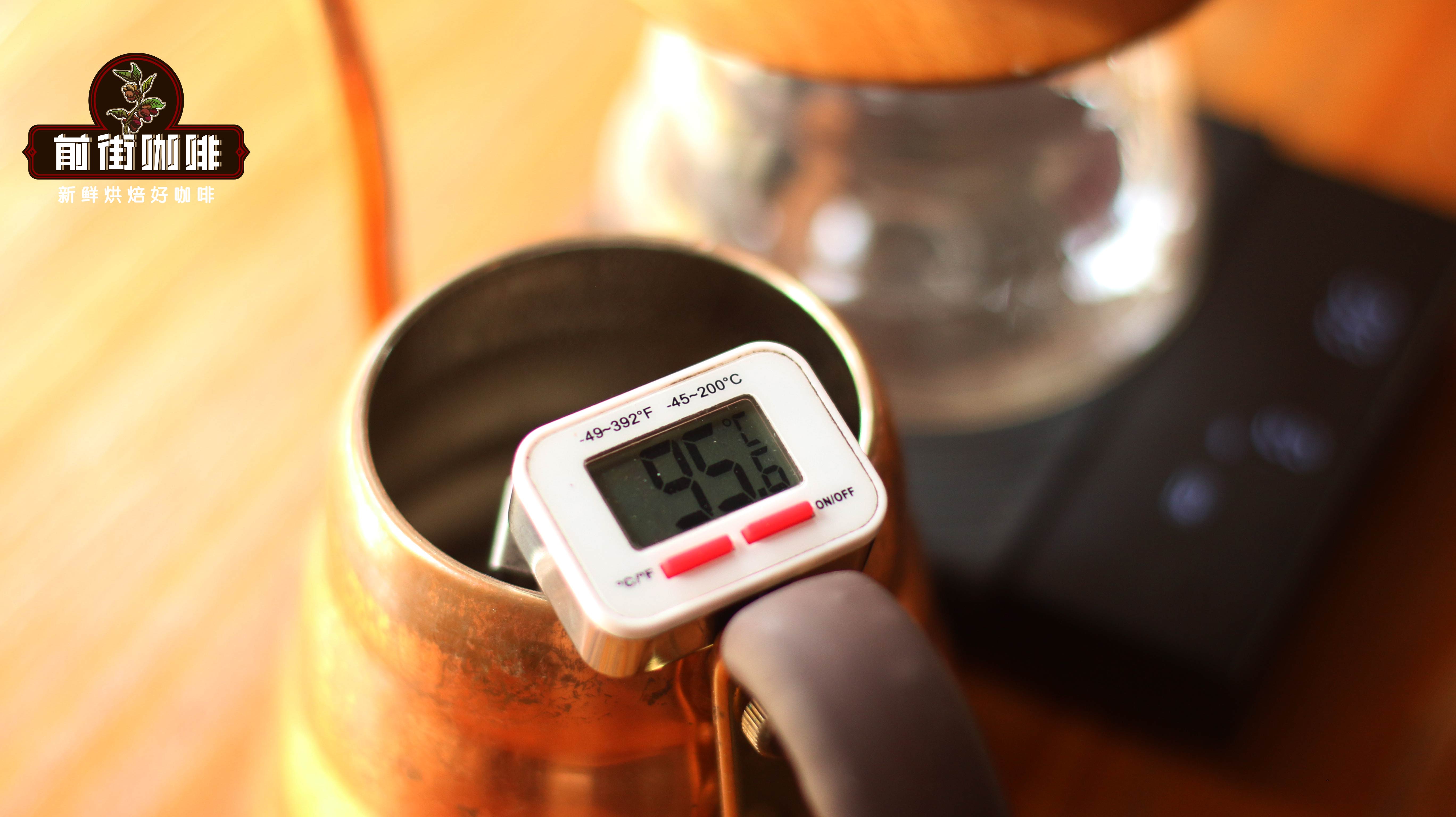
What temperature should the water be for pour-over coffee? The mainstream recommendation is between 86°C and 93°C—light-roast beans suit higher temperatures, while dark-roast beans suit lower ones. But the water temperature in the brewing kettle and the actual extraction temperature that touches the coffee grounds are not the same thing. Using measured data, this article shows how the temperature inside the coffee bed changes starting from initial temperatures of 90°C and 93°C, and how raising the pouring height affects the actual extraction temperature. It also combines the brewing parameters for Front Street Coffee beans of different roast levels to help coffee enthusiasts more accurately understand and apply water temperature in their daily brewing.
What temperature should the water actually be for pour-over coffee? The currently common recommendation is to keep it within the range of 86°C to 93°C—lighter-roasted beans suit higher temperatures, while darker-roasted beans suit relatively lower ones.
Once, while sharing pour-over coffee with guests as usual, one guest quickly named the coffee bean. So we struck up a conversation on that note. Through talking, we learned that this guest often brewed coffee at home too, and had previously bought this Front Street bean to brew at home, so when tasting the cup we shared, he found the flavor exactly the same and immediately guessed the answer.
When the conversation turned to brewing insights, this guest said: "I've tried water temperatures from 90 to 94°C, and only 93°C brews the best-tasting cup—just like this one of yours." However, the pot of coffee shared that day was actually brewed with water at 90°C!
When setting brewing parameters, Front Street bases them on the characteristics of the coffee beans themselves, the roast level, and the flavor profile. The higher the water temperature, the higher the extraction efficiency, the easier various substances and compounds are released, and the higher the concentration becomes. Therefore, Front Street chooses different water temperatures for extraction based on different roast levels.
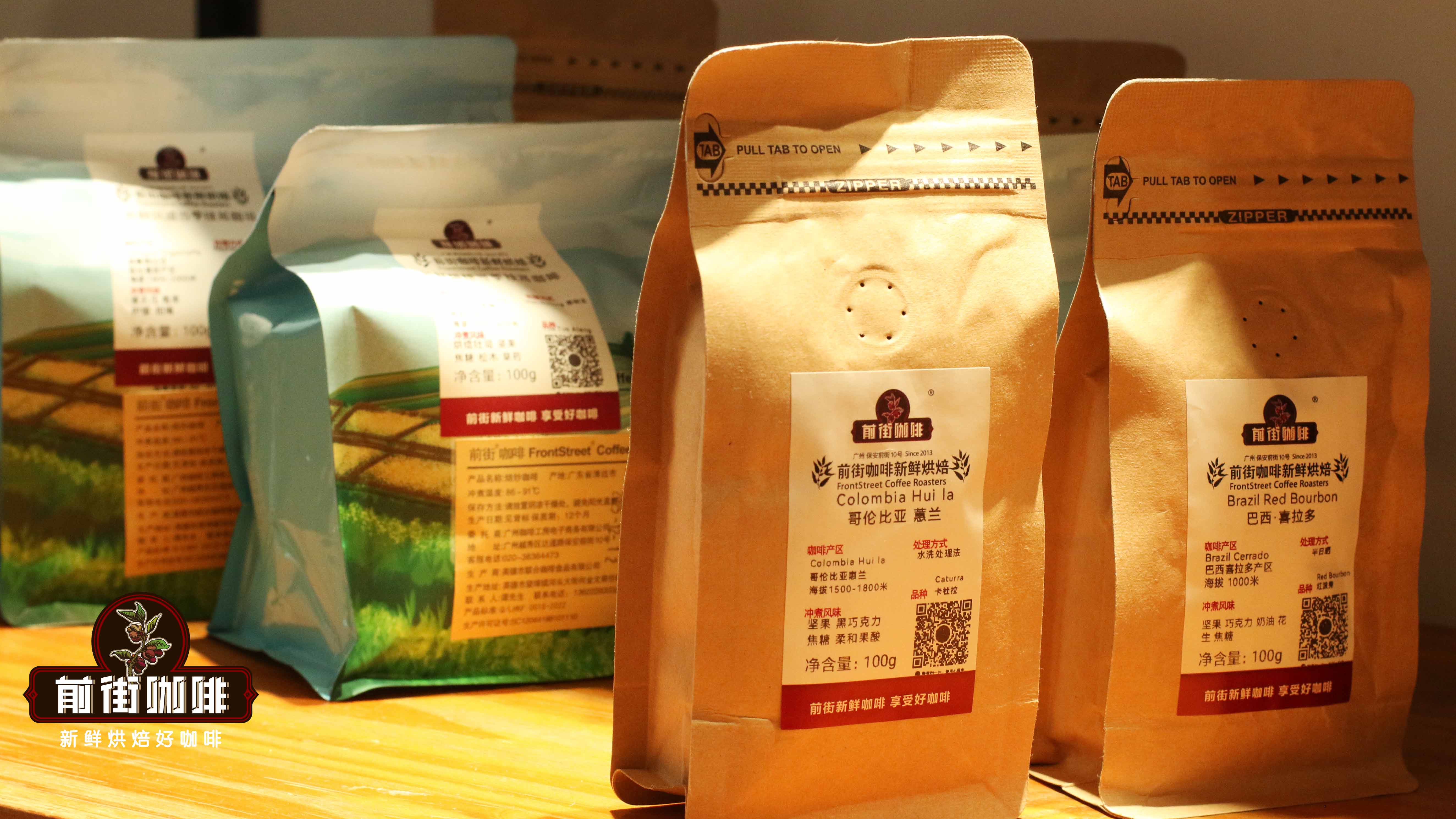
For medium to dark roasted coffee, the caramelization reaction is more complete, making it easier to release large-molecule substances with burnt-bitter notes. To avoid extracting too many off-flavors, Front Street lowers the water temperature appropriately, prioritizing 86–88°C for extraction—for example, Front Street. Golden Mandheling, Front Street. Huila, and Front Street. Jamaican Blue Mountain all use this temperature range.
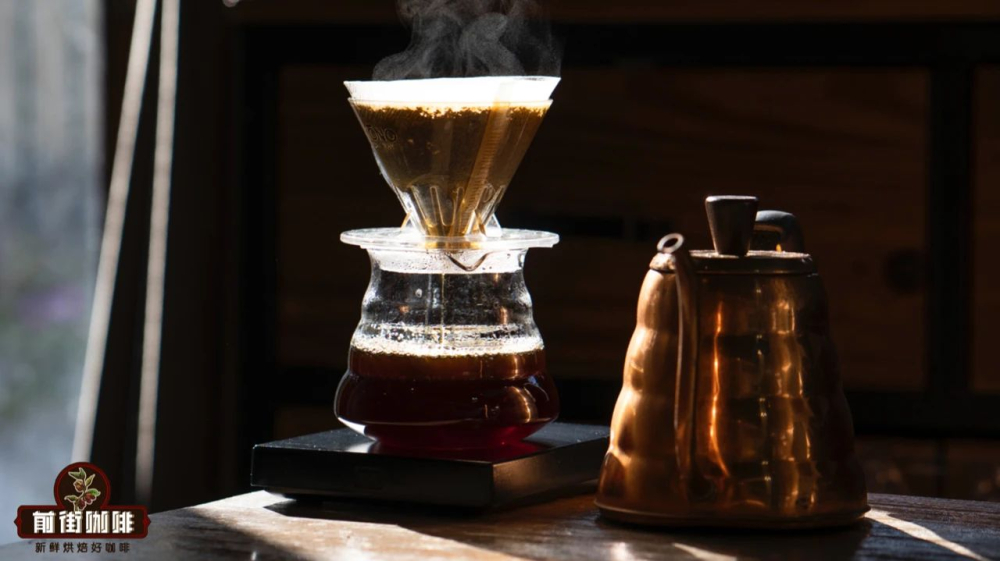
By the same reasoning, light-roasted beans receive heat for a shorter time, have a harder texture, and carry more floral and fruity aromas, requiring higher water temperatures to draw out their internal flavors. For example, we routinely use 91–93°C hot water to extract Front Street. Washed Gedeb, Front Street. Kenya Little Tomato, and Front Street Panama Butterfly—single-origin beans whose flavors are mainly fruity acidity and floral notes.
Of course, using different parameters (with corresponding reasonable adjustments to grind size, water temperature, etc.) to brew the same coffee bean can indeed produce a similar taste—after all, there are countless ways to brew a good cup of coffee. But if only the water temperature differs, will this still happen?
The water temperature in brewing parameters vs. the actual extraction temperature
What we usually call the brewing water temperature actually refers to the initial temperature in the pour-over kettle. That is, if you want to brew coffee with 91°C water, you only need to control the initial water temperature in the kettle at 91°C, then put the lid on and start brewing. But the water temperature that actually contacts the coffee grounds and participates in extraction certainly cannot reach 91°C. For this reason, Front Street conducted a simple temperature measurement experiment.
A wire probe thermometer was fixed in the coffee grounds to measure the temperature changes within the coffee bed during brewing. When the coffee grounds are dry, their temperature is about 32°C. When we brew with 90°C water, the bed temperature rises to 85°C at the start of blooming; as the first pour ends and the blooming stage begins, the internal temperature drops to 78°C; then the second pour begins, the temperature rises back to 85°C, and afterward the extraction temperature stabilizes between 84.5–86°C, with a maximum temperature of 86.2°C.
From this, we can see that when we brew with 90°C water, the actual extraction temperature is between 84.5–86°C.
Next, brewing with water at an initial temperature of 93°C: at the start of blooming, the bed temperature rises to 86.3°C; as the first pour ends and the blooming stage begins, the internal temperature drops to 83°C; then the second pour begins, the temperature rises to 87°C, and afterward the extraction temperature stabilizes between 85–88°C, with a maximum temperature of 88°C.
Comparing these two sets of data, we can see that although the initial brewing temperatures differ by 3°C, the difference in actual extraction temperature is less than 3°C. Although the gap is narrowed, it can still be clearly distinguished by taste.
It seems that, with other parameters unchanged, different water temperature parameters can only express different flavors. Wait—let's briefly sort through the earlier information again. When brewing with 90°C, the actual extraction temperature is 84.5–86°C, so how are those 4–5.5°C lost? The coffee grounds absorb heat, the dripper absorbs temperature, and the water dissipates heat by being exposed to the air. Therefore, we just need to speed up the temperature loss during the time the water in the kettle contacts the coffee grounds.
This seems like a rather literary phrasing that might require some "high technique" to achieve, but in fact you just need to raise the pouring height. Normally, Front Street's pour-over pouring height is about 3–4 cm, so this time let's raise the pouring height to 7–8 cm for the experiment, using water at 93°C.
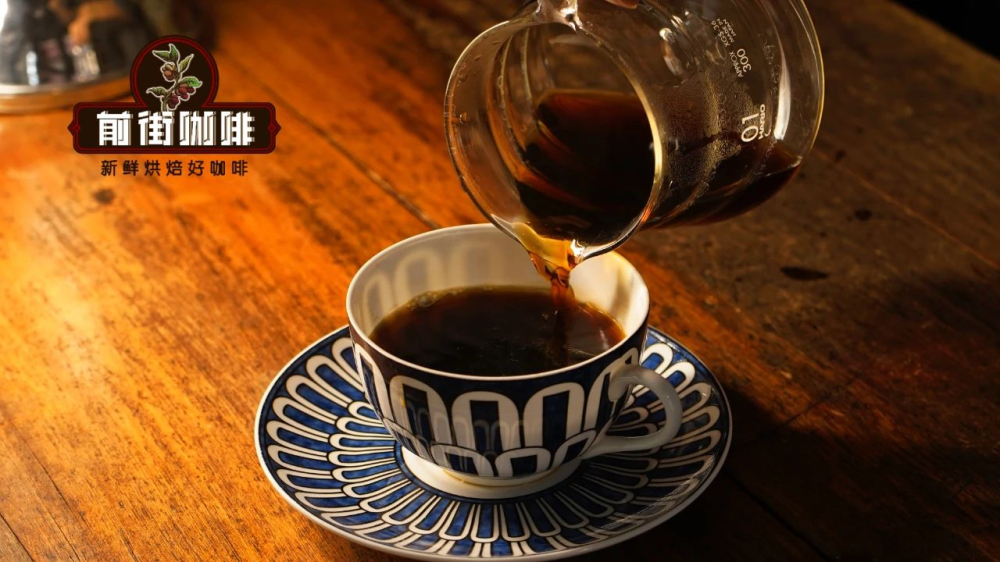
When the blooming pour begins, the bed temperature rises to 87°C; as the first pour ends and the blooming stage begins, the internal temperature drops to 83°C; then the second pour begins, the temperature rises to 86.2°C, and afterward the extraction temperature stabilizes between 84–86.7°C, with a maximum temperature of 87°C.
This brew was closer to the effect of brewing with an initial temperature of 90°C, both in data and in taste evaluation. I believe that by this point, everyone can roughly understand where the focus of brewing water temperature lies, and also understand why some people like to pour close to the liquid surface while others like to raise a straight, tall stream of water.
If in daily life we brew coffee without going to great lengths to measure the temperature in the coffee bed, then we can only rely on the easier-to-control parameter—the water temperature in the pour-over kettle. But at least you now understand the relationship between the water temperature in the parameters and the actual extraction temperature, and you'll be more at ease in actual brewing!!!
The above content is compiled by CoffeeHunters, a coffee news website.


