







What coffee-to-water ratio should cold brew use?
Cold brew has no single fixed ratio. Pour-over holds near 1:15, but cold brew runs from 1:8 to 1:13, and a 1:10 ratio is the daily standard in production. Because cold brew is a full immersion method, more water means a thinner, lighter cup and less water means a stronger, fuller one, with grind size and steeping time shifting the result further.
Low-temperature steeping dissolves aromatic and acidic small molecules first, so the drink tastes refreshing with acidity and sweetness up front. That also explains how to fix sour cold brew: use a tighter ratio, a finer grind or a longer steep to pull more sweetness. Kenya Little Tomato is a suitable bean choice, and the setup needs only grounds, a bottle, water and a fridge.
Cold brew coffee, through its low-temperature slow extraction method, can present a unique flavor that is light and intertwined with sweet and sour notes, and it can be easily made at home. However, many people are confused: why is the coffee-to-water ratio for cold brew not fixed like pour-over, with some using 1:8, some 1:10, and others 1:15? What taste differences do different ratios actually bring? This article will use actual comparative experiments to help you understand the effects of coffee-to-water ratio, grind size, steeping time, and other factors on cold brew flavor, and using Kenya Little Tomato as an example, analyze suitable coffee bean choices for cold brew, while also sharing why Front Street Coffee prioritizes a 1:10 ratio in daily production.
For more specialty coffee knowledge, please follow the WeChat public account: Front Street Coffee (FrontStreet Coffee)
The core principle of cold brew coffee is to let coffee grounds and cold water contact for a long time in a low-temperature environment, prompting aromatic and acidic small-molecule substances to dissolve first, so the finished drink tends to be refreshing, with acidity and sweetness often more prominent. At the same time, cold brew has almost no threshold for equipment or space; as long as you have coffee grounds, a bottle, water, and a refrigerator at home, you can achieve "caffeine freedom" at any time.
However, many observant friends will notice an interesting phenomenon: the coffee-to-water ratio for pour-over coffee has remained almost stable at around 1:15 for a long time, but cold brew coffee-to-water ratios range from 1:8 to 1:13, and Front Street Coffee itself also habitually uses 1:10 for production. So what taste differences do these different ratios actually bring?
The effect of coffee-to-water ratio on coffee flavor
Cold brew is a typical immersion extraction, where coffee grounds and low-temperature water coexist in the same container for a long time, gradually releasing flavor. When other conditions remain unchanged, the higher the proportion of water, the lower the concentration of the coffee liquid, the lighter the taste, and the thinner the mouthfeel; the lower the proportion of water, the higher the concentration, the stronger the taste, and the fuller the mouthfeel.
Therefore, if you want to obtain a balanced taste and allow the coffee to show a more ideal flavor, you need to choose an appropriate coffee-to-water ratio.
How long should cold brew steep? How coarse should the coffee grounds be ground?
The parameters in any extraction plan are interconnected. For cold brew, the coffee-to-water ratio is not the only variable determining taste; grind size, steeping time, water quality, and the coffee beans themselves are equally critical.
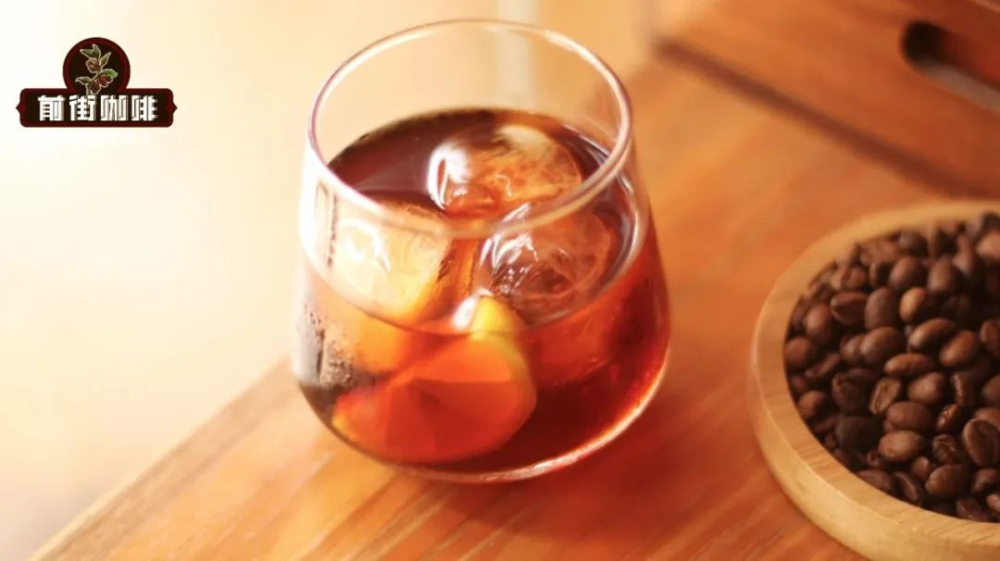
Although low-temperature extraction can reduce the release of bitter substances, it cannot completely avoid them. Therefore, coffee grounds used for cold brew should not be ground too fine, and the steeping time should not be too long. In terms of grinding, it is recommended to control the pass rate of a 0.85mm standard sieve at around 80-85%, and the particle feel should be visually close to granulated sugar; the steeping time is best kept between 6 and 16 hours, which ensures sufficient contact between grounds and water and also makes it less likely to produce negative flavors due to over-extraction.
The reason Front Street Coffee repeatedly emphasizes water quality is not only because it is the extraction medium, but also because water quality is the item most easily overlooked. For example, friends often leave messages on Front Street Coffee's backend saying that they bought our coffee beans and made cold brew according to the parameters in the article, but the taste was still not as expected. After checking various reasons, they found that the problem was the seemingly colorless and tasteless water. Friends with similar confusion can refer to Front Street Coffee's past comparative experiment "Using different waters to make cold brew, the difference is surprisingly this big!", so we will not expand on it here.
In terms of coffee bean selection, Front Street Coffee uses Kenya Little Tomato on the bean shelf as an example for demonstration. This bean uses the K72 washed processing method, and the varieties are SL28 and SL34. SL28 and SL34 are both varieties developed and screened through multiple generations. SL28 belongs to the Bourbon genetic group and carries the bright tone and rich acidity of the original Bourbon; SL34's lineage is closer to Typica, and its acidity is milder.
Iced coffee made with Kenya AA has a full mouthfeel of dark berries wrapping the mouth on the first sip, accompanied by abundant Little Tomato aroma. Drinking it after chilling is very satisfying, so it is also the first-choice bean for many people when making cold brew.
What is the difference in taste between cold brews made with different coffee-to-water ratios?
Cold brew is in a low-temperature environment of 0-10°C throughout the process, and the extraction efficiency itself is very low. In addition, the coffee grounds and water are relatively static, with no external force driving them in the meantime, so the dissolution rate of flavor substances in the coffee grounds is quite limited. To make the experimental results clearer, Front Street Coffee set up four common coffee-to-water ratios: 1:8, 1:10, 1:12, and 1:15, while keeping the other parameters consistent.
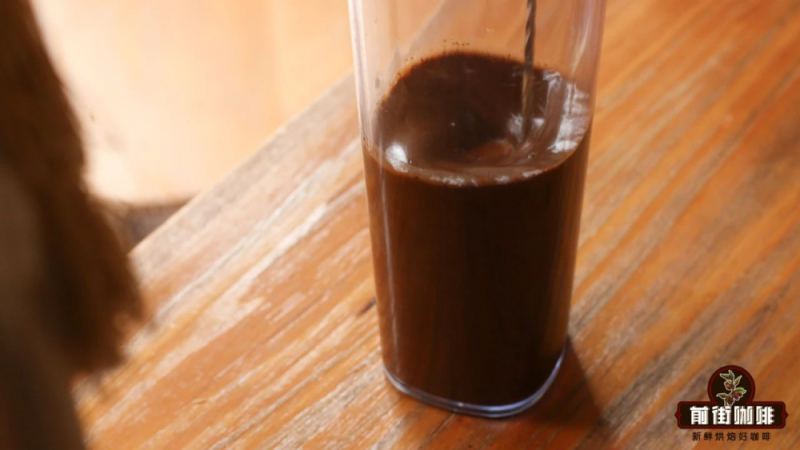
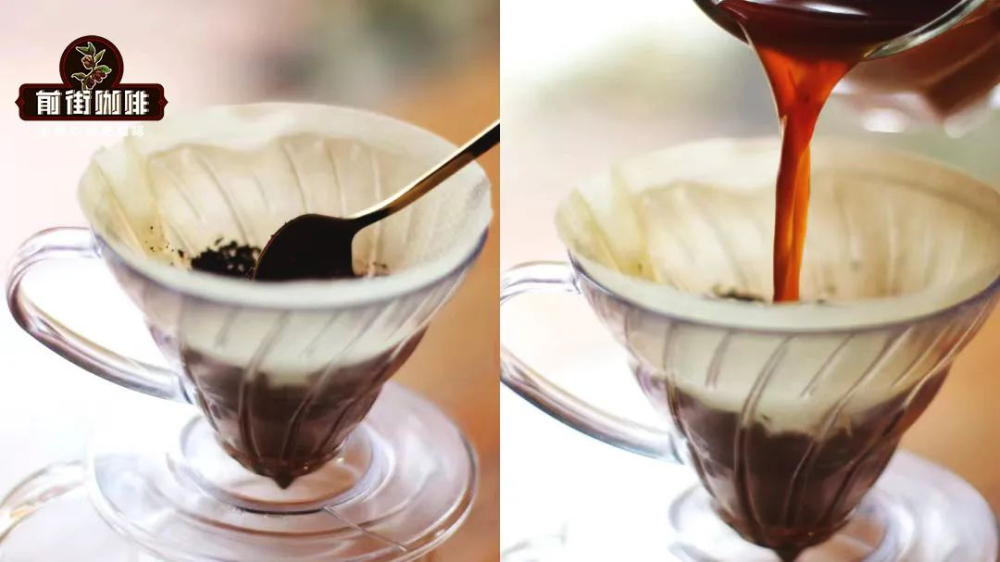
The production process is exactly the same: pour the coffee grounds and water into the container in sequence, stir evenly, seal, and then put it in the refrigerator. When the time is up, take it out and filter it (you may stir once during the process).
Coffee beans: Kenya Little Tomato
Coffee grounds amount: 18g
Steeping time: 6 hours
Grind size: fine granulated sugar / China No. 20 standard sieve pass rate 80% (EK43s setting 9.5)
Coffee-to-water ratio: 1:8, 1:10, 1:12, 1:15
Corresponding water amounts: 144g, 180g, 216g, 270g
The coffee liquid with a 1:8 coffee-to-water ratio has the darkest color, the strongest and most sour taste, and even a slightly salty mouthfeel. There are only a small amount of berries in the flavor, and the finish tends toward bitterness;
The coffee liquid with a 1:10 coffee-to-water ratio smells of fresh sugarcane, with flavors of red plum, berries, and snow pear tea. The mouthfeel is slightly strong, the acidity is high, and the sweetness is not obvious;
The cold brew with a 1:12 coffee-to-water ratio has the clearest mouthfeel, with flavors including Little Tomato, red plum, smoked plum juice, sugarcane, and the lingering fragrance of preserved plum candy. The concentration is moderate, with balanced acidity, sweetness, and bitterness;
The coffee liquid with a 1:15 coffee-to-water ratio has the lightest color and a thin body, with only a little acidity from black plum and berries. The taste is flat, but almost no bitterness can be tasted.
From the above comparison, it can be seen that because 1:8 uses too little water, the coffee flavor does not have enough space to unfold and easily shows negative characteristics of being heavy and bitter; 1:15, due to too much water, overly dilutes the soluble substances, resulting in insufficient body, so it naturally tastes bland.
Among the two groups of 1:10 and 1:12, 1:12 shows the best flavor and mouthfeel when drunk directly, but Front Street Coffee still prioritizes 1:10 in many articles and daily production. Why is that?
When Front Street Coffee makes cold brew for production, it is mainly based on two considerations.
First, in order to keep the cold brew at a low-temperature mouthfeel, in addition to serving it in an iced cup, we also add 1-2 hard ice cubes, so that even if the coffee is diluted, the flavor will not change much; second, every guest has different taste preferences. Some like it light, while some prefer it strong. When the ice cubes are just added, the coffee has a full and rich mouthfeel, and as time passes and they gradually melt, the coffee also slowly becomes lighter. Therefore, using a high-concentration cold brew with ice not only accommodates the "heavy-flavor camp" but also satisfies the "light-flavor camp."
The above content is compiled by CoffeeHunters, a coffee news website.


